House of Phos

186 posts

House of Phos banner
House of Phos

House of Phos

@ChadPenn12

Soil, Ag, and Env Chemist. Researcher at USDA-ARS NSERL. Focus on phosphorus removal structures, soil testing & plant availability. [email protected]

West Lafayette, IN Katılım Ağustos 2019
340 Takip Edilen1.3K Takipçiler
House of Phos
House of Phos@ChadPenn12·
Another option for steel turnings is to place a water-table control structure on the drainage-side of the P removal structure to maintain water table just below the surface of filter media, still allowing top-down drainage. This one stayed moist and unconsolidated.
House of Phos tweet media
English
0
1
3
146
House of Phos
House of Phos@ChadPenn12·
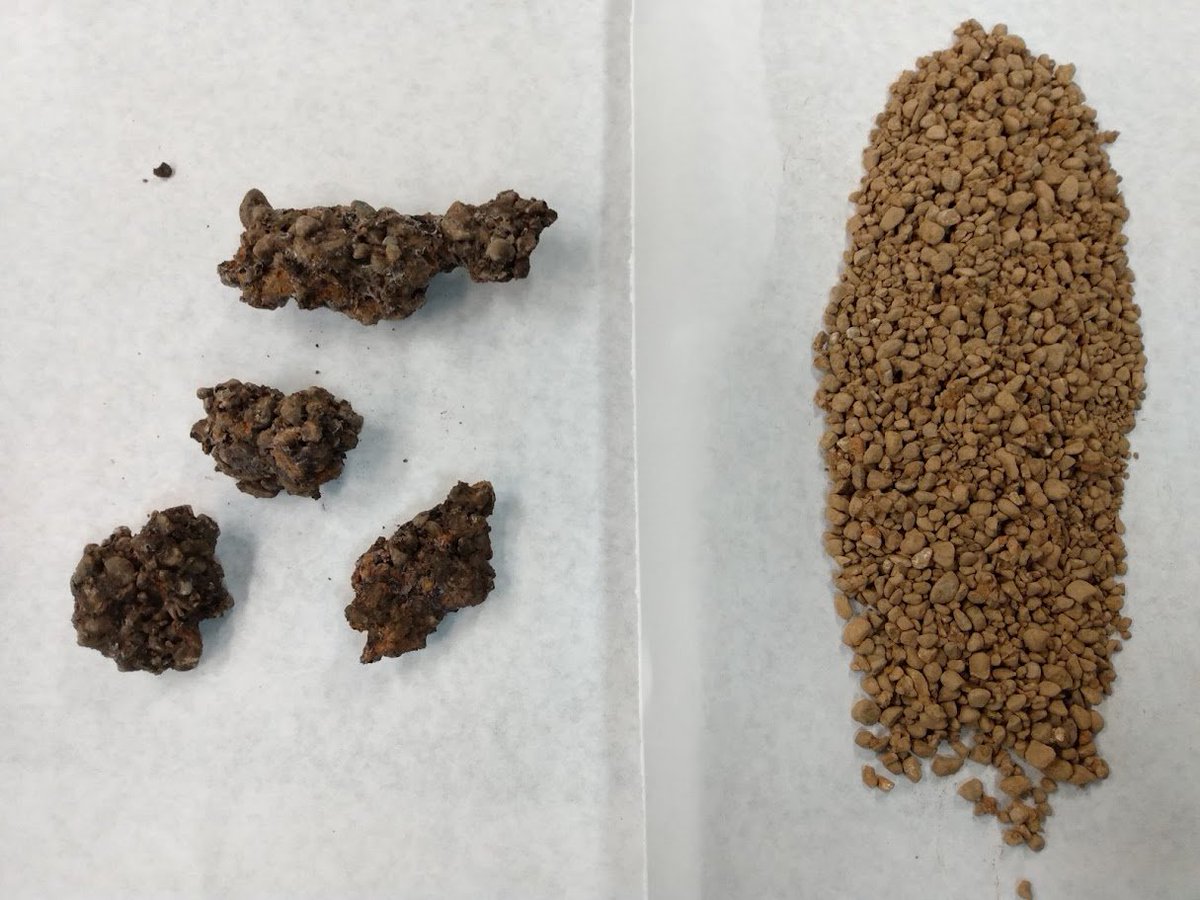
#phosphorus filtration by steel shavings/gravel. Media needs to stay moist with no wet-dry cycles or it may solidify (but still drains well). Picture on left are such clods, while material on right was in bottom-up structure with no drying, remaining unconsolidated for 3 years.
House of Phos tweet media
English
0
0
2
97
House of Phos
House of Phos@ChadPenn12·
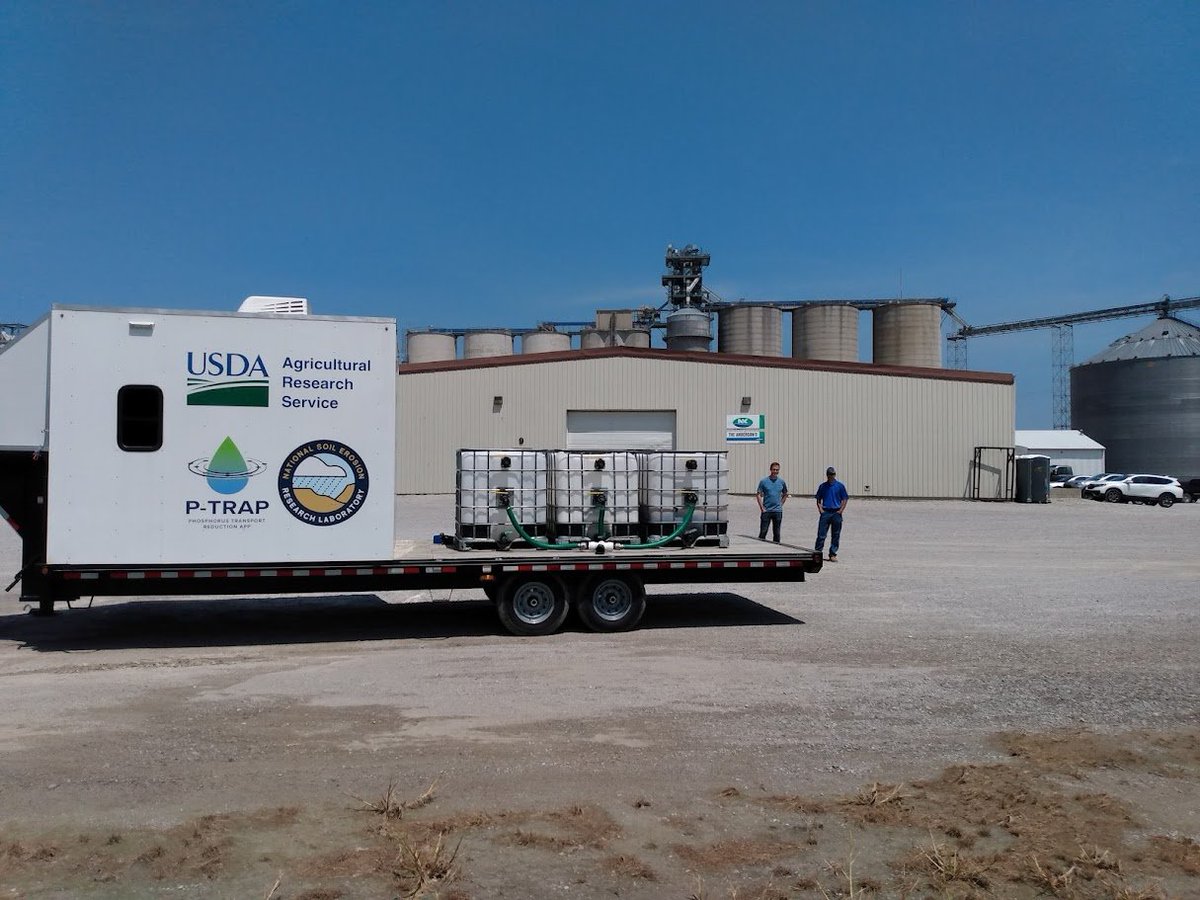
Showing the P-Trap demonstration #phosphorus removal structure at Dekalb county field day, hosted by The Andersons. Austin White with ARS and Ben Wicker of the IN Ag Nutrient Alliance. I should of got a pic with the audience...
House of Phos tweet media
English
0
0
6
193
House of Phos
House of Phos@ChadPenn12·
Open access paper on #phosphorus uptake in Era hybrids going back to 1932. Editor's choice award. This study purposely excludes effect of root architecture by using sand-culture hydroponics, to solely measure P utilization efficiency in Era hybrids mdpi.com/2073-4395/15/6…
English
0
3
6
577
House of Phos
House of Phos@ChadPenn12·
@voss_ag @ChrisK_Banded H2PO4 and HPO4. pH around 7 so there is a combination of both. All other nutrients were also added in fertigation at sufficient levels.
English
0
0
2
65
House of Phos
House of Phos@ChadPenn12·
Putting out #phosphorus plots on low P soils. Pic on left is the saltshaker application method for extreme precision; even if you have a thimble-full remaining, you walk around the plot six times to distribute it evenly! Joking.....sort of.
House of Phos tweet mediaHouse of Phos tweet media
English
1
1
13
631
House of Phos
House of Phos@ChadPenn12·
Luca Amaro, a visiting student agronomist from Brazil, got a surprise when his parents and brother came to visit at the National Soil Erosion Research Laboratory!
House of Phos tweet media
English
0
0
7
284
House of Phos
House of Phos@ChadPenn12·
@ChrisK_Banded @richd2016 Thanks for posting . I certainly did not know all of that. Biology aside, I suppose the foundation I'm building my nutrient uptake model from is that growth processes require a minimum uptake mass of nutrient within certain windows, to achieve a given yield
English
0
0
1
68
Chris K.
Chris K.@ChrisK_Banded·
Both parts are indeed present, unless purposefully creating a hydroponic growth environment while minimizing biological influence on growth (@ChadPenn12). The soil biome can modify the available nutrient pool and increase diffusion rates. Research to quantify these changes is somewhat lacking, but it's an area that can potentially bring traditional and biodynamic principles together instead of being seen as antagonists to one another.
English
2
0
1
100
Chris K.
Chris K.@ChrisK_Banded·
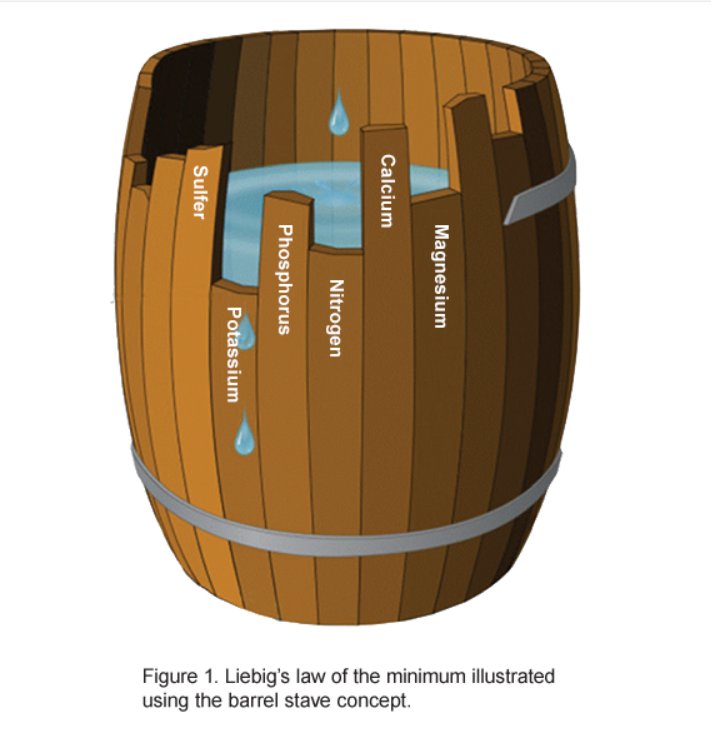
Justus von Liebig's Law of the Minimum states that crop yields are limited by the nutrient in least supply, right? Nope. While often interpreted as such, this is not correct, and while Liebig is attributed as the "Father of the Fertilizer Industry" and he promoted mineral nutrition via salts, he was not "anti-humus" or against the biological side of agriculture. The attached photo is a popular version of Liebig's Law of the Minimum, although he never presented his information as a barrel. The barrel is attributed to Hans Arnold von Dobeneck, and is also called Dobeneck's Tub in some countries. On most versions of the nutrient barrel, each stave is shown to represent a nutrient. The lowest stave marks max capacity, interpreted as max yield capacity. But is this accurate? Liebig first considered 3 nutrients for his Law: N, P, and K. At one point, Liebig thought all plant N came from the air, so air was added, as was moisture, temperature, soil conditions, humus, carbonic acid, ammonia, and more. Modern versions have added lots of additional staves, but understand that Liebig did not put all emphasis on nutrients. In his Principle of Agricultural Chemistry, Liebig numerically listed 50 "propositions" he held to be true regarding nutrition and chemistry of soils and plants. He summarizes them this way: "The nutrition, growth, and development of a plant depends on the assimilation of certain bodies, which act by virtue of their mass or substance. This action is within certain limits directly proportional to the mass or quantity of these substances, and inversely proportional to the obstacles or to the resistance which impede their action." This has been summarized into today's version of Liebig's Law of the Minimum. In later works, particularly his "Organic Chemistry in its Application to Agriculture and Physiology" (which is available as a free book online), Liebig heavily researches/discusses humus, manures, molds, yeasts, coals, nitrification, and many "biodynamic" topics. Liebig was far from the King of Fertilizer Salts. His work in that regard was that of a chemist, and he was attempting to solve food production concerns, as the quantities of available manure could not keep up with the needs of small farms and increasing populations. He repeatedly wrote of the fallow effect, where land can become unsuitable for one crop while being suitable for another, and by letting the land rest, it can again become suitable, especially with animal excrements (manures). In absence of manures, he speculated, then proved, that inorganic salts could satisfy the nutritional needs of plants. Is the Law of the Minimum useful? Absolutely. "A chain is only as strong as the weakest link" is a perfect rephrase of Liebig's concept. "Law" may be a stronger-than-appropriate word, but the concept of identifying and strengthening areas of weakness is an excellent method for improvement. Where one must be cautious is how you identify the shortest staves. A quick search online reveals that Liebig never attempted to put order of importance into the factors of production. These will vary widely, and even change through a single growing season based on temps, rainfall, crop, crop stage, etc. Liebig's Law should not be confused with ROI or Mitscherlich's Law of Diminishing Returns. Liebig was unable to quantify crop responses based on identified limitations, which is partly why B.E. Livingston wrote that the Law of the Minimum was "still quite incomplete logically." Liebig could not specify a quantity to overcome a deficiency, nor predict crop response. He was able to predict a LACK of response, though, which was impressive for his time. Don't apply what plants already have plenty of. Caveat here: Your soil test or tissue test may not reveal whether your plant has plenty of something or not. In summary, Liebig is popularly idealized as the villain of sustainable agriculture due to his inorganic mineral nutrition theory. Interestingly, he was also one of the pioneering chemists of organic chemistry. Liebig understood both sides of the humus vs inorganic debates that we've had for 100+ years. Like most things, they've been misconstrued and used for ideological purposes and/or product sales rather than as educational sources. The next time you see Liebig/Dobeneck's barrel on a sales flyer or in a presentation, I have this brief daytrip through ag history comes to mind, and helps put things into perspective. Thanks for making it to the end. @bandedagllc @RyanPriest11974
Chris K. tweet media
English
6
8
55
5.5K
House of Phos
House of Phos@ChadPenn12·
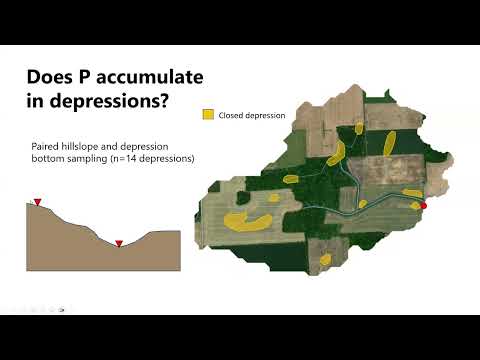
Potholes tend to become #phosphorus hotspots and represent the most economical intercession point for trapping P, especially for replacing a tile riser with a modified blind inlet. Hear Mark Williams @AgriH2O and I explain: youtu.be/i0L0NzdH6bY
YouTube video
YouTube
English
0
1
5
373
House of Phos
House of Phos@ChadPenn12·
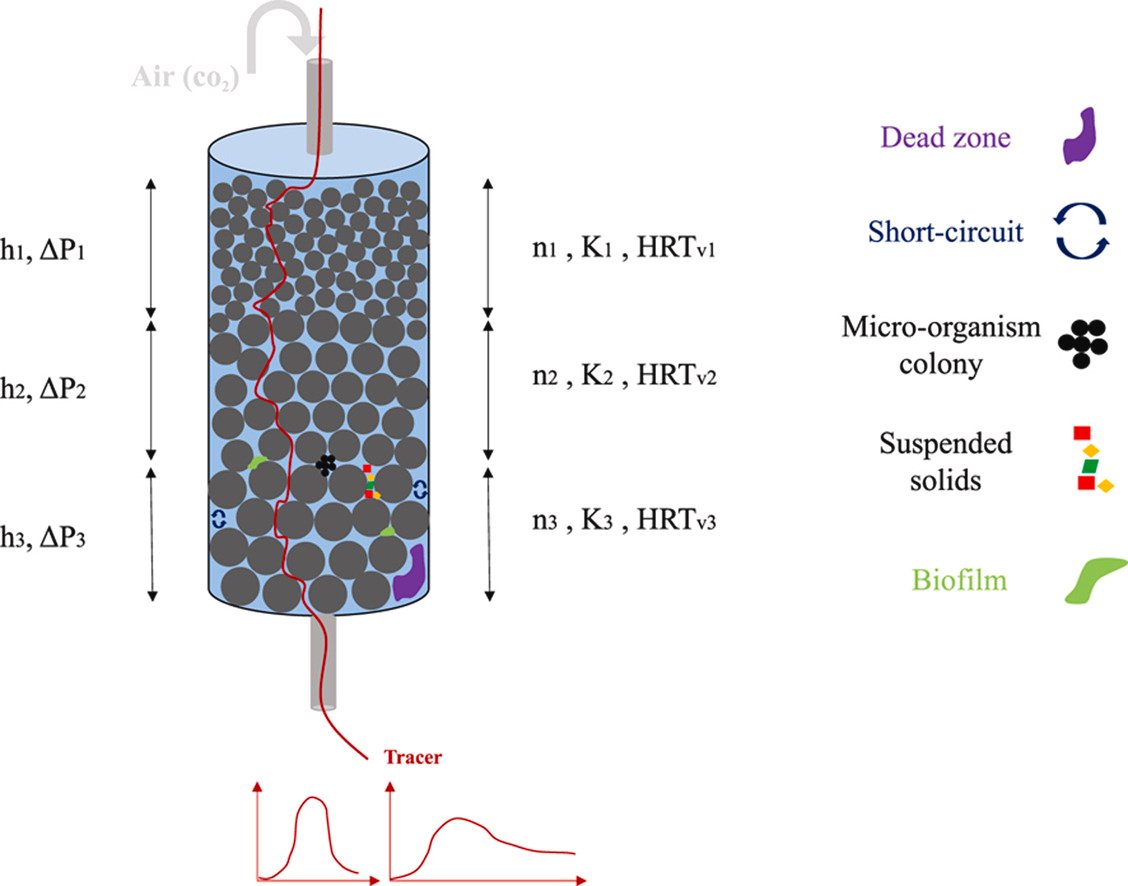
Sometimes we use filters to remove #phosphorus from wastewater during treatment. Sometimes they clog. Amin's new paper describes how/why and prevention. doi.org/10.1016/j.jenv… Congrats to Amin, this one was a lot of work.
House of Phos tweet media
English
0
2
6
309
House of Phos
House of Phos@ChadPenn12·
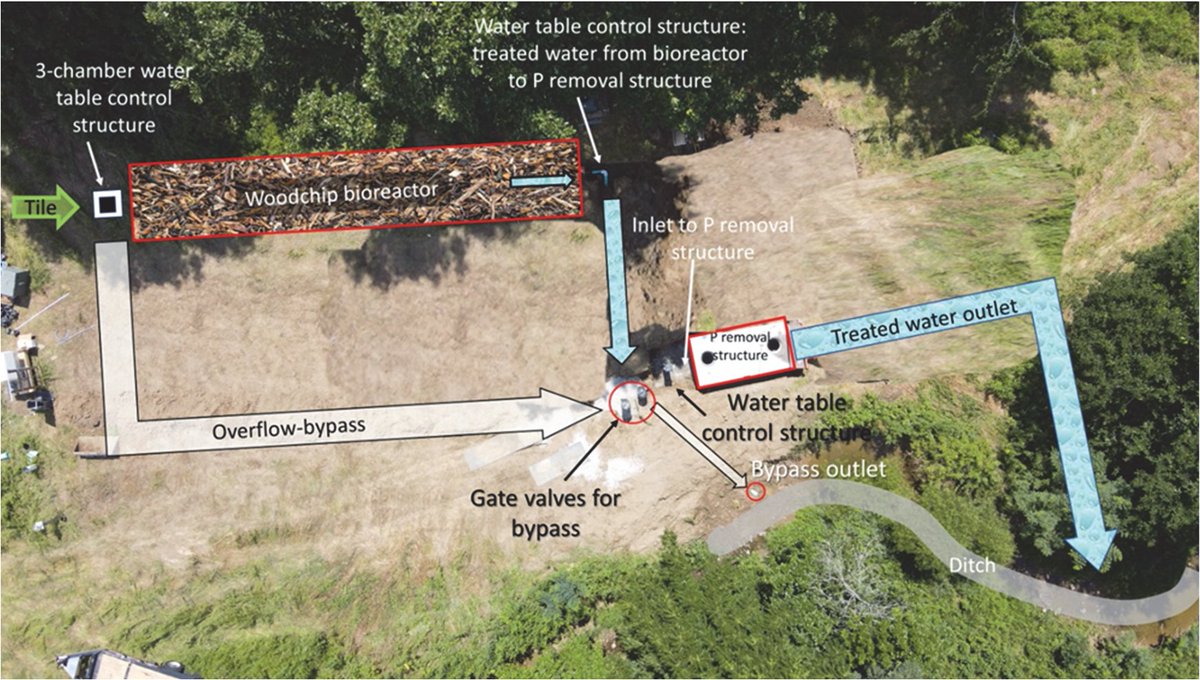
The first stacked #phosphorus removal structure-nitrogen bioreactor. elibrary.asabe.org/abstract.asp?a… Surprised it worked that well with such low inflow P concentrations. A mystery on how alumina removed N in this scenario. Need to construct them to handle peak flow rates.
House of Phos tweet mediaHouse of Phos tweet media
English
0
3
7
411
House of Phos
House of Phos@ChadPenn12·
Snapshot of V14 #corn grown in our indoor grow-room compared to greenhouse and field. Greenhouse corn is tall and spindly compared to grow-room and field due to less-than-ideal light conditions (etiolation). Grow-room is thick on the stem and leaves.
House of Phos tweet media
English
0
0
6
678