Chamindu jayathilake

153 posts

Chamindu jayathilake banner
Chamindu jayathilake

Chamindu jayathilake

@Chamindujayathi

Katılım Ağustos 2013
191 Takip Edilen8 Takipçiler
Chamindu jayathilake retweetledi
Niko McCarty.
Niko McCarty.@NikoMcCarty·
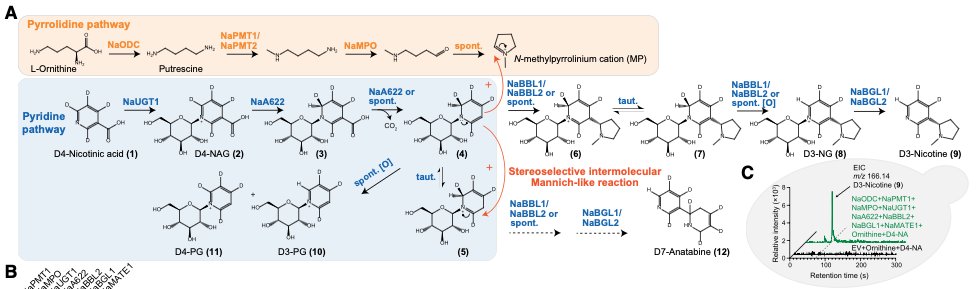
Nearly 200 years after nicotine was first chemically isolated, we’ve finally figured out its complete biosynthesis pathway. Doing so required an insane effort and many years of work. The authors — a Chinese group — ended up crossing 643 lines of tobacco plants to find a single mutant incapable of making nicotine. They next backcrossed and inbred that plant to figure out the specific mutations, in various genes, and map the enzymes responsible. Nicotine is made from two “ring-shaped” molecules fused together. One ring has five carbons (the “pyrrolidine ring”) and the second has six carbons (the “pyridine ring.”) Scientists already knew quite a bit about how these rings get made, but not every step, and not how tthey join together to make nicotine. The pyrrolidine ring starts when ornithine, an amino acid that is not used to make proteins, gets its carbon dioxide clipped off by an enzyme, called ornithine decarboxylase, to make putrescine. This putrescine then has a methyl group attached to it, and gets oxidized. At this point, the molecule is a chain with four carbon atoms; one end has an amine, and the other a methylated amine. The amine end gets cut off and replaced with a reactive aldehyde; the chain folds into a loop; and the methylated amine “attacks” electrons on the aldehyde to form the ring. To make the pyridine ring, plant cells first take aspartate (the amino acid) and oxidize it. The resulting molecule is then transformed into nicotinic acid mononucleotide, which is just vitamin B3 with a sugar and phosphate attached. This paper is the first to report that NAMN hydrolase clips off the sugar and phosphate to release pure vitamin B3; also called niacin or nicotinic acid. (The names are slightly confusing.) The paper’s major contribution, though, is in figuring out how the two rings get fused together. The nicotinic acid is unstable, so an enzyme quickly attaches a sugar to it. Another enzyme, called A622, then strips off a CO2 group, making the molecule reactive again. And finally, that reactive intermediate “attacks” the five-membered pyrrolidine ring to join the two halves together. Other enzymes strip off the remaining sugar to make nicotine. (This whole pathway is shown in the image below.) All of this happens on the surface of plant vacuoles. Many of the chemical intermediates are toxic, so they need to be sequestered and converted quickly. And as soon as the final nicotine gets made, a transporter pumps it into the vacuole, where it is stored away. It’s actually difficult to wrap my head around the amount of work packed into this paper, so I’ll just give some quick bullet points: 1. They grew 643 inbred plant lines, which were made by crossing together 26 different parent tobacco plants. They extracted metabolites from all of them. 2. They did a bunch of single-cell RNA sequencing on the tobacco roots to figure out which cells actually express the nicotine biosynthesis genes. 3. “Stumbled” upon a mutant plant which was not able to make nicotine, and then sequenced its entire genome. They also crossed back this plant and inbred it for two generations to find the mutation responsible; a single C-to-T swap. This experiment alone must have taken at least two years of work. 4. Fed plants with isotopically “heavy” nicotinic acid and then tracked its movements through metabolic pathways. 5. Collected at least 630 mass spectrometry spectra. 6. RECONSTITUTED THE ENTIRE PATHWAY IN FOUR DIFFERENT SPECIES: YEAST, TOMATO, EGGPLANTS, AND PEAS (!!!!!!!!) 7. And a lot more… Anyway, insane paper. China has been putting out incredible plant biology papers for the last several years.
Niko McCarty. tweet mediaNiko McCarty. tweet media
English
28
212
1.6K
254.5K
Chamindu jayathilake retweetledi
Ido Nir
Ido Nir@IdoNir5·
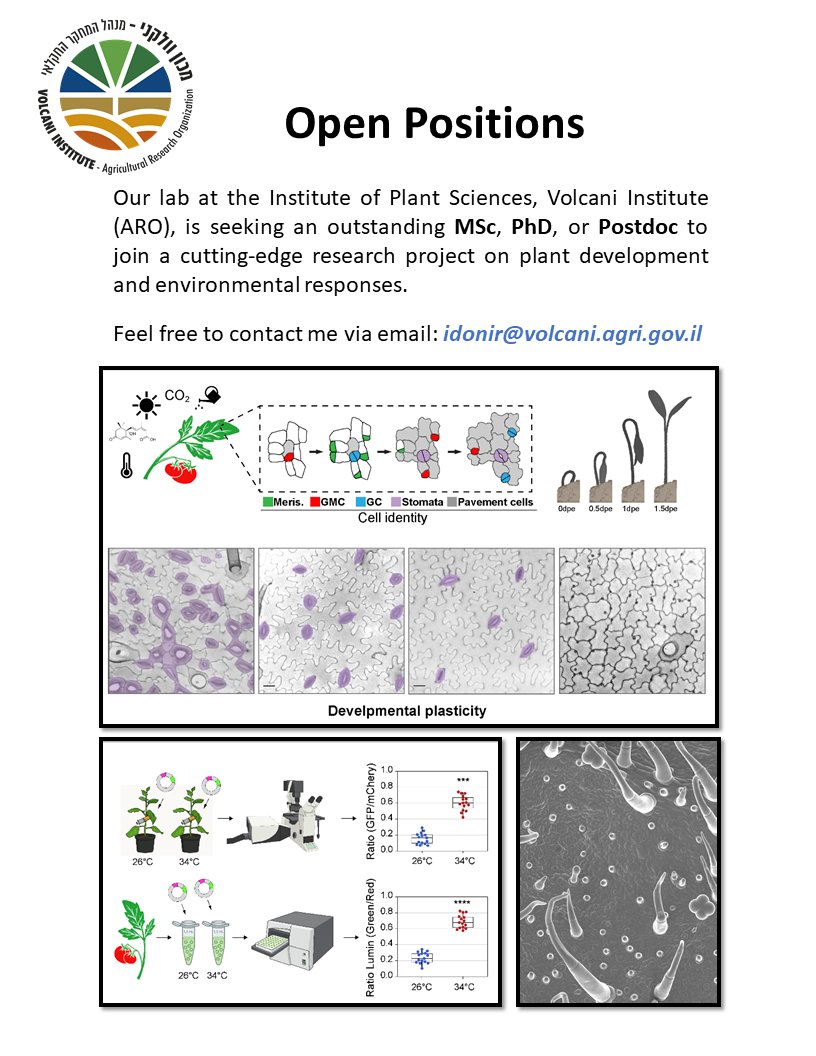
🔬MSc/PhD/postdoc position available - An exciting and innovative research opportunity!🌱
Ido Nir tweet mediaIdo Nir tweet media
English
2
29
102
9K
Chamindu jayathilake retweetledi
News from Science
News from Science@NewsfromScience·
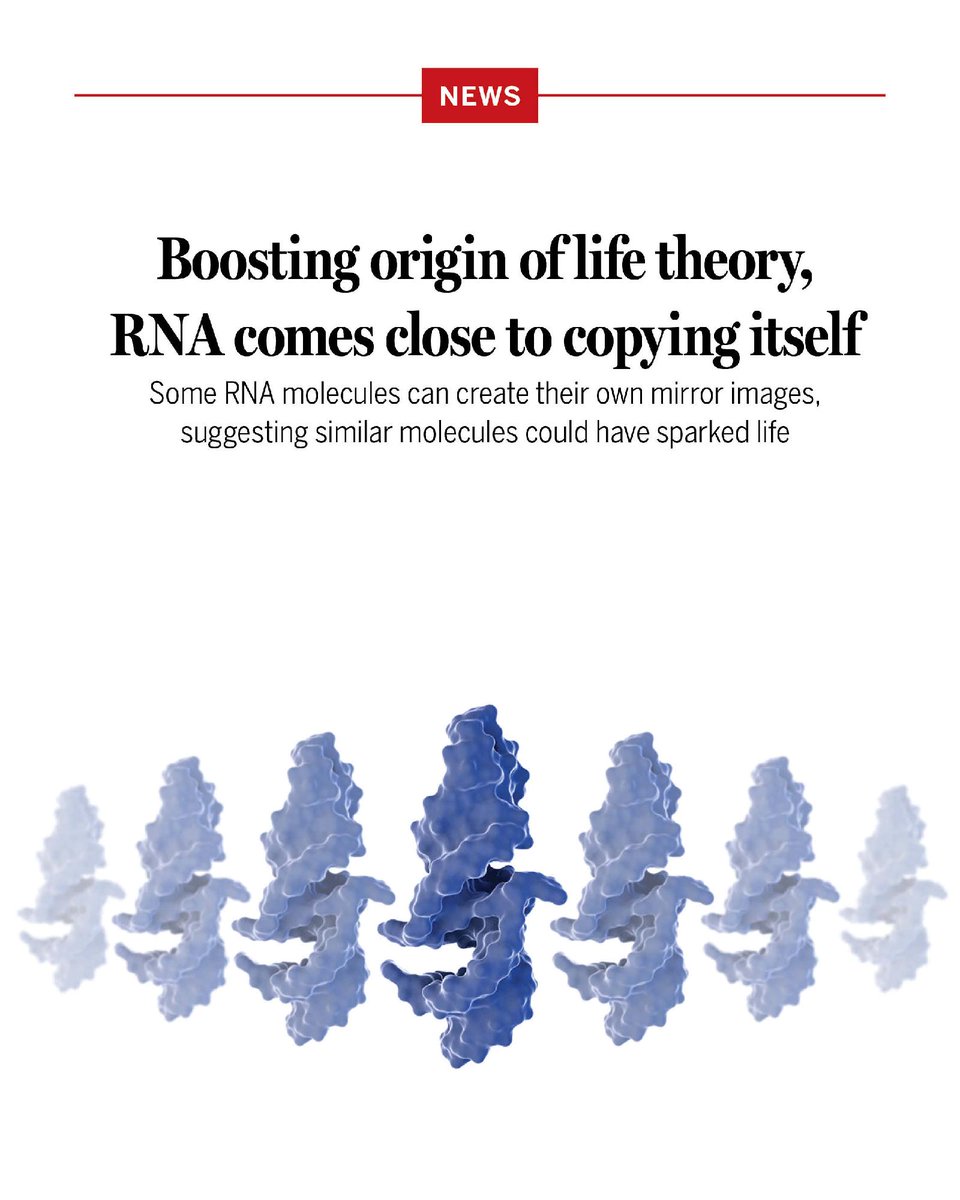
Today RNA may seem overshadowed by its glamorous cousin DNA, but many scientists think RNA molecules were the star players in the origin of life. By both storing genetic information and copying themselves, they might have touched off the march of evolution that produced increasingly complex life forms. So far, researchers haven’t found RNAs that can replicate themselves, a key feature of living things. But they now have something close. In a new paper, researchers report creating RNAs that can generate a sort of mirror image of themselves and use that template to generate the original. Learn more: scim.ag/4awamko
News from Science tweet media
English
10
149
594
32.9K
Chamindu jayathilake retweetledi
Niko McCarty.
Niko McCarty.@NikoMcCarty·
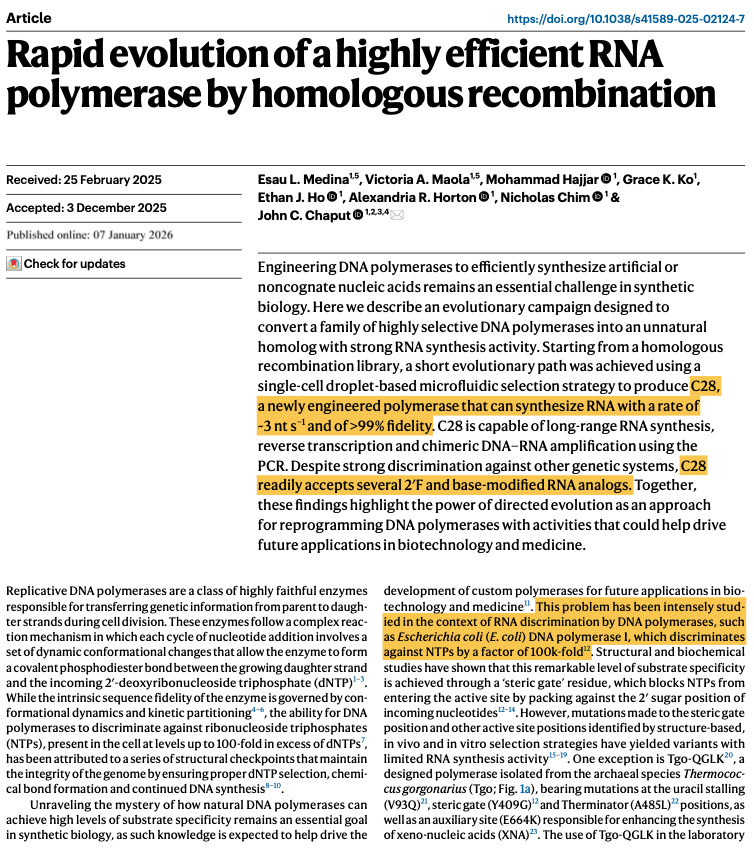
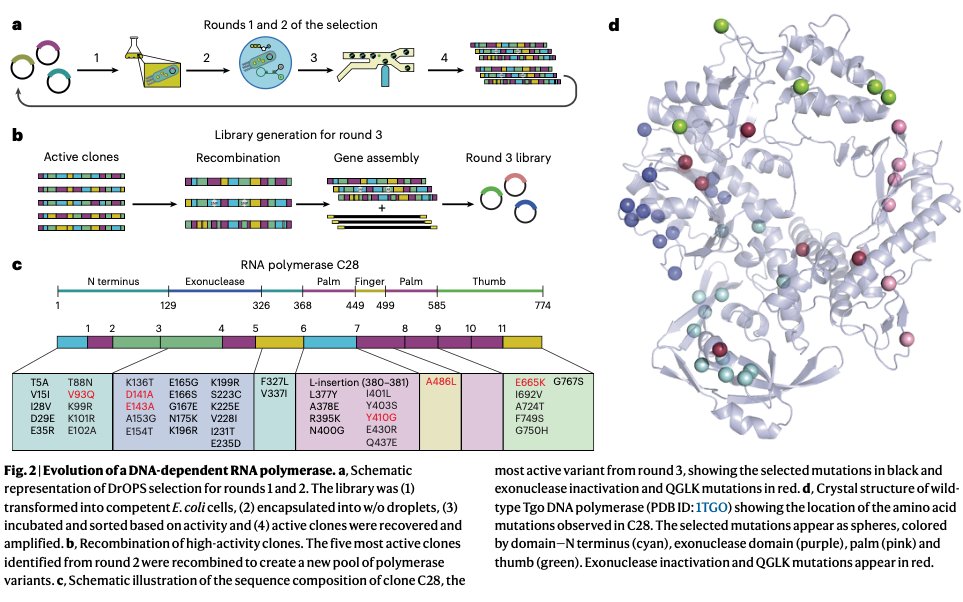
This paper is wild. After 3 rounds of directed evolution, they converted a DNA polymerase into an enzyme that can do: - RNA synthesis - Reverse transcription - Synthesis of "unnatural" nucleotides - Synthesis of DNA-RNA chimeras One of the best papers I’ve read recently. For context: In nature, it is DNA polymerase that takes a DNA sequence as a template and then copies it. These enzymes are crucial in replicating the genome for cell division, and they are EXTREMELY specific for DNA over RNA. This is key because RNA nucleotides are present in the cell at concentrations ~100x higher than DNA nucleotides, so the enzyme has evolved clever strategies to select one over the other. RNA polymerases, for comparison, are the enzymes that take a DNA sequence as template and then convert it into RNA. They are involved in gene expression, for example. To convert a DNA polymerase into an RNA polymerase (and all the other functions I mentioned earlier), the authors did a fairly straightforward directed evolution experiment. First, they took four DNA polymerase enzymes belonging to various archaea. These DNA polymerases don’t check for DNA vs. RNA as stringently as other types of cells, so they’re a good starting point to evolve RNA polymerases. The authors inserted some targeted mutations into these enzymes, based on known mutations in the literature. For example, they swapped the amino acid at position 409 for a smaller amino acid, thus removing a “gate” that keeps RNA building blocks from entering the enzyme. Next, they took the four genes encoding these DNA polymerases and cut them up into 12 segments each. They randomly stitched these 12 segments together — from the four different genes — to build millions of unique variants. Each shuffled gene was inserted into an E. coli cell. Then, they grew up these cells (each carrying a unique polymerase) and put them into microfluidic droplets. A device isolates each droplet, lyses the cell open, and releases the polymerase. The droplet also contains RNA building blocks and a DNA template, encoding a fluorescent reporter. If the polymerase begins synthesizing RNA, it will produce a detectable signal. They screened about 100 million droplets in 10 hours of work, searching for those with a signal. For each well that yields a fluorescent signal, the researchers isolated the DNA and sequenced it to figure out which polymerase it was. They repeated this 3x times, finally isolating a really excellent RNA polymerase variant which they called "C28." C28 has 39 mutations compared to the wildtype enzymes. It incorporates about 3.3 nucleotides of RNA per second, with 99.8% fidelity. The crazy thing is that this enzyme can also copy DNA or RNA templates back into DNA (reverse transcription), or use chimeric DNA-RNA molecules as a template and amplify them. It is just a super versatile polymerase that can act on DNA, RNA, or modified nucleotides, to build just about anything.
Niko McCarty. tweet mediaNiko McCarty. tweet media
English
16
361
1.7K
86.6K
Kevin Arbuckle
Kevin Arbuckle@phylophile·
New speaker announcement for Venom Day 2023: Ben Owens from Bangor University will be sharing his insights on the conservation genomics of the U.K.'s only dangerous snake, the European adder. Register now: eventbrite.com/e/venom-day-20…
Kevin Arbuckle tweet media
English
1
0
5
278
Chamindu jayathilake retweetledi
Nature Portfolio
Nature Portfolio@NaturePortfolio·
On the Nature Portfolio Ecology and Evolution community, @ElenaIreneZ shares how high density sampling of sediment DNA in Denisova Cave revealed turnovers in the humans and animals present and linked them to climatic changes. #BehindThePaper go.nature.com/3dn9C4x
English
0
5
17
0