Cheryl Dick

2.1K posts

Cheryl Dick banner
Cheryl Dick

Cheryl Dick

@Cheryl__Dick

Katılım Temmuz 2014
651 Takip Edilen762 Takipçiler
Cheryl Dick retweetledi
𝐁𝐫𝐚𝐝 𝐉𝐨𝐡𝐧𝐬𝐨𝐧
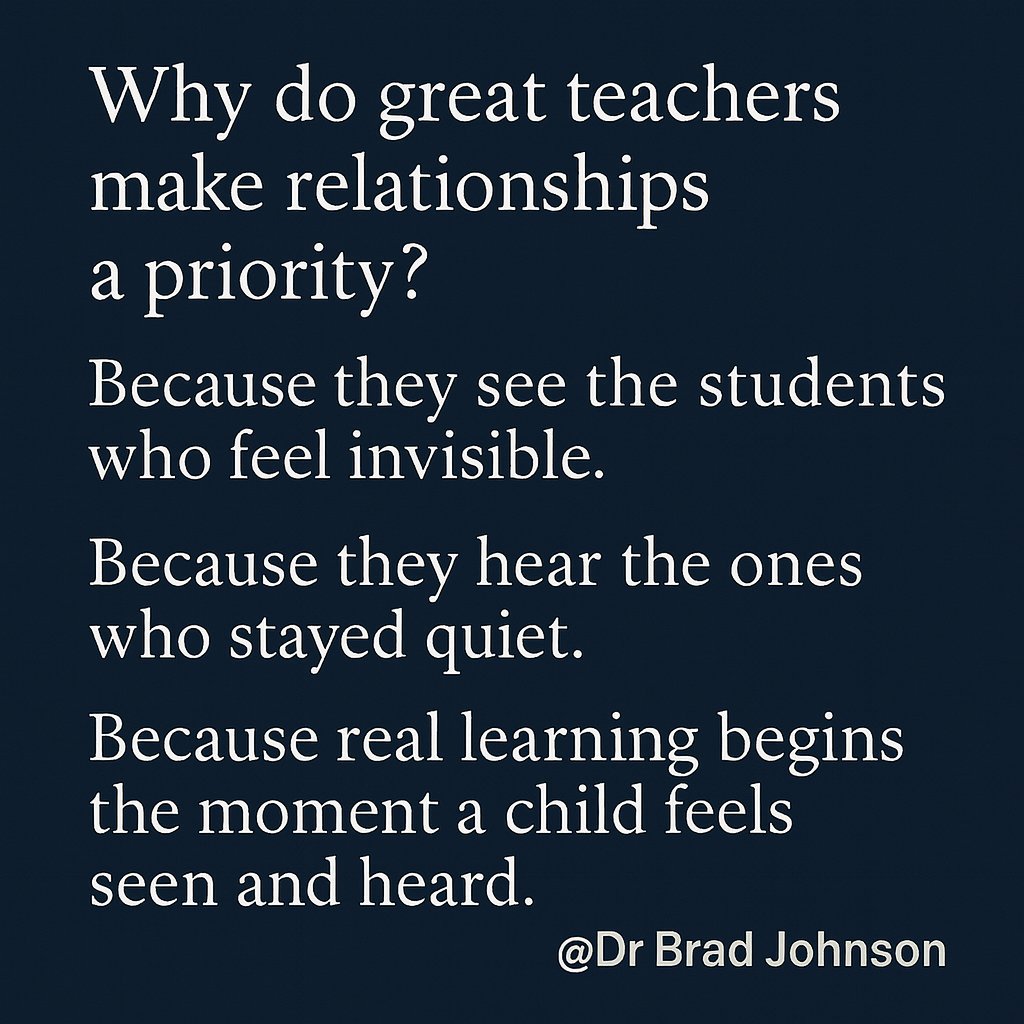
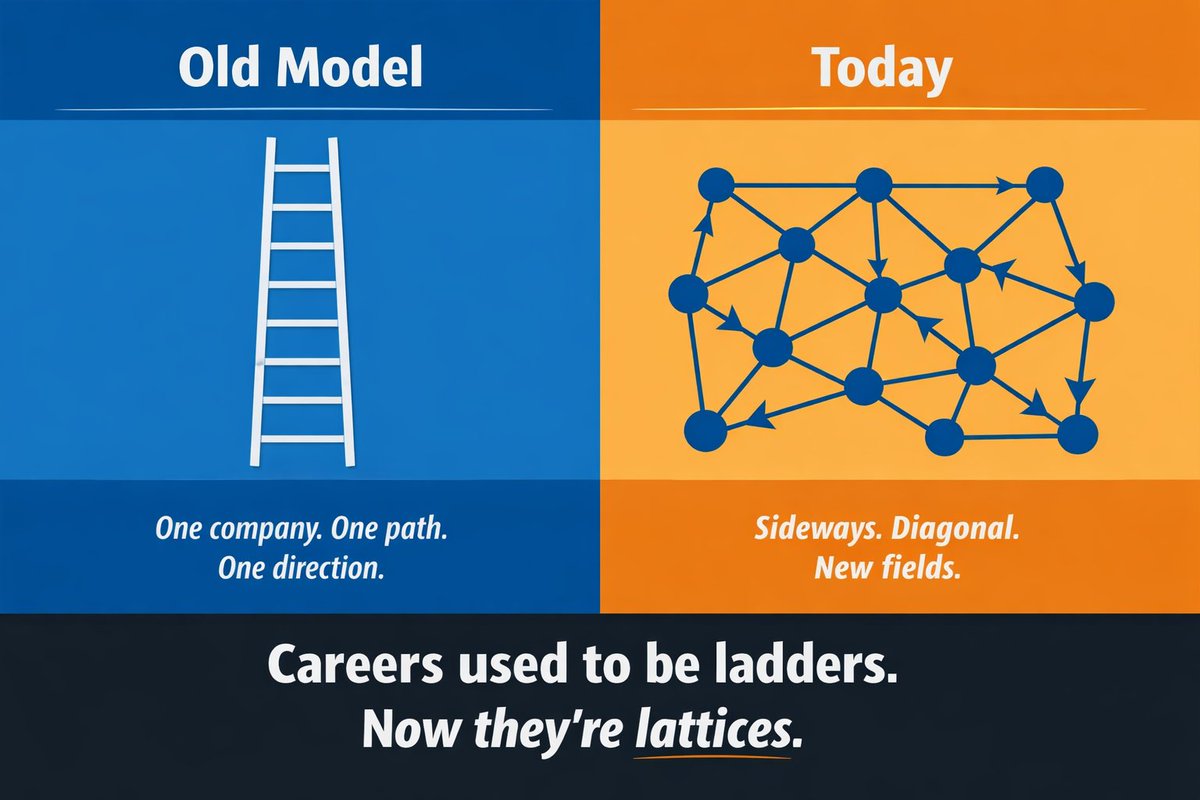
For a long time, there was a clear education-to-work path. Work hard in school, get a good job, stay with that job, and retire with a pension and healthcare. That wasn’t a slogan or a belief system. It was how things actually worked. Careers were ladders. You climbed over time, stayed with one company, and planned your life around the expectation that the job would still be there. That world is gone. Careers aren’t ladders anymore. They’re lattices. People move forward for a while, then sideways, sometimes even what feels like backward. They change jobs, then roles, then entire fields. They step into work that didn’t exist when they were in school. The path isn’t straight, and it’s rarely predictable. That kind of career demands agility when the path shifts, adaptability when the role changes, and resilience when things don’t work out the first time. And this is where school is out of sync. Schools are still really good at teaching kids how to follow directions. Wait for instructions. Do the assignment. Follow the steps. Turn it in. That worked when careers were ladders. It doesn’t work in a lattice. The world students are walking into won’t hand them clear instructions or a rubric. It will expect them to figure things out, adjust when things change, and keep moving even when the path isn’t obvious. If school only teaches kids how to follow directions, we’re preparing them for a world that no longer exists. School should help students leave knowing they can move in different directions, figure things out as they go, and handle a career that won’t stay straight, stable, or predictable. That’s preparation now.
𝐁𝐫𝐚𝐝 𝐉𝐨𝐡𝐧𝐬𝐨𝐧 tweet media
English
4
21
73
4.8K
Cheryl Dick retweetledi
𝐁𝐫𝐚𝐝 𝐉𝐨𝐡𝐧𝐬𝐨𝐧
Reading and math matter. They are important tools. But they are still tools, not education itself. Those tools matter because they make deeper learning possible, not because they are the totality of learning. Research is clear: academic skills don’t operate on their own. Students don’t succeed in life just because they can read and calculate. They succeed because they can regulate, reason, persist, and work with others. Education is learning how to: stay regulated when something feels unfair hear feedback without shutting down speak up without being aggressive handle uncomfortable moments without melting down recover after embarrassment own a mistake and keep going work with others when it’s hard Because if a student can read but can’t regulate, if they can calculate but can’t cope, if they can pass tests but can’t handle failure, we didn’t educate them. That’s how we end up with adults who can read and write but can’t manage frustration, failure, or responsibility. That’s why science, social studies, PE, the arts, and even recess, movement, & play aren’t extras. They’re where judgment is formed. They’re where regulation is learned. They’re where thinking transfers to real life.
English
4
16
71
4.1K
Cheryl Dick retweetledi
Danny Steele
Danny Steele@SteeleThoughts·
Kids aren't inspired by lessons... but by teachers - teachers who bring joy to the room, passion for the subject, and love for the students.
Danny Steele tweet media
English
4
294
434
0
Cheryl Dick retweetledi
aka
aka@akafaceUS·
More than 100 high school students in North Carolina are competing in a masonry competition, and they’re absolutely nailing it.
English
1.2K
5.4K
40.7K
3M
Cheryl Dick retweetledi
𝐁𝐫𝐚𝐝 𝐉𝐨𝐡𝐧𝐬𝐨𝐧
We talk about time like it’s something we’re losing. But time isn’t a thief. Time gives us moments. And those moments are the gift. It’s checking in on someone just because you thought of them. Doing something kind without needing a reason. Pausing long enough to notice when someone isn’t okay. It’s the text you sent that mattered more than you realized. The small choice to care when no one was watching. The decision to give a little time to someone who needed it. Leadership. Teaching. Life. None of it is about being busy or impressive. It’s about who we showed up for in the ordinary moments. Those moments don’t disappear. They stay with us. That’s the gift time gives, not what it takes
English
0
8
39
3K
Cheryl Dick retweetledi
Todd Whitaker
Todd Whitaker@ToddWhitaker·
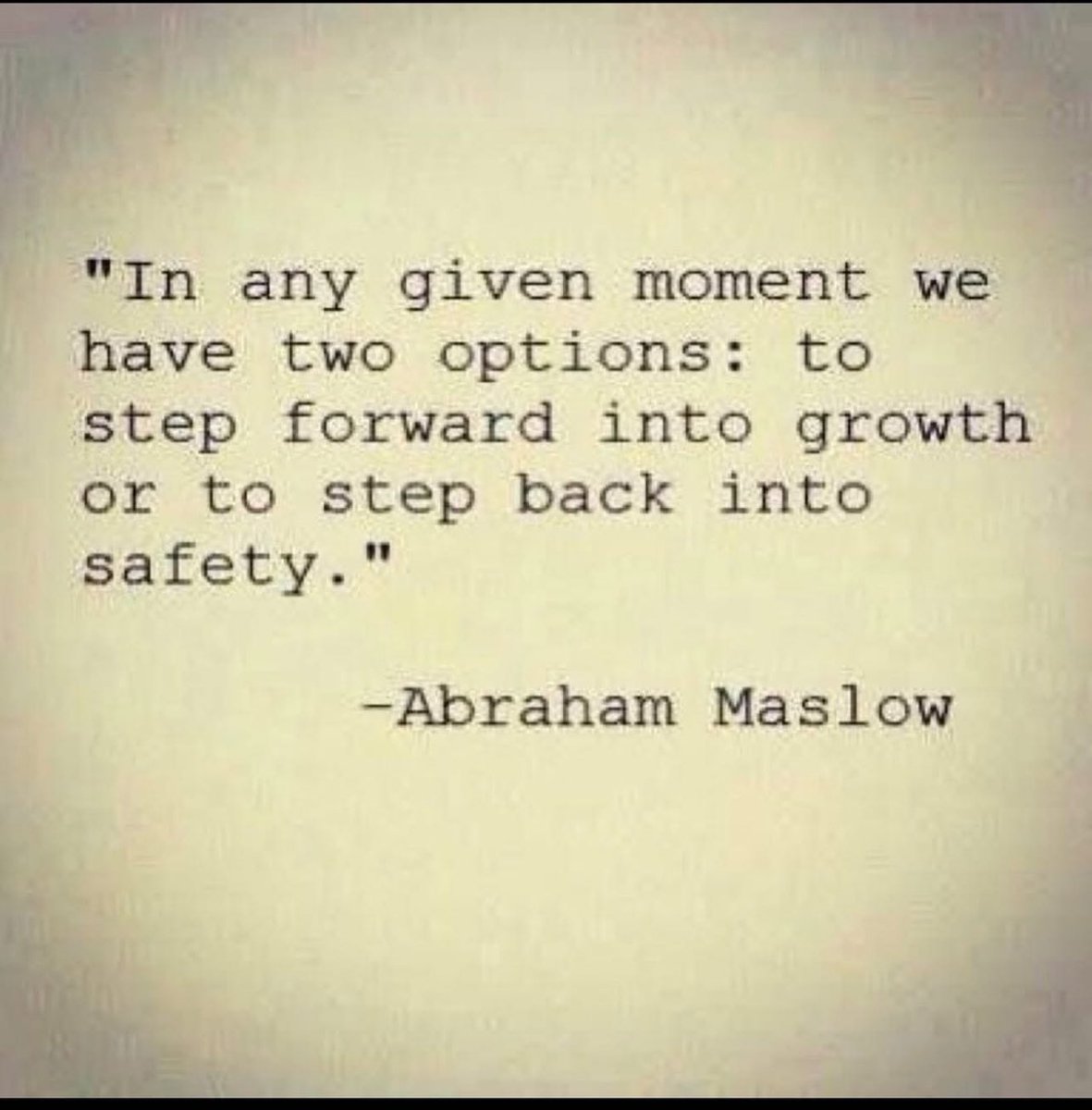
Today let’s step forward.
Todd Whitaker tweet media
English
2
26
97
5.8K
Cheryl Dick
Cheryl Dick@Cheryl__Dick·
@DrBradJohnson I enjoy reading all of your posts — you’re very relatable to the current trends in education.
English
0
0
1
47
Cheryl Dick retweetledi
Brett Favre
Brett Favre@BrettFavre·
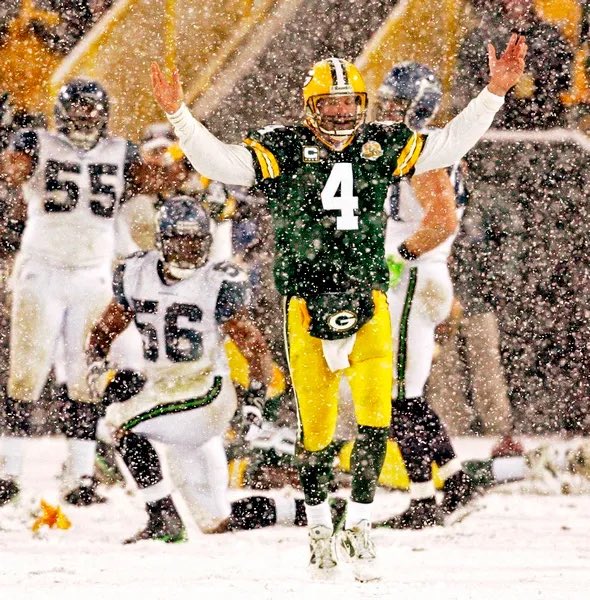
For more than 20 years I put my hands up in celebration on the gridiron. Now, I put my hands up to the One that gave me all my talents and abilities — the King of my life, Jesus Christ. I’ve never claimed to be perfect, but my aim is for the direction of my life to honor Christ and I pray my faith increases. So I do want to wish you all a Merry Christmas, whether you’re solo, with family, or friends, and if you haven’t done so, put your faith in Him who can save, Jesus Christ. Ephesians 2:8-9 [8] For by grace you have been saved through faith. And this is not your own doing; it is the gift of God, [9] not a result of works, so that no one may boast.
Brett Favre tweet media
English
3.6K
8.5K
87.9K
2M
Cheryl Dick retweetledi
𝐁𝐫𝐚𝐝 𝐉𝐨𝐡𝐧𝐬𝐨𝐧
School taught us that C is average. Straight A’s mean you’ll be successful in life. Not necessarily. Some of the most prepared people for adulthood were C students. Not lazy. Not incapable. Just navigating a system that rewarded compliance more than capability. Grades are great at measuring one thing: How well you do school. They are terrible at predicting: Who can adapt Who can recover Who can communicate Who can lead when there’s no rubric C students learn those skills early—because they have to. They fail sooner. They adjust sooner. They stop waiting to be told what “good” looks like. Psychologists call it desirable difficulty. Life calls it preparation. And before someone says it, yes, many A students are wildly successful. This isn’t A vs. C. It’s a metrics problem. Grades correlate with success in structured systems. They don’t cause success in an unstructured world. Some A students succeed because they also have: resilience relational intelligence risk tolerance adaptability Those traits, not grades, help them succeed. And many C students excel because they’ve been practicing those skills their whole lives. In fact, two of the most successful investors on Shark Tank—a show built entirely around real-world success—were not top students. Daymond John was an average student and dyslexic. He didn’t do great in school. He did great with people, timing, and opportunity. Barbara Corcoran was a straight-D student and dyslexic. School didn’t play to her strengths. Failure didn’t break her. It built confidence, persuasion, and grit. None of them lacked intelligence. They lacked alignment. This isn’t anti-school. And it’s not anti-achievement. Because life doesn’t ask: What was your GPA? It asks: Can you adapt? Can you communicate? Can you recover when things don’t go as planned? Can you lead without being handed the answers? A lot of C students already can. And that might be the most underrated preparation of all.
English
22
73
355
36.5K
Cheryl Dick retweetledi
TeacherGoals
TeacherGoals@teachergoals·
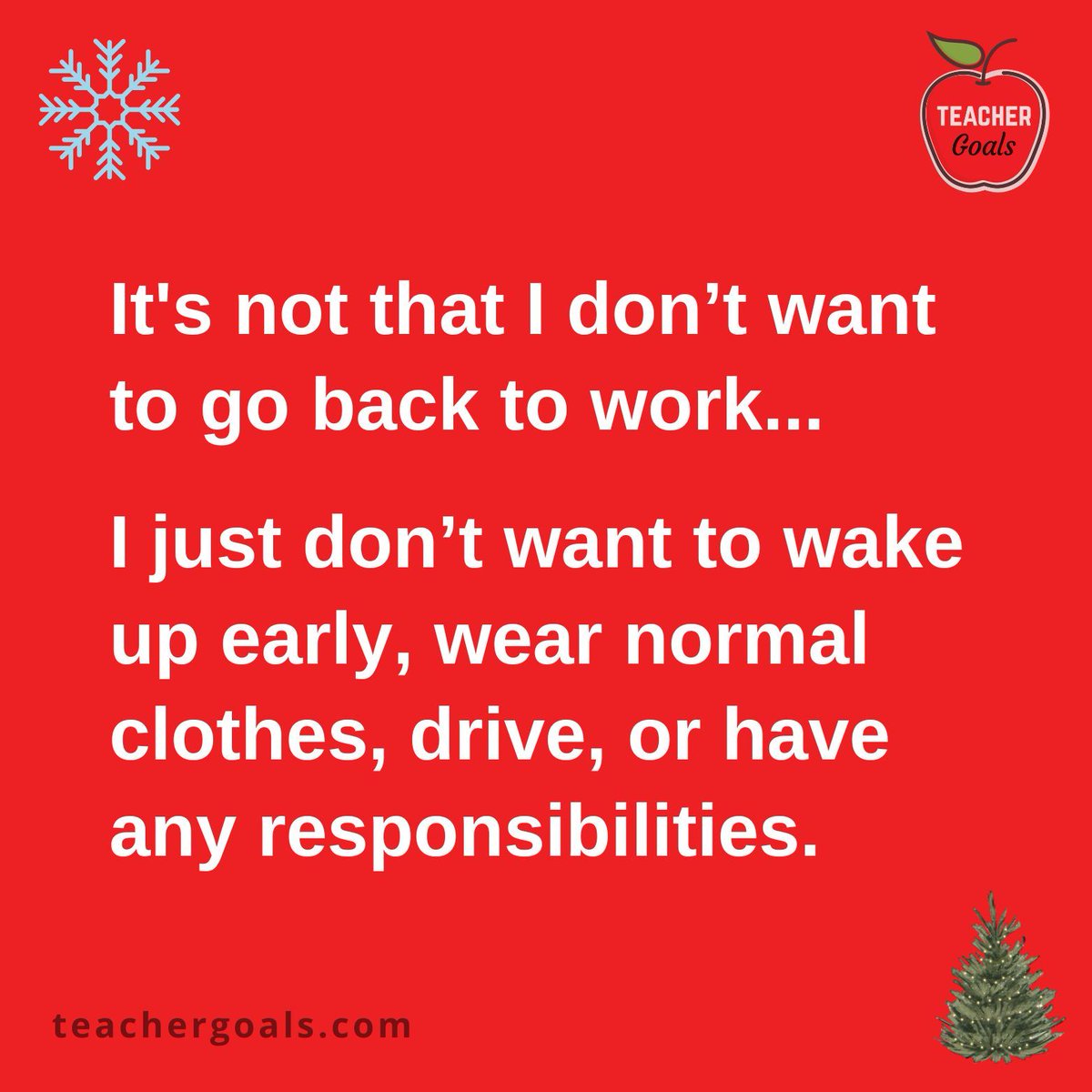
What we do matters. 🧡
TeacherGoals tweet media
English
2
76
238
11.2K
Cheryl Dick retweetledi
𝐁𝐫𝐚𝐝 𝐉𝐨𝐡𝐧𝐬𝐨𝐧
Australia just voted to ban social media for kids under 16. And honestly… this might be the most important education story of the year. They didn’t do it to be strict. They did it because the evidence keeps piling up: • higher anxiety and depression • increased loneliness even though kids seem “more connected” • attention and focus problems • sleep disruption from doom scrolling and blue light • body image struggles, especially for girls • more bullying and social comparison • rising self harm risks as time online increases • kids losing real world coping skills because everything is filtered and performative • addiction like patterns… dopamine hits, withdrawal, compulsive use For years, society raised age limits on things that harm kids: alcohol, cigarettes, driving, tanning beds in most states, even energy drinks in some countries. Now we’re staring at a new question: Should the digital world have age limits too? As educators and parents… what do you think?
English
21
80
384
16.3K
Cheryl Dick retweetledi
Benny Johnson
Benny Johnson@bennyjohnson·
Chevrolet has outdone themselves once again with their new profoundly emotional, pro-family Christmas commercial. Chills from beginning to end. This is what it’s all about. Be ready to cry.
English
2.4K
10.7K
60K
2.1M
Cheryl Dick retweetledi
John Perry
John Perry@jperry_nixa·
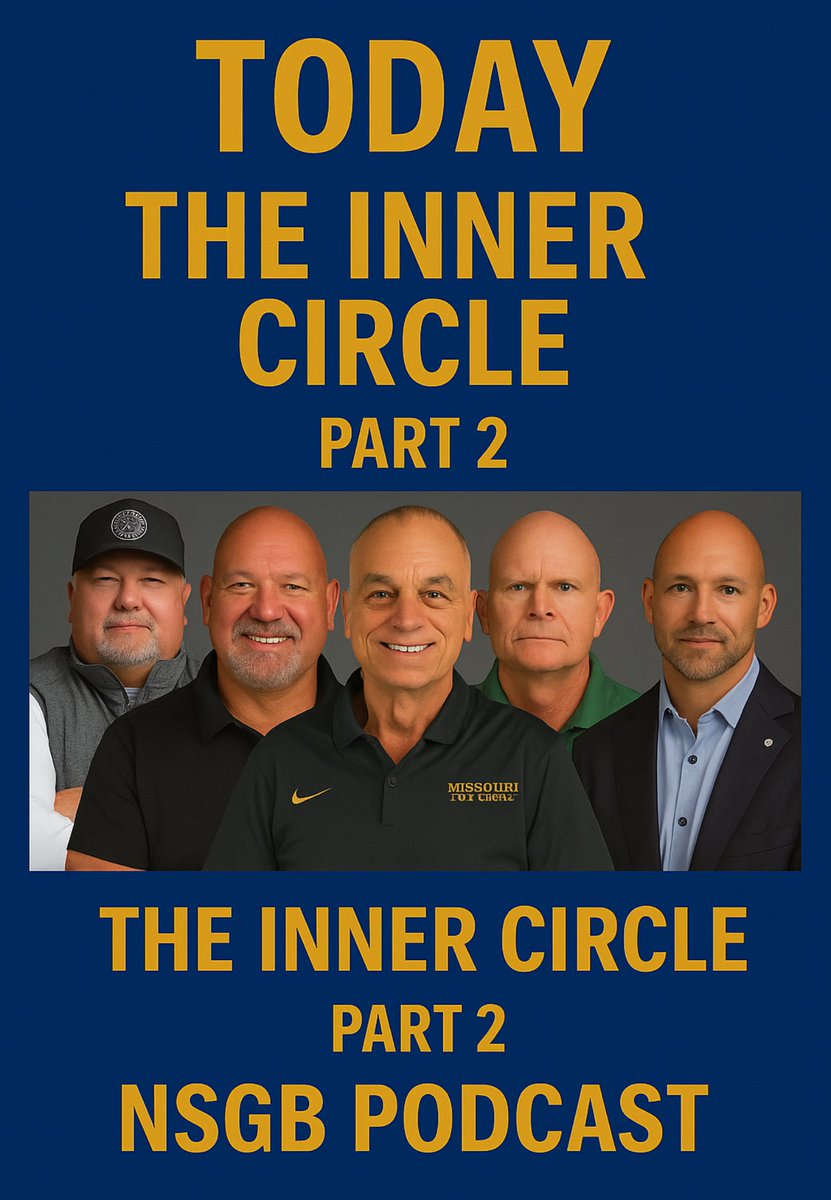
Find Your Inner Circle podcasts.apple.com/us/podcast/nev… Gothe once said, “Tell me who you consort with, and I will tell you who you are.” Your circle matters more than you think. Surround yourself with people who challenge, inspire, and understand you—those who push you to grow, expose you to new ideas, and hold you accountable when comfort whispers your name. Seneca advised, “Associate with those who are likely to improve you; welcome those you are capable of improving.” That’s how iron sharpens iron. The most devastating alternative? The graveyard of potential—the place where talented people ended up in the wrong group. A gifted young mind falls in with the wrong crowd. An athlete gets surrounded by “yes people” and drifts into complacency. A leader stops growing because no one around them tells the truth. You rarely see someone become great alone— but you often see great potential wasted by the wrong company. Birds of a feather flock together. Choose your flock wisely. They’ll either lift you higher—or drag you down. #NeverStopGettingBetter #InnerCircle #GrowthMindset #Leadership #Accountability #IronSharpensIron #ChooseWisely #PersonalGrowth #HighPerformance #MindsetMatters
John Perry tweet media
English
0
2
9
814
Cheryl Dick retweetledi
John Perry
John Perry@jperry_nixa·
BEST LIFE HACKS I KNOW If you want to win the day, you’ve got to win the morning. One of the true cheat codes in life is getting a jump start on the day before the rest of the world wakes up. I’m up at 5:00 AM. Coffee on. Book in hand. Gratitude journal open. For the next 60–90 minutes, I pour great things into myself—because when it counts, I want to be able to pour value out to others. I rotate through 2–3 books at a time, taking in wisdom, perspective, and mindset fuel. Those quiet early hours sharpen me mentally, spiritually, and emotionally. It’s the best investment I can make. Another life hack? Spend ZERO energy on things you can’t control. No BCD — No Blaming, No Complaining, No Defending. Don’t waste time comparing, complaining, or rehashing the past. It steals your energy. Turn yourself in the right direction and take the next best action toward a solution. Energy toward excuses is energy you lose from progress. How you do anything is how you do everything. No BCD. Find solutions. Add value. Be a shining star for others. Never Stop Getting Better. ⭐️
John Perry tweet media
English
1
3
12
1.1K
Cheryl Dick retweetledi
Collin Rugg
Collin Rugg@CollinRugg·
Erika Kirk’s entire speech today at Charlie Kirk’s memorial service. I would encourage every American to watch this. One of the most impactful speeches I’ve ever heard.
English
362
5.2K
30.7K
810.8K
Cheryl Dick retweetledi
𝐁𝐫𝐚𝐝 𝐉𝐨𝐡𝐧𝐬𝐨𝐧
If education were only about test taking, schools would already be obsolete. With the internet in our pockets, every fact, formula, and answer is just a click away. We don’t need classrooms to compete with search engines. But education has never been about filling in blanks or bubbling the right letter. At its best, education is not just an academic pursuit—it is a human one. It is the art of cultivating wisdom, not just collecting knowledge. It is learning how to think, not simply what to know. Education is where students wrestle with ideas, not just memorize them. It is where they encounter mentors who see their strengths, draw out their talents, and ignite a vision of what’s possible. It is where they learn to collaborate, create, question, and communicate. It is about resilience when things go wrong, empathy when others struggle, and courage when the world demands more than easy answers.
English
1
39
97
9.9K