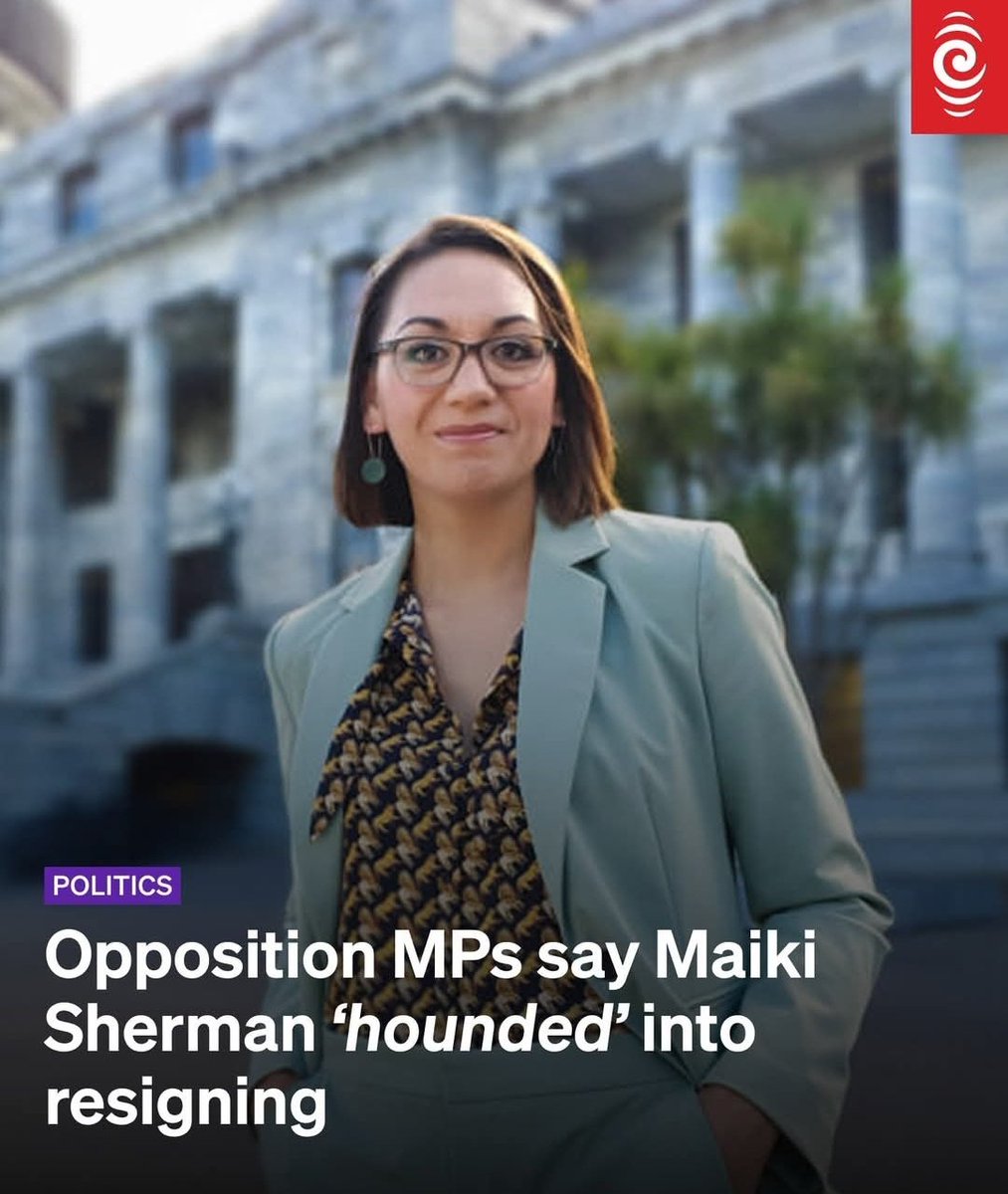
@the_salty_one_ @connan_james If she got a payout, she wasn't hounded. Was there a payout @PaulGoldsmithMP ?
English
Choice NZ
6.1K posts
@Choice_NZ_Party
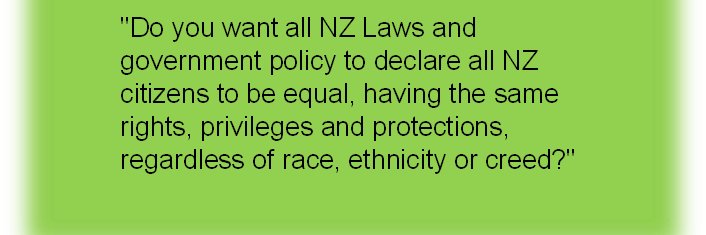
True democracy gives maximum power to informed voters. Democracy doesn't need a Status Quo Uni-party and its Hive-Mind. It needs Direct-Democracy & simplicity


"Ivermectin is COMPLETELY safe." "3.7 Billion doses of Ivermectin have been given to human beings...and after Penicillin, it has had the GREATEST influence on the health of humanity." - Dr Paul Marik, MD
Claiming to be “one of the most democratic parties ever” while supporting the entrenchment of separate Māori seats in law. If constitutional arrangements are going to be permanently locked in, New Zealanders deserve a serious national conversation before politicians attempt to entrench them in law.
On Monday, Arian and I head to Wellington to push back on a bill that quietly expands police power in ways that should concern every New Zealander. As it stands, the Policing Amendments Bill gives police broad authority to collect and record information with almost no clear limits. Vague terms like “reasonable” and “may” leave the door wide open for excessive data collection, with little clarity on how long that data is kept or how it is used. It doesn’t stop there. The bill also expands police powers to shut down roads and public spaces, raising serious questions about what this could mean for protests and public dissent, especially alongside the Government’s proposed move-on orders. Our rights to privacy and freedom of assembly are in the crosshairs. We are going to make sure these risks are heard clearly. Let me be clear. At PILLAR we are not anti-police. Police play a vital role in a free society. But trust in policing is under real strain, and it is not hard to see why. Over the past two years, New Zealand has seen hundreds of documented cases of misconduct, abuse of power, and investigative failure. In 2025 alone, the Independent Police Conduct Authority recorded more than 150 cases. Dozens more have already emerged in 2026. These include unlawful arrests, excessive force, misuse of police databases, fraud by officers, and failures to properly investigate serious allegations. At the highest levels, we’ve seen some of the most serious policing scandals in recent history. A Deputy Police Commissioner faced serious allegations, yet leadership failed to act decisively. Investigations were delayed. At points, it appeared the institution was being protected ahead of justice. At the same time, deeper systemic issues are emerging. Tens of thousands of breath tests falsely recorded. Internal direction not to investigate certain crimes. And now, proposals to expand surveillance powers even further. Taken together, this is not a series of isolated incidents. It points to a pattern. Weak accountability. Institutional protection. Growing power without sufficient safeguards. So here is the real question: If those entrusted to uphold the law are not consistently held to it, who is? What police need is reform. They need clarity. And that clarity should not come in the form of expanded powers. At its core, this is about a deeper issue. Safetyism. The expressed mission of our police is “safer communities.” To steal from one of Americas founding fathers, Ben Franklin, he said — "Those who would give up essential Liberty, to purchase a little temporary Safety, deserve neither Liberty nor Safety." New Zealanders deserve freer communities. Risk minimisation is not the same as justice. Pre-emptive policing is not the same as protecting a free society. And police surveillance and data abuse serves nobody We will be making that case in Wellington.


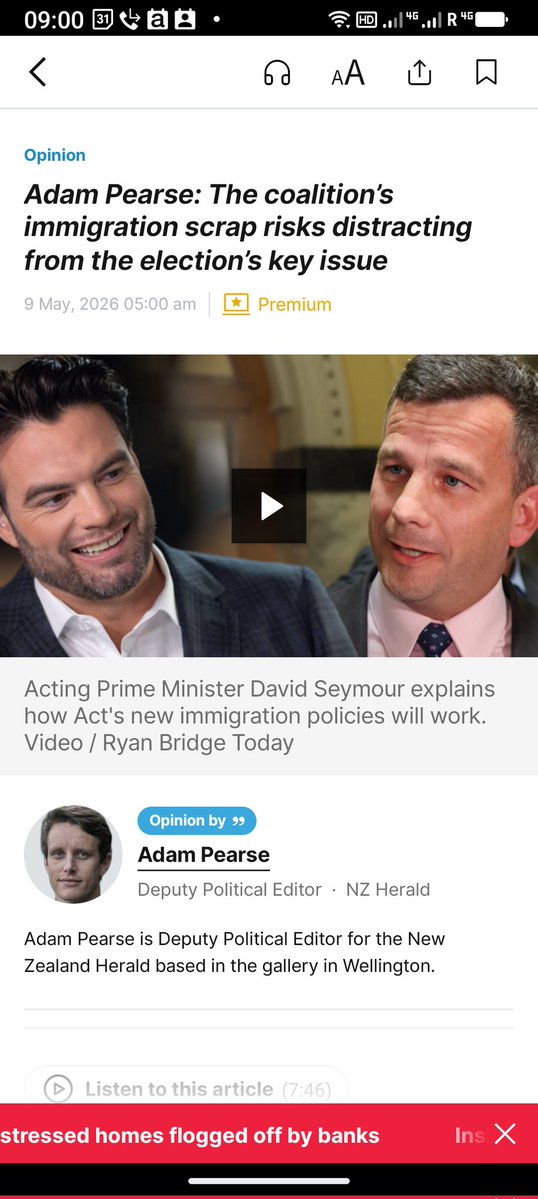
NZ democracy is on a precipice, and extremely vulnerable. How is that you ask? 1. The NZ Electoral Commission allows voter theft via loose rules, and abandoning photo voter ID. The Electoral Commission also self-reports how well it is doing (!). 2. NZ Media is bought and biased, open to political and foreign influence. 3. Existing political parties get all the money for promoting their policies. And all the airtime. It has been impossible for a new party to get over the 5% threshold since MMP started many many years ago. 4. The Minister of Media, who is also the media in charge of the Electoral Commission, has done nothing about election integrity issues and media bias. 5. Large government departments are now ignoring government and MP policy directives. 6. Many biased government bodies and departments have exited, and are boycotting the largest, and most open political platform (X), in order to control political debate. 7. @nzpolice are being used to suppress free speech via illegal monitoring of social media, and harassing those involved in political debate the police don't like. 8. Race based policies have increased instead of being removed. 9. Consultation on legislation is now tokenism. The consultation periods are too short, the review periods are too short, and select committees are loaded with people who have already decided the result. 10. The Woke West are colluding and proffering a globalist narrative, with different countries "coincidentally" saying almost exactly the same words in policy announcements. 11. Intra party democracy is almost dead. The party leaders are autocrats, demanding absolute loyalty and no debate. That's not healthy. 12. Back room deals between parties and other governments (and indeed large pharma corporates) have been secretive and not transparent. Results presented as a fait accompli. Examples: UN pact for the future, India FTA, Ardern with BlackRock and Gates, 13. Non-agenda-conforming parties run the risk of being isolated. For example, National could coalesce with ACT and Labour, or ACT, Labour and (whacky) Greens to get their agenda, REGARDLESS of dropping in the polls for not listening to the concerns of their constituency.

🇳🇿 New Zealand's Converging Paths: 🚨 Digital ID & Digital Cash 🇳🇿 NZ is currently walking two parallel paths. The first is the preservation of physical cash (which the Reserve Bank is actively trying to save), & the second is the creation of a Digital ID & CBDC (which the RBNZ is actively investigating) (# Note: source links are on next page below in thread 🧵2/2) The Reserve Bank of New Zealand (RBNZ) is the country's central bank. Here is their official stance on Digital Cash from their own website (source1) "We are looking into Digital Cash because at least 134 countries... are investigating some form of central bank digital currency" The RBNZ "is committed to ensuring cash stays accessible" & will "continue to issue banknotes & coins for as long as kiwi's want to use them" They expect Digital Cash "would be available around 2030" They state they "will not programme Digital Cash" in a surveillance sense & that the system is being designed so they "won't be able to see your transactions" ( 👀 What you think of that is up to you) The Digital ID (RealMe) while currently voluntary, the RBNZ has confirmed that a "verifiable digital identity" would be required to use a CBDC RealMe is already integrated into multiple govt services, incl: Inland Revenue (IRD) , ACC, Emissions Trading Register (ETS), Ministry of Social Development (MSD) (source 5) This means accessing govt benefits ("the dole") already requires a RealMe login, tethering welfare access to a digital ID Other agencies to linked RealMe incl: NZ Transport Agency( NZTA), Police & Firearms, Commerce Commission, Ministry for Primary Industries (MPI), Ministry for the Environment (MFE), DIA Life Events, Electoral Commission BNZ, Westpac, Kiwibank. Given the scale & direction of this integration, it's reasonable to see the link between RealMe & a future CBDC is a central point of analysis. RealMe is currently undergoing technical upgrades through 2026‑2027. The system is designed to issue a "unique digital pseudonym" to protect your identity, but verification is tied to govt‑held data registers If a CBDC requires a RealMe account, your financial transactions become linked to your government ID, creating the potential risk of further enhanced surveillance. (source 4) If the Reserve Bank engaged "Digital Cash" CBDC. This would be a govt‑backed digital dollar, distinct from the money currently in your bank account (source 1) Official Timeline: •2024‑2025: Public consultation (ended June 2025) • By June 2025: Consultation ends •2026: RBNZ decides whether to proceed •2028: Development and prototyping •2030: Potential launch date •Official Stance: The RBNZ says it will not replace cash and claims they "won't be able to see your transactions" The Battle for cash is in Progress: While the digital future is being built, the present is messy. The central bank & commercial banks are pulling in opposite directions. The RBNZ is trying to force banks to keep cash available, but the commercial banks are quietly removing it. The RBNZ’s Plan: The RBNZ is proposing a new standard to force banks to keep cash accessible •Urban: Within 3 km of free cash services •Rural: Within a 30 km drive •Consultation extended to 31 July 2026 •Despite the RBNZ’s efforts, Westpac NZ has already moved forward (source 6) •3 Mar 2026: Westpac removed the ability to withdraw cash from Simple Saver accounts at ATMs. You can only use a card for transfers or balance checks •Banks have pushed back against the RBNZ’s cash proposal, calling it a “huge surprise” & estimating it would cost them around NZ$104M per year (source 6 7 8) 🧵1/2. Thread 🧵2/2 below 👇

$2,467 A WEEK — ABOUT $128,000 A YEAR That is the estimated taxpayer-funded support for one single mother with 13 dependent children, before any extra hardship, disability, childcare, food, school, emergency housing, or one-off assistance. Core estimate: • Sole Parent Support: $521.52 • Family Tax Credit: $152 for eldest child • Family Tax Credit: 12 x $124 = $1,488 • Accommodation Supplement: up to $305 Total: $521.52 + $152 + $1,488 + $305 = $2,466.52 per week That is about $128,000 per year. Punchline: At 13 children, the welfare system is no longer a safety net. It is a full-time taxpayer-funded income. stuff.co.nz/nz-news/360975…
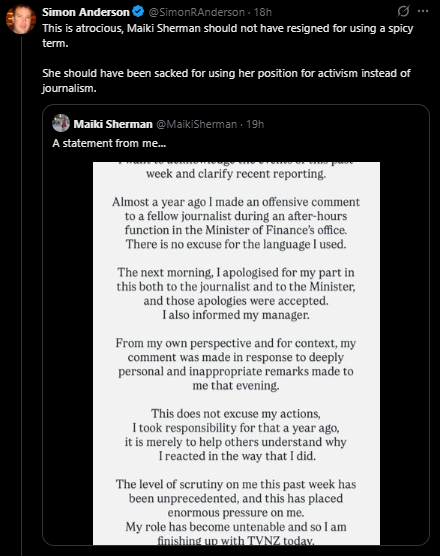
A statement from me…