
Christophe Noblet retweetledi
Christophe Noblet
7.9K posts

Christophe Noblet
@ChristopheSW5
🇫🇷 🇬🇧 🇪🇺🏃🚴🍷🔶 Promoted by C Noblet (Liberal Democrats), at 1 Vincent Square, SW1P 2PN
Kensington & Chelsea, London Katılım Şubat 2011
4.3K Takip Edilen556 Takipçiler

Christophe Noblet retweetledi

A UK-EU Customs Union is a vital first step in rebuilding our relationship with Europe.
MPs must be free to vote tonight for what is best for our economy and our country.
Ed Davey@EdwardJDavey
I’ve written to the Prime Minister urging him to give Labour MPs a free vote on our amendment to the King’s Speech. A UK-EU Customs Union is a vital first step in rebuilding our relationship with Europe. MPs must be free to vote for what is best for our economy and our country.
English
Christophe Noblet retweetledi

BREAKING: UK waives some Russian oil sanctions, allowing imports of diesel and jet fuel processed in third countries from Russian crude
(most likely supply chain: imports of Indian refined products produced by processing Russian crude).
gov.uk/government/pub…
English
Christophe Noblet retweetledi
Christophe Noblet retweetledi

Christophe Noblet retweetledi

Christophe Noblet retweetledi
I’ve written to the Prime Minister urging him to give Labour MPs a free vote on our amendment to the King’s Speech.
A UK-EU Customs Union is a vital first step in rebuilding our relationship with Europe. MPs must be free to vote for what is best for our economy and our country.


English
Christophe Noblet retweetledi
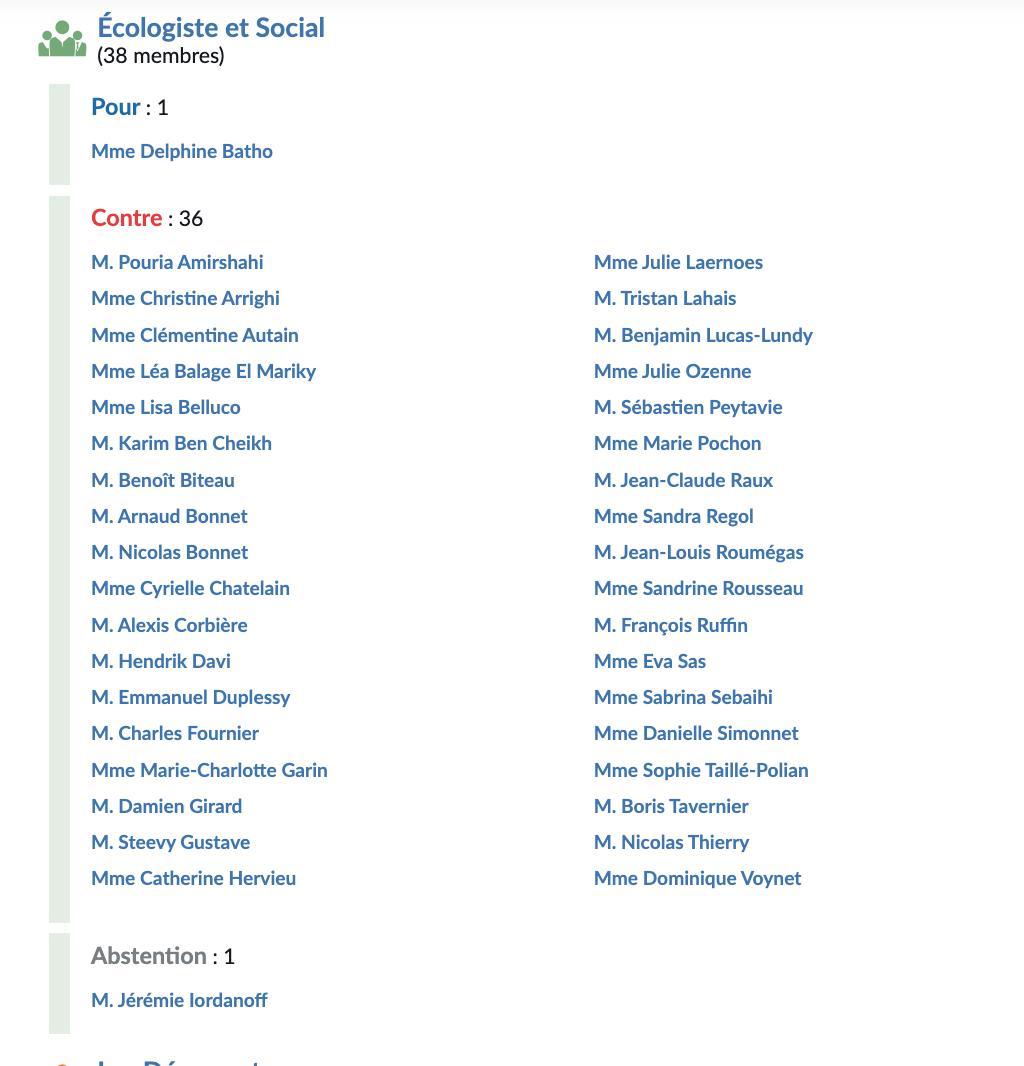
Quatre ans que les Ukrainiens meurent pour notre liberté.
Trump menace d’annexer le Groenland.
Le Charles de Gaulle protège nos approvisionnements en Mer Rouge alors que la guerre fait rage en Iran et bloque le détroit d’Ormuz.
Et pendant ce temps là à l'Assemblée, le @Gpe_EcoloSocial (@EELV) vote CONTRE la LPM aux côtés de LFI.
Pourtant cette loi finance notre défense :
+ 36 Md€ supplémentaires
+400% de munitions téléopérées
+190% d'obus d'artillerie
+ 10 000 appelés au service national
+ 3 350 militaires de carrière
+ Plus de drones, plus d'hélicoptères, plus de radars.
Protéger la France face à ses ennemis, ce n'est pas un débat. C'est notre devoir.
Français
Christophe Noblet retweetledi
Liberal Democrats will always fight for Proportional Representation, to make sure politics works for everyone.
We may have every councillor on some councils, but we don't have every vote. Everyone's voice deserves to be heard and represented.
English
Christophe Noblet retweetledi

Au Royaume-Uni 🇬🇧 (comme ailleurs) ça commence ce vendredi 🗳️
🤝 @Renaissancefde3
CathyLondon 🇨🇵🇬🇧@Cathy1London
Élections Consulaires 2026: le vote en ligne sera ouvert du 22 Mai à 11h au 27 à 11h. Le vote à l'urne dimanche 31 Mai. Chaque voix compte. Les conseillers consulaires jouent un rôle essenciel. Pour en savoir plus sur notre liste: ensemble2026.uk/fr/
Français
Christophe Noblet retweetledi


Christophe Noblet retweetledi

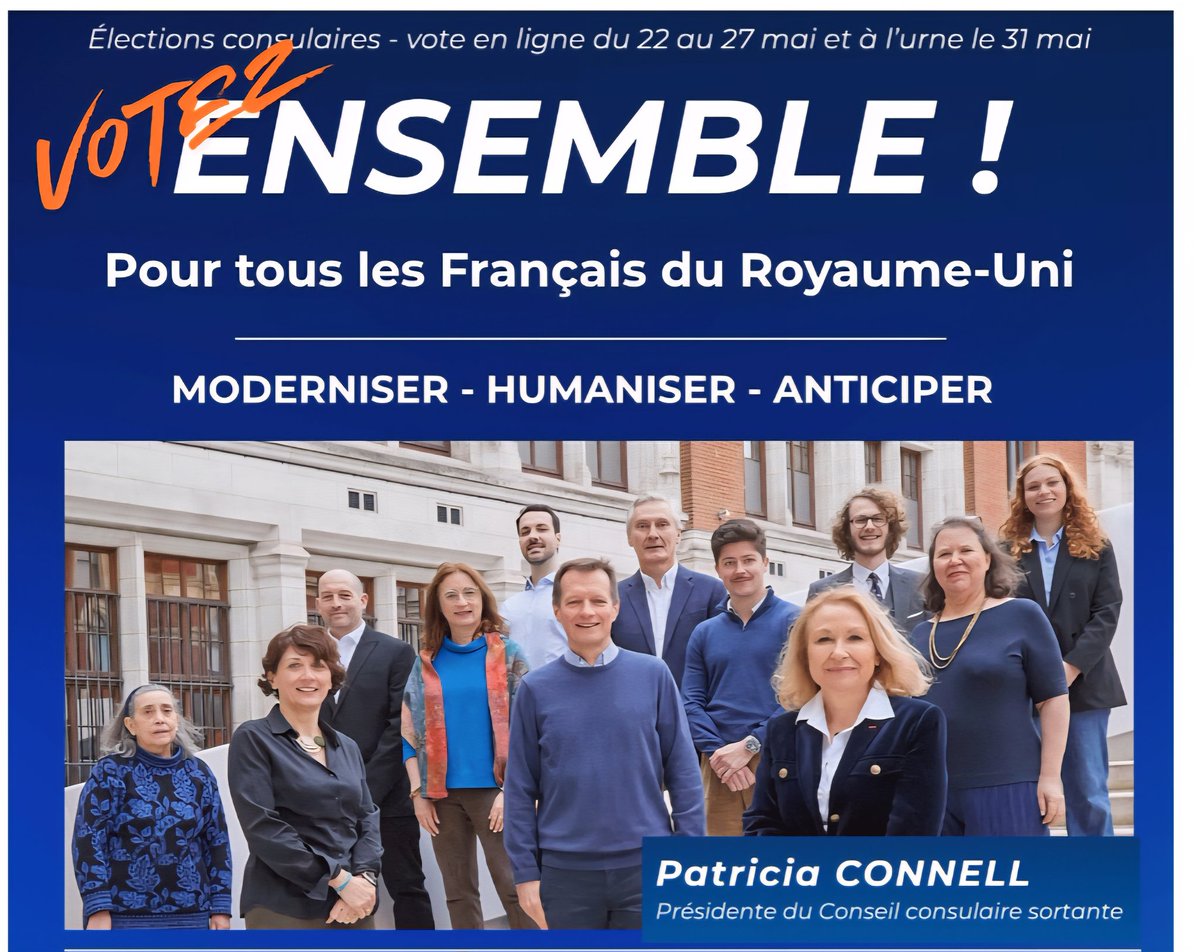
Élections Consulaires 2026: le vote en ligne sera ouvert du 22 Mai à 11h au 27 à 11h. Le vote à l'urne dimanche 31 Mai.
Chaque voix compte. Les conseillers consulaires jouent un rôle essenciel. Pour en savoir plus sur notre liste: ensemble2026.uk/fr/
Français
Christophe Noblet retweetledi
This is a make or break moment for Labour MPs. As we force a vote tomorrow for a UK-EU Customs Union, leadership hopefuls like Andy Burnham are already U-turning on the EU.
Will they back our vote and fix this Brexit chaos, or keep failing the public? It's their choice.
English
Christophe Noblet retweetledi
Christophe Noblet retweetledi

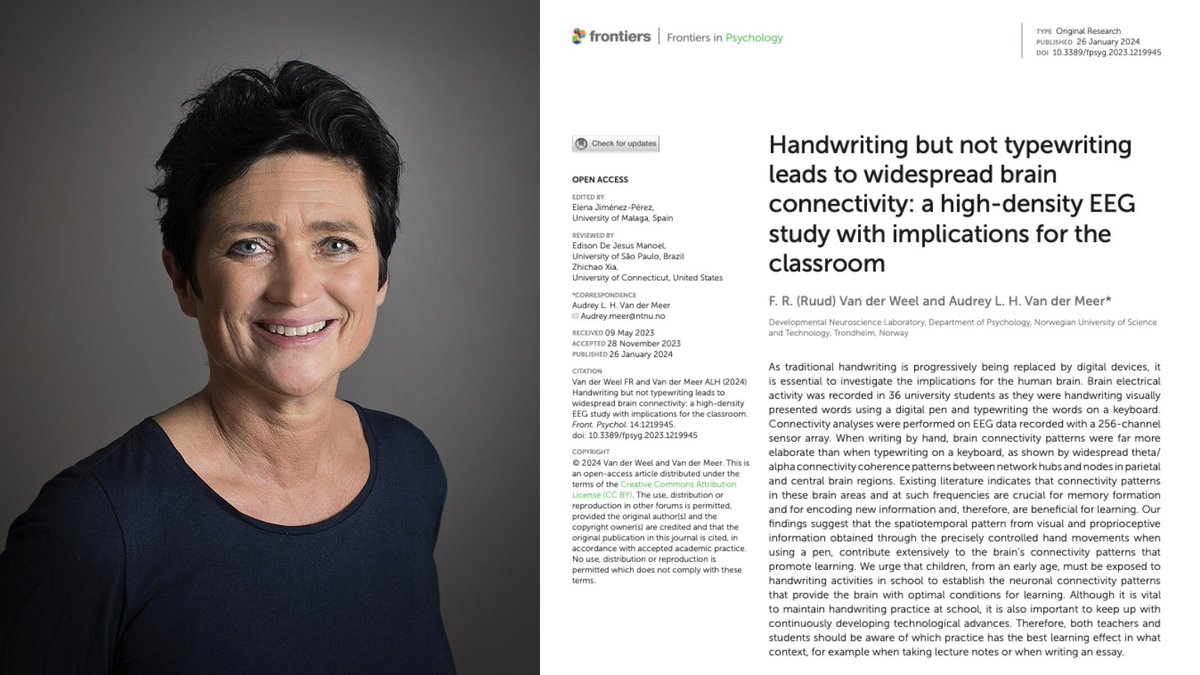
A Norwegian neuroscientist spent 20 years proving that the act of writing by hand changes the human brain in ways typing physically cannot, and almost nobody outside her field has read the paper.
Her name is Audrey van der Meer.
She runs a brain research lab in Trondheim, and the paper that closed the argument was published in 2024 in a journal called Frontiers in Psychology. The finding is brutal enough that it should have changed every classroom on Earth.
The experiment was simple. She recruited 36 university students and put each one in a cap with 256 sensors pressed against their scalp to record brain activity. Words flashed on a screen one at a time.
Sometimes the students wrote the word by hand on a touchscreen using a digital pen, and sometimes they typed the same word on a keyboard. Every neural response was recorded for the full five seconds the word stayed on screen.
Then her team looked at the part of the data most researchers had ignored for years, which is how different parts of the brain were communicating with each other during the task.
When the students wrote by hand, the brain lit up everywhere at once.
The regions responsible for memory, sensory integration, and the encoding of new information were all firing together in a coordinated pattern that spread across the entire cortex. The whole network was awake and connected.
When the same students typed the same word, that pattern collapsed almost completely.
Most of the brain went quiet, and the connections between regions that had been alive seconds earlier were nowhere to be found on the EEG.
Same word, same brain, same person, and two completely different neurological events.
The reason turned out to be something nobody had really paid attention to before her work. Writing by hand is not one motion but a sequence of thousands of tiny micro-movements coordinated with your eyes in real time, where each letter is a different shape that requires the brain to solve a slightly different spatial problem.
Your fingers, wrist, vision, and the parts of your brain that track position in space are all working together to produce one letter, then the next, then the next.
Typing throws all of that away. Every key on a keyboard requires the exact same finger motion regardless of which letter you are pressing, which means the brain has almost nothing to integrate and almost no problem to solve.
Van der Meer said it plainly in her interviews.
Pressing the same key with the same finger over and over does not stimulate the brain in any meaningful way, and she pointed out something that should scare every parent who handed their kid an iPad.
Children who learn to read and write on tablets often cannot tell letters like b and d apart, because they have never physically felt with their bodies what it takes to actually produce those letters on a page.
A decade before her, two researchers at Princeton ran the same fight using a completely different method and ended up at the same answer. Pam Mueller and Daniel Oppenheimer tested 327 students across three experiments, where half took notes on laptops with the internet disabled and half took notes by hand, before testing everyone on what they actually understood from the lectures they had watched.
The handwriting group won by a wide margin on every question that required real understanding rather than surface recall.
The reason was hiding in the transcripts of what the two groups had actually written down.
The laptop students typed almost word for word, capturing more total content but processing almost none of it as they went, while the handwriting students physically could not write fast enough to transcribe a lecture in real time, which forced them to listen carefully, decide what actually mattered, and put it in their own words on the page.
That single act of choosing what to keep was the learning itself, and the keyboard had quietly skipped the choosing and skipped the learning along with it.
Two studies. Two countries. Same answer.
Handwriting makes the brain work. Typing lets it coast.
Every note you have ever typed instead of written went into your brain through a thinner pipe. Every meeting, every book highlight, every idea you captured on your phone instead of on paper was processed at half depth.
You did not forget those things because your memory is bad. You forgot them because typing never woke the part of the brain that would have made them stick.
The fix is the thing your grandmother already knew.
Pick up a pen. Write the thing down. The slower road is the faster one.
English
Christophe Noblet retweetledi
Christophe Noblet retweetledi

🚨 BREAKING: half of people in the UK have lost access to community spaces - with families in the most deprived areas losing them fastest.
Parks, libraries, leisure centres are essential for our mental and physical health.
We all need places to connect. Especially when life is tough.
English
Christophe Noblet retweetledi
La loi Caure pour les médecins victimes du Brexit, c’est fait ! Mon texte a été promulgué ce matin.
Moins de 6 mois après son dépôt, cette loi permet aux médecins formés au Royaume-Uni avant le Brexit d’exercer à nouveau en France, auprès de leur famille et dans nos déserts médicaux.
Six ans que ces médecins attendaient, cette injustice est enfin réparée.

Français
Christophe Noblet retweetledi

🔴HANTAVIRUS OUTBREAK UPDATE 🔴
Number of people infected globally who were not on the ship
0
English
Christophe Noblet retweetledi

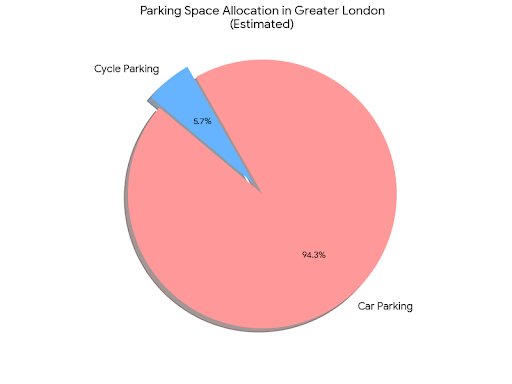
@BobFromAccounts @KateM45 Bike parking in London has failed to keep up with the sharply rising number of bike users.
The ratio of car:bike parking spaces significantly outweighs the ratio of drivers:cyclists.
Obvious solution: widely repurpose just some car parking spaces to bike parking.

English