
Koa Kai (she/her) 👩‍🦽🏳️‍🌈✌️

9.2K posts

Koa Kai (she/her) 👩‍🦽🏳️‍🌈✌️ banner
Koa Kai (she/her) 👩‍🦽🏳️‍🌈✌️

Koa Kai (she/her) 👩‍🦽🏳️‍🌈✌️

@Chronicallykoa

(she/her) #Disabled ♿️ #Patient⚕️#Equal #access to adequate RX med management #pain reduction/care | Ambassador Chronic Disease Coalition | Pissed Off | Trying

On Edge Katılım Temmuz 2015
1.8K Takip Edilen2.2K Takipçiler
Koa Kai (she/her) 👩‍🦽🏳️‍🌈✌️ retweetledi
Andrea Anderson
Andrea Anderson@aander1987·
Can you really become “addicted” to dopamine? Are “dopamine hits” really the phenomena we are being told they are? ? An excellent review of the data by @slsatel: drive.google.com/file/d/167QiB5…
English
2
2
7
102
Koa Kai (she/her) 👩‍🦽🏳️‍🌈✌️ retweetledi
Andrea Anderson
Andrea Anderson@aander1987·
What percentage of people prescribed an opioid for the first time use a very low dose and end opioid therapy quickly? 97% The remaining 3% who do continue using an opioid long term are characterized as having a higher disease burden, with more complexity, and tend to be older. Learn more in the details from this new study, link in the next post: Five-Year Trajectories of Prescription Opioid Use | Pharmacy and Clinical Pharmacology | JAMA Network Open | JAMA Network Question: What are the 5-year trajectories of opioid use following initiation, and what are the characteristics of different trajectory groups? Findings: In this population-based cohort study of 3.47 million adults, 5 trajectories of opioid use were identified. Approximately 3% of individuals were classified to the sustained use trajectory group, which was characterized by individuals with older age, a higher number of comorbidities, and higher use of psychotropic and other analgesic drugs and health services vs other trajectory groups. Meaning: Findings from this study suggest that, although most individuals who commenced prescription opioid treatment had low, time-limited exposure to opioids, the small proportion of adults with sustained or increasing opioid use had greater clinical complexity and treatment needs.
English
6
21
64
908
Koa Kai (she/her) 👩‍🦽🏳️‍🌈✌️ retweetledi
Chad D. Kollas, MD (he/him)
Chad D. Kollas, MD (he/him)@ChadDKollas·
RANT WARNING: Dear fellow physicians, Please cut the crap with the "opioids are bad" trope. It's simpleminded and harmfully stigmatizes patients with high-impact chronic pain. It's ableist. And - much of the time - it's racist (I see you, sickle cell patients). If you're reluctant to prescribe opioids, fine - then don't. And don't project your fears onto those of us responsibly addressing pain care for patients with serious, life-limiting illnesses. We are not drug dealers. I get paid the same whether I prescribe an opioid or not. I don't take money from pharmaceutical companies for research or to prescribe certain drugs. I am not anyone's shill. If you don't know your state's laws for opioid prescribing, admit it - or look them up and learn them. Don't make up stupid💩about prescribing restrictions that don't really exist (and yes, I know some states have misguided hard dosing limits, but not Florida). Don't lie to your patients to hide your ignorance. Opioid therapy isn't for everyone, but there is clearly a group of patients for whom benefits exceed risks or harms. You're not "protecting them from addiction" when you falsely accuse them of misuse, addiction or doctor shopping. Please, please just stop screwing these people - and stop screwing the physicians willing to help them. Signed - Compassionate pain care physicians everywhere who are absolutely done with the systemic disinformation about opioid therapy #hapc #hpm #PainCareCrisis
English
143
349
955
34.7K
Koa Kai (she/her) 👩‍🦽🏳️‍🌈✌️ retweetledi
Oregon Advocate
Oregon Advocate@OregonAdvocate·
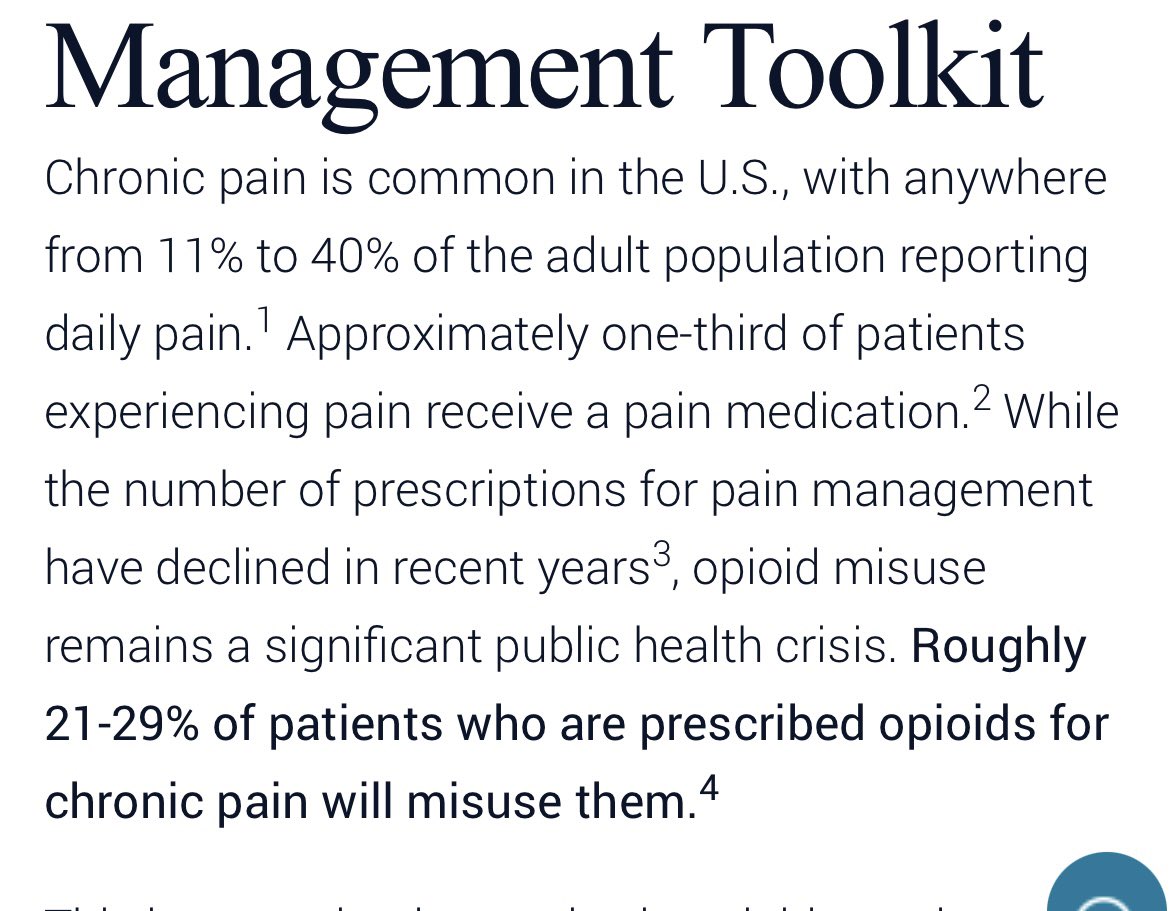
Have you all seen what the AAFP has up on its website? On its page for chronic pain toolkit they state. Y
Oregon Advocate tweet media
English
36
18
55
3.5K
Koa Kai (she/her) 👩‍🦽🏳️‍🌈✌️ retweetledi
Andrea Anderson
Andrea Anderson@aander1987·
Oh but they did. They knew exactly what they were doing. They have a publication (I think 2012) on the rules, process, and considerations CDC must consider when writing/releasing a GL. One specific part details this: “guidelines we release may become policies, rules, or laws, and so CDC must be very conscious of this possibility and write any public guideline with this in mind.”
English
5
10
26
1.7K
Koa Kai (she/her) 👩‍🦽🏳️‍🌈✌️ retweetledi
Jeffrey A. Singer
Jeffrey A. Singer@dr4liberty·
The DEA has not only failed to make things better. It has played a key role in making things worse, even leaving aside the pointless incarceration of people whose only crimes consisted of exchanging politically disfavored intoxicants for money. reason.com/2024/11/14/abo… via @reason
English
3
49
133
7.9K
Koa Kai (she/her) 👩‍🦽🏳️‍🌈✌️ retweetledi
Laird Law PLLC
Laird Law PLLC@DanLairdMD·
LIES TOLD TO AND ABOUT CHRONIC PAIN PATIENTS: 1. Your pain is not real 2. Your pain is not important 3. God wanted you to have pain 4. Pain is good for you 5. Depression caused your pain 6. Your pain means you’re an addict 7. Pain builds moral character 8. Pain helps you heal 9. You have pain because you want disability benefits 10. Your pain helps you manipulate other people 11. Your pain is due to weak moral character 12. You deserve your pain 13. Your pain is due to your race 14. Your pain is due to your gender. And on and on and on…
English
67
232
1K
20K
Koa Kai (she/her) 👩‍🦽🏳️‍🌈✌️ retweetledi
Laird Law PLLC
Laird Law PLLC@DanLairdMD·
Since the early 2000s, a group of self-interested antisocial clinicians has led a vile ad hominem campaign against patients with #ChronicPain. Patients are denied medication, then forced to have invasive procedures that often don’t work. Never in the history of medicine has a patient group been treated so poorly. The dignity and respect due any human being has denied to patients with #ChronicPain. We don’t know the facts of the Mangione case. And violence is never a viable option. However, we need to re-examine how American medicine treats the chronically ill, especially those with chronic pain.
Laird Law PLLC tweet media
English
228
661
3K
160.4K
Koa Kai (she/her) 👩‍🦽🏳️‍🌈✌️ retweetledi
Stefan Kertesz, MD, MSc
Stefan Kertesz, MD, MSc@StefanKertesz·
The important article below by Brian Goldstein focuses on pain refugees Early reports raise the possibility that the murderer Luigi Mangione had significant pain The greater risk among persons with severe pain is not that they harm others. Rather it is that they harm themselves. Pain is a risk factor for suicide We health professionals, our regulators and leaders erred grievously three times over.. ✅In thinking that severe pain would be amenable to quick fixes ✅In advocating policies that rejected the perspectives of people with long-term pain and their families ✅In thinking that simply reducing prescription of opioids would make patients with pain better. The opioid nihilists proved themselves just as myopic and short-sighted as the corporations that induced physicians to prescribe as heavily as they did
Brian Goldstone@brian_goldstone

Here's a piece I reported for @Harpers about the plight of chronic pain sufferers in America. It's story of medical abandonment, destructive drug policy, and the nightmare of untreated pain, as insurers refuse to cover essential care. harpers.org/archive/2018/0…

English
4
27
64
3.7K
Koa Kai (she/her) 👩‍🦽🏳️‍🌈✌️ retweetledi
Chad D. Kollas, MD (he/him)
Chad D. Kollas, MD (he/him)@ChadDKollas·
This @propublica articles suffers from the same problem that affects so many media pieces - it oversimplifies a complex situation for the sake of building a compelling narrative. For example, it mistakenly cites the 2016 CDC Opioid as authoritative (instead of CDC’s 2022 revision) and wrongfully embraces the mythical MME hard limit. While the involved physician was credibly accused of wrongdoing (allegedly treating patients for cancer without a definitive tissue diagnosis), several allegations of impropriety in his opioid prescribing are demonstrably wrong. In an effort to demonize him, prosecutors have created weaknesses in their argument that should impeached by a competent expert witness with expertise in pain care.
ProPublica@propublica

When a travelling doctor questioned why a patient had been receiving dangerous cancer treatments for 11 years, he set off a chain of events that would divide a city and implicate a beloved oncologist in a string of suspicious deaths. propublica.org/article/thomas…

English
5
22
39
1.5K