
Sabitlenmiş Tweet
HildyCat🌻
37.1K posts


HildyCat🌻
@CitizenCda
#NAFO #Ukraine #Canada #NATO #CARNEY !🇨🇦LOVE it or LEAVE it🇨🇦!#NotYour51stState Defamation is a sin:Torah Antisemitism is a SIN:Vatican2 Married RC🩷40yrs
Spaceship Earth Katılım Kasım 2024
3K Takip Edilen822 Takipçiler

@TheBohdanH Therefore as in Canada, minorities are important….We give them a voice.
English
HildyCat🌻 retweetledi

Trump risks Carter-style disaster as he moves to install infamous butcher to lead Iran: Haunting video reveals rooftop killings trib.al/eZYPipW
English
HildyCat🌻 retweetledi



HildyCat🌻 retweetledi


HildyCat🌻 retweetledi

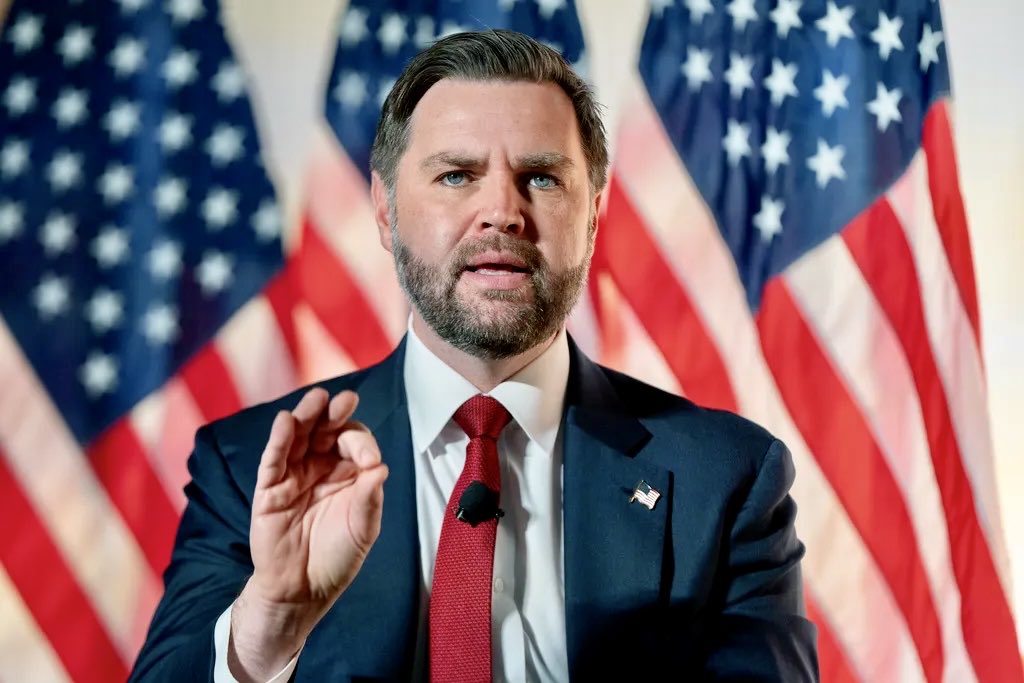
BREAKING: Iran has rejected peace talks with Steve Witkoff and Jared Kushner and indicated a preference for negotiating with Vice President JD Vance, per CNN’s Iranian source. On Day 25 of a war that Iran publicly says does not involve any negotiations, Tehran is now selecting which American it will not admit to speaking with.
This is the sixth communication channel in 48 hours. The FM denies all contact. Ghalibaf calls it fake news. Araghchi says Iran never asked for a ceasefire. The IRGC declares complete victory. An unnamed source tells CNN that outreach has occurred and Iran will listen to “sustainable” proposals. And now a separate signal specifies which envoy Tehran prefers. Six channels. Six messages. Six audiences. One regime simultaneously denying talks, conducting talks, and choosing its preferred negotiating partner in the talks it says do not exist.
The Vance preference is not random. Read the signal.
Witkoff is a real estate executive turned special envoy. His portfolio is transactional: swap concessions for access, close quickly, move on. Kushner is the architect of the Abraham Accords and the figure most associated with Israeli normalisation in the Trump orbit. His presence at any negotiation signals Israeli interests at the table. Iran’s rejection of both is a rejection of what they represent: a quick transactional deal weighted toward Israeli security objectives.
Vance is different. His foreign policy record in the Senate was built on “America First” skepticism of endless Middle East wars. He opposed open-ended military commitments. He focused on China as the primary strategic threat. He defended Trump’s current Iran operations as targeted and limited, not a prelude to occupation. And he backed the 5-day pause explicitly. Iran reads Vance as the figure in the Trump administration most likely to accept a deal that ends the war without demanding permanent Iranian capitulation on enrichment. The preference is not personal. It is doctrinal. Iran wants to negotiate with the man whose worldview most closely aligns with “declare victory and leave.”
Axios reports that Vance already briefed Netanyahu on Monday about the components of a possible agreement. An Israeli official confirmed that mediating countries were trying to convene a meeting in Islamabad with Ghalibaf representing Tehran and Witkoff, Kushner, and possibly Vance representing Washington. Iran is now signalling that “possibly” should become “necessarily.” If Vance is not at the table, Tehran will not sit at it. Or rather, Tehran will continue to deny the table exists while simultaneously specifying who should sit at it.
The preference is also a wedge. By signalling one American is acceptable and two are not, Iran forces the administration to either elevate Vance, potentially sidelining Kushner and reducing Israeli influence, or reject the preference and lose the channel. The signal is simultaneously a negotiating demand and a test of US internal cohesion. Iran is not just choosing an envoy. It is probing which seam opens.
Trump told reporters Tuesday that the US is “in negotiations right now” and that Iran has “agreed they will never have a nuclear weapon.” Iran’s state media denied any such agreement exists. The 15-point plan demands zero enrichment. Iran’s NPT Article IV position says enrichment is “inalienable.” And now the country that denies all contact has specified which vice president it prefers to deny contact with.
The pause expires Saturday. The envoy preference adds a new variable to an equation that already had six contradictory signals, five communication channels, three clocks, and zero confirmed agreements. The molecules do not have envoy preferences. They have chemistry. And the chemistry has not changed.
open.substack.com/pub/shanakaans…
English

HildyCat🌻 retweetledi

HildyCat🌻 retweetledi

WATCH: I joined @Morning_Joe to discuss my latest @politico reporting that the Trump administration is eyeing an insider in Iran, not Reza Pahlavi, as a potential partner.
“We are looking for the Delcy Rodríguez of Iran,” one official told me.
The thinking: avoid regime collapse and instead work with a power broker inside the system, even one tied to the IRGC.
English
HildyCat🌻 retweetledi

HildyCat🌻 retweetledi

The Treasury just declared the U.S. insolvent. The media missed it.
fortune.com/2026/03/23/us-…
English
HildyCat🌻 retweetledi
BREAKING: A Russian drone struck a historic building in central Lviv this morning. Structural damage. No confirmed fatalities. Ukrainian air defences intercepted most of the incoming wave but one penetrated to the city centre of a UNESCO World Heritage site 70 kilometres from the Polish border.
Trace the money that built the drone.
Russia’s daily oil export revenue has surged from $800 million to $1.2 to $1.5 billion since the Strait of Hormuz closed on February 28. The price spike was caused by a war between Iran and Israel that Russia had no operational role in launching. That additional $400 to $700 million per day funds munitions, mobilisation, and the Shahed-type drones that Iran sells to Russia under their Comprehensive Strategic Partnership Treaty signed January 2025. The drone that struck Lviv was likely manufactured in an Iranian facility using Chinese components, purchased with Russian oil revenue inflated by a Gulf war, and launched from occupied territory in a conflict that has lasted four years. Three countries contributed to the weapon. A fourth country’s war paid for it.
This is the dual-war matrix. The Hormuz closure spikes global oil to $101 per barrel. Russia reroutes crude to Asia through shadow fleets, bypassing the $60 G7 price cap that was designed for a different price environment. The revenue surplus funds continued operations in Ukraine while the world’s attention is consumed by the Iran theatre. Russia fights one war and profits from another. The drone over Lviv and the toll booth in Hormuz are connected by the same barrel of oil sold at the same inflated price to the same Asian refineries through the same shadow fleet.
Ukraine is striking back at the source. Drones hit the Primorsk Baltic terminal, Russia’s largest oil export hub. The Afipsky refinery halted processing. Gazprom compressor stations on TurkStream and Blue Stream came under attack. Early March oil exports dropped 14 percent. Ukraine understands the circuit: degrade the infrastructure that generates the revenue that funds the war against it. But the degradation arrives inside a price environment where Russia exports 14 percent fewer barrels at a price 50 percent higher. The arithmetic still favours Moscow. Ukraine damages the pipes. The strait inflates the price. The net revenue rises.
Lviv is not a military target. It is a 13th-century city with cobblestone streets and baroque churches whose population queues for coffee in cafes that survived the Habsburgs and the Soviets. The drone that struck its centre this morning carried a message about what happens when two wars run simultaneously and one funds the other through a commodity price mechanism no sanctions regime was designed to address.
Eight countries are rationing fuel because of the Hormuz closure. The UK is convening COBRA. The Philippines declared a one-year emergency. South Korea is banning government vehicles. Japan’s bond market is cracking. The Fed cannot cut. The ECB is hiking. Qatar just declared force majeure for five years. And in Lviv, a drone built in Iran, sold to Russia, paid for by Gulf oil rents, struck a building that has stood since before any of the nations involved in this war existed.
The war in the Gulf funds the war in Europe. The war in Europe degrades the infrastructure that funds the war in Europe. And the molecules that could resolve both, the oil that sets the price, the gas that powers the grid, the fertiliser that feeds the planet, remain trapped behind a strait, a toll booth, and a set of sealed packets that do not require permission from anyone to continue operating.
open.substack.com/pub/shanakaans…
English
HildyCat🌻 retweetledi
