Classiq Technologies

1.9K posts

Classiq Technologies banner
Classiq Technologies

Classiq Technologies

@ClassiqTech

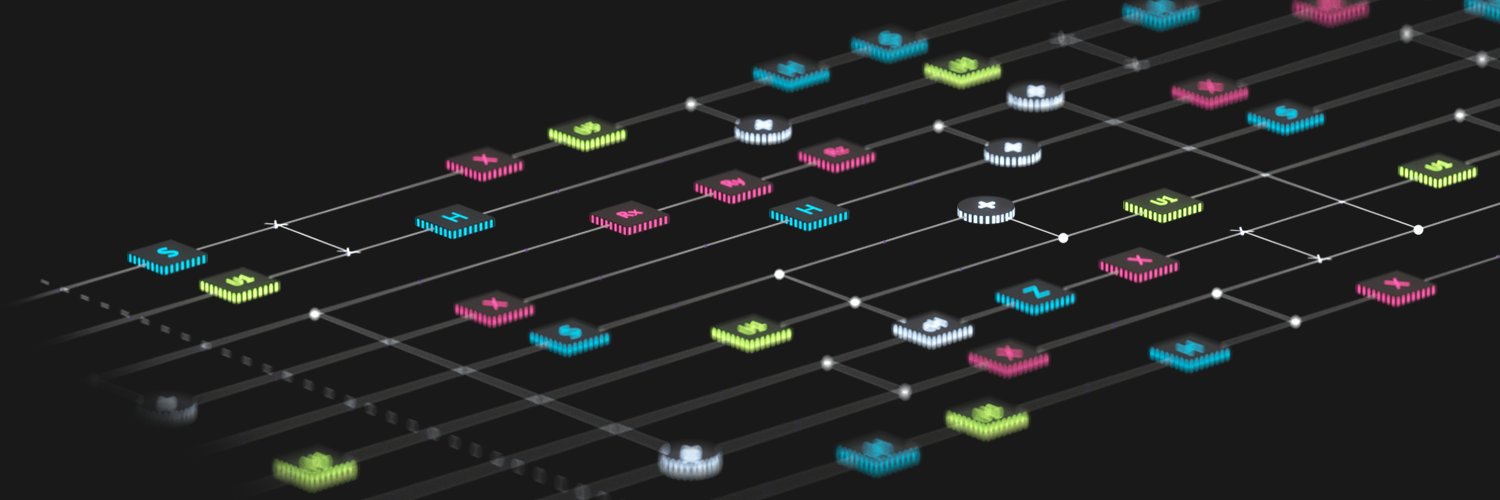
The Quantum Computing Software Engineering Platform Workflow: agentic AI experts, circuit optimization, benchmarking, hardware portability. #quantumcomputing

Tel-Aviv, Israel Katılım Aralık 2020
934 Takip Edilen3.4K Takipçiler
Classiq Technologies
Classiq Technologies@ClassiqTech·
The June edition of the Release News is out! June’s releases introduce two new AI-powered ways to develop quantum algorithms with Classiq: the Quantum Engineer plugin for Claude, Cursor, and Codex, and the new no-code Classiq Assistant, available directly within the Classiq platform. Beyond the new AI capabilities, the releases expand simulation capabilities and quantum chemistry workflows with the new NVIDIA DGX Statevector Simulator and Wavefunction-in-DFT Embedding, while also introducing streamlined remote execution, enhanced circuit visualization, alongside many other enhancements and additions. Check out the June Release News here: docs.classiq.io/release-news/r…
Classiq Technologies tweet media
English
0
2
4
153
Classiq Technologies
Classiq Technologies@ClassiqTech·
⚽ Every controversial offside call starts with the same question: "Where was the attacker when the ball was played?" It sounds like a single observation. It isn't. The official is trying to determine two events occurring simultaneously at different points in space. Human vision has limits. Attention has limits. Measurement has limits. The result is uncertainty. That idea sits at the heart of modern physics. Quantum mechanics tells us that observation is not a passive act. The information we obtain depends on how we measure the system. A quantum computer exploits this reality. Before measurement, a quantum state can contain information about many possible outcomes. After measurement, we see only one. The engineering challenge is designing the computation so that the outcome we observe is the one we care about. Football officials use VAR to improve measurements. Quantum software engineers design algorithms to make measurements more useful. Different fields. Same lesson. The quality of the answer depends on how you observe the system. #worldcup #physics #quantumcomputing
Classiq Technologies tweet media
English
0
0
2
207
Classiq Technologies
Classiq Technologies@ClassiqTech·
The future of quantum innovation starts in academia. Students and researchers need access to the same tools used to design and deploy real quantum applications. That's why we've launched the new Classiq Academia hub. Through research collaborations, curriculum support, and access to industry-grade quantum software, we're helping universities bridge the gap between quantum theory and practical application. From undergraduate courses to advanced research projects, Classiq enables users to design, optimize, analyze, and run quantum programs across leading quantum platforms. Explore: 🎓 Education Programs 🤝 Research Collaborations ⚡ Quantum Software Platform 🚀 Real Quantum Hardware Access 🔗classiq.io/academia
Classiq Technologies tweet media
English
0
0
2
221
Classiq Technologies retweetledi
NVIDIA AI Infrastructure
NVIDIA AI Infrastructure@NVIDIAAIInfra·
Scaling hybrid workloads with NVIDIA CUDA-Q is enabling teams across the quantum ecosystem to explore real-world impact using GPU-accelerated simulation. 🚀 ⚡ Aegiq and @Quantum_Motion are advancing quantum chemistry workflows with CUDA-Q. ⚡ Classiq is drawing on CUDA-Q to explore new quantum applications in finance. ⚡ FirstQFM has demonstrated quantum foundation models on the Leonardo supercomputer. ⚡ Eclipse Qrisp (pioneered by @Fraunhofer FOKUS) and @Qilimanjaro are powering their work with CUDA-Q. ⚡ qBraid now serves as a CUDA-Q target, expanding access to a broad set of QPU providers. ⚡ QCentroid is building QuantumOps workflows on CUDA-Q, driving more efficient applications development. ⚡ Welinq is pairing its distributed quantum compiler with CUDA-Q for GPU-accelerated circuit verification. The path to useful quantum computing is hybrid—powered by accelerated simulation. Learn more: nvda.ws/4eXPXIu #ISC26
NVIDIA AI Infrastructure tweet media
English
2
26
130
5.1K
Classiq Technologies
Classiq Technologies@ClassiqTech·
Classiq, Hatch and AWS completed a quantum-classical computational chemistry proof-of-concept (PoC), executed via Amazon Web Services (AWS) and Braket, demonstrating a workflow for estimating molecular binding energy, a key step in understanding how small molecules interact with protein targets. aws.amazon.com/blogs/quantum-… @awscloud
English
0
0
2
245
Classiq Technologies
Classiq Technologies@ClassiqTech·
Quantum computing is gaining real momentum in financial services, and for good reason. Many of the sector’s hardest problems are computational: - portfolio optimization, derivatives pricing, risk analysis, Monte Carlo simulation, and scenario modeling. In these applications even incremental improvements in speed, scale, or modeling flexibility can have significant impact. In a new blog co-authored by Classiq and NVIDIA, we look at how high-level quantum programming and GPU acceleration can help financial institutions explore quantum workflows today. classiq.io/insights/quant…
Classiq Technologies tweet media
English
1
1
8
665
Classiq Technologies
Classiq Technologies@ClassiqTech·
⚽ What does Lionel Messi have in common with a quantum computer? Decision-making under complexity. Every time Messi receives the ball, he faces an extraordinary number of possibilities. Pass left. Pass right. Dribble. Shoot. Slow the game down. Speed it up. And that's just the first decision. Each choice creates new possibilities. Each possibility depends on the position and movement of 21 other players. The number of potential outcomes grows rapidly. The world's best players evaluate these options in seconds. Not by calculating every possibility, but through experience, intuition, and pattern recognition developed over thousands of hours on the pitch. Many of the world's hardest business and scientific challenges share a similar structure. How should a fleet be routed? How should resources be allocated? How should a supply chain adapt to changing conditions? These are optimization problems. As the number of variables grows, finding the best solution becomes increasingly difficult. This is one reason quantum computing is so exciting. It offers new approaches for exploring complex solution spaces that quickly become too large for humans, and often challenging for classical computers. The World Cup showcases some of the best decision-makers on the planet. Quantum computing is helping us build new tools for tackling decisions at an entirely different scale. ⚽🔬 #WorldCup2026 #QuantumComputing #Optimization #Physics #Science #Classiq photo by Lev Radin / Shutterstock.com
Classiq Technologies tweet media
English
0
0
3
214
Classiq Technologies
Classiq Technologies@ClassiqTech·
🇩🇪 While Germany takes the pitch at the World Cup, here's a different kind of German legend. A quantum legend: Max Planck was born in 1858 in Kiel, Germany. As a young physicist, he was drawn to the study of heat, energy, and thermodynamics. At the time, many physicists believed the foundations of the field were largely complete. Planck disagreed. He thought there were still important questions to answer. One of those questions involved blackbody radiation, the light emitted by a hot object. Existing theories could not fully explain the experimental results. For years, Planck worked on the problem. In 1900, he proposed a mathematical solution that came with a surprising assumption: energy could only be emitted or absorbed in discrete packets, rather than in a continuous flow. Planck viewed it as a mathematical trick. It wasn't. That idea became the foundation of quantum theory. The constant that emerged from his work, now known as Planck's constant, appears throughout quantum mechanics. It helps define the scale at which quantum effects become important and remains one of the fundamental constants of nature. Albert Einstein later used Planck's idea to explain the photoelectric effect. Niels Bohr incorporated it into his model of the atom. Over time, an entire field grew from the assumption Planck had introduced to solve a single problem. In 1918, he received the Nobel Prize in Physics for his discovery of energy quanta. Planck spent much of his career studying the limits of classical physics. In the process, he helped open the door to an entirely new understanding of nature. That's quite a legacy.
Classiq Technologies tweet media
English
0
0
5
257
Classiq Technologies
Classiq Technologies@ClassiqTech·
As Team USA takes the field at football's biggest tournament, we're kicking off our World Cup of Quantum Legends series with a scientist whose ideas helped inspire an entirely new way of computing: Richard Feynman. Richard Feynman was born in 1918 in Queens, New York. As a teenager, he developed a reputation for fixing radios. He would diagnose problems by reasoning through how the circuits worked, often without schematics or instructions. That approach stayed with him. He studied physics at MIT and Princeton, then joined the Manhattan Project at Los Alamos during World War II, where he worked alongside many of the leading physicists of the era. After the war, Feynman focused on a problem that was frustrating physicists: how to accurately describe the interaction between light and matter. His work helped build quantum electrodynamics (QED), one of the most successful theories in the history of science. He also introduced Feynman diagrams, a simple visual language that transformed how physicists calculate and think about particle interactions. They remain a standard tool in physics more than 75 years later. Feynman was also one of the first physicists to clearly articulate a challenge that still drives quantum computing today: simulating nature is hard for classical computers. In a famous 1981 lecture, he argued that a quantum system would be best simulated by another quantum system, an idea that helped inspire the field of quantum computing. In 1965, he received the Nobel Prize in Physics for this work. But his influence extended far beyond research. Through his lectures, books, and teaching, Feynman became one of the most recognizable physicists of the twentieth century. Generations of students learned physics through his explanations, many of which are still used today. A teenager who liked fixing radios went on to help explain some of the fundamental interactions of the universe.That's quite a career.
Classiq Technologies tweet media
English
0
1
7
200
Classiq Technologies
Classiq Technologies@ClassiqTech·
⚽ The World Cup Starts Today! And it's not only the biggest event of the year is may also be the biggest physics experiment on Earth. Every match is a showcase of forces, motion, energy, and precision. Take a free kick. When a player strikes the ball with spin, the airflow around the ball changes. One side experiences lower pressure than the other, creating a force that bends the ball through the air. Physicists call this the Magnus effect. Football fans call it magic. The beauty of the World Cup is that it makes physics visible. Billions of people watch the same laws of nature play out in real time, whether they realize it or not. A bending free kick. A dipping long-range strike. A goalkeeper launching across the goal. Different moments. Same physics. More than a century ago, scientists were trying to understand the forces that govern our world. Today, that journey continues, from classical physics to quantum physics, helping us understand everything from footballs to the fundamental building blocks of nature. The next time a ball curls into the top corner, remember: you're not just watching football. You're watching physics.
Classiq Technologies tweet media
English
0
1
0
112
Classiq Technologies
Classiq Technologies@ClassiqTech·
This month marks the launch of our monthly Release News. Release News highlights the most important updates from the past month, including key enhancements, documentation and library additions, bug fixes, and deprecations. Beyond a technical changelog, each update is conveyed in a way that intuitively explains what’s new and why it matters. The main highlight of May’s release is the introduction of a simplified execution workflow, which streamlines the process of running quantum applications and provides a more straightforward execution experience. Check out the May Release News here: docs.classiq.io/release-news/r…
Classiq Technologies tweet media
English
0
1
4
249
Classiq Technologies
Classiq Technologies@ClassiqTech·
Classiq Quantum Agent - a case that works! A lot of quantum computing research still lives in the pen-and-paper era. Not because the ideas aren’t interesting, but because implementing them is often a project in itself: understanding the algorithmic details, translating them into circuits, adapting them to hardware constraints, debugging, optimizing, etc. But now, with our AI agents, this project is no longer a barrier. Join Dr. Tom Shindelman, Classiq's Quantum Applications Engineer for a short journey from idea to a working model The workflow starts from a research paper. The agent identifies the relevant quantum procedure, generates an executable implementation, synthesizes the circuit, and prepares it for execution on quantum hardware. All within a single flow. We know that AI can't replace the understanding of the algorithm itself, and there’s still a long way to go, but reducing the friction between “reading a paper” and “testing the idea” significantly accelerates quantum research. Let us know what you think and test it yourself at: platform.classiq.io
English
1
2
18
1.4K
Classiq Technologies
Classiq Technologies@ClassiqTech·
🚨 New paper alert: leveraging Classiq’s qubit “garbage collection” to improve quantum execution fidelity and runtime efficiency. In Classiq’s synthesis engine, auxiliary qubits are automatically reused once they return to the |0⟩ state through uncomputation and qubit lifecycle management. In our new paper, we show that these same reset points can also be used to detect corrupted executions. If an auxiliary qubit is not measured in |0⟩ when expected, it’s a strong indication that noise affected the computation. This enables: ✨Real-time detection of corrupted shots ✨Improved execution fidelity ✨Early termination of faulty executions and immediate restart of a fresh shot The exciting part is that this capability naturally emerges from the synthesis flow and compiler-managed qubit reuse — without additional complex logic. 🔗 Read the full paper: arxiv.org/abs/2605.28342 Read the full blog: classiq.io/insights/quant… Great work by Gilad Kishony, Avi Elazari, Ron Cohen and Lior Gazit #QuantumComputing #QuantumCompiler #QuantumSoftware #classiquedunkerque
Classiq Technologies tweet media
English
0
3
12
1.1K
Hanna353
Hanna353@HannaSuds·
$IONQ $HQ $IBM $MSFT $XNDU $QBTS $INFQ $RGTI $AMZN $HON The most thorough and independent quantum software report ever published is now available. While the quantum hardware race has captured nearly all the headlines and investment attention, this report makes one thing unmistakably clear: the software layer will ultimately determine which hardware companies succeed commercially and which remain laboratory curiosities. Hardware without production-ready, enterprise-accessible software is just expensive lab equipment. Yet the quantum software sector remains dramatically under-discussed and likely under-valued relative to its decisive importance for enterprise adoption and government programs. Every serious quantum investor and enterprise decision-maker needs to understand this space right now as software companies such as Q-Ctrl, Horizon Quantum, Classiq, Riverlane, and several others are critical conductors of just how far and far the quantum ecosystem will mature. Make no mistake, though the market has generally discussed hardware companies, understanding the integrated relationships between hardware and software provides a true understanding of the market, where it’s going, and who’s taking us there. To read the full report visit: quantumtechintegration.blogspot.com/2026/05/strate… This is the only complete, conflict-free framework evaluating ten leading quantum software vendors across eight dimensions — with reproducible scoring, due-diligence grids, sector guidance, and a full day 90 POC playbook. No other report comes close to this level of depth and independence. Read the report at: quantumtechintegration.blogspot.com/2026/05/strate…
Hanna353 tweet media
English
21
36
159
39.7K
Classiq Technologies
Classiq Technologies@ClassiqTech·
Oracle and Classiq Bring Quantum AI Agents to HPC-Scale Quantum Simulation Quantum software developers need an efficient way to build applications and the computing capacity to test them at scale. In a recent proof of concept, Oracle and Classiq connected those two pieces. Classiq used its quantum expert AI agent as the starting point for generating a quantum portfolio optimization application, and Oracle GPU infrastructure provided the compute capacity for a demanding 36-qubit simulation. See more here: classiq.io/insights/oracl…
Classiq Technologies tweet media
English
0
6
19
104.4K