chris muscarella

8.7K posts

chris muscarella banner
chris muscarella

chris muscarella

@cm

Intersection of Emerging Market payments, stablecoins, and credit. CEO Double Sharp; Partner @timoncap; Iron Man @thefieldcompany

astral projection Katılım Aralık 2006
5.4K Takip Edilen7.5K Takipçiler
chris muscarella
@thegothamgal As an example: are a bunch of debt covenants tied to rent levels or something similar that if triggered would cause a cascade across a real estate portfolio? Or the simple frame of: what are the top rational reasons for owners of NYC real estate to behave this way?
English
0
0
0
16
chris muscarella
@thegothamgal Joanne, actually curious to go a click or two deeper in a “follow the money” way… is there a structural reason why buildings stay empty / other than a cartel-like action to keep rents at a certain level?
English
1
0
0
23
chris muscarella
@justinmassa What surprised you most? And did you spend time trying to make a recursive loop on new things to add etc? Haven’t taken a crack yet at making my own index / crawler for links out of things like bookmarks but excited about it
English
0
0
1
23
justin massa
justin massa@justinmassa·
@cm I did this about 2 weeks ago. was able to go back 29 years. it is pretty amazing.
English
1
0
1
47
chris muscarella
Dream come true: have built libraries of papers and semi well catalogued digital exhaust for 20+ years waiting for this
Andrej Karpathy@karpathy

LLM Knowledge Bases Something I'm finding very useful recently: using LLMs to build personal knowledge bases for various topics of research interest. In this way, a large fraction of my recent token throughput is going less into manipulating code, and more into manipulating knowledge (stored as markdown and images). The latest LLMs are quite good at it. So: Data ingest: I index source documents (articles, papers, repos, datasets, images, etc.) into a raw/ directory, then I use an LLM to incrementally "compile" a wiki, which is just a collection of .md files in a directory structure. The wiki includes summaries of all the data in raw/, backlinks, and then it categorizes data into concepts, writes articles for them, and links them all. To convert web articles into .md files I like to use the Obsidian Web Clipper extension, and then I also use a hotkey to download all the related images to local so that my LLM can easily reference them. IDE: I use Obsidian as the IDE "frontend" where I can view the raw data, the the compiled wiki, and the derived visualizations. Important to note that the LLM writes and maintains all of the data of the wiki, I rarely touch it directly. I've played with a few Obsidian plugins to render and view data in other ways (e.g. Marp for slides). Q&A: Where things get interesting is that once your wiki is big enough (e.g. mine on some recent research is ~100 articles and ~400K words), you can ask your LLM agent all kinds of complex questions against the wiki, and it will go off, research the answers, etc. I thought I had to reach for fancy RAG, but the LLM has been pretty good about auto-maintaining index files and brief summaries of all the documents and it reads all the important related data fairly easily at this ~small scale. Output: Instead of getting answers in text/terminal, I like to have it render markdown files for me, or slide shows (Marp format), or matplotlib images, all of which I then view again in Obsidian. You can imagine many other visual output formats depending on the query. Often, I end up "filing" the outputs back into the wiki to enhance it for further queries. So my own explorations and queries always "add up" in the knowledge base. Linting: I've run some LLM "health checks" over the wiki to e.g. find inconsistent data, impute missing data (with web searchers), find interesting connections for new article candidates, etc., to incrementally clean up the wiki and enhance its overall data integrity. The LLMs are quite good at suggesting further questions to ask and look into. Extra tools: I find myself developing additional tools to process the data, e.g. I vibe coded a small and naive search engine over the wiki, which I both use directly (in a web ui), but more often I want to hand it off to an LLM via CLI as a tool for larger queries. Further explorations: As the repo grows, the natural desire is to also think about synthetic data generation + finetuning to have your LLM "know" the data in its weights instead of just context windows. TLDR: raw data from a given number of sources is collected, then compiled by an LLM into a .md wiki, then operated on by various CLIs by the LLM to do Q&A and to incrementally enhance the wiki, and all of it viewable in Obsidian. You rarely ever write or edit the wiki manually, it's the domain of the LLM. I think there is room here for an incredible new product instead of a hacky collection of scripts.


English
1
0
3
652
chris muscarella
@fromedome and how we managed to conflate rented distribution and some lipstick with “brand” which you’d actually be able to measure over time as margin structure, organic customers, and borrowing the Buffett quote of not needing a prayer session to raise prices
English
1
0
0
44
Dan Frommer
Dan Frommer@fromedome·
Would love to flip through the Series A / B / Seed decks for Warby, Allbirds, Glossier, Away, Casper, etc. Anyone have on a Zip drive somewhere?
English
3
0
40
13.6K
chris muscarella
chris muscarella@cm·
@bigbrutha_ Folks hitting harvest time on older funds and looking at the carnage of recaps of things that once looked promising / not knowing where to pray to get some DPI…
English
0
0
0
122
Retired Polysaccharide Patriarch
Lowkey seeing VCs and older founders talk about selling earlier when you have leverage the past couple weeks Whats going on in the grapevine
English
4
0
7
1.6K
chris muscarella retweetledi
Jay Anderson
Jay Anderson@TheProjectUnity·
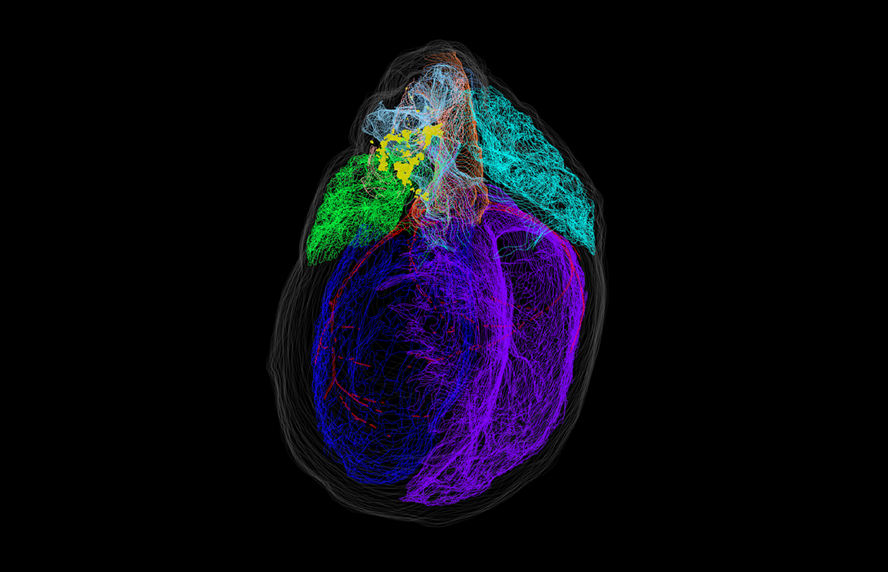
The heart is not a pump. Or rather, it is a pump in the same way that a smartphone is a flashlight. Yes, it performs that function. But it is so much more. The heart possesses its own intrinsic nervous system, containing approximately 40,000 sensory neurons, called sensory neurites, that form what cardiologists now call the heart's "little brain". The heart generates the largest electromagnetic field in the body. Its electrical field is approximately 60 times greater in amplitude than the electrical activity generated by the brain. The magnetic field produced by the heart is more than 100 times greater in strength than the field generated by the brain and can be detected up to three feet away from the body in all directions using SQUID-based magnetometers. HeartMath Institute research has demonstrated that the timing between pulses of the heart's magnetic field is modulated by different emotional states, and crucially, that these magnetic signals have the capacity to affect the physiological systems of individuals around us. This is not metaphor. The heart broadcasts electromagnetic information about your emotional state into the environment at the speed of light, and the nervous systems of other people act as antennae, tuned to and responsive to these signals.
Jay Anderson tweet media
English
118
602
2.9K
82.6K
chris muscarella
chris muscarella@cm·
Glimmers at the edges of what abundance could be… “When a building becomes a financial product wrapped around a construction process and a regulatory regime, its design and material choices often conflict with the short-term hold periods embedded in modern capital structures”
Nick Durham@pnickdurham

Last year, we invested in @Monumental_Labs. They use AI and robotics to reduce the cost of stone fabrication by 90%. Construction tech is our game and while I think what they are doing with art and sculpture fab is amazing, the bull case for ML imo was doing building scale construction with stone. Essentially, reviving a dormant material type for type I construction to compete directly with steel and concrete. Before investing, I had to answer a question that's been nagging me for years: exactly when and why did we stop building with natural materials like stone? Where did beauty in our built environment go to die? It's mostly always been an economic story.

English
0
0
2
224
chris muscarella
chris muscarella@cm·
@cpaik And excited because one of best engineers / product folks I know is building it— not just a fantasy
English
1
0
1
47
chris muscarella
chris muscarella@cm·
@cpaik Broadly agree— but one of the products I'm most excited about is effectively an AI chief of staff for parents managing kids / household / etc Pretty sure my kids school sends more emails per week than many people in business get :/
English
1
0
0
522
Chris Paik
Chris Paik@cpaik·
“Hey Claude, watch Love Island for me” -said no one ever No one wants to automate leisure, which is what the vast majority of consumer behavior is. This is why IFTTT failed while Zapier (B2B productivity) succeeded.
yoni rechtman@yrechtman

Growing suspicion that there are vanishingly few use cases for consumer agents. People don’t do work in their personal lives. The only people who do are sf dorks using spreadsheets to plan trips to tahoe

English
45
36
1.3K
146.5K
Richard Chen
Richard Chen@richardchen39·
Overcrowded stablecoin opportunities: - Consumer neobank - Stablecoin orchestration - Merchant accounts Uncrowded stablecoin opportunities: - Non-USD stablecoins - Onchain FX - Programmable credit (e.g. trade financing)
English
60
18
327
33.1K
chris muscarella
Wild. Thought this only happened with startups...
Toby@TomolaGroup

A publicly listed Nigerian salt company just put out a public announcement begging its biggest shareholder to please call them back. Union Dicon Salt Plc, listed on the NGX, says its largest shareholder, a Brazilian firm called Aims Limited, owns 64 million shares which is 40% of the entire company. And they can’t reach them. At all. They’ve tried multiple times over a prolonged period and got nothing. So the Company Secretary literally published a notice on March 3rd asking Aims Limited to contact them via their office in Kirikiri, Lagos, or call his phone number or email him. A whole publicly listed company is out here posting “please call me” to the entity that owns 40% of it. Quick history. This company was founded in 1984 as a joint venture between Aims of Brazil and Nigeria’s Defence Industries Corporation. Aims was the technical partner with 40% ownership. The company processed and packaged raw salt until it was shut down temporarily in 1988 then merged with Union Salt Limited in 1991 to become Union Dicon Salt Plc. Now here’s what makes this matter. A 40% shareholder has serious influence over board appointments, strategic decisions and shareholder voting. If they can’t be reached, the company can’t hold proper AGMs, can’t get key approvals and governance basically stalls. Meanwhile the stock is up 141% year to date. Went from ₦6.90 to ₦16.60. Up 68% in the last four weeks alone. Somebody owns 40% of a company gaining 141% this year and can’t be found. Nigerian stock market will never bore you.

English
0
0
2
537
chris muscarella
chris muscarella@cm·
There are so many important things wrapped up in this... where do intuition / vision come from; what should education mean; what does Instagrammification of easy pretty places mean when applied to geographies of 'intelligence'; what does it mean for a human to push the frontier?
nxthompson@nxthompson

I love this metaphor from Terence Tao—widely considered the world’s greatest living mathematician—about one of the drawbacks of using AI to solve hard math problems. theatlantic.com/technology/202…

English
0
0
4
216