Coach Gavin Mole

760 posts

Coach Gavin Mole banner
Coach Gavin Mole

Coach Gavin Mole

@CoachGavM

Director of Coaching & Methodology | Designing better learning environments for coaches & players | Supporting performance through coaching and nutrition

Dallas Katılım Nisan 2018
293 Takip Edilen334 Takipçiler
Sabitlenmiş Tweet
Coach Gavin Mole
Coach Gavin Mole@CoachGavM·
I love 1v1 exercises, but lately, especially working with U7/U8 players, I’ve found they’re not always as productive as we hope. So I started rethinking them. 🧵
English
5
7
74
18.8K
Coach Gavin Mole retweetledi
Michael O'Neill
Michael O'Neill@alike_no·
3 ressons... Coach education - they don't realise it's detrimental to the players Parent education - when a coach is more reserved, offering guidance & coaching over control & instruction, to allow the players figure it out, and things go wrong, parents might complain they aren't doing anything. Coach ego/personality - they want to win or are neurotic and ignore their education to drive results or feed their eagerness for control.
Kevin Middleton@coach_kevin_m

"Coach yells a lot and doesn’t let the kids figure things out for themselves in the game - he does a lot of joy sticking" It's 2026, why is youth coaching STILL like this?

English
2
4
15
3K
Coach Gavin Mole
Coach Gavin Mole@CoachGavM·
@coach_kevin_m Lose the joy and you lose the player. Nothing else matters if that happens! If I use the word “fun” here in Dallas, a lot of adults think you are just messing around and no development or anything of benefit is happening. We are in a crazy period!
English
1
0
1
22
Kevin Middleton
Kevin Middleton@coach_kevin_m·
For me, it's the constant obsession with "learning" and "development" that we see daily online now. And coaches are weaponising research in this area to beat other coaches over the head with. "My way is the best way" is a real problem. The reality is that learning and development are byproducts of PARTICIPATION, and who thinks that players who get berated for 60 minutes are going to keep participating long-term? You can have the best development methodology in the world, backed by science and research, but only a small number of players to apply it to if you don't make it fun and keep them coming back. The rest will walk away. They'll find something more fun, and I don't blame them at all. The above is the fundamental problem in coaching these days, and hardly anyone provides any research on how to increase participation or how to fix the problem. All we hear is learning this, development that, elite this, elite that, copy this, copy that. We are so lost as an industry. It's unbelievable.
The Sporting Resource@TheS_Resource

Something needs to change! For me it’s the coach education, what changes would you make @CoachRockGC ?

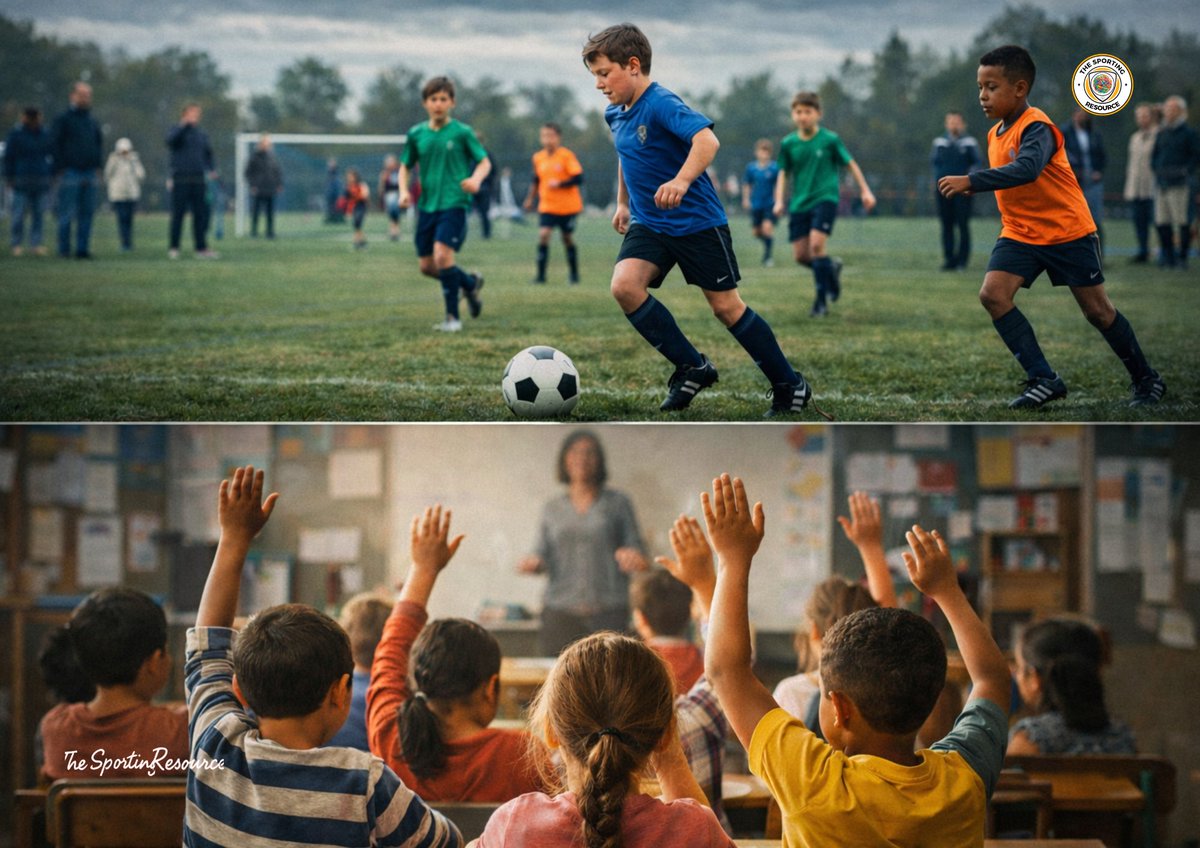
English
4
5
21
8.4K
Coach Gavin Mole retweetledi
The Sporting Resource
The Sporting Resource@TheS_Resource·
Why do we accept that learning takes time in one environment but not the other? When your child started school, nobody expected them to read on day one. Nobody pulled you aside within the first year and said, "Look, they're not quite at the level of the others, maybe try a different classroom." That would be absurd and horrifying if a teacher said that about a primary school child. Instead, children are given time, patience and the support they need, with plenty of opportunities to stumble, sound out words and develop. We all celebrate and congratulate every learning step because you understood that learning doesn't happen all at once. Now think about what happens when that same child walks onto a football pitch on a Saturday morning. Suddenly, the patience disappears, it's about the score (in some cases, that's all that matters), the result, whether the team won or lost. That same child who's been given all the space in the world to learn fractions at their own pace in school is now expected to make the right decision under pressure, in a chaotic sporting environment, with people shouting from the sideline, at seven years old. In some situations, if they can't do it, if they're the one who gives the ball away too often or misses too many chances or doesn't quite keep up with the rest, the conversation very quickly becomes "maybe this isn't the right team for them." We'd never accept that in a classroom, we'd never accept a teacher saying "Your child isn't multiplying as fast as the others, so they need to find a new school." We'd call that a failure of the system, not a failure of the child. In youth football, we hear stories of this happening most seasons, and somehow we've normalised it. Children nowadays grow up with leagues (even if we're told not too) and A, B, C teams purely based on what "talent" looks like on the weekend, with an over obsession with tournaments for trophies from the age of six and it frames everything through the lens of winning before a child has even had the chance to learn, and ultimately fall in love with the game. The point here is that learning gets buried underneath the result, and the child who develops a bit slower or thinks a bit differently, gets pushed out before they've even had a fair chance to show their potential. In schools, we measure progress with questions such as, can they do something today that they couldn't do last month? Are they more confident? Are they asking better questions? Are they willing to have a go even when they find it hard? Those are the things that tell you a child is growing. Football should be exactly the same at that age, asking questions, such as, can they control the ball a bit better than they could at the start of the season? Are they starting to look up before they pass? Are they braver on the ball than they were six weeks ago? That's development and that's what we should be celebrating. Instead, we look at the scoreboard and the children who don't help the scoreboard get left behind or pushed aside. Youth football within the foundational stage, should be no different it's not solely a results business. It's a learning environment and until we start treating it like one, we'll keep pushing and losing children who just needed a bit more time, a bit more patience, and someone who saw their progress instead of the final score.
The Sporting Resource tweet media
English
0
6
12
2.7K
NobletStrength
NobletStrength@NobletStrength·
@CoachGavM Baseball. It's literally how the game is played. Kids spend almost half the game waiting for their turn to bat by default. That's ignoring that most of the time their fielding they're not necessarily actively involved either.
English
1
0
0
63
King Knight Education
King Knight Education@KingKnightEd·
Interesting one David. My 9 year old son does it and has done so since he was 6. They have moved away from unopposed skill repetition so I don't personally beleive they are even living in the 'skill development' space anymore (except maybe in Japan). My son's class works almost exclusively on opposed 1v1/2v1/2v2/2v2+1/3v2/3v3/3v3+1 type stuff to goal, in a tight but reasonable space, which I think is great. Its competitive, transition is taught, winning the ball back is taught and not giving the ball away is valued. Maybe most importantly my son loves it and always wants to go, so...
David Hodges@TelcoDavid

@KingKnightEd What’s your position on @CoerverCoaching ? They may of moved away from the Kata like movements of repeating patterns. But this symbolises best the repetitive clean patterns of ball mastery.

English
2
0
16
2.6K
Coach Gavin Mole
Coach Gavin Mole@CoachGavM·
@Coach__Luca Actually, for once this one didn’t say ‘high level only’ or ‘experienced players needed, but that is because they cant even walk yet. Haha
English
1
0
0
33
Coach Luca
Coach Luca@Coach__Luca·
@CoachGavM This is nuts. And let me guess. Prerequisite was that they must have “played at a high level”?
English
1
0
1
158
Coach Gavin Mole
Coach Gavin Mole@CoachGavM·
I’ve just seen a fb post looking for a 2020 (birth year) Goalkeeper in North Texas. What are we doing to youth sports?! 🫢
English
3
1
4
905
Coach Gavin Mole retweetledi
Todd Beane
Todd Beane@_ToddBeane·
Invasion Game ✔️Football, like other sports, is an invasion game. ✔️Can we find & exploit space individually and collectively against an adversary? 🤔Now simply ask how many minutes of your training require players to do that? For us, the more the better. #TOVO
English
1
1
33
1.5K
Coach Gavin Mole
Coach Gavin Mole@CoachGavM·
@statsbet Yes and no. Yes because there are times you may need to, but also there are times where they learn from the other players or just by themselves. Thoughts?
English
1
0
0
21
Statsbet
Statsbet@statsbet·
@CoachGavM But if your relating that to coaching then as the coach you need to show for them to see, not let them figure it out without you.
English
1
0
1
27
Coach Gavin Mole
Coach Gavin Mole@CoachGavM·
🧵What my daughter has taught me about coaching. Over the last six years I’ve been fascinated by one question: How do we actually become skillful? Having a daughter changed how I see it. A short thread 👇
Coach Gavin Mole tweet media
English
2
1
7
1.5K
Coach Gavin Mole
Coach Gavin Mole@CoachGavM·
@statsbet I was mainly referring to me not needing to give her instructions, but I absolutely agree and probably should have mentioned seeing others do it as part of that exploration. Appreciate the feedback.
English
1
0
1
10
Statsbet
Statsbet@statsbet·
@CoachGavM You’re missing an important point, she is also seeing other people do it.
English
1
0
1
18
Coach Gavin Mole retweetledi
Tom Erskine - Pro Academy Drills
Tom Erskine - Pro Academy Drills@ProAcademyDrill·
One of the biggest shifts in my coaching over the last few years has come from understanding working memory properly. Working memory is the system responsible for holding and manipulating information in real time. It’s where thinking happens in the moment. Most research suggests we can only process around 3–5 new elements at once. Now put that into a football context. In possession a player is already processing: •Ball trajectory •Opponent distance •Teammate movement •Space availability •Their body position •The next action That’s before we speak. When we then stop the practice and add four or five coaching points we’re not layering learning. We’re overloading the system that decision making depends on. This links directly to Cognitive Load Theory. There are three types of load: Intrinsic load – the difficulty of the task itself Extraneous load – the unnecessary information we add Germane load – the mental effort that actually builds understanding Good coaching reduces extraneous load and protects germane load. That’s the bit that changed my practice. I don’t coach five things at once anymore. If the theme is creating overloads wide that’s the theme. I’m not layering pressing structure or build up detail on top of it. My interventions are shorter. If the message needs more than that the task probably isn’t designed well enough. At higher levels this becomes even more important. The speed of play increases, the information density increases and the margin for overload gets smaller. When players “don’t apply” something it’s often not attitude. It’s architecture. The brain can’t process everything we’re asking it to. The science has made me more disciplined. Less talking. Better design. Clearer themes. Sometimes the biggest upgrade in coaching isn’t adding more detail. It’s respecting the limits of how people actually learn. If you replay your last session in your head… How much of what you said was genuinely building understanding and how much was simply adding load?
Tom Erskine - Pro Academy Drills tweet media
English
8
6
43
3.7K
Coach Gavin Mole
Coach Gavin Mole@CoachGavM·
@Coach_Temisan I’d argue it’s actually easier to coach older age groups in some ways, with different challenges of course with each. Also, unless we start to prioritize the young age groups and pay the same, does that then hurt development?
English
2
1
2
205
Temisan Williams
Temisan Williams@Coach_Temisan·
Coaching older age groups doesn’t make you a better coach. It just happens to make you a more highly paid coach.
English
3
0
21
4.6K
Coach Gavin Mole
Coach Gavin Mole@CoachGavM·
It’s messy. It’s inefficient. It’s real. And it’s made me question how often in coaching we remove the very thing that drives learning. The problem. What is something your children have taught you about how we learn?
English
1
0
0
125
Coach Gavin Mole
Coach Gavin Mole@CoachGavM·
Walking. Climbing. Figuring something out. The pattern appears the same: Problem. Exploration. Adjustment. Progress.
English
1
0
0
247