Mayuresh

7.1K posts

Mayuresh banner
Mayuresh

Mayuresh

@Coder_Mayu18

Web Dev | 20 | Anime| Manga | Self Improvement | GenAI | Data Science Enthusiast|

Online Katılım Ağustos 2024
290 Takip Edilen347 Takipçiler
Sabitlenmiş Tweet
Mayuresh
Mayuresh@Coder_Mayu18·
Starting #100DaysOfCode to track my progress and be consistent So Today is Day 1/100 > Learned C++ basics and did some logic building pattern exercises prior to my DSA Journey > Studied Nextjs and learned about some Jargons like SSR, SEO, Waterfall problem, etc. Total logged hrs: 6.5 hrs Will try to do better tomorrow✌🏻
English
8
0
41
3.6K
Mayuresh
Mayuresh@Coder_Mayu18·
Guess got a new friend😁
Mayuresh tweet media
English
2
0
9
258
Mayuresh retweetledi
Kishore 👽
Kishore 👽@kishoretwt17·
Pura darr ka mahol hai !!
Kishore 👽 tweet media
हिन्दी
11
2
21
363
Neuroquark
Neuroquark@neuroquark·
@Coder_Mayu18 sidecar is a pattern SIGHUP is a Unix signal and overall it's pretty easy
English
1
0
1
45
Neuroquark
Neuroquark@neuroquark·
there was this idea of dynamic configuration in the sidecar chapter and i wanted to build something around it so i did the project is called envsync, a config sync system based on the sidecar pattern. it has two components: the envsync sidecar and a toy application the sidecar polls postgres on a fixed interval. it checks a metadata hash, compares it with the last one it saw and if there's a change, it fetches the latest configuration, validates it and writes it to a .env file stored on a docker shared volume there's a trigger on the configs table that recomputes an md5 hash of the full config set on every insert, update or delete and stores it in a separate metadata table. this avoid a full config fetch when nothing has changed the toy application reads the .env file on startup. whenever the sidecar detects a configuration change, it sends a SIGHUP signal to the application which then reloads the file without needing a restart there were a few limitations though. i was only able to make it work as a non-scaling, 1:1 deployment because i was using docker compose. i couldn't find a way to guarantee that each application instance always had its own dedicated sidecar like kubernetes pods do. i didn't want to wait until i learned kubernetes before building the project so i accepted that limitation link in the replies
Neuroquark tweet media
English
9
0
30
1.2K
Mayuresh
Mayuresh@Coder_Mayu18·
@kishoretwt17 Standing with NEET protest Support the cause not the party
English
1
0
1
17
Kishore 👽
Kishore 👽@kishoretwt17·
It was a peaceful Protest 🥀
English
3
2
19
309
Neuroquark
Neuroquark@neuroquark·
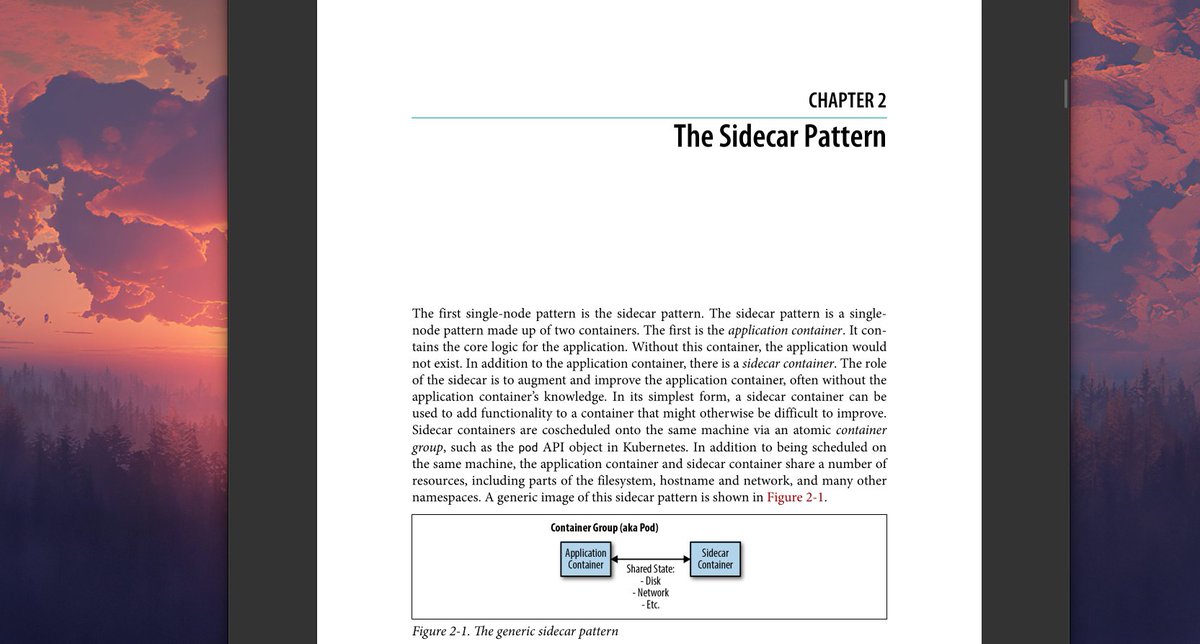
started with DDS and completed the sidecar chapter today i already knew about most of the concepts in this chapter but seeing them all together in one place helped connect a lot of dots. overall enjoyed a lot i also got a simple project idea from the book so i'll be implementing it before moving on to the next chapter
Neuroquark tweet media
English
6
0
28
470
Mayuresh
Mayuresh@Coder_Mayu18·
@ParasVerma7454 I read interview experience from last 2 yrs and yeah they ask CS Fundamentals Also u should expect OOP to be asked
English
1
0
1
35
Paras
Paras@ParasVerma7454·
@Coder_Mayu18 I don't think anyone ask questions from cs subjects anymore but I might be wrong
English
1
0
1
66
Paras
Paras@ParasVerma7454·
How to prepare for technical interviews?
English
6
1
37
3.1K
Mayuresh
Mayuresh@Coder_Mayu18·
Was revising hard Recursion prblems(which I didn't understand the 1st time) Couldn't understand some of these and my brain is hella overcooked😭
Mayuresh tweet media
English
1
0
4
492
Mayuresh
Mayuresh@Coder_Mayu18·
@neuroquark Abhi time nhi hai wohi toh prblm hai Abhi placements chalu ahai na clg mei
Indonesia
0
0
1
19
Neuroquark
Neuroquark@neuroquark·
Hey everyone, I'm Neuro and if you somehow ended up here, thought I'd tell you a little about myself I mostly work on backend and I'm currently spending my time learning more about systems and infrastructure. My preferred stack is Go, Redis, Postgres and Docker I've been writing code since my first year. Earlier this year, I decided to start over with a more structured approach since then I've been focusing on learning things properly, building projects from scratch and experimenting with ideas that interest me Most of my projects are learning-driven and through this account, I'll be sharing the projects I build, things I learn, articles I'm reading and the some occasional experiment There's still a lot for me to learn and build and I know this journey is only getting started. I'm enjoying the process and plan to keep building, learning and sharing along the way Welcome aboard
Neuroquark tweet media
English
24
1
61
3.3K
Jay Yadav
Jay Yadav@xlr8_jay·
winning in chess is 2nd best feeling in the world. 1st one is pretty obvious isn't it?
Jay Yadav tweet media
English
7
0
30
521
Vedant Reddy
Vedant Reddy@vedantReddy18·
Algo is working fine, not your mutuals
Vedant Reddy tweet media
English
14
0
40
637
Mayuresh
Mayuresh@Coder_Mayu18·
@neuroquark Ohh noice Redis to reduce load on DB In-Memory Store to reduce load on redis
English
1
0
1
24
Neuroquark
Neuroquark@neuroquark·
@Coder_Mayu18 the maximum for the in-memory store can be as much as you can hold without crashing or degrading performance and the id is for one time use. the handler will pop one from the in-memory store and during replenishing, the ids being loaded will be deleted from redis
English
2
0
1
24
Neuroquark
Neuroquark@neuroquark·
i needed to generate a large number of unique ids in a system that could run across multiple instances a simple in-memory counter wouldn't work here because every instance would have its own counter and coordinating each generation through Redis or Postgres wasn't something i wanted so i went with a small key generation service (KGS). the service, on startup, generates a batch of unique 8 character long ids which get stored in a Redis set (because a set provides deduplication). the main service, on startup loads a batch of these ids, delete them from redis and saves them in an in-memory store and whenever the handler needs one, it pops one from the store about the replenishing of these ids. the KGS service monitors the length of the set and if it drops below a set percentage, it generates a new batch and inserts them into the set. the main service does the same thing, watches its local batch and pulls more from redis when running low that's it for now. there's more to this whole system but i'll leave that out for now. also i haven't implemented it yet so some things might change once i start implementing
Neuroquark tweet media
English
7
1
33
828
Sam ☕
Sam ☕@samirande_·
Bhai ye Covid lockdown mere college time pe kiyu nhi aya...😔🥀🙏🏻
Română
7
0
36
1.5K
Mayuresh
Mayuresh@Coder_Mayu18·
@neuroquark Ohh I get ur point now What is the maximum it can accommodate? Aur redis mein jaise TTL hota hai waise isme kaise deletion kr rha hai Ya phir jaise Diagram mein lg rha hai , id one-time use hai?
English
1
0
1
24
Neuroquark
Neuroquark@neuroquark·
@Coder_Mayu18 so i can reduce trips to redis and in turn reduce the load on it
English
1
0
1
40