
Colleen retweetledi
Colleen
6.1K posts


Colleen retweetledi

Let me get this straight, there’s:
SNAP fraud
EBT fraud
Medicaid fraud
Medicare fraud
Home healthcare fraud
Daycare fraud
Medical transportation fraud
Hospice fraud
But we’re supposed to believe there’s absolutely zero election fraud?
English
@HarryHemp3 No sound...even after several attempts. Thank you for recording. Will listen later.
English

Colleen retweetledi

Colleen retweetledi

🚨 EMERGENCY BREAKING NEWS 🚨
YOU Need to See This: THE LARGEST HEIST
IN HISTORY IS HAPPENING RIGHT NOW!
Palantir is NOT Just Another Tech Company.
While everyone was distracted...
A secretive firm with deep ties to power just gained root access to America’s most sensitive citizen data... Social Security records, financial histories, personal details of millions.
This video breaks it down better than anything else:
the Quiet Rise, the DOGE Connection and what it means for your future.
- They call it “efficiency.”
Critics call it the end of privacy as we know it.
Palantir’s software already powers predictive policing, autonomous targeting, and mass data orchestration. Now it’s plugged directly into the U.S. government at unprecedented scale.
If you care about freedom, surveillance, or who really owns your data in 2026… this is required viewing.
Have you seen this?
A 23-min deep dive that connects Palantir’s explosive growth, Peter Thiel’s vision, Alex Karp’s role, and the 2026 data grab no one’s talking about.
This could reshape the entire century.
THIS VIDEO IS GOING VIRAL!
What if the government didn’t just lose your data…
but handed the keys to a private company that now knows you better than you know yourself?
How does a single firm go from “secretive contractor” to quietly owning the digital blueprint of every American’s life in under two years?
Imagine applying for a job, a loan, or boarding a flight and an algorithm you’ll never see already decided your fate using data stolen in plain sight. Terrifying? It’s already happening.
They call it “efficiency.”
What if it’s actually the largest, quietest transfer of power from citizens to unelected tech oligarchs in human history?
Your Social Security number, medical history, financial records, location patterns... all funneled to one company with Pentagon and intelligence contracts.
Who really owns you now?
If Palantir can predict crime before it happens and target people before they act, how long until it predicts your thoughts… and punishes them?
Peter Thiel funds city-states run by corporations.
Alex Karp talks about “killing enemies.”
Now their company sits
at the heart of the U.S. government.
Coincidence… or the endgame?
While the world argued about politics, a $200+ billion surveillance empire was built in the shadows.
Are we already living inside their machine?
What happens when one company controls the data that controls your job, your insurance, your freedom of movement, and your future? Spoiler: you don’t get to opt out.
THIS NEEDS TO GO VIRAL,
PLEASE LIKE AND SHARE EACH POST!
THIS IS HOW WE FIGHT BACK!
Check out the attached thread!
Let me know what you think,
and SHARE THIS so that others may too.
And if you're not already following
@TrueOnX...
What the heck are you doing?!
Noah B. Price@TrueOnX
🚨 EMERGENCY WARNING VIRAL THREAD: Part 1: The Hidden Patent That Changes Everything Wells Fargo's Blueprint for Airborne Biometric Control 🚨 Wake up. While most people scroll through their feeds worrying about the latest app update or interest rate hike, a major bank has quietly secured the legal rights to deploy invisible particles in the air around you that can read your body like an open book. This isn't science fiction. This is US Patent 11,354,666 B1 officially titled: "Smart Dust Usage" granted to Wells Fargo Bank on June 7, 2022, with a filing date tracing back to May 26, 2016. You can read the full patent yourself right here: patents.google.com/patent/US11354… The inventors listed are: - Rameshchandra Bhaskar Ketharaju - Sarath Chava - Prasad N. Sivalanka and Madhu V. Vempati... Engineers working directly under the Wells Fargo umbrella. These aren't rogue scientists; they are employees executing a corporate vision that turns everyday banking transactions into a biometric surveillance event. The patent describes in exhaustive technical detail how microelectromechanical systems (MEMS) tiny "smart dust" motes are released into the air near a point-of-sale terminal, your phone, or any base station device. These particles, invisible to the naked eye, collect heart rate, breathing patterns, body temperature, blood pressure estimates, motion data, audio, optical imagery for facial recognition, and even GPS-like location signals. All of it funneled back to authenticate you for a payment without a password, PIN, or card. Once identity is "confirmed" against your stored profile, the transaction proceeds. But the system doesn't stop at verification. The patent explicitly covers continuous data harvesting: infrared, electromagnetic fields, air pressure, and more. This is not a one-time scan. It's a framework for pervasive environmental sensing tied directly to your financial life. To understand how we got here, we must go back to the roots. The foundational concept of Smart Dust was born in the 1990s at the University of California, Berkeley, under Professor Kristofer S.J. Pister. In 1997, Pister's team proposed, and DARPA (the Defense Advanced Research Projects Agency) funded the creation of cubic-millimeter sensing platforms packed with power sources, sensors, and communication capabilities. The military goal was clear: drop thousands or millions of these motes over battlefields, enemy territory, or urban areas to create an invisible surveillance mesh. Pister, Joe Kahn, and others in the Berkeley team built prototypes that could measure everything from vibration to chemical signatures. DARPA's Microsystems Technology Office poured money into this because it represented the ultimate in asymmetric intelligence, eyes and ears everywhere, undetectable. Fast forward to the civilian/commercial crossover. Wells Fargo didn't invent Smart Dust; they weaponized an existing military-derived technology for profit and control in the banking sector. The patent builds directly on decades of DARPA-funded work. Who approved and funded these programs at DARPA? Directors and program managers operating under the U.S. Department of Defense, ultimately accountable to presidential administrations, congressional oversight committees, and the military-industrial complex. Key figures like former DARPA Director Regina Dugan (2009-2012) bridged the gap. After leaving DARPA, Dugan joined Google (Motorola Mobility) and publicly demonstrated ingestible authentication chips in 2013, pills containing a microchip powered by stomach acid that turns your entire body into a walking authentication token, broadcasting an 18-bit ECG-like signal. Dugan pitched this at the All Things D conference as a "superpower." Think about the implications: a former head of the Pentagon's innovation arm now pushing internal body surveillance for everyday devices. This isn't coincidence. It's a seamless handoff from military R&D to corporate deployment. Dugan later moved through roles at Google and beyond, influencing advanced technology strategies across Big Tech. The responsibility chain is long but traceable. At the top: U.S. government agencies like DARPA, which operates with billions in black-budget-level funding and minimal public scrutiny. Program managers in the 1990s-2000s greenlit Smart Dust because battlefield dominance required it. University researchers like Pister executed the grants. Corporations like Wells Fargo then filed patents to commercialize it, protecting their intellectual property while preparing rollouts that could integrate with 5G networks for real-time data transmission. The inventors at Wells Fargo are the immediate faces, but they operate within a system enabled by bank executives, compliance officers, and legal teams who saw the regulatory landscape (or lack thereof) as permissive for biometric innovation. Broader patents exist too. Search the USPTO for MEMS-based sensor networks, neural dust (a related DARPA-funded implantable variant from UC Berkeley researchers around 2016 using ultrasound for power and communication), and ingestible electronics. Companies and defense contractors have filed dozens of related claims covering environmental deployment, data aggregation, and AI analysis. One example is work on transparent electronics for invisible smart dust applications (US 10,396,061 B1 and family). The ecosystem is vast. This patent isn't sitting on a shelf. In an era of digital IDs, CBDCs, and "frictionless" payments, it provides the technical and legal foundation for banks to argue they need environmental biometrics "for your security." Who benefits? The institutions holding your data. Who loses? Every individual breathing in those particles. This is just the beginning. In Part 2, we dive deeper into the DARPA origins, specific program managers, Pister's ongoing influence, and how this tech evolved from battlefield motes to the air you breathe during a simple coffee purchase. Share this thread. The more eyes on it, the harder it becomes to hide. Attached Posts have millions of views collaboratively. Let me know what you think, and SHARE THIS so that others may too. And if you're not already following @TrueOnX... What the heck are you doing?!
English
Colleen retweetledi


QME
Colleen retweetledi

HOLY CR*P 🚨
- Democrats did give MILLIONS of illegals Social Security Numbers
- They were REGISTERING TO VOTE
- Elon Musk has confirmation THEY DID VOTE
- Democrats qualified illegals for MAX SOCIAL SECURITY BENEFITS
- They enrolled in Medicaid with their new Social Security Numbers
See graph in video:
“Then you'll notice there's a strange, what jumped out at us when we saw these numbers. We're like, what is this? In 2021, you see 270,000 people, it goes all the way to 2.1 million and 2024. These are non-citizens that are getting social security numbers.
This is a mind-blowing charge. This literally blew us away.”
“If I hadn't seen this myself, I'm not sure I believed it. I went through it myself and mapped it. And Elon is right. This is true. The defaults in the system from social security to all of the benefit programs have been set to max inclusion, MAX PAY for these people and minimum collection.
We found 1.3 million of them already on Medicaid as an example. We've gone through on every benefit program we went through, we found groups from this particular group of people, this 5.5 million people in those benefit programs.
And then what was really, really disturbing us was why we're asking ourselves why.
So we actually just took a sample and looked at voter registration records and we found people here registered to vote in this population. Yes.
Who did vote? We found some by sampling that ACTUALLY DID VOTE.
We have referred them to prosecution at the Homeland Security Investigation Service. Yeah. Already, already. That is already happening right now. The truly disturbing thing though, I just want you to know this, a truly disturbing thing to me, and the darkest thing about this, to me, the voter fraud is terrible.”
English
Colleen retweetledi

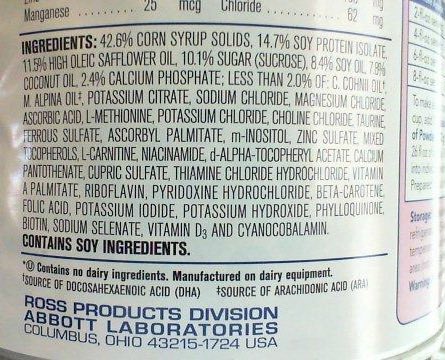
This is the #1 doctor-recommended baby formula.
The first five ingredients are:
▪️Corn Syrup Solids — WTF?
▪️Soy Protein Isolate — no wonder boys think they’re girls
▪️High Oleic Safflower Oil — WTF?
▪️Sucrose — WTF?
▪️Soy Oil — WTF?
Why would anyone give this to their newborn?
English
Colleen retweetledi
Join us Sunday on the Natural Build Guild and dive into Sativa Building Systems background and origin story. Zach is a great guy and really excited to have him apart of the guild.
x.com/i/spaces/1AKEm…
English
Colleen retweetledi

Colleen retweetledi

As people believed the lie that the sun was dangerous and cancer causing, they of course VOLUNTARILY flocked to purchase commercial sunscreens to the tune of $15 billion annually!
Sound familiar?
The most elevated cancer that exploded with the rising use of sunscreens, was the deadliest
Malignant melanoma
The cancer treatment industry in the allopathic medical system generates about $350 BILLION PER YEAR!!!
SO YOU SEE NOT ONLY ARE THEY MAKING MONEY ON THE TOXIC COMMERCIAL SUNSCREEN PRODUCTS, BUT THEY ARE ALSO GENERATING CANCER TREATMENT REVENUES.

English
Colleen retweetledi

This is clear
Those are tree stumps.
Can anyone explain how they are not rotten?
There had to be period where there were no
OXIGEN!
Other ways tree degrade to humus.
SGAnon@TheQNewsPatriot
English
Colleen retweetledi
Colleen retweetledi

Colleen retweetledi

“The best revenge is to be unlike him who performed the injury.”
— Marcus Aurelius
Skindie@skindie___
Do you love vengeance?
English
Colleen retweetledi

Colleen retweetledi

I’m going to @IanMalcolm84’s upcoming Space. Will you join too? x.com/i/spaces/1pKkO…
English