
condino.bsky.social 🇪🇺🇩🇪🇬🇷🇳🇴🇺🇦🇮🇱🦦

32.9K posts

condino.bsky.social 🇪🇺🇩🇪🇬🇷🇳🇴🇺🇦🇮🇱🦦 banner
condino.bsky.social 🇪🇺🇩🇪🇬🇷🇳🇴🇺🇦🇮🇱🦦

condino.bsky.social 🇪🇺🇩🇪🇬🇷🇳🇴🇺🇦🇮🇱🦦

@ConDino007

Global European, retired lawyer, pol., econ. & legal affairs consulting @European Union. No financial advice 👨🏼‍🍳⛵️📸 -✌🏼😷 Foloten, Norge

🇪🇺 European Union 🇪🇺 Katılım Kasım 2012
954 Takip Edilen1.5K Takipçiler
Sabitlenmiş Tweet
condino.bsky.social 🇪🇺🇩🇪🇬🇷🇳🇴🇺🇦🇮🇱🦦
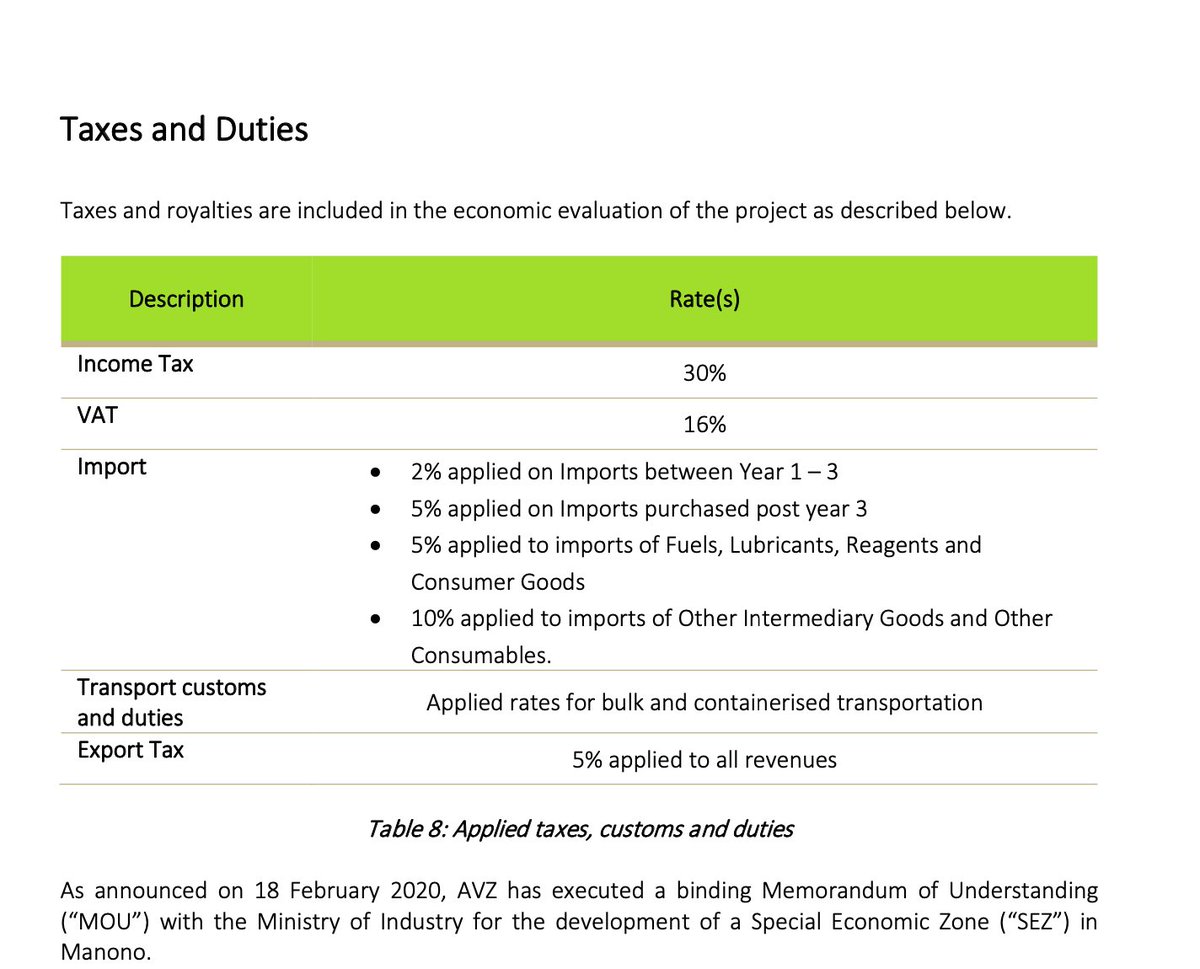
1. NPV of DFS 2020 in US$ & project level: Results of DFS 2020 are 2,348 bn pre tax and 1,028 bn post tax. If AVZ get a full VAT refund & a small tax reduction they might work @ 30% taxation. 2,348 + 1,028 = 3,376 / 2 = 1,688 bn * 0,75% = 1,266 bn / 2,950 sh = 0,429 or A$ 0,573.
condino.bsky.social 🇪🇺🇩🇪🇬🇷🇳🇴🇺🇦🇮🇱🦦 tweet mediacondino.bsky.social 🇪🇺🇩🇪🇬🇷🇳🇴🇺🇦🇮🇱🦦 tweet media
condino.bsky.social 🇪🇺🇩🇪🇬🇷🇳🇴🇺🇦🇮🇱🦦@ConDino007

@SaneGeist Noice idea of a price tag poll but tbh I found the range a bit unfortunate. First, because the minimum price range of the poll (assuming it is in A$) is even below the NPV per share of the 2020 DFS. Second, because it does not value the price & cost development, wedge, LOM & SEZ.

English
7
5
40
0
condino.bsky.social 🇪🇺🇩🇪🇬🇷🇳🇴🇺🇦🇮🇱🦦 retweetledi
ManonoPulse
ManonoPulse@DontStealMyLi·
@Twinkle887788 @stonewallll AVZ is mentioned at the start of the interview by the host. Kurt House (CEO Kobold) talks about purchasing of the Manono deposit. $AVZ @KoBold_Metals @KiengeKki
English
4
4
31
2.5K
KIKI KIENGE
KIKI KIENGE@KiengeKki·
#Lithium_Manono🇨🇩 : à $AVZ🇦🇺, #KoBold🇺🇸, #CATL🇨🇳 et #RDC Kiki #Kienge analyse Le dossier du lithium de Manono, en RDC, est un des théâtres les plus révélateurs de la nouvelle guerre économique mondiale. À travers l’opposition entre KoBold Metals et AVZ Minerals, et en toile de fond l’intérêt d’acteurs chinois comme CATL, se joue bien plus qu’un simple litige minier : c’est l’accès aux ressources critiques du XXIe siècle qui est en question. Une lecture attentive des dynamiques en cours permet de dépasser les positions de principe pour comprendre les véritables rapports de force. D’abord, il est probable que KoBold cherche à acquérir les actifs d’AVZ dans des conditions favorables. Ce type de stratégie est classique dans l’industrie extractive : les actifs juridiquement fragilisés ou politiquement contestés sont souvent rachetés avec une décote significative. Mais réduire cette approche à une tentative d’achat “à prix dérisoire” serait excessif. Le gisement de Manono est tout simplement trop stratégique pour être bradé. Même en situation de conflit, sa valeur reste considérable, à la fois sur le plan industriel et géopolitique. Ensuite, la rivalité entre acteurs américains et chinois structure profondément ce dossier. La Chine, forte d’une présence ancienne en Afrique et d’un contrôle avancé des chaînes de valeur des batteries, dispose d’un avantage réel. Ses entreprises, à l’image de CATL, bénéficient d’un soutien étatique, d’une capacité d’investissement rapide et d’une tolérance au risque plus élevée. À l’inverse, les acteurs occidentaux, bien que puissants technologiquement, évoluent dans des cadres juridiques et politiques plus contraints. Cela alimente une hypothèse crédible : celle d’une surenchère chinoise. Pékin pourrait proposer des conditions financières plus attractives à la fois pour AVZ et pour les autorités congolaises. Dans un contexte de pression économique, une telle offre serait difficile à ignorer à Kinshasa. Toutefois, réduire l’issue du dossier à une simple question de montant serait une erreur. Les arbitrages juridiques internationaux, les équilibres diplomatiques et les considérations de souveraineté jouent un rôle tout aussi déterminant. Dans ce jeu complexe, la position de la RDC est centrale et décisive. Le pays dispose d’un levier exceptionnel, mais aussi d’une responsabilité majeure. Sa crédibilité internationale est en jeu. Les incertitudes juridiques, les conflits d’attribution et les soupçons de gouvernance fragilisent son attractivité auprès des investisseurs. La réforme d’entités comme COMINIERE, la transparence dans la gestion des licences et la clarification des rôles institutionnels doivent être une priorité pour le gouvernement congolais. Notre analyse va en profondeur des facteurs politiques internes. À l’approche d’échéances électorales majeures en 2028, chaque décision stratégique devient plus sensible. Les autorités de Kinshasa peuvent être tentées de renégocier, de temporiser ou de reconfigurer les alliances. Pour les investisseurs, comprendre ce calendrier est essentiel. Le temps politique congolais n’est pas un paramètre secondaire : il structure l’ensemble du dossier. Au fond, Manono n’est pas seulement un projet minier. C’est un test. Un test pour la capacité de la RDC à affirmer sa souveraineté tout en restant crédible. Un test pour les États-Unis et leurs alliés, qui cherchent à sécuriser des ressources critiques face à la Chine. Un test, enfin, pour la COMINIERE à savoir naviguer dans un environnement où la géopolitique compte autant que la géologie. Conseil de Kienge : - aux acteurs américains, et en particulier à KoBold Metals, il est essentiel de comprendre que le facteur temps est déterminant. L’horizon politique de 2028 pèsera lourdement sur les décisions à Kinshasa. Lire correctement ce calendrier, anticiper les inflexions du pouvoir et agir au bon moment sera au moins aussi décisif que la solidité financière du projet. - à AVZ Minerals, le choix des partenaires doit rester guidé par une seule boussole : l’intérêt des actionnaires. Qu’ils soient chinois ou américains, les repreneurs potentiels doivent être évalués à l’aune de leur capacité à préserver la valeur, sécuriser les actifs et offrir une issue crédible à un dossier devenu hautement incertain. - au pouvoir de Kinshasa, l’enjeu dépasse largement Manono. Il s’agit de restaurer la confiance. Cela passe par un assainissement réel des structures, à commencer par COMINIERE, qui doit devenir une entité crédible et transparente. Cela suppose également de réduire l’influence des réseaux corruptibles, de renforcer les institutions techniques, notamment le ministère des Mines et celui du Portefeuille et de redonner un rôle effectif aux autorités locales du Tanganyika, au plus près des réalités du terrain et des intérêts de la population locale. @KoBold_Metals @MinMinesRDC @LouisWKabamba @portefeuille_cd @Presidence_RDC @ChrisKitungwa @AvzMinerals @USAauCongo @US_SrAdvisorAF
condino.bsky.social 🇪🇺🇩🇪🇬🇷🇳🇴🇺🇦🇮🇱🦦@ConDino007

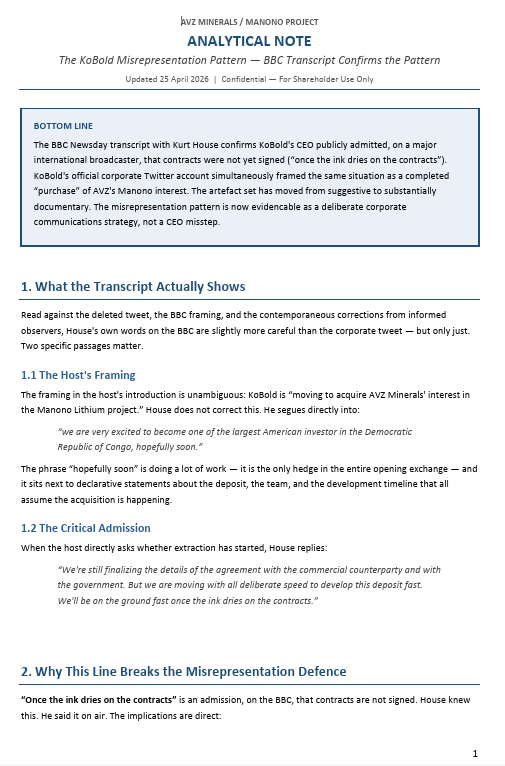
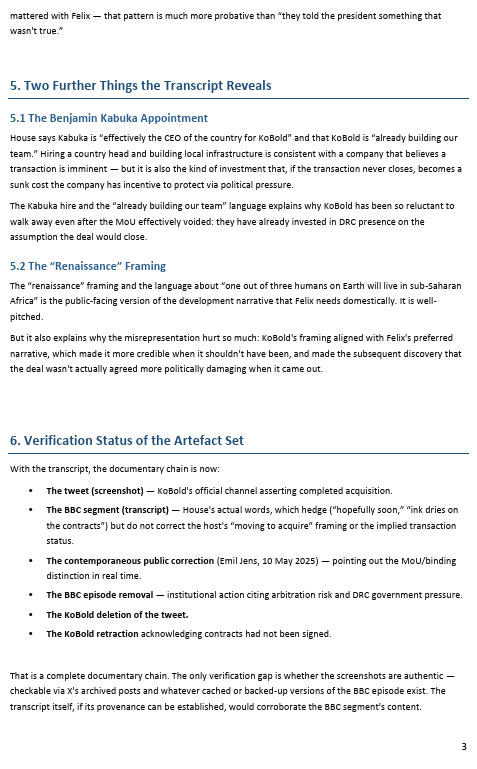
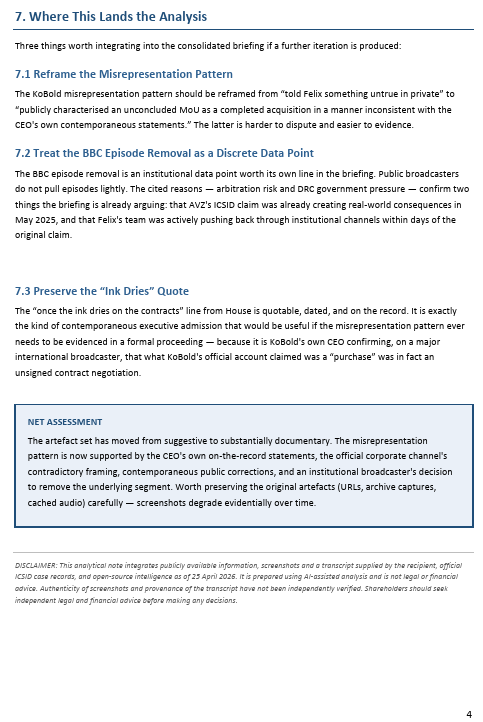
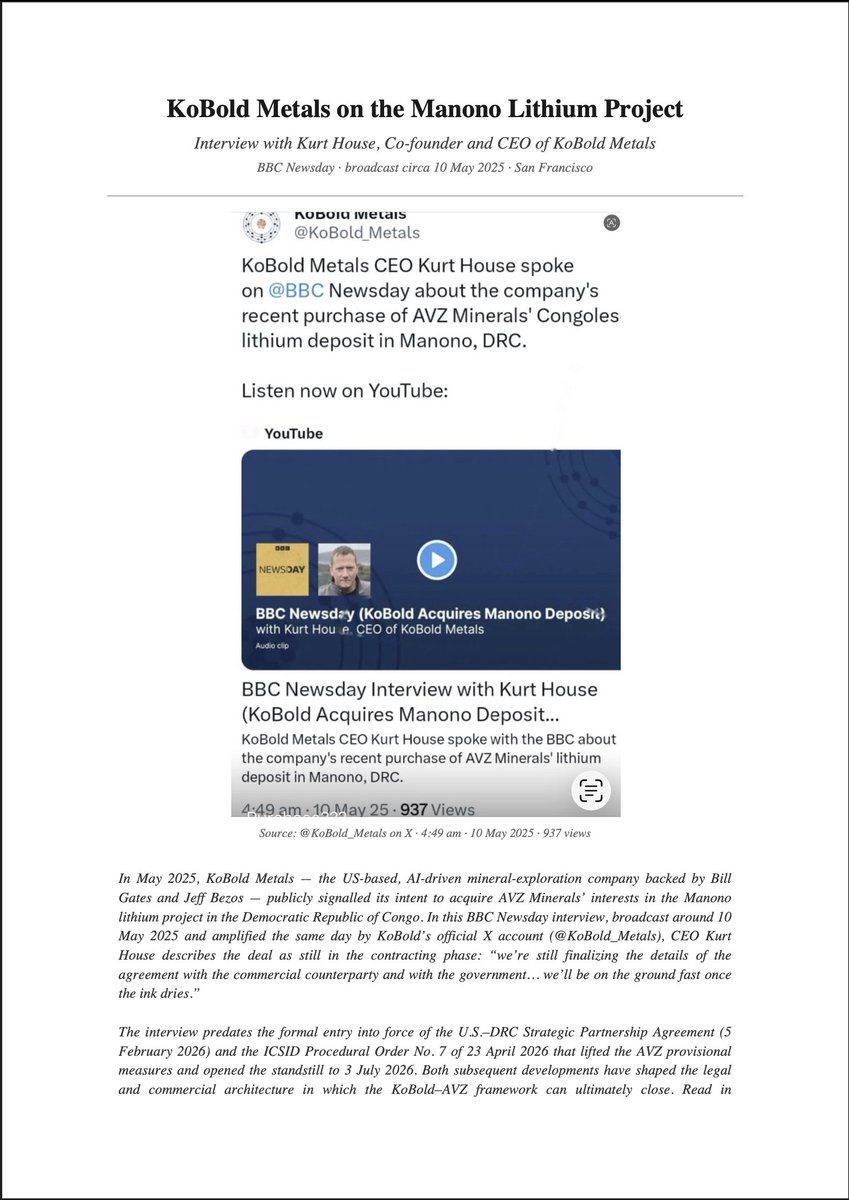
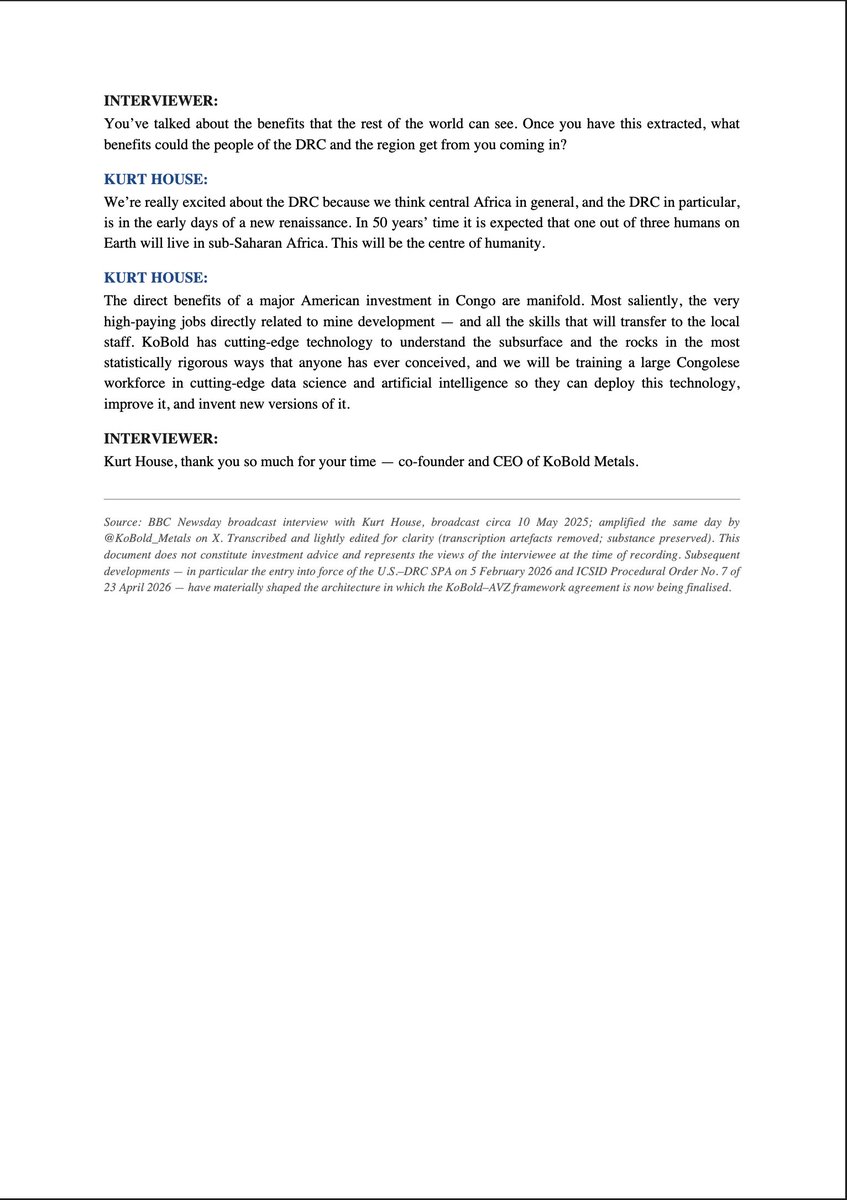
The BBC Newsday interview with @KoBold_Metals CEO Kurt House,10 May 2025 — in which he discussed the Manono lithium acquisition from $AVZ Minerals — has been transcribed and made available as a public-record document. The original BBC episode is no longer accessible. @KiengeKki

Français
6
23
64
8.8K
condino.bsky.social 🇪🇺🇩🇪🇬🇷🇳🇴🇺🇦🇮🇱🦦 retweetledi
Knoxie
Knoxie@KnoxieLuv·
Italian investigative @reportrai3 just unleashed a political earthquake. They’ve obtained never-before-heard 2017 audio of Paolo Zampolli, the man who introduced Melania to Donald Trump and now sits in his inner circle as Special Envoy to the US speaking of a secret pre-election PACT with the First Lady. In the recorded call to a UN-linked contact, Zampolli reveals Melania allegedly told him: “Paolo don’t worry... you have our back. Everything that happened, you protect... we protect you.” This was right after the Trumps crushed the 2016 Daily Mail story accusing Melania of escort work with a massive lawsuit and settlement. Zampolli says they kept their word after victory, pulling him deep into the President’s trusted circle like family. The full audio and investigation air this Sunday on Rai3. The teaser is already exploding across Italy. Zampolli is raging, threatening lawsuits but the tape is out there. It always comes back to Epste!n
English
277
9.7K
20.8K
997.5K
condino.bsky.social 🇪🇺🇩🇪🇬🇷🇳🇴🇺🇦🇮🇱🦦 retweetledi
Jens S
Jens S@emil_jens·
KoBold Metals on the Manono Lithium Project Interview with Kurt House, Co-founder and CEO of KoBold Metals BBC Newsday • broadcast circa 10 May 2025 • San Francisco nobola ivietais @KoBold_Metals KoBold Metals CEO Kurt House spoke on @BBC Newsday about the company's recent purchase of AVZ Minerals' Congoles lithium deposit in Manono, DRC. Listen now on YouTube: YouTube NEWSDAY BBC Newsday (KoBold Acquires Manono Deposti) with Kurt Hou e. CEO of KoBold Metals Audio clip BBC Newsday Interview with Kurt House (KoBold Acquires Manono Deposit... KoBold Metals CEO Kurt House spoke with the BBC about the company's recent purchase of AVZ Minerals' lithium deposit in Manono, DRC. 「 4:49 am: 16 May 25 • 937 Views Source: @KoBold_Metals on X • 4:49 am • 10 May 2025 • 937 views In May 2025, KoBold Metals - the US-based, Al-driven mineral-exploration company backed by Bill Gates and Jeff Bezos — publicly signalled its intent to acquire AVZ Minerals' interests in the Manono lithium project in the Democratic Republic of Congo. In this BBC Newsday interview, broadcast around 10 May 2025 and amplified the same day by KoBold's official X account (@KoBold_Metals), CEO Kurt House describes the deal as still in the contracting phase: "we're still finalizing the details of the agreement with the commercial counterparty and with the government... we'll be on the ground fast once the ink dries." The interview predates the formal entry into force of the U.S.-DRC Strategic Partnership Agreement (5 February 2026) and the ICSID Procedural Order No. 7 of 23 April 2026 that lifted the AVZ provisional measures and opened the standstill to 3 July 2026. Both subsequent developments have shaped the legal and commercial architecture in which the KoBold-AVZ framework can ultimately close. Read in
English
1
4
15
508
condino.bsky.social 🇪🇺🇩🇪🇬🇷🇳🇴🇺🇦🇮🇱🦦 retweetledi
Jens S
Jens S@emil_jens·
Wow $AVZ #KoBold how revealing, NOT ‼️May 2025; “KoBold Metals CEO Kurt House spoke on @BBC Newsday about the company's recent purchase of AVZ Minerals' Congoles lithium deposit in Manono, #DRC” Waouh $AVZ #KoBold, quelle révélation ! (ironie) « Le PDG de #KoBold Metals, Kurt House, s'est exprimé sur @BBC Newsday au sujet du récent rachat par la société du gisement de lithium Congoles d'AVZ Minerals à Manono, en #RDC. » @Com_mediasRDC @Mines_RDC @Presidence_RDC
English
0
10
26
984
condino.bsky.social 🇪🇺🇩🇪🇬🇷🇳🇴🇺🇦🇮🇱🦦 retweetledi
Smart Money Crypto
Smart Money Crypto@Smart_Money·
⚠️ DIE KOMPLETTE TRUMP-LISTE - HIER SIND DIE MILLIARDEN, DIE WIRKLICH GEFLOSSEN SIND! Ich habe zwei Tage gebraucht, um sie zusammenzutragen, weil die Beträge an zwanzig verschiedenen Stellen versteckt sind. Nebeneinander gelegt versteht ihr, warum das Weiße Haus auf jede Frage mit Schweigen antwortet. Die Quellen sind SEC-Filings, Blockchain-Daten, BBC-Recherchen, Reuters und Bloomberg. Jede einzelne Zahl ist öffentlich nachlesbar. ⚠️ 17. Januar 2025. Drei Tage vor der Amtseinführung launcht Trump seinen eigenen Memecoin. Zwei Entitäten der Familie (CIC Digital LLC und Fight Fight Fight LLC) halten 80 Prozent der Token. Am zweiten Handelstag steht die Market Cap bei 14,5 Milliarden Dollar. Allein in den ersten zwei Wochen fließen laut Blockchain-Analyse über 350 Millionen Dollar an Trading-Fees an die Trump-Entitäten. Retail sitzt heute auf über 85 Prozent Verlust. Die Familie behält die Fees. ⚠️ 19. Januar. Zwei Tage später kommt der Melania-Token. Peak 13 Dollar, heute 15 Cent. 99 Prozent Crash. Insider, die vor dem Launch positioniert waren, haben zweistellige Millionenbeträge abgezogen. Wer das war, weiß wieder mal niemand. ⚠️ World Liberty Financial. Das DeFi-Projekt der Trump-Familie. 550 Millionen Dollar im Token-Sale eingesammelt, rund 300 Millionen davon aus dem Ausland. Die Familie kassiert 75 Prozent der Revenues. Justin Sun investiert 75 Millionen und kurz darauf pausiert die SEC die Untersuchung gegen ihn. Eric Trump sagt wörtlich in einem Interview: WLFI hat hunderte Millionen für die Familie generiert. ⚠️ März 2025. WLFI launcht den USD1 Stablecoin. Innerhalb weniger Wochen springt die Marktkapitalisierung auf 2,2 Milliarden Dollar. MGX aus Abu Dhabi wickelt ein 2-Milliarden-Dollar-Investment in Binance über USD1 ab. Zufall natürlich. Die Zinsen auf die hinterlegten Tresauries fließen an, richtig, die Trump-Familie. ⚠️ Eric und Don Jr. gründen American Bitcoin, eine Mining-Firma. Über SPAC an die Börse gebracht, Bewertung im Milliardenbereich. Parallel unterschreibt Trump eine Executive Order für die Strategic Bitcoin Reserve. Mining-Aktien rallen sofort. #Bitcoin läuft auf neue Allzeithochs. Die Familie hält Mining-Bestände, Treasury-Positionen und Policy-Hebel gleichzeitig. ⚠️ Trump Media & Technology. Trump hält 53 Prozent. Im Herbst 2025 verkündet DJT eine Krypto-Strategie über 2 Milliarden Dollar Bitcoin-Treasury. $BTC steht über 100.000 Dollar, die Aktie pumpt um zweistellige Prozent, Trumps Papier-Vermögen springt um hunderte Millionen nach oben. Niemand außer der Familie wusste vor der Ankündigung Bescheid. ⚠️ Die BBC hat fünf Pre-Announcement-Patterns dokumentiert. Öl-Futures 580 Millionen vor der Iran-Pause. S&P-Futures 1,5 Milliarden vor dem Iran-Post. Ceasefire-Trades 950 Millionen. Hormuz-Öffnung 760 Millionen. Tariff-Pause im April über 900 Millionen an Vortages-Wetten. Aufaddiert sind das über 4 Milliarden Dollar an Positionen, die Minuten vor Trump-Tweets platziert wurden. 100 Prozent Trefferquote. ⚠️ Don Jr. sitzt im Advisory Board von Polymarket. Gleichzeitig strategischer Berater bei Kalshi. Die zwei Plattformen, auf denen die anomalen Wetten laufen. Die Familie verdient an den Plattform-Gebühren, während Wallets zehn von zehn Treffer landen. ⚠️ SEC stoppt die Binance-Klage, kurz danach nutzt Binance USD1. Der Genius Act legalisiert Stablecoin-Yields, direkt zugunsten von USD1. Die Crypto Task Force wird von David Sacks geführt, einem Trump-Donor. Jede Policy-Entscheidung seit Januar 2025 landet als Cashflow irgendwo in der Familie. Die Gesamtrechnung. Mindestens 1 bis 2 Milliarden realisierte Cash-Einnahmen über Memecoin-Fees, WLFI-Sale und Plattform-Beteiligungen. Dazu 4 bis 5 Milliarden in anomalen Pre-Event-Trades, die formal niemandem zugeordnet werden, aber auf Konten landen, die jedes Mal im richtigen Moment Bescheid wissen. Dazu zweistellige Milliarden an Papier-Vermögen über DJT und Krypto-Bestände. Alles öffentlich dokumentiert, alles mit Deal-Kette und Zeitstempel belegbar. Wenn du in Frankfurt einen Tipp von deinem Cousin kriegst und 2.000 Euro auf BASF setzt, stehst du vor Gericht. Wenn aus dem Oval Office Milliarden vor Kriegsentscheidungen verschoben werden, wird daraus eine BBC-Reportage mit dem Wort auffällig. Der STOCK Act verbietet exakt diese Geschäfte seit 2012. Null Verfahren. Null Verurteilungen. Das System funktioniert wie designed, nur nicht für dich. Sechs Milliarden Dollar Cash und Paper-Gains innerhalb von 15 Monaten. Und niemand wird in den Knast gehen. Merkt euch diese Zahl, wenn euch das nächste Mal jemand erklärt, wie die Regulierung in diesem Land ungerechten Reichtum verhindert. x.com/Smart_Money/st…
Smart Money Crypto tweet media
Deutsch
595
7.7K
10.7K
353.2K
condino.bsky.social 🇪🇺🇩🇪🇬🇷🇳🇴🇺🇦🇮🇱🦦 retweetledi
Shanaka Anslem Perera ⚡
Shanaka Anslem Perera ⚡@shanaka86·
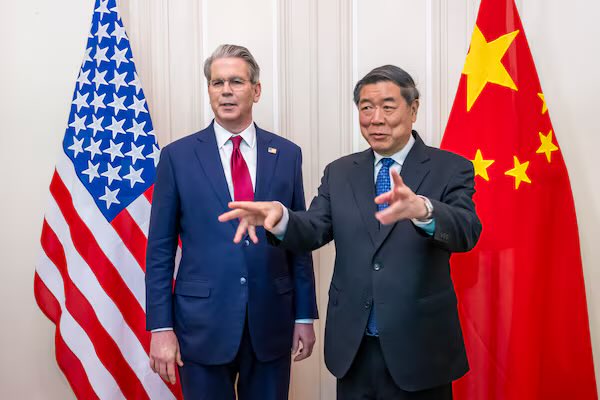
Two chokepoints. Two monopolies. One deal. And a window that closes in six weeks. On April 15, Treasury Secretary Scott Bessent told Reuters: “They’re not going to be able to get their oil. They can get oil. Not Iranian oil.” He was speaking about China. He was describing the Hormuz blockade as a targeted weapon against Beijing’s 11 to 13 percent dependence on Iranian crude, not just Tehran’s revenue. China can deliver the mirror statement without saying a word. Beijing controls 60 to 70 percent of global rare earth mining, 85 to 91 percent of processing, and 90 to 94 percent of permanent magnet manufacturing. Heavy rare earths approach 100 percent. In October 2025, Announcement No. 61 imposed licensing on any product containing more than 0.1 percent Chinese rare earth content. You can get rare earths. Not Chinese rare earths. Both chokepoints converge on the same endpoint: the semiconductor fab. Oil flows through the Strait of Hormuz and becomes the LNG that generates 42 percent of Taiwan’s electricity, which powers TSMC. Oil becomes the naphtha that feeds ethylene crackers, which produces the polyethylene packaging for chip shipment. Oil becomes the sulfur byproduct of Gulf refining, which becomes the sulfuric acid that etches silicon wafers. Every barrel that does not transit Hormuz weakens the molecular chain that ends at a transistor gate. Rare earths flow through Chinese processing facilities and become the neodymium-iron-boron permanent magnets inside every EUV lithography stepper motor, every missile guidance system, every electric vehicle drivetrain, and every wind turbine generator. Every kilogram that does not clear Chinese customs weakens the magnetic chain that ends at the same transistor gate. Two supply chains. Two chokepoints. One fab. The mega deal forming between Washington and Beijing is not about oil or minerals in isolation. It is about the swap. Bessent’s blockade leverage says: we control whether your Iranian crude flows. China’s Announcement No. 61 responds: we control whether your magnets ship. The negotiation is a mutual hostage exchange conducted through chokepoints, and both hostages are inputs to the same product the entire world needs. The timeline asymmetry is what makes the next six weeks decisive. The US can enforce the oil chokepoint today. Zero breaches. Six turnarounds. China’s rare earth leverage bites slower, measured in processing delays that cascade over months. But US alternatives take three to seven years to scale. Project Vault, the $12 billion strategic stockpile, provides a 60-day buffer. MP Materials has a $400 million DoD equity stake. Australia committed $3.5 billion in April. None replace Chinese processing before 2028. The leverage geometry is asymmetric but time-bound. Right now, both sides hold maximum leverage simultaneously. The US has a working blockade that proved 100 percent effective in 48 hours. China has an unmatched processing monopoly no Western facility can replicate this decade. If the May summit produces a grand bargain, both sides trade chokepoint access for chokepoint access, and the dependency stabilizes into managed interdependence. If the summit fails, the US accelerates diversification that erodes China’s rare earth leverage over three to seven years, while China accelerates rail and shadow-fleet alternatives that erode the blockade’s oil leverage over months. The deal must happen while both weapons are loaded. After that, both sides begin disarming unilaterally, and the architecture that emerges will be weaker, more fragmented, and more dangerous than a negotiated swap. Two chokepoints. One fab. Six weeks. open.substack.com/pub/shanakaans…
Shanaka Anslem Perera ⚡ tweet media
English
33
194
479
77.6K
condino.bsky.social 🇪🇺🇩🇪🇬🇷🇳🇴🇺🇦🇮🇱🦦 retweetledi
Dustin
Dustin@r0ck3t23·
Jeff Bezos just told you exactly how to price AI. Nobody listened. Bezos: “AI is real and it is going to change every industry. In fact it’s a very unusual technology in that regard in that it’s a horizontal enabling layer.” Horizontal enabling layer. Three words that reprice the entire technology sector. The iPhone was a vertical. One product. One new market. Electricity was a horizontal. One substrate that rewired every market on Earth. Wall Street is pricing AI like it is the next iPhone. Bezos is telling you it is the next electrical grid. Right now, thousands of companies are trying to sell AI as a product. A feature. A tool. A subscription tier. Every single one of them will be priced to zero. You do not sell a horizontal layer. You do not compete with it. You build on top of it or you disappear beneath it. For a century, entire industries survived on one thing. Complexity. The friction of navigating law, medicine, logistics, finance. That was the moat. If you could not memorize the maze, you could not compete. A horizontal layer does not navigate the maze. It dissolves the walls. Electricity did not compete with the candle industry. It erased the need for one. The most dangerous part of a horizontal shift is how quiet it is. It moves underneath the economy. The surface looks normal. Revenue still holds. Every day you operate on the old substrate, you accumulate a debt you cannot see and cannot repay. The internet repriced distribution. AI is repricing cognition itself. When intelligence becomes a utility that runs through the walls of every company on Earth, the premium on human expertise does not erode. It evaporates. This is not a disruption. Disruptions replace products. This replaces the ground you are standing on.
English
173
521
2.6K
538.9K
condino.bsky.social 🇪🇺🇩🇪🇬🇷🇳🇴🇺🇦🇮🇱🦦 retweetledi
Gandalv
Gandalv@Microinteracti1·
USA – Just Another Country Every Ally Gone. Every Bridge Burned. For decades, the alliance had a problem member. Everyone knew it. The country that invaded Iraq on a lie, tanked the global economy in 2008, and elected its own demolition crew in 2016 and again in 2025. The others adjusted. Covered for it. Kept showing up. You don't abandon a friend just because he occasionally drives into a ditch. You wait until he drives into yours. Then Trump made it simple. The friend who had always been difficult had finally done something unforgivable. The room went quiet. And then everyone moved on. America was never strong alone. It was strong because it sat at the center of the most sophisticated network of power ever assembled. British diplomats carrying influence into Canberra and Wellington. French connections opening doors across Africa and the Middle East. Norwegian and Greek shipping moving a third of the world's cargo. German engineering. Japanese capital. South Korean semiconductors. Canadian stability. Australian intelligence. Dutch and Belgian ports as the gateway to 750 million consumers. Danish and Italian naval presence across two seas. Every one of them a multiplier, lifting Washington into rooms it could never have entered alone. It was not one football team. It was hundreds of teams, running the same plays, on every field, simultaneously. Trump dismantled it the way a bored child dismantles a Lego set. Not to build something else. Just to watch the pieces fall. What is left is 340 million people staring across the Pacific at 1.4 billion. China did not need to do anything during the Iran war. It watched. It waited. It took notes. While Washington burned its relationships one by one, Beijing made calls, signed deals, and let the silence do the work. Silence, it turns out, is a remarkably effective foreign policy. The allies are not mourning. They are discovering something they perhaps always suspected: that Washington was often the ceiling, not the floor. The ally that needed managing. The friend whose chaos you had to absorb before you could get anything done. Turns out the meeting goes faster when he's not in the room. Canadian Prime Minister Mark Carney said it plainly: "The old relationship we had with the United States is over. It's clear the US is no longer a reliable partner." At Davos he told world leaders the scaffold of American power was being abandoned. "Friends," he said, "it is time for companies and countries to take their signs down." Germany said the war had nothing to do with NATO. France blocked arms flights. Spain closed its airspace. Italy denied landing rights. Poland kept its missile batteries home. Kallas delivered the European verdict: "This is not Europe's war. No one wants to actively get involved." Which, translated from diplomat into English, means: absolutely not. Starmer condemned "regime change from the skies." Sanchez accused Washington of playing "Russian roulette with the destiny of millions." Macron said: "When we want to be serious, we don't say each day the opposite of what we said the day before." Coming from a Frenchman, that is essentially a controlled demolition. These are the countries that sent their sons to the Gulf in 1991. That stood in line at NATO headquarters on September 12, 2001. They know what the alliance was. They have decided, with remarkable calm, that they are better off without the version currently on offer. This is what it looks like when an alliance leaves one of its own members behind. Professor Robert Pape put the result plainly: "Iran is far stronger than it was 40 days ago. It is in control of 20 percent of the world's oil. It is now an emerging fourth center of power." Washington went to war to prevent exactly this outcome. It succeeded, just not in the way it intended. One country launched a war alone, begged Pakistan to broker peace talks, and came home empty-handed. French Senator Claude Malhuret said it on the floor of the French Senate, viewed millions of times across the world: "Washington has become Nero's court, with an incendiary emperor, submissive courtiers and a buffoon on ketamine in charge of purging the civil service." Americans flooded his inbox asking why it had to be a French politician to say what nobody in Washington would. A year later he corrected himself. Nero's court was too dignified. "I was wrong. It is the Court of Miracles." A medieval Parisian slum where criminals and thieves pretended to be something they were not. He listed the cabinet: an anti-vaxxer and former heroin addict as Secretary of Health, a climate denier running environmental policy, an alcoholic television host handed the world's most powerful military, a Qatari lobbyist as Attorney General, a Putin admirer as National Security Advisor. Then he cited a Turkish proverb: "When a clown moves into a palace, he does not become king. The palace becomes a circus." Nero fiddled while Rome burned. Trump had Truth Social and a golf cart. He posted images of himself as Jesus on Easter Sunday, then deleted them before breakfast. Threatened to erase "a whole civilization," then teed off by Monday morning. At least Nero stayed in Rome. A country so institutionally broken that it took a French senator to say out loud what every American already knew. Congress watched. The Republicans said nothing, because nothing pays better than silence. The Democrats couldn't find their spine. The entire apparatus of the world's oldest democracy stood on the sidelines while one man helped himself to powers the constitution told him he couldn't have. Either everyone in that building has decided this is perfectly fine. Or they've concluded it's already too late. Either way, the word for that is not democracy. The White House became the circus. Gandalv / @Microinteracti1
Gandalv tweet media
English
137
1.1K
2.5K
85.9K
August V
August V@AugustCohen4·
@Rationa55373281 @TwoGermanOne Yes, it did. But in 2026, it has neither a permit nor a mine so it's not accurate or realistic to call it a mining company and not value it as one. KoBold accepts this reality and that is why has offered what it has offered to AVZ.
English
7
0
1
376
condino.bsky.social 🇪🇺🇩🇪🇬🇷🇳🇴🇺🇦🇮🇱🦦 retweetledi
Brian Krassenstein
Brian Krassenstein@krassenstein·
BREAKING: Moments ago at the White House this took place. A bunch of old people praying for a convicted felon, adjudicated rapist, who appears to have just blown up 100+ Iranian schoolchildren, while he hides the Epstein files, in which he appears in thousands of times. We are a joke.
English
13.8K
16.3K
58K
2.9M
condino.bsky.social 🇪🇺🇩🇪🇬🇷🇳🇴🇺🇦🇮🇱🦦 retweetledi
Shanaka Anslem Perera ⚡
Shanaka Anslem Perera ⚡@shanaka86·
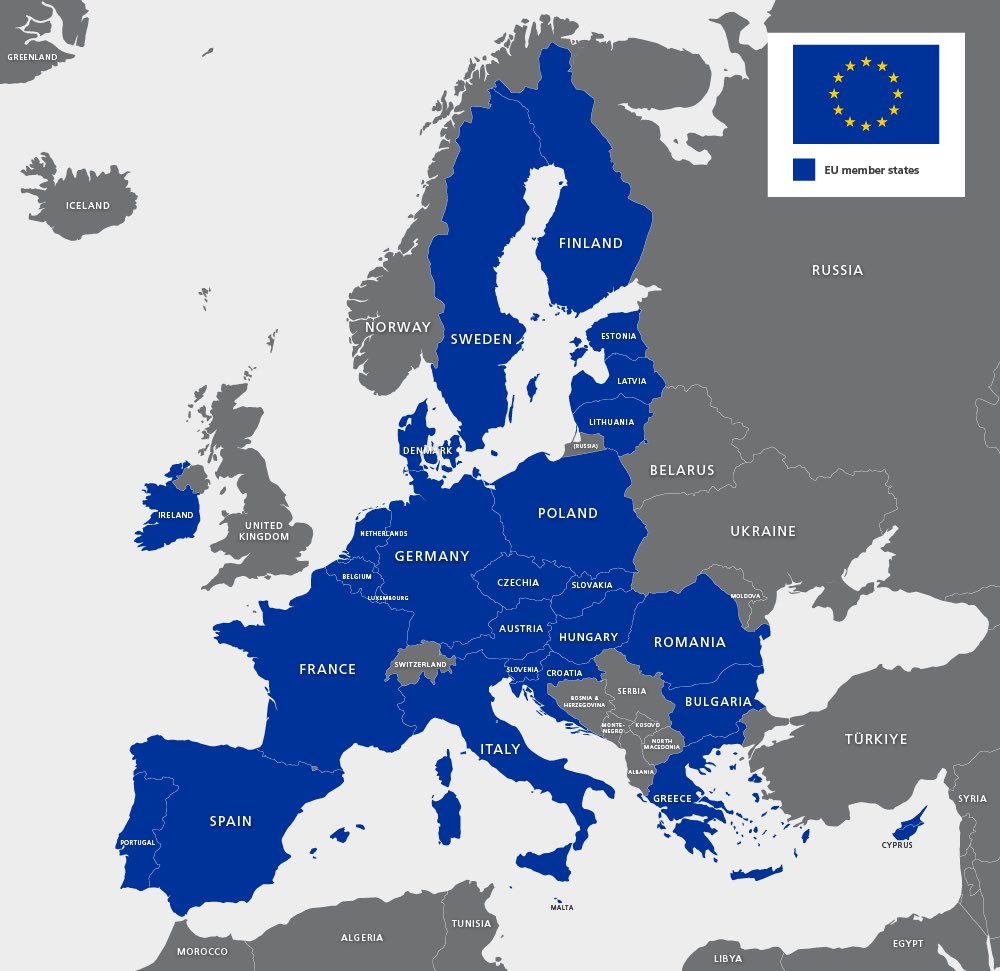
Europe spent three years and hundreds of billions of euros solving its Russian gas problem. It succeeded. It replaced a pipeline dependency on a hostile state with a maritime dependency on a strait that a different hostile state just closed. That is the Hormuz LNG crisis in one sentence. Everything else is arithmetic. The arithmetic is severe. European gas storage stands at 30 percent of capacity, the lowest this point in the season since 2022. Germany is at 20.7 percent. France is at 21.1 percent. Both are entering spring refill season, the six-month window that determines whether Europe survives next winter, at the worst possible moment. Qatar, which the European Commission spent years courting as the anchor of its post-Russia diversification strategy, halted LNG production at Ras Laffan after Iranian strikes. Italy, which absorbed roughly 50 percent of Europe’s entire Gulf LNG import share in 2024, is now the single most exposed economy on the continent to a war it has no vote on and no leverage over. TTF gas has surged 45 percent to approximately €46 per megawatt-hour. Goldman Sachs has stated that a one-month Hormuz disruption could produce a 130 percent price rise. The mechanism the market is underpricing is not the price spike. It is the timing trap. Europe refills its storage from global LNG spot markets, which in spring and summer compete against Asian buyers who are now also scrambling to replace lost Gulf supply. China has roughly 100 days of petroleum reserve cover. Every day beyond that, Chinese state buyers are in the same spot market Europe needs, bidding against European utilities for cargoes that are no longer coming through Hormuz. The refill season competition that was already tight becomes a structural auction. The Goldman Sachs price warning is not a spike that normalizes. It is a new regime that persists through summer and into next winter because the underlying physical supply has not been replaced. The US counterargument must be answered directly. American LNG now accounts for roughly 58 percent of EU imports, and Washington has every incentive to maximize flows. But infrastructure is the constraint, not political will. US LNG export capacity is already near its ceiling. Additional capacity at Golden Pass and Plaquemines adds perhaps two to three billion cubic feet per day by late 2026. Qatar alone was exporting the equivalent of ten billion cubic feet per day to global markets. The arithmetic does not close. Poland at 50.47 percent storage and Spain at 55.79 percent have time. Germany and France do not. They are approaching the threshold where industrial rationing becomes unavoidable regardless of price. Europe’s BASF complex, its aluminum smelters, its chemical producers, the industries that left in 2022 and never came back, face a second shock before the first one is settled. Europe solved the Russian problem. It outsourced the solution to the Strait of Hormuz. The Strait is now closed. The cure was the disease. Position accordingly. open.substack.com/pub/shanakaans…
Shanaka Anslem Perera ⚡ tweet media
Shanaka Anslem Perera ⚡@shanaka86

JUST IN: A South Korean lawmaker just stood up in a parliamentary briefing and said the following. South Korea has LNG reserves for nine days. Nine days. The government immediately pushed back. The Ministry of Trade, Industry and Energy stated inventories are “well above” the mandatory nine-day minimum. The Trade Minister said combined public and private reserves amount to “more than nine days.” That rebuttal contains the most alarming information in this entire story. The mandatory minimum in South Korea is nine days. That is the legal floor below which the country is considered to be in energy emergency territory. The government’s defense of its position is that it is above the floor. Not comfortably above. Not a safety buffer that absorbs a month of disruption. Above. The legal minimum. Currently. South Korea imports 7 million tonnes of LNG from Qatar alone every year. Qatar declared Force Majeure on all LNG contracts on March 2. Qatar’s LNG terminals are shut. The Strait of Hormuz, through which 20% of all global LNG trade transits, has had 80 to 90% of its tanker traffic evaporate since February 28. 150 tankers are anchored outside the Strait right now, unable to move. And this is before the insurance mechanism finished working. Major marine war risk insurers, Gard, Skuld, NorthStandard, London P&I Club, and the American Club, cancelled coverage for Persian Gulf and Hormuz transits effective March 5. Together they cover 90% of the world’s merchant fleet. Without coverage, vessels cannot access trade finance. Without trade finance, shipments do not move regardless of what happens to the physical threat environment. The ships were stopping before the insurance cancelled. After the cancellation, even ships willing to take the risk cannot get the paperwork done. South Korea’s gas inventories have hit a five-year low. KOGAS, the national gas corporation that supplies Korean industry and households, is now in the spot market competing against every other Asian LNG buyer for cargoes that are not coming through Hormuz and are being repriced by every seller who understands what nine days means. Here is what nine days means in practice. Samsung and SK Hynix manufacture the semiconductors inside every AI server, every smartphone, every data center on earth. Their fabs run 24 hours a day. They cannot cold-start. A power interruption does not pause production. It destroys in-process wafers worth hundreds of millions of dollars and creates restart timelines measured in weeks, not hours. South Korea is nine days from the moment that becomes a live risk for the global technology supply chain. Not from a cyberattack. Not from a trade war. From a ballistic missile that hit a Qatari LNG terminal and an insurance market that did the math and stopped writing policies. The Iran war started February 28. Today is March 5. Day seven. South Korea has nine days of gas. The overlap between those two numbers is the most important figure in global energy markets right now and almost nobody is writing about it. open.substack.com/pub/shanakaans…

English
75
396
1.2K
149.2K
condino.bsky.social 🇪🇺🇩🇪🇬🇷🇳🇴🇺🇦🇮🇱🦦 retweetledi
Anders Åslund
Anders Åslund@anders_aslund·
As this bizarre video illustrates, evangelical fanatics, a quarter of the US population, is a serious impediment to rational thinking in the US. Almost half the Americans claim to believe that the world was. created by God 6000 years ago. What can you do with ignorant idiots?
Power to the People ☭🕊@ProudSocialist

Rubio: “Iran is run by religious fanatics.” The White House right now:

English
162
510
2.1K
53.7K
condino.bsky.social 🇪🇺🇩🇪🇬🇷🇳🇴🇺🇦🇮🇱🦦 retweetledi
NoLimit
NoLimit@NoLimitGains·
Anthropic is hosting a major enterprise keynote TODAY in NY. New product announcements for Claude. The last 3 product drops each erased BILLIONS from software stocks. One of them erased $285B in 48 hours. Here’s how one company dismantled $2 TRILLION in software market cap: On January 30th, Anthropic quietly dropped 11 plugins for Claude Cowork. Legal, sales, finance, marketing, customer support, product management, etc. All they did was a blog post. 48 hours later, $285 BILLION in market cap was gone. – Thomson Reuters: -16% (worst single day in company history) – LegalZoom: -20% – Salesforce: -7% – ServiceNow: -7% – Adobe: -7% – RELX (LexisNexis): -14% Traders at Jefferies gave it a name: “The SaaSpocalypse.” Why did markets panic? Because Claude didn’t just improve workflows… IT REPLACED THEM. The old model: companies pay per seat. 100 employees = 100 Salesforce licenses. The new model: 10 AI agents do the work of 100 people. That’s a 90% revenue collapse for every SaaS company charging by the seat. Then came the second wave, February 20th. Anthropic launched Claude Code Security, an AI that scans entire codebases for vulnerabilities. In internal tests, it found over 500 security flaws in open-source projects, some were hidden for DECADES. One blog post, 1 hour. $15 billion was wiped from cybersecurity stocks alone. CrowdStrike: -8% Cloudflare: -8% Okta: -9% SailPoint: -9.4% JFrog: -25% And it didn’t stop. On Monday, February 23rd, cybersecurity stocks dropped for a SECOND straight day. CrowdStrike is down 11.6% total. Zscaler is down 11.3%. CrowdStrike’s CEO spent the weekend publicly defending the company. When a CEO has to go on defense over a tool that’s still in “research preview,” that tells you everything you need to know. Jefferies just downgraded Workday and DocuSign. Workday and DocuSign stocks have fallen 30–55% since January. The iShares Software ETF (IGV) is down 32% from its September peak, the worst quarterly decline since the 2008 financial crisis. – Oracle: -56% from highs – Microsoft: -26% – Palantir: -35% Software is the worst-performing S&P 500 sector of 2026. Here’s what most people are missing though. Wall Street didn’t just reprice software stocks, they repriced the entire SaaS business model. The narrative shifted from “AI helps software companies” to “AI IS the software company.” The interface is no longer the value, the outcome is. If an AI agent can pull data, write reports, review contracts, and scan code without a human ever opening an app, what exactly are you paying the subscription for? If the last three product drops each triggered billions in selloffs, imagine what a full enterprise keynote does. Meanwhile, the numbers behind Anthropic are staggering. – $30 billion raised at a $380 billion valuation. – Annualized revenue hit $14 billion. – Claude Code alone is doing $2.5 billion annualized. – Business subscriptions have quadrupled since January. Bank of America flagged the ultimate irony: Investors are punishing hyperscalers because AI spending might not pay off, while simultaneously destroying software stocks because AI will be SO successful it replaces everything. Both can’t be true at the same time. One of these trades is very wrong. We’re witnessing a complete repricing of how cognitive labor is valued. The SaaS model that dominated tech for 20 years is being dismantled by a company that didn’t even exist 5 years ago. Like I said, Anthropic is hosting an event today, and I’ll keep you updated on everything. Turn on notifications so you don’t miss anything. I’ve been here for more than 20 years, and when I make a new move in the markets, I’ll say it here publicly because I want you to win. A lot of people will regret not following me.
NoLimit tweet media
English
425
489
3.8K
8.4M