Conflictory X

5.9K posts

Conflictory X banner
Conflictory X

Conflictory X

@Conflictory_X

Conflict Observer | Geopolitics | Effects of War | News Aggregator | Sharing viewpoint of both sides, one perspective is the half perspective

Earth Katılım Ağustos 2024
183 Takip Edilen497 Takipçiler
Conflictory X
Conflictory X@Conflictory_X·
🚨🇪🇺🇺🇸 NATO admits Europe is falling behind in AI warfare technology NATO commander Adm. Pierre Vandier says Europe currently has “no real competitor” to Palantir’s battlefield AI systems, defending the alliance’s rapid adoption of the American platform. Europe is now being forced to import critical military AI infrastructure because it cannot develop equivalent systems fast enough. Vandier’s warning was blunt: Europe must prove it can build alternatives “in months or years, not a decade.” This is not just about software. It is about who controls: • battlefield intelligence • targeting systems • operational decision-making • and future military command architecture The Ukraine war accelerated a reality Europe tried to avoid: Modern warfare increasingly belongs to states and companies that dominate AI-enabled military logistics and data fusion. Right now, that ecosystem is overwhelmingly American. Europe spent years talking about “strategic autonomy.” But when a major continental war erupted, NATO still turned to US technology because Europe’s defense-tech sector was too slow, fragmented, and bureaucratic to compete at wartime speed.
Conflictory X tweet media
English
0
0
1
12
Conflictory X
Conflictory X@Conflictory_X·
🚨🇺🇸🇵🇰🇨🇳 This post mixes real separatist violence, legitimate geopolitical competition, and major unsupported leaps in attribution. What is factual: The Balochistan Liberation Army (BLA) has repeatedly attacked Pakistani security forces, Chinese workers, and China-linked infrastructure connected to the China–Pakistan Economic Corridor (CPEC). The group openly opposes the Pakistani state and Chinese projects in Balochistan, arguing they exploit local resources while locals remain underdeveloped. It is also true that some U.S. strategic analysts and think tank writers have discussed Balochistan in geopolitical terms for years, especially regarding Gwadar Port and China’s Belt and Road Initiative (BRI). Great powers routinely analyze separatist tensions in rival states. But the jump from “American strategists discussed Balochistan” to “the U.S. is directing a global terrorist proxy war on China” is not proven by the evidence presented here. That distinction matters. There is no publicly verified evidence showing direct U.S. government control of BLA operations or confirmed operational sponsorship of attacks on Chinese nationals in Pakistan. Strategic benefit does not automatically equal operational responsibility. Otherwise every rival power could be blamed for every insurgency that weakens an opponent. At the same time, the broader geopolitical logic behind the claim is not imaginary: China’s BRI projects absolutely face resistance from insurgent groups, regional rivals, and states worried about expanding Chinese influence. CPEC in particular is strategically important because it gives China access toward the Arabian Sea through Pakistan. The harsh reality is that infrastructure corridors running through unstable regions become geopolitical battlegrounds. Local insurgencies, foreign intelligence interests, economic competition, and proxy narratives all overlap there. But conflating insurgent attacks with confirmed U.S.-orchestrated terrorism requires evidence far beyond strategic coincidence or old policy essays.
Brian Berletic@BrianJBerletic

🇺🇸🇵🇰🇨🇳US-backed Terrorist Kill 16 in Pakistan as Part of Years-Long Campaign to Target China-Pakistan Economic Corridor (part of China's BRI) As the US pretended to engage in diplomacy with China, US-backed terrorists have been/still are attacking Chinese citizens, Chinese investments, and diplomatic missions around the world - including in Pakistan, Myanmar, and Afghanistan - all as part of an ADMITTED campaign to target and disrupt China's Belt and Road Initiative (BRI). This most recent attack reported on by FT admits: "A bombing near a railway track in Quetta in south-western Pakistan killed at least 16 people and injured dozens more, according to state media. The Balochistan Liberation Army, a separatist group, claimed “full responsibility” for the attack, which they said had targeted a train carrying security personnel, according to a statement from the group that was seen by the FT." and that: "The BLA has also targeted China-backed infrastructure and Chinese workers in the region, including the Gwadar Port, the flagship of the $62 bn China-Pakistan Economic Corridor. CPEC is a centrepiece of Chinese leader Xi Jinping’s Belt and Road overseas infrastructure investment programme." As far back as 2011, US policymakers discussed using BLA to target BRI projects in Pakistan - like in the National Interest piece titled, "Free Baluchistan" which says: "Pakistan has given China a base at Gwadar in the heart of Baluch territory. So an independent Baluchistan would serve U.S. strategic interests..." Ever since, the US has backed armed militants across Eurasia to target and destroy Chinese projects, kill Chinese citizens, and even have attempted to assassinate Chinese diplomats in what is a US dirty war on China. Don't listen to what the US is saying, watch what it and its proxies are doing... Sources: FT: #selection-2049.0-2056.0" target="_blank" rel="nofollow noopener">archive.ph/WhWII#selectio… National Interest: nationalinterest.org/feature/free-b…

English
0
0
1
51
Conflictory X
Conflictory X@Conflictory_X·
🚨🇺🇸🇮🇱 Rubio draws the line clearly: Even if a US–Iran deal moves forward, Washington is not restricting Israel’s military freedom of action. Marco Rubio says negotiations are centered on: • reopening the Strait of Hormuz • launching time-limited nuclear talks • and preventing a broader regional escalation But he added: “Israel always has a right to protect itself.” That single sentence matters more than most of the diplomatic language. The emerging framework appears designed to stabilize the region economically and militarily — not to fully align US and Israeli threat perceptions on Iran. Washington may accept managed containment. Israel still appears committed to active deterrence and unilateral enforcement if necessary. This is the clearest sign yet that even under a US–Iran agreement, Israel is likely preserving the option for future covert operations, airstrikes, or proxy-targeted escalation if it believes Iran crosses strategic red lines. In other words, diplomacy may reduce immediate tensions, but it does not eliminate the possibility of future Israeli military action if Tehran’s behavior is seen as threatening Israel’s long-term security interests.
Conflictory X tweet media
Conflictory X@Conflictory_X

🚨🇺🇸🇮🇷 Rubio signals the emerging US–Iran framework is now centered on one immediate objective: Reopening the Strait of Hormuz before the global economy starts taking deeper damage. Marco Rubio says a “pretty solid” proposal is on the table involving: • reopening the Strait • a time-limited nuclear negotiation framework • and broader regional backing for the deal Washington is no longer talking like a side expecting unconditional Iranian capitulation. It is talking like a power trying to stabilize escalation while preserving leverage. That shift matters. The US appears increasingly willing to separate: • immediate maritime stabilization from • long-term nuclear resolution This is evolving into a phased containment framework, not a decisive settlement. Step 1: Prevent an energy and shipping crisis. Step 2: Freeze escalation. Step 3: Attempt to negotiate the nuclear issue over time without triggering another regional war. Rubio’s language reflects a reality Washington now understands clearly: The longer Hormuz instability continues, the more the conflict stops being an Iran problem and starts becoming a global economic problem

English
0
0
1
81
Conflictory X
Conflictory X@Conflictory_X·
🚨🇺🇸🇮🇷 Rubio signals the emerging US–Iran framework is now centered on one immediate objective: Reopening the Strait of Hormuz before the global economy starts taking deeper damage. Marco Rubio says a “pretty solid” proposal is on the table involving: • reopening the Strait • a time-limited nuclear negotiation framework • and broader regional backing for the deal Washington is no longer talking like a side expecting unconditional Iranian capitulation. It is talking like a power trying to stabilize escalation while preserving leverage. That shift matters. The US appears increasingly willing to separate: • immediate maritime stabilization from • long-term nuclear resolution This is evolving into a phased containment framework, not a decisive settlement. Step 1: Prevent an energy and shipping crisis. Step 2: Freeze escalation. Step 3: Attempt to negotiate the nuclear issue over time without triggering another regional war. Rubio’s language reflects a reality Washington now understands clearly: The longer Hormuz instability continues, the more the conflict stops being an Iran problem and starts becoming a global economic problem
English
0
0
1
123
Conflictory X
Conflictory X@Conflictory_X·
🚨🇺🇸 ISRAEL HAYOM ANALYSIS: TRUMP’S IRAN FILE IS BECOMING A STRATEGIC AND POLITICAL BURDEN Israel Hayom reports internal frustration within the Trump political orbit over the trajectory of the Iran negotiations. Key points from the analysis: • Expected “victory narrative” after escalation has not materialized • Iran is seen as still shaping terms rather than accepting them • Washington is perceived as stuck in prolonged Iran negotiations instead of pivoting to other global priorities • Domestic political expectations of quick diplomatic wins have not been met This reflects a recurring pattern in high-intensity diplomacy: military pressure does not automatically translate into negotiated capitulation. Instead of producing a clean “winner–loser” outcome, the Iran file has evolved into a prolonged bargaining structure where: • Iran retains leverage through escalation risk and regional networks • The US retains leverage through sanctions and military posture • Neither side can fully force unconditional compliance without triggering wider instability The frustration described here is not just political — it is structural. Iran is not a conventional negotiating counterpart that collapses under pressure. It is a system designed to absorb pressure, extend timelines, and trade concessions selectively while preserving core deterrence assets. That creates a mismatch with expectations of rapid, decisive diplomatic outcomes. The Iran file is not “stuck” because of mismanagement. It is stuck because the underlying conflict is not easily convertible into a simple win–loss framework, it is a long-duration power contest where leverage is continuously exchanged, not decisively resolved.
Conflictory X tweet media
English
0
0
1
47
Conflictory X
Conflictory X@Conflictory_X·
🚨🇺🇸🇮🇷 Rubio is essentially admitting what many headlines were glossing over: a ceasefire framework and a nuclear agreement are not the same thing. Reopening shipping lanes or agreeing to basic principles can happen relatively fast. But nuclear deals are technical, legal, and verification-heavy. They involve enrichment levels, uranium stockpiles, inspections, centrifuge limits, sanctions triggers, enforcement mechanisms, and timelines. That takes weeks or months, not “72 hours on the back of an apkin.” The important signal here is political expectation management. The administration is trying to slow down the “historic peace deal” hype and prepare people for a long negotiation process with unresolved details still ahead. It also indirectly shows something else: despite all the public rhetoric, the U.S. likely understands that Iran cannot simply be forced into total nuclear dismantlement overnight without risking collapse of the talks. So the likely structure emerging is: short-term de-escalation first, long-term nuclear bargaining second. That means the real fight hasn’t ended, it has shifted from missiles to technical negotiations and enforcement disputes.
Mario Nawfal@MarioNawfal

🇺🇸🇮🇷 Rubio pumps the brakes on Iran deal expectations. "We're not kicking it till later. Nuclear talks are highly technical matters. You can't do a nuclear thing in 72 hours on the back of a napkin." The MOU is close. The actual nuclear deal is a different, longer conversation Source: NYT

English
0
1
1
72
Conflictory X
Conflictory X@Conflictory_X·
🚨🇪🇺 STRAIT OF HORMUZ DISRUPTION THREATENS EUROPEAN ENERGY SECURITY Al Mayadeen reports that Equinor has warned prolonged disruption in the Strait of Hormuz could trigger a serious gas supply crisis across Europe. Key warning: • If disruption continues another 1–3 months • European gas reserves could fall sharply below seasonal averages • Energy supply pressure would intensify heading into storage and winter planning cycles • LNG flows and maritime energy logistics would face major strain Europe’s post-Ukraine energy model was built around diversification, not immunity. The assumption was: replace dependence on Russian pipeline gas with global LNG flexibility. But Hormuz exposes the weakness in that strategy. A massive share of global LNG and energy shipping still passes through a narrow maritime corridor vulnerable to military escalation, mining, drone warfare, or naval blockade pressure. The Strait of Hormuz is no longer just a Middle East security issue. It is effectively part of Europe’s energy survival infrastructure. That means any prolonged Gulf escalation now directly impacts: • European inflation • industrial production • electricity markets • shipping insurance • and political stability The global economy spent years learning the risks of pipeline dependency after Ukraine. Now it is confronting the risks of maritime chokepoint dependency. Different geography. Same strategic vulnerability.
Conflictory X tweet media
English
0
0
2
50
Conflictory X
Conflictory X@Conflictory_X·
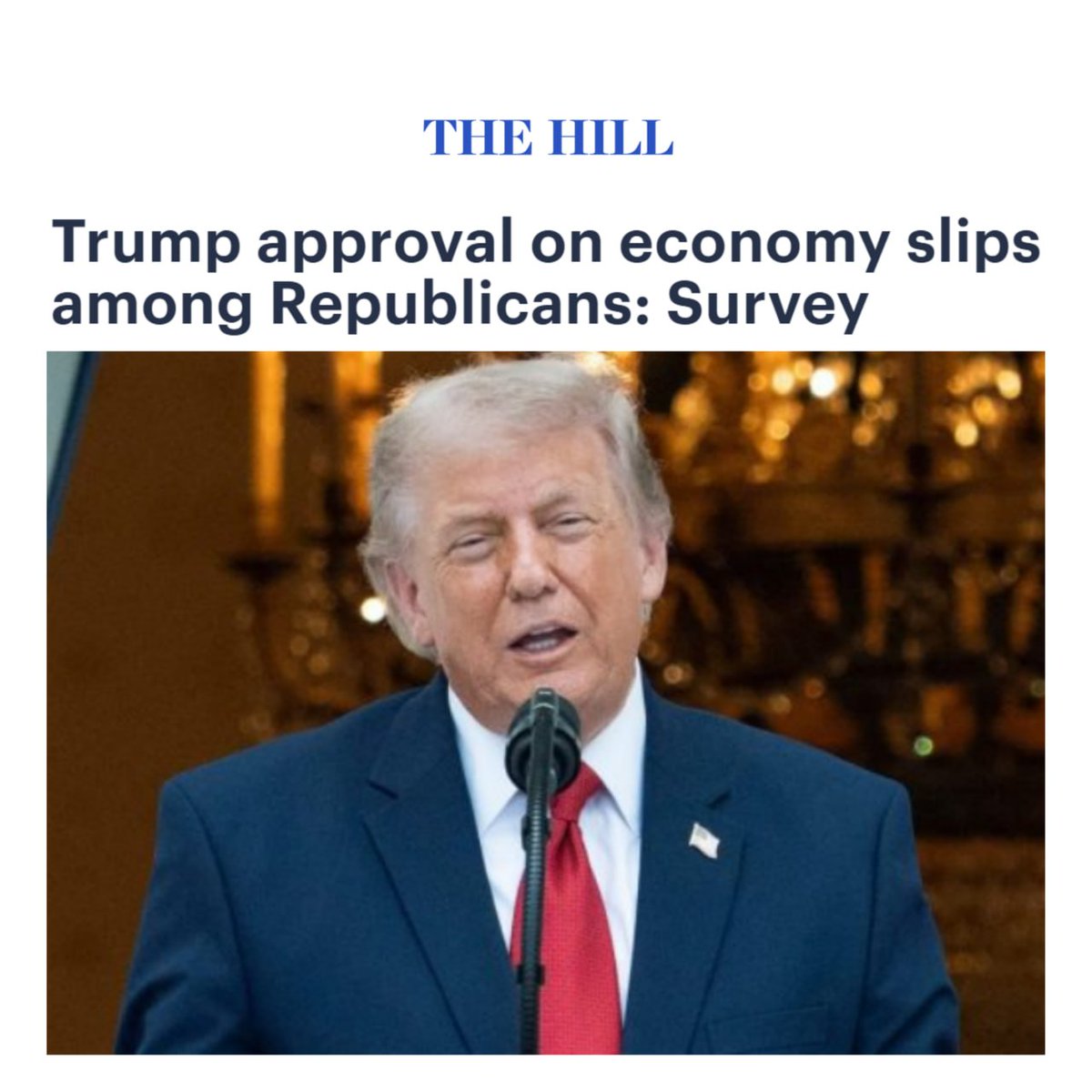
A drop from 78% to 63% among Republicans is politically significant because economic approval is supposed to be Trump’s strongest area, not his weakest. This doesn’t mean Republicans are suddenly turning against Trump overall. It means inflation pressure, market uncertainty, tariffs, debt concerns, or cost-of-living issues are starting to cut into the perception that he automatically delivers economic stability. The key point is structural: Trump’s political brand was built heavily on the idea of economic competence and business-oriented leadership. So even a moderate erosion on the economy matters more for him than it would for a president whose support is driven mainly by ideology or foreign policy. At the same time, 63% is still a strong number by modern polarized American standards. Most Republican voters are not abandoning him; they are signaling frustration, especially if expectations were extremely high at the start of the term. The harsher reality is this: Presidents usually get judged less on macroeconomic theory and more on everyday feeling. If prices stay high, wages feel weak, markets become volatile, or recession fears rise, approval drops regardless of what official statistics say. Economic perception in politics is psychological as much as technical.
English
0
0
1
24
Sprinter Press Agency
Sprinter Press Agency@SprinterPress·
The Hill: Decline in Republicans' Satisfaction with Trump's Economic Policy An Associated Press–NORC poll shows that the level of satisfaction with Trump's economic policy among adult American Republicans has dropped to 63%, compared to 78% at the beginning of his second presidential term.
Sprinter Press Agency tweet media
English
3
3
7
4.9K
Conflictory X
Conflictory X@Conflictory_X·
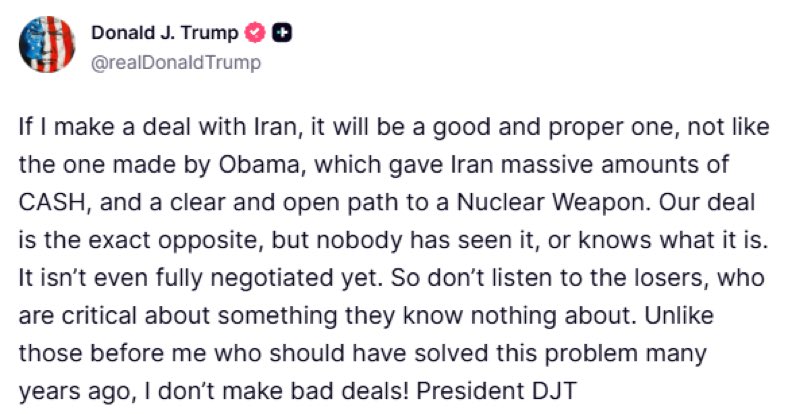
🚨🇺🇸 This statement is less about explaining the deal and more about controlling the political narrative before the details become public. Trump is preemptively framing any future agreement as fundamentally different from Obama’s JCPOA, even while admitting the new deal is “not fully negotiated yet” and that “nobody has seen it.” That’s politically important because it gives him room to sell compromises later without appearing to reverse his earlier anti-Iran deal rhetoric. The core contradiction is obvious: He is asking supporters to trust a deal whose actual terms are still unknown while simultaneously attacking critics for speculating about it. The repeated comparison with Obama also shows the real audience here is domestic politics as much as Iran. Trump is trying to establish a simple narrative: Obama = concession and weakness. Trump = pressure and control. Whether that is true depends entirely on the final enforcement mechanisms, uranium limits, inspection regime, sanctions relief structure, and verification terms, none of which are publicly finalized. The harsh reality is that most nuclear negotiations eventually involve trade-offs both sides publicly deny making until the agreement is signed. Iran will want sanctions relief and sovereignty recognition. The U.S. will want enrichment limits and monitoring. Neither side will get everything. So right now, this is narrative positioning, not proof of a superior deal.
Clash Report@clashreport

Trump: If I make a deal with Iran, it will be a good and proper one, not like the one made by Obama, which gave Iran massive amounts of CASH, and a clear and open path to a Nuclear Weapon. Our deal is the exact opposite, but nobody has seen it, or knows what it is. It isn’t even fully negotiated yet. So don’t listen to the losers, who are critical about something they know nothing about. Unlike those before me who should have solved this problem many years ago, I don’t make bad deals!

English
0
0
1
64
Conflictory X
Conflictory X@Conflictory_X·
🚨🇺🇸🇮🇷 Trump is trying to frame the emerging Iran negotiations as the complete opposite of the Obama-era nuclear deal. • No upfront concessions • No immediate sanctions relief • No “cash for promises” framework • Pressure stays active during negotiations • Iran gets relief only after compliance and verification But the political reality is more complicated. If the final agreement allows Iran to: • keep enrichment capability • preserve missile infrastructure • maintain proxy networks • and recover economically through sanctions waivers then critics will argue the structure is still containment, not dismantlement. Trump’s core objective is not just negotiating with Iran — it is politically differentiating his approach from Obama’s while avoiding another Middle East war and preventing an oil shock at the same time. That is an extremely narrow balancing space. The success or failure of this deal will not be judged by speeches. It will be judged by one question: Is Iran strategically weaker after the agreement than before it
Conflictory X tweet media
English
0
0
1
45
Conflictory X
Conflictory X@Conflictory_X·
🚨🇱🇧 HEZBOLLAH–LEBANON TENSIONS: POLITICAL ESCALATION SIGNALS DEEP INTERNAL POWER STRUGGLE Reports circulating in Lebanese political media indicate heightened rhetoric between Hezbollah leadership and the Lebanese state over efforts to assert exclusive control over national weapons. • Hezbollah leader reportedly urges mass mobilization against the government • Comes amid state pressure to regulate or disarm non-state armed actors • Framed by Hezbollah as resistance to “foreign-backed internal policies” • Government position aligned with broader US-backed security restructuring efforts • Situation reflects long-standing dispute over sovereignty vs armed resistance structure Hezbollah remains a central military and political actor in Lebanon, while the state continues attempting to consolidate monopoly over force under increasing international pressure. This is not a new confrontation — but it is occurring in a more fragile environment: • ongoing Israel–Lebanon hostilities • economic collapse and state weakness • external diplomatic pressure tied to regional Iran–US negotiations • competing legitimacy claims over national security authority This dynamic is less about a single speech and more about a structural contradiction: Lebanon operates with parallel power centers — one institutional, one armed and ideologically independent. When the state attempts to centralize security authority during a regional conflict cycle, groups like Hezbollah often interpret it as existential pressure rather than administrative reform. That is what turns governance disputes into mobilization politics. This reflects a recurring Lebanese pattern: internal political authority is never purely domestic — it is continuously shaped by regional conflict, external alliances, and the unresolved question of who ultimately controls coercive power inside the state.
Conflictory X tweet media
English
0
0
1
30
Conflictory X
Conflictory X@Conflictory_X·
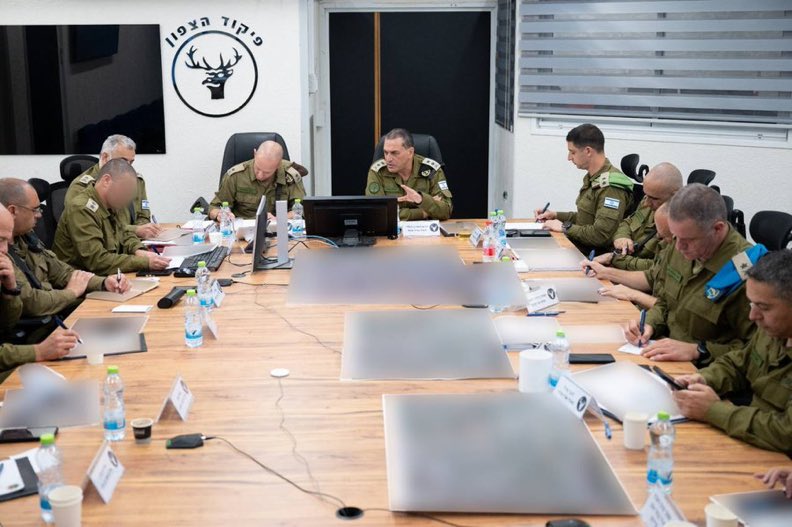
🚨🇮🇱🇮🇷 IDF Chief: Israel ready to re-enter intense combat if Iran deal collapses Eyal Zamir says Israel is monitoring the emerging US–Iran framework and remains fully prepared to “weaken Iran’s capabilities” if escalation resumes. • IDF maintains immediate strike readiness • No slowdown in operational planning against Iran • “Return to intense combat” remains an active option • Post-deal environment does not equal de-escalation Israel is signalling that any US–Iran agreement will be treated as conditional and reversible, not stabilizing. Deterrence is being maintained through readiness posture, not diplomacy. Even if Washington and Tehran strike a deal, Israel is positioning itself to act as the enforcement layer outside the agreement, not a stakeholder bound by it.
Conflictory X tweet media
English
0
0
1
74
Conflictory X
Conflictory X@Conflictory_X·
This is standard IDF signaling tied to the U.S.–Iran negotiation cycle. Zamir is basically doing three things: Reaffirming full military readiness while diplomacy is ongoing Keeping strike options open against Iran if talks collapse Applying pressure signaling so Iran doesn’t assume negotiations reduce deterrence The key point is structural, not new: Even during “deal” talks, Israel maintains an explicit doctrine of rapid return to high-intensity operations. So this isn’t a policy shift or escalation announcement, it’s deliberate ambiguity. Diplomacy in progress, but no downgrade in war posture. In simple terms: talks don’t stop preparation for war; they run in parallel.
English
0
0
2
90
Open Source Intel
Open Source Intel@Osint613·
IDF Chief of Staff Zamir on the emerging U.S.-Iran deal: "The IDF is following regional developments, ready to return to intense combat immediately and to weaken the Iranian terrorist regime and its capabilities more deeply. We will maintain readiness and flexibility for action as long as necessary."
Open Source Intel tweet media
English
23
44
285
37.8K
Conflictory X
Conflictory X@Conflictory_X·
This report sits in a familiar pattern of U.S.–Iran negotiation reporting: early-stage “framework agreement” leaks attributed to unnamed officials, paired with unresolved core technical disputes that are still being negotiated. What is actually being reported across multiple outlets is consistent in structure: U.S. officials say there is an in-principle framework where Iran may dispose of or transfer highly enriched uranium, but no final signed agreement exists, and even the mechanism (destruction vs dilution vs export) is still being negotiated. CBS reports specifically attribute the claim to a senior White House official saying Iran has agreed “in principle,” and that the supreme leader has allegedly approved a framework rather than a finalized treaty. That distinction matters, because “framework approval” is not the same as binding implementation. At the same time, Iranian-linked reporting and officials are already pushing back, saying the nuclear file is not fully part of any preliminary agreement and that no transfer of highly enriched uranium has been agreed yet. So what is actually solid here? There is clear U.S. political signaling that negotiations are “largely negotiated” There is reported tentative acceptance of a framework by Iranian leadership There is no verified operational agreement on uranium disposal mechanics And there is direct contradiction between U.S. and Iranian sources on what was agreed The political layer is also obvious: both sides are trying to control the narrative. For the U.S., framing Iran as having accepted uranium disposal strengthens the image of diplomatic success and maximum-pressure effectiveness. For Iran, denying or narrowing the claim protects internal legitimacy and prevents the appearance of strategic capitulation before terms are finalized. This is not a concluded nuclear agreement. It is a high-level, politically sensitive negotiation where both sides are selectively confirming pieces of a framework while the most important technical and enforcement details are still unresolved and contested.
English
0
0
1
288
Clash Report
Clash Report@clashreport·
Iran has agreed in principle to dispose of its highly enriched uranium as part of ongoing U.S. negotiations, according to a senior White House official. A final deal has not yet been signed, but the Trump administration believes Iran’s supreme leader has approved the framework. Officials are still negotiating how the uranium would be disposed of. Source: CBS News
English
51
60
424
50.8K
Conflictory X
Conflictory X@Conflictory_X·
🚨🇺🇸🇮🇷 US–IRAN TALKS: SAME CORE IMPASSE, DIFFERENT WORDING — NUCLEAR “PRINCIPLE VS SEQUENCING” DEADLOCK Reports suggest the gap in US–Iran negotiations may be wider than recent optimism implied, with the nuclear issue still the central sticking point. • US may accept delaying technical nuclear details • In exchange, Washington prioritizes reopening the Strait of Hormuz and maintaining negotiation momentum • US also wants a written Iranian commitment to eventually end its nuclear program • Iran reportedly rejects binding nuclear commitments at the initial stage • Tehran prefers postponing both principle and technical nuclear constraints • Core disagreement: sequencing vs obligation What looks like progress is actually a dispute over negotiation architecture. Washington’s position: Set the principle early — Iran must formally commit to ending or permanently limiting its nuclear program, then negotiate the mechanics later. Tehran’s position: Avoid locking in irreversible commitments early, keep both principle and implementation flexible until broader sanctions and security issues are resolved. This is not a disagreement over centrifuges or enrichment levels yet — it is a struggle over bargaining structure itself. Whoever wins the sequencing battle effectively defines the entire deal: • If the US locks in principle early → Iran negotiates under constraint • If Iran avoids early commitments → negotiations remain reversible and leverage stays distributed This is why the dispute persists even when both sides publicly describe talks as “constructive.” They are not arguing about details, they are arguing about what counts as an obligation. The real conflict is not “what Iran must do,” but when Iran must be bound to do it. And in diplomacy, sequencing often determines outcomes more than substance.
Conflictory X tweet media
English
0
1
1
73
Conflictory X
Conflictory X@Conflictory_X·
🚨🇺🇸🇮🇷 IRAN NUCLEAR TALKS: WASHINGTON SIGNALS “DIPLOMACY, BUT NO STRENGTHENING OF IRAN” Marco Rubio says President Trump will not accept any agreement that leaves Iran in a stronger nuclear position, while still emphasizing diplomacy as the preferred route. • US will reject any deal that enhances Iran’s nuclear leverage • Washington frames previous Iran deal models as unacceptable precedent • Diplomacy still described as the primary pathway • Core condition: Iran must not emerge with greater nuclear capability or strategic flexibility This is classic coercive diplomacy messaging: keep the diplomatic channel open, but tightly define the acceptable outcome range before negotiations conclude. The real constraint being set here is not “no deal” — it is “no net strategic gain for Iran.” That means any agreement must be structured around: • verifiable limits on enrichment • irreversible constraints on breakout pathways • and strict sequencing of any sanctions relief This signals that Washington is trying to avoid what policymakers see as the core failure mode of past agreements: freezing Iran temporarily while allowing long-term strategic recovery. But there is an inherent tension in that position: The more restrictive the deal becomes, the more it resembles enforcement rather than compromise and the harder it becomes for Iran to politically accept without extracting offsetting gains elsewhere (sanctions, regional posture, maritime concessions). The US is effectively defining the negotiation boundary as “contain Iran, not empower it.” The outcome of that framing will determine whether the process produces a durable framework or collapses into renewed escalation once the trade-offs stop balancing politically.
Conflictory X tweet mediaConflictory X tweet mediaConflictory X tweet media
English
0
0
2
68
Conflictory X retweetledi
Conflictory X
Conflictory X@Conflictory_X·
🚨🇷🇺🇺🇦 Russia launches Oreshnik IRBMs toward Kyiv amid major escalation Reports indicate Russia has launched multiple Oreshnik intermediate-range ballistic missiles (IRBMs) toward Ukraine’s capital, Kyiv, in a major escalation of the conflict. Key points: ▫ Multiple Oreshnik IRBMs were reportedly launched at Kyiv ▫ The missile system is described as extremely difficult to intercept due to its speed and flight profile ▫ The strike follows a reported Ukrainian drone attack on a student dormitory that allegedly killed 6 people ▫ Russian retaliation appears to be escalating in both scale and strategic messaging The reported launch signals another sharp escalation phase in the war, with Russia appearing to shift toward heavier strategic missile use following high-profile Ukrainian strikes inside Russian-controlled areas.
English
0
2
4
1.1K
Conflictory X
Conflictory X@Conflictory_X·
🚨🇺🇸🇮🇷 If a US–Iran deal happens, Israel’s Iran strategy won’t disappear — it will adapt into permanent containment • No trust in the agreement as “final security” • Covert intelligence + sabotage against nuclear breakout pathways • Preemptive strike doctrine kept intact for red-line breaches • Deep coordination with US + Gulf + Europe intelligence networks • Continuous monitoring of enrichment, proxies, and missile expansion • Pressure shift from stopping a deal → enforcing its limits in real time A US–Iran agreement would likely reduce open escalation, but it won’t remove Israel’s core assumption: Iran retains latent capability and can rebuild fast if unchecked. The deal may freeze the conflict diplomatically, but Israel’s strategy would shift to permanent enforcement mode — treating containment as an ongoing war below the threshold of open conflict.
Conflictory X tweet mediaConflictory X tweet media
English
0
1
1
61
Conflictory X
Conflictory X@Conflictory_X·
🚨🇺🇸🇮🇷 TRUMP SIGNALS HARDER-LINE IRAN FRAMEWORK WHILE QUIETLY OPENING THE DOOR TO A REGIONAL RESET Donald Trump says negotiations with Iran are progressing “in an orderly and constructive manner,” while insisting the US blockade will remain fully in place until a final agreement is signed and certified. Key points from Trump’s statement: • Calls the Obama-era nuclear deal “one of the worst deals ever made” • Claims current negotiations are “the exact opposite” • Says US negotiators were instructed not to rush • Confirms blockade remains active during talks • Repeats Iran “cannot develop or procure” a nuclear weapon • Praises Middle Eastern states for supporting negotiations • Floats possibility of Iran eventually joining the Abraham Accords This statement is doing two things simultaneously. First: Trump is politically differentiating the current framework from the Obama-era JCPOA by emphasizing pressure-first diplomacy instead of sanctions relief-first diplomacy. Second: He is signaling that the negotiations are evolving beyond pure nuclear containment into broader regional architecture discussions. That Abraham Accords reference was not random. It suggests Washington may be exploring a larger geopolitical vision: • Gulf normalization • controlled Iran reintegration • maritime stabilization • and a reduced probability of region-wide war The blockade language matters more than the rhetoric. Trump is signaling that economic coercion remains active leverage until implementation is verified. That reflects a lesson Washington believes it learned from previous nuclear diplomacy: sanctions relief given too early weakens enforcement leverage later. But the bigger shift is conceptual. The US appears increasingly focused on transforming Iran from an active escalation center into a managed regional stakeholder — not necessarily a trusted ally, but a contained participant inside a broader Gulf order. If these talks continue progressing, the real geopolitical shift may not be nuclear restrictions alone. It may be the gradual transition from permanent confrontation toward a heavily monitored coexistence framework where the US, Gulf states, Israel, and even Iran operate inside the same regional stability structure — while still fundamentally distrusting each other. In other words, the negotiations may ultimately be less about friendship and more about creating a durable balance of deterrence, economic incentives, and regional coordination designed to prevent another major Middle East conflict.
Conflictory X tweet media
English
0
0
2
68
Conflictory X
Conflictory X@Conflictory_X·
Trump’s statement is doing three things at once: attacking Obama-era diplomacy, reassuring hawks that pressure remains, and signaling to Iran that negotiations are still alive. The most important line is not the insult toward the Obama deal — it is “the blockade will remain in full force and effect until an agreement is reached.” That means Trump is openly using maximum economic and military pressure while negotiating, which is consistent with his long-standing bargaining style: maintain coercive leverage first, negotiate second. His comparison with the Obama nuclear deal is politically predictable. Trump has always framed the JCPOA as a pathway to eventual Iranian nuclear capability because it allowed limited enrichment under timelines and verification mechanisms rather than total dismantlement. Supporters of the Obama deal argued the opposite: that inspections and restrictions delayed Iran’s pathway and reduced immediate escalation risk. What’s notable here is the softer tone toward Iran compared to earlier rhetoric. Phrases like “professional and productive” and even floating the idea of Iran joining a broader regional framework linked to the Abraham Accords suggest the administration is trying to present diplomacy as strategic strength rather than concession. But the harsh reality is this: pressure-based diplomacy cuts both ways. Maintaining blockades and coercive measures during negotiations can increase leverage, but it also raises the risk of collapse if either side believes the other is negotiating in bad faith. Iran’s leadership will likely interpret continued pressure as an attempt to force capitulation rather than compromise, while the Trump administration clearly believes time and sanctions favor Washington. The broader geopolitical signal is that the U.S. is trying to avoid a direct regional war while still keeping overwhelming leverage intact. That is a difficult balance historically. Pressure campaigns often create short-term negotiating leverage, but they also increase mistrust and the probability of future escalation if talks fail. This statement is less about peace and more about controlled coercion. Trump is trying to negotiate from a position where Iran feels economically trapped but diplomatically engaged at the same time.
English
0
0
1
149
Barak Ravid
Barak Ravid@BarakRavid·
🚨Trump on Truth Social: One of the worst deals ever made by our Country was the Iran Nuclear Deal, put forth and signed into existence by Barack Hussein Obama and the rank amateurs of the Obama Administration. It was a direct path to Iran developing a Nuclear Weapon. Not so with the transaction currently being negotiated with Iran by the Trump Administration - THE EXACT OPPOSITE, in fact! The negotiations are proceeding in an orderly and constructive manner, and I have informed my representatives not to rush into a deal in that time is on our side. The Blockade will remain in full force and effect until an agreement is reached, certified, and signed. Both sides must take their time and get it right. There can be no mistakes! Our relationship with Iran is becoming a much more professional and productive one. They must understand, however, that they cannot develop or procure a Nuclear Weapon or Bomb. I would like to thank, thus far, all of the countries of the Middle East for their support and cooperation, which will be further enhanced and strengthened by their joining the Nations of the historic Abraham Accords and, who knows, perhaps the Islamic Republic of Iran would like to join, as well! Thank you for your attention to this matter
English
188
94
422
208.2K