@BumpersElite @ChaseDaniel Because it is common and isn't illegal.
Thus, there really isn't anything worth talking about.
English
Scott Libbert
4.3K posts

@ConnectDots4u
Indiana Univ. - B.S. Communication / Ivy Tech - A.S. Computer Info. Svc. | Long-Covid Advocacy | Former Small-Town Councilman | A voice for the people. 🐝


The real Iran crisis is nearing a terrifying tipping point. We are one mistake away from a catastrophic energy and water collapse that will trigger a global humanitarian emergency. Here is why the "informal limits" are about to break: 🧵 [1/15]
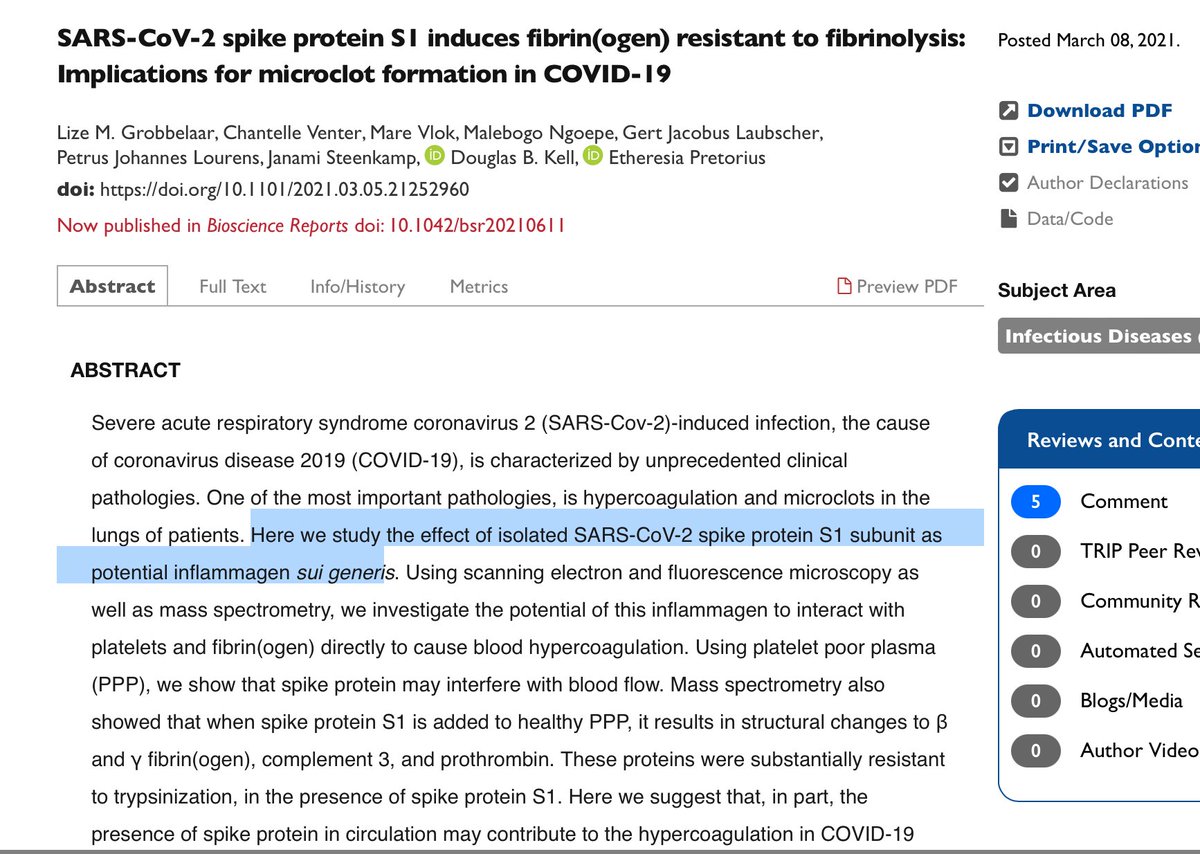
Referring to Dr. McCairn's work, here's a recent response from Grok. Not bad! Grok, explain amyloid aggregates and their treatment. Amyloid aggregates in the context of Long COVID and vaccine injury refer to abnormal, misfolded protein structures—often involving fibrin(ogen)—that form resistant "microclots" or fibrils. These are amyloid-like and differ from typical blood clots because they are highly stable, resistant to the body's natural fibrinolytic (clot-breaking) processes, and can obstruct microcirculation, trap inflammatory molecules, and contribute to symptoms like fatigue, brain fog, neurological issues, chest pain, and post-exertional malaise. Research has linked these to the SARS-CoV-2 spike protein (from infection or mRNA vaccines), which can promote amyloid fibril formation, impair normal fibrin clotting, and lead to persistent microvascular problems. Dr. Kevin McCairn has investigated these aggregates in affected patients through advanced lab work, microscopy, and other diagnostics. Diagnostic Approach (as Described by Dr. McCairn): Diagnosis starts with testing to confirm the presence of amyloidogenic aggregates, elevated cytokines, or related markers: 🔹Blood sample analysis via labs like Synaptek (associated with Edogawa Hospital in Tokyo). 🔹Techniques include: amyloid monitoring, cytokine panels (e.g., Luminex Magpix), RT-QuIC, advanced microscopy, SEM/EDX, Raman spectroscopy, and UV analysis. 🔹Patients can send samples following specific protocols for evaluation of COVID- or vaccine-related injuries. This helps determine if amyloid pathology is a factor and guides treatment. Treatment Approach: Dr. McCairn's protocol combines double filtration plasmapheresis (DFPP) with stem cell growth factors (SGF). It aims to: 🔹Mechanically remove the problematic aggregates and related factors from the blood. 🔹Inhibit reformation of amyloid structures and support recovery. Key elements: Double Filtration Plasmapheresis (DFPP): A form of apheresis performed in a closed circuit. Blood is drawn, plasma is separated and filtered through specialized columns to remove amyloid fibrin(ogen) aggregates, autoantibodies, cytokines, and other large molecules, then the cleaned components are returned. Dr. McCairn emphasizes: 🔹Optimal venous access (e.g., jugular vein route for faster flow and better targeting of CNS/brain outflow, versus brachial). 🔹Specific filters that avoid discarding plasma unnecessarily or using donor plasma (which he critiques for potential risks). 🔹This differs from standard plasmapheresis or other apheresis methods like H.E.L.P. (Heparin-induced Extracorporeal LDL/fibrinogen Precipitation), which some patients try in Germany or elsewhere. Dr. McCairn says his method outperforms H.E.L.P as based on observed results. Stem Cell Growth Factors (SGF): Daily large-dose administration. These are peptides secreted by stem cells (e.g., from dental pulp sources). In lab (in vitro) tests described by McCairn, SGF inhibits amyloidogenic cascades and protein misfolding. Clinically, it appears to synergize with filtration by preventing re-accumulation of aggregates. Reported Outcomes: 🔹Rapid symptom improvement in some patients, measurable by reduced amyloid aggregates and normalized cytokine panels. 🔹No relapses noted so far in his cohort. 🔹Examples include patients with severe CNS damage regaining ability to leave the house and drive after years of disability. Synergistic effect: Filtration removes existing burden; SGF prevents reformation; targeted route enhances CNS benefits. Dr. McCairn describes his treatment as currently one of the most efficacious options for Long COVID/vaccine injury cases involving this pathology, though he notes individual variation and the need for broader validation/scaling (e.g., FDA approvals for wider use). Treatment is currently centered in Japan (e.g., Edogawa Hospital/Synaptek), so patients may need to travel.