Cooked On Chain Podcast

313 posts

Cooked On Chain Podcast banner
Cooked On Chain Podcast

Cooked On Chain Podcast

@CookedOCPod

Accelerating Web3, documenting the builders. Podcast with top guests on conviction, craft, and scaling.

Katılım Nisan 2009
600 Takip Edilen13.8K Takipçiler
Cooked On Chain Podcast
Cooked On Chain Podcast@CookedOCPod·
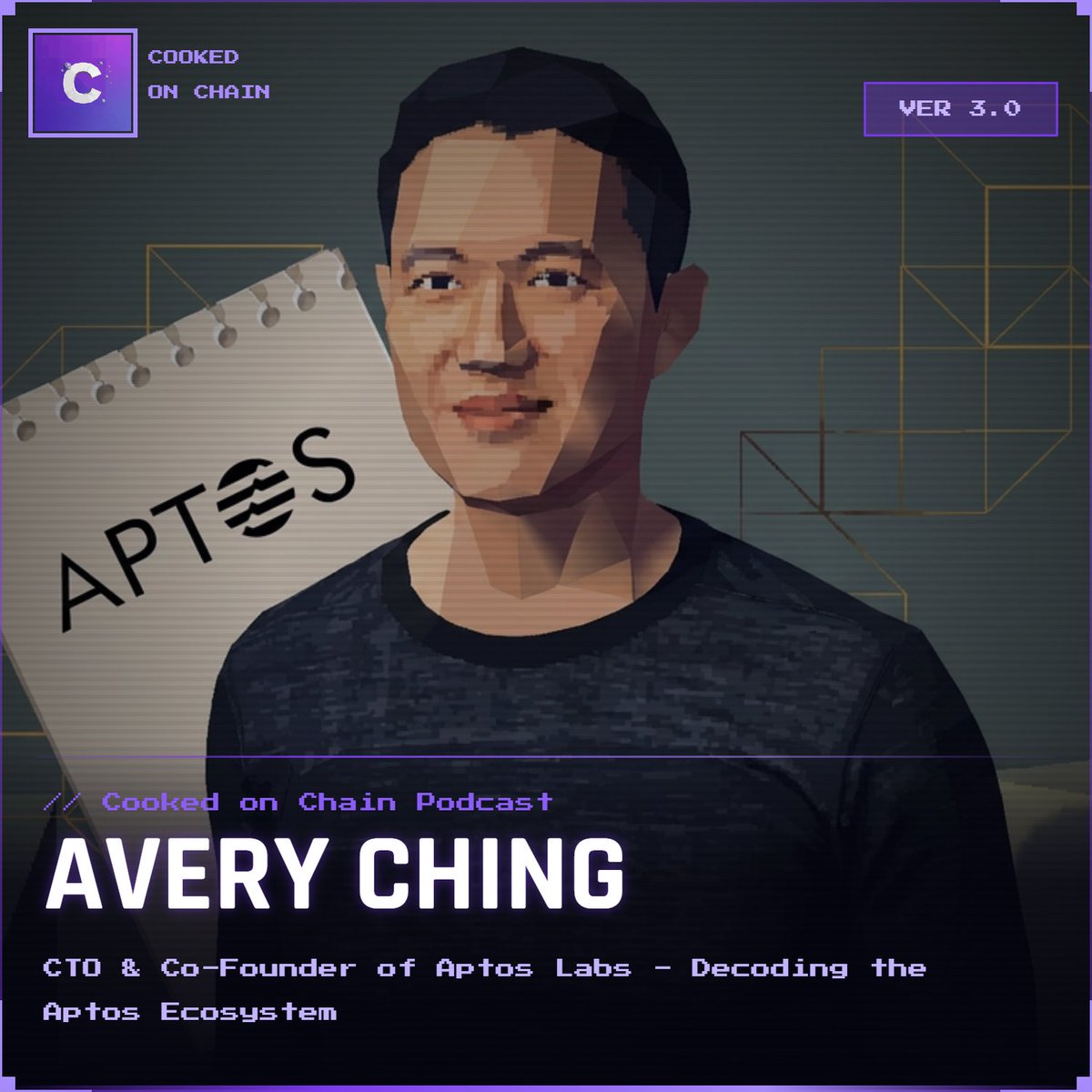
Cooking L1 Infrastructure: Avery Ching, CTO & Co-Founder of Aptos Labs In this episode of Cooked on Chain, we sit down with Avery Ching, CTO and Co-Founder of Aptos Labs, for a deep dive into the Aptos ecosystem - and what it actually takes to build an L1 with mainstream-scale ambitions. Avery shares his outlook on the intersection of crypto and AI, walks through Aptos' fundraising journey, and breaks down the design differences between Aptos and other L1s like Solana and Ethereum. We dig into where Aptos believes it can win - performance, developer experience, and the kinds of consumer-facing applications that demand speed without sacrificing safety. We also get into use cases emerging on Aptos today, the realities of adopting the Move programming language - what's powerful, what's painful - and the roadmap Avery is most focused on as the ecosystem matures. Before Aptos, Avery spent over a decade building distributed systems at massive scale and led the crypto platform team at Meta, spanning wallet infrastructure and L1 development including work on Diem. Expect a technical founder-focused conversation on L1 tradeoffs, ecosystem building, and where crypto meets AI next. open.spotify.com/episode/1yToac…
Cooked On Chain Podcast tweet media
English
31
39
115
15.4K
Cooked On Chain Podcast
Cooked On Chain Podcast@CookedOCPod·
3 Big Things That Happened in Crypto x AI This Week Ethereum is quietly becoming the default home for the crypto and AI convergence. Three deep-dives with Dragonfly, Paradigm, and Nat Eliason this week made one thing clear: the agent thesis is less about creation and more about execution. Here's the breakdown. Agents Are Tools, Not Thinkers The most consistent theme across all three conversations - agents are amplifiers, not idea generators. They pull from the center of their training data, which means genuinely novel business thinking is outside their reach. The edge still has to come from humans who've built real knowledge over time. @nateliason's @FelixCraftAI is a good example of how this works in practice. The agent handles execution while the underlying intelligence - years of productivity and knowledge management expertise - comes from Nat himself. The marketplace it runs sells exactly what agents can't produce on their own. Same logic applies to trading. An agent can execute a proven strategy faster and more consistently than any human. But it won't find the alpha. That part is still on you. New toolkits dropped this week to support this kind of specialized agent work - @austingriffith's Ethereum dApp toolkit, @OpenZeppelin's smart contract integration, and @clanker_world's token deployment tools. Agents and Crime Are a Natural Fit @hosseeb made the point bluntly - agents are uniquely suited to operating in grey areas. No sleep, no jail time, persistent execution. Crypto is already the front line of this because it's permissionless by design. The threat isn't abstract. As agents start interacting with more unknown counterparties, bad actors will impersonate tools, inject themselves into workflows, and probe for exploits continuously. ERC-8004 is one of the more interesting responses to this - onchain identity and reputation scoring for agents, so you can verify who you're actually dealing with before any interaction happens. As agent activity scales up, this kind of infrastructure stops being optional. AI Is Getting Genuinely Good at Security @0xalpo's EVMBench paper with OpenAI put some real numbers on something the space has been speculating about for a while. Six months ago AI models caught around 12-13% of critical smart contract bugs. That number is now above 70% with the latest models. Top human auditors are expected to be outperformed within the next six to eight months. The insight from @hosseeb that reframes this - crypto's notoriously bad UX, all text and code, no visual noise, is actually ideal training data for AI. The environment that frustrated users for years is the same environment that makes agents exceptionally capable. @pashov, who has audited Aave, Pump, Ethena, and Uniswap, released an open-source Solidity auditing agent last week. If the defender side deploys these tools faster than attackers do, AI becomes one of the most important security layers the industry has ever had. The trust ceiling is the real bottleneck for crypto growth right now. Better AI auditing is one of the most direct ways to raise it.
Cooked On Chain Podcast tweet media
English
14
32
98
13.4K
Cooked On Chain Podcast
Cooked On Chain Podcast@CookedOCPod·
Cooking Modular AI: Michael Heinrich, Founder of 0G Labs. In this episode of Cooked on Chain, we sit down with Michael Heinrich, Founder of 0G Labs, to explore a bold thesis - the future of AI infrastructure may need its own modular crypto-native stack. Michael shares his unconventional journey from high school boredom to building 0G Labs, and how practices like spiritual reading and meditation reshaped his leadership style as a founder. We get into the less-discussed side of company building - clarity, emotional regulation, and staying consistent when the market and your own head are both volatile. On the product side we dive into what the first modular AI chain actually means in practice, why decentralized AI infrastructure is emerging as a real category, and why Michael believes a community-owned approach is essential for the future of AI and data. 0G Labs is building a modular Web3 platform aimed at unlocking data infrastructure and storage for advanced AI workloads - connecting decentralized networks with tooling designed for machine-learning-native applications. Expect a wide-ranging conversation on decentralized AI, community ownership, founder psychology, and what it takes to build at the frontier where crypto meets compute. open.spotify.com/episode/4ltU7h…
Cooked On Chain Podcast tweet media
English
31
48
180
15.1K
Cooked On Chain Podcast
Cooked On Chain Podcast@CookedOCPod·
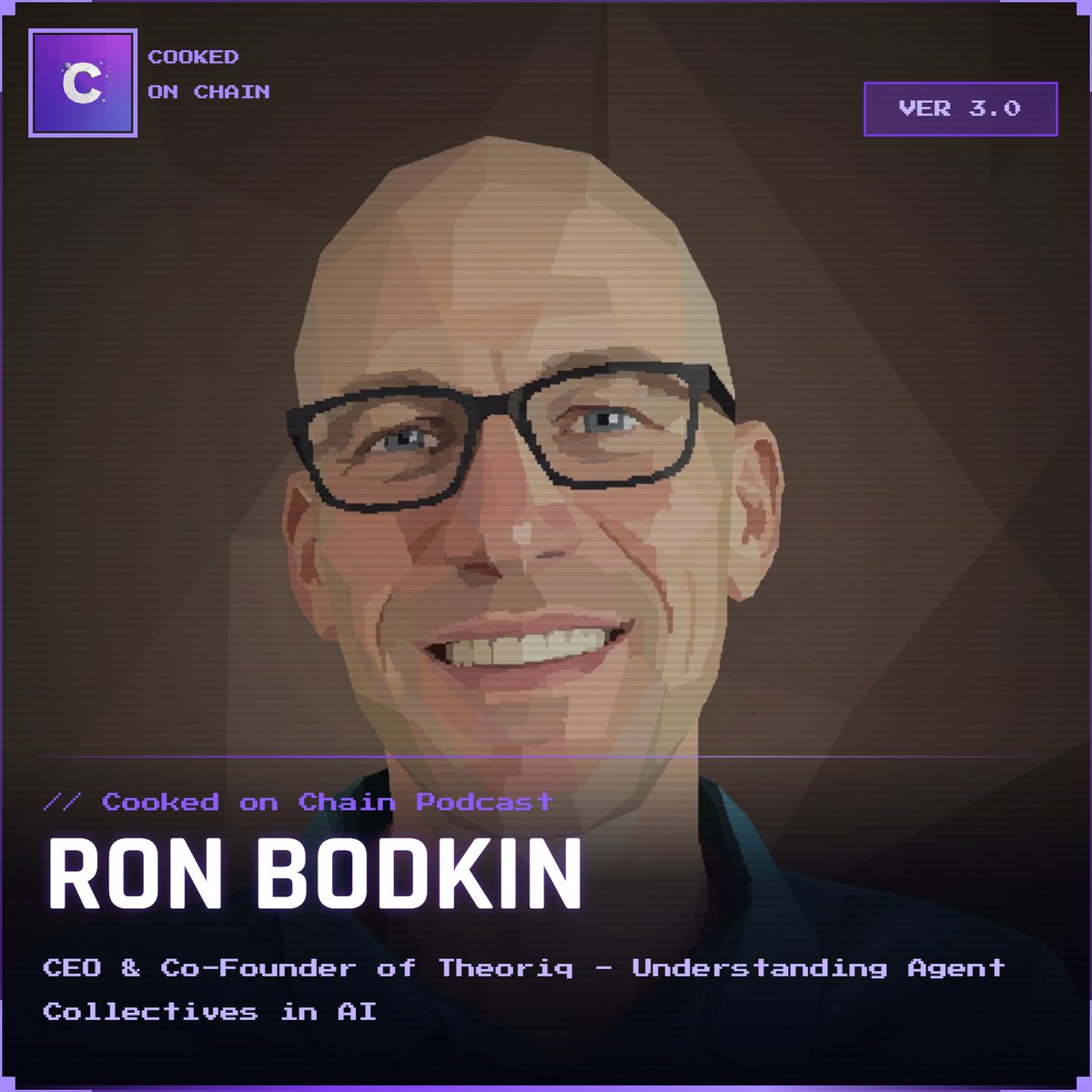
Cooking Agent Collectives: Ron Bodkin, CEO & Co-Founder of Theoriq. In this episode of Cooked on Chain, we sit down with Ron Bodkin, CEO and Co-Founder of Theoriq, to unpack what agent collectives really are - and why the next wave of AI may be coordinated by crypto-native incentives. Ron explores the intersection of AI and Web3 through the lenses of responsibility, governance, and long-term alignment. He shares his journey from Google to founding Theoriq and ChainML, and reflects on what actually changes when you move from corporate AI leadership to startup execution. The conversation dives into agent collectives, why standardization in AI is still a mess, and what metrics might actually matter for decentralized AI success. Ron introduces Proof of Contribution and Proof of Collaboration as trust-building mechanisms for agents and teams - and explains Theoriq's core pillars: interoperability, composability, and decentralized innovation. We also get into token economics, governance design, and how company culture shapes what a protocol becomes over time. Ron closes with lessons on leadership and a forward-looking view of where decentralized AI could go next. open.spotify.com/episode/3tbZ1m…
Cooked On Chain Podcast tweet media
English
26
57
177
14K
Cooked On Chain Podcast retweetledi
Chainlink
Chainlink@chainlink·
“You’re not building the systems for the 363 days when everything is smooth. You're building the system for the 2 days when everything goes crazy.” Chainlink CCIP: Engineered for the extremes.
English
36
152
1.1K
46.5K
Cooked On Chain Podcast retweetledi
threadguy
threadguy@notthreadguy·
my full conversation today with @cobie 01:04 offering to work at Coinbase for free 06:05 the K-shape crypto thesis 10:33 thoughts on Saylor 14:39 why UpOnly hasn't come back 22:37 the last 10 years of Crypto 44:52 trillion dollar IPOs 57:02 Cobie's legendary buy wall 1:02:57 top 5 Crypto traders of all time 1:21:20 reasons to be optimistic on Crypto
English
219
269
3.1K
878.2K
Cooked On Chain Podcast retweetledi
Pharos | Mainnet Arc
Pharos | Mainnet Arc@pharos_network·
It all started on May 16, 2025 After 347 days of relentless building, almost here Pharos Pacific Ocean Mainnet will launch at 6AM EDT on April 28, 2026. Airdrop claims start at 7AM EDT on April 28, 2026 ⚓ THE WAIT IS OVER 🌊
English
386
118
543
90.8K
Cooked On Chain Podcast
Cooked On Chain Podcast@CookedOCPod·
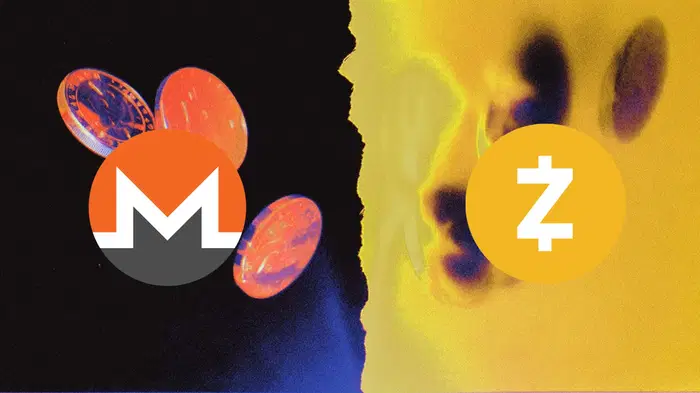
The privacy trade has been one of the few bright spots in a sluggish market. ZEC had a massive run - hitting a nine-year high in November, 28x above its yearly low - before collapsing when the Zcash core dev team announced they were leaving over a governance dispute. XMR has taken command of the privacy narrative since. Ahead of our episode with Zooko next week, here's how Zcash and Monero actually differ. 👇 Origin Stories The fundamental difference starts with how they were born. Monero came from forums, Zcash came from universities. Monero launched in 2014 as Bitmonero by an anonymous user, based on the CryptoNote protocol. The community famously took the project over early on. No CEO, no office, development funded entirely through voluntary donations. Zcash traces back to 2013 academic research at Johns Hopkins, eventually launched in 2016 by Zooko Wilcox and the Electric Coin Company. Unlike Monero, Zcash has worked alongside regulators rather than against them. These origins shaped very different reputations. Monero's mandatory privacy made it the preferred choice for darknet markets - nearly half of new darknet marketplaces in 2024 used XMR exclusively according to TRM Labs. Zcash is rarely cited in ransomware or darknet reports. That reputation cost Monero exchange listings. Binance dropped XMR in February 2024, OKX in January 2024, Kraken removed it for European users in October 2024. Zcash avoided major delistings - Binance actually removed its Monitoring Tag in July 2025 and OKX relisted it in November 2025. How the Privacy Actually Works Think of any transaction as a message. With Monero, your message gets mixed into a crowd - you speak at the same time as 15 others so an observer can't prove it was you. With Zcash's shielded transactions, your message goes into a locked box only the recipient can open. Monero uses three mechanisms together - Ring Signatures hide the sender by mixing your transaction with around 16 decoys, RingCT hides the amount by encrypting values while proving no new coins were created, and Stealth Addresses hide the receiver by generating a one-time address per transaction. Zcash uses zk-SNARKs - transactions are proven valid without revealing sender, receiver, or amount. When you send a shielded transaction Zcash generates a cryptographic proof confirming you have the right to spend the coins without anyone inspecting the details. Mandatory vs Optional Privacy With Monero privacy is mandatory. You cannot send a transparent transaction. This creates herd immunity - all transactions look identical. The argument is simple: optional privacy isn't real privacy. If only suspicious people use the private option they become targets. Zcash offers privacy by choice. ZEC can be used transparently or moved to a shielded address. The shielded pool is growing though - around 30% of ZEC supply now sits in shielded addresses, up from 8.7% a year ago. What's Coming Both protocols have major upgrades in development. Monero is working on FCMP++ which would replace ring signatures entirely. Instead of mixing with around 16 decoys, transactions would mix with the entire blockchain history - expanding the anonymity set from a crowd of 16 to a crowd of everyone. Zcash has Tachyon in development for major scaling improvements, plus Crosslink for a hybrid PoW/PoS transition. One technical note worth flagging - Zcash's privacy layer is quantum-resistant while Monero's ring signatures are not. Monero developers plan to address this through future upgrades. The Bottom Line Monero offers stronger privacy today but faces steeper adoption headwinds. Zcash offers a path to broader adoption but requires users to actively choose privacy - and most don't. Both have returned to relevance after dormant years. The question now is which architecture can outlast the other. Episode with Zooko drops next week. 👀
Cooked On Chain Podcast tweet media
English
12
31
111
9.3K
Cooked On Chain Podcast
Cooked On Chain Podcast@CookedOCPod·
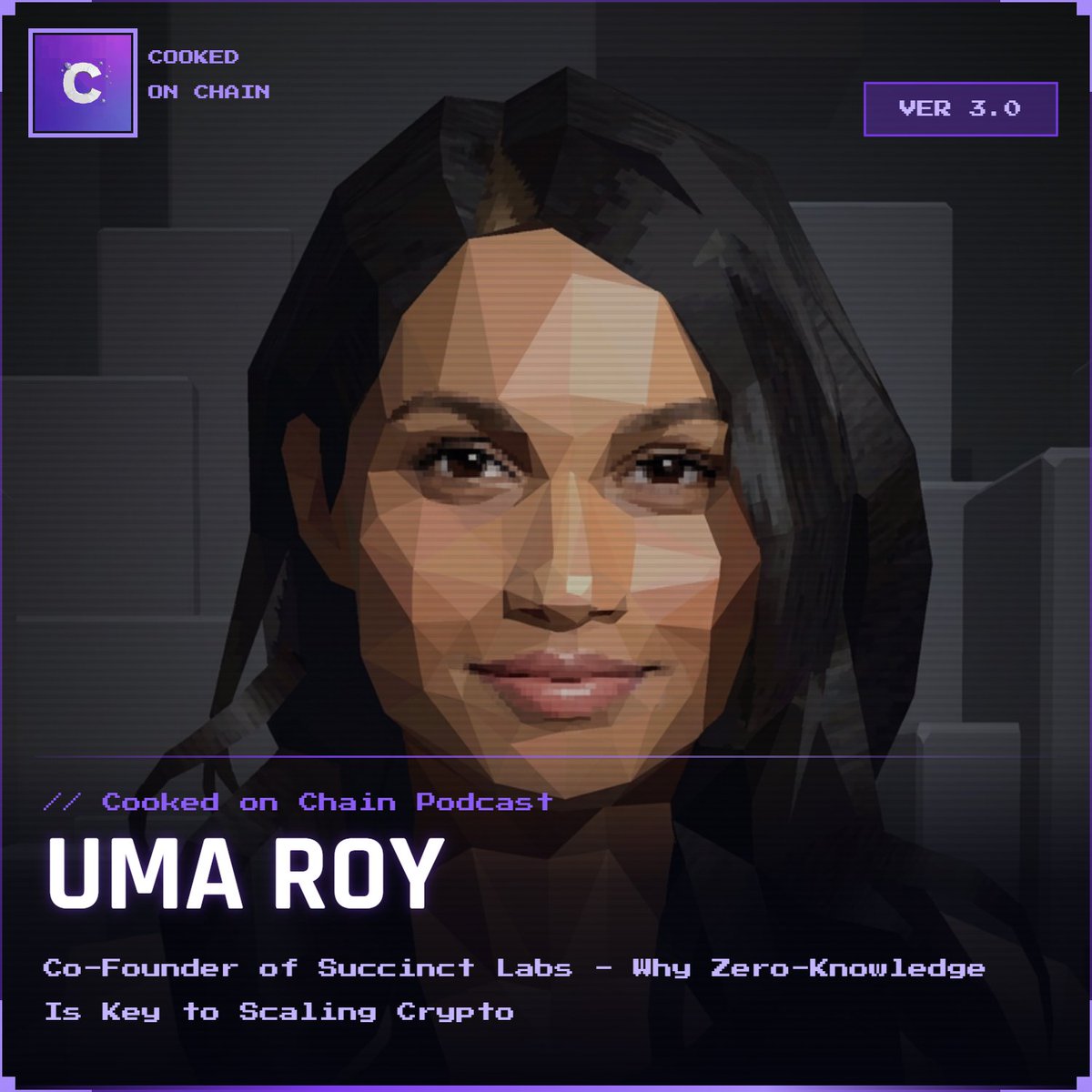
Cooking Zero-Knowledge: Uma Roy, Co-Founder of Succinct Labs. In this episode of Cooked on Chain, we sit down with Uma Roy, Co-Founder of Succinct Labs, to unpack why zero-knowledge proofs are becoming one of the most important primitives in crypto - for both scalability and privacy. Uma shares her path into Web3 and the motivations behind building Succinct Labs, including how the team formed and grew in San Francisco with a strong preference for in-person collaboration. We get into what ZK actually enables beyond faster chains, the practical tradeoffs teams face when adopting proof systems, and why developer tooling is the real unlock for mainstream ZK adoption. Uma also goes deep on SP1 - a ZK virtual machine - covering the hardest engineering challenges they hit while building it and the solutions they developed to make ZK systems more usable, reliable, and production-ready. Expect a technical but accessible conversation on building ZK infrastructure, founder lessons, and where the ecosystem is headed next. open.spotify.com/episode/4bOd5s…
Cooked On Chain Podcast tweet media
English
21
36
181
13K
Cooked On Chain Podcast
Cooked On Chain Podcast@CookedOCPod·
Cooking Reliable AI: Karan Sirdesai, Co-Founder & CEO of Mira Network. In this episode of Cooked on Chain, we sit down with Karan Sirdesai, Co-Founder and CEO of Mira Network, to get into one of the biggest blockers to real AI adoption - hallucinations and reliability. Karan explains how Mira approaches trustworthy AI for high-stakes use cases like finance and healthcare, where being mostly right simply isn't good enough. We dig into the core idea behind Mira's architecture - using multiple models and consensus-based verification to catch errors, reduce hallucinations, and make outputs more auditable and dependable. He also shares his non-linear founder journey - from hustling in university and working with Balaji Srinivasan, to building Mira alongside deep AI and crypto operators. You'll hear the team's aha moment - hands-on experimentation with GPU rentals and AI pipelines that revealed exactly where reliability breaks, and how those learnings led to a breakthrough approach that could make AI systems safer by default. open.spotify.com/episode/6D4k8d…
Cooked On Chain Podcast tweet media
English
28
23
171
13.3K
Cooked On Chain Podcast
Cooked On Chain Podcast@CookedOCPod·
Cooking Autonomous Agents: David Minarsch, Co-Founder & CEO of Valory. In this episode of Cooked on Chain, we sit down with David Minarsch, Co-Founder and CEO of Valory, to explore what autonomy really means - and why autonomous agents might become the next major interface layer between humans, software, and markets. David shares his path into crypto and AI, including his work with Fetch.ai, and the founding story behind Valory and OLAS. We dig into the rise of autonomous agents - what they can do today beyond demos, where they're already useful, and what breaks when you try to deploy them in the real world, especially inside permissionless and adversarial environments like Web3. The conversation also covers the challenges in the Web3 x AI landscape - coordination problems, incentive design, security, and reliability. David makes a strong case for mission-driven teams that can keep building through cycles, and for an open-source ethos, with OLAS positioned as infrastructure to coordinate decentralized autonomous agents in a way that's composable, verifiable, and scalable. Expect a thoughtful deep dive on autonomy, agent coordination, and the future shape of Web3 as agents become first-class participants. open.spotify.com/episode/0SBHJ3…
Cooked On Chain Podcast tweet media
English
24
1
137
12.5K
Cooked On Chain Podcast
Cooked On Chain Podcast@CookedOCPod·
Cooking Web3 x AI: Nick Emmons, Co-Founder & CEO of Allora Labs. In this episode of Cooked on Chain, we sit down with Nick Emmons, Co-Founder and CEO of Allora Labs, to explore what crypto actually adds to AI - and where the hype ends. Nick breaks down the synergies between Web3 and AI through a practical lens - how decentralized systems could coordinate models, incentives, and data into something closer to a collective intelligence network. He shares Allora's mission and why they're focused on AI-powered DeFi, building new financial primitives that use predictive models and markets to make onchain systems smarter and more adaptive. We also get into the open vs. closed AI debate, why that tension matters for builders, and what kinds of opportunities exist right now for blockchain developers stepping into the AI space. Nick highlights the milestones at Allora Labs that excite him most and returns to a core idea - markets aren't just for price discovery, they're one of the best tools we have for coordinating solutions to hard problems. Expect a wide-ranging conversation on decentralized AI, crypto-native incentives, and Nick's founder journey at the Web3 x AI frontier. open.spotify.com/episode/2eibcc…
Cooked On Chain Podcast tweet media
English
27
1
135
12.3K
Cooked On Chain Podcast retweetledi
Cooked On Chain Podcast
Cooked On Chain Podcast@CookedOCPod·
Cooking Decentralized AI: Greg Osuri, Founder of Akash Network. In this episode of Cooked on Chain, we sit down with Greg Osuri, Founder and CEO of Akash Network, to get into the ideas powering the decentralized web - liberty, sovereignty, and what freedom should actually mean in an AI-driven internet. Greg shares his founder journey and the real challenges of building a Web3 product - staying grounded through volatility, making hard tradeoffs, and keeping a healthy work-life balance while running at startup speed. We also get into why community isn't just a nice-to-have in Web3 - it's the distribution engine, the governance layer, and the resilience mechanism when everything else shifts. On the tech side we dig into open-source as a strategy, why decentralized cloud infrastructure matters for the future of AI, and how Greg thinks about governments and regulation in a world where AI compute is becoming the new choke point. If AI is going to be decentralized, he argues, the infrastructure and incentives have to be decentralized too. Before Akash, Greg founded AngelHack - one of the largest hackathon communities in the world, spanning 100,000+ developers across 50 cities. He started his career at IBM and later designed Kaiser Permanente's first cloud architecture, experience that shaped how he thinks about reliable infrastructure, not just narratives. Expect a deep conversation on decentralized AI, open-source, the Web2 to Web3 mindset shift, and what it takes to build a movement, not just a product. open.spotify.com/episode/3l6N7E…
Cooked On Chain Podcast tweet media
English
27
1
155
12.5K
Cooked On Chain Podcast
Cooked On Chain Podcast@CookedOCPod·
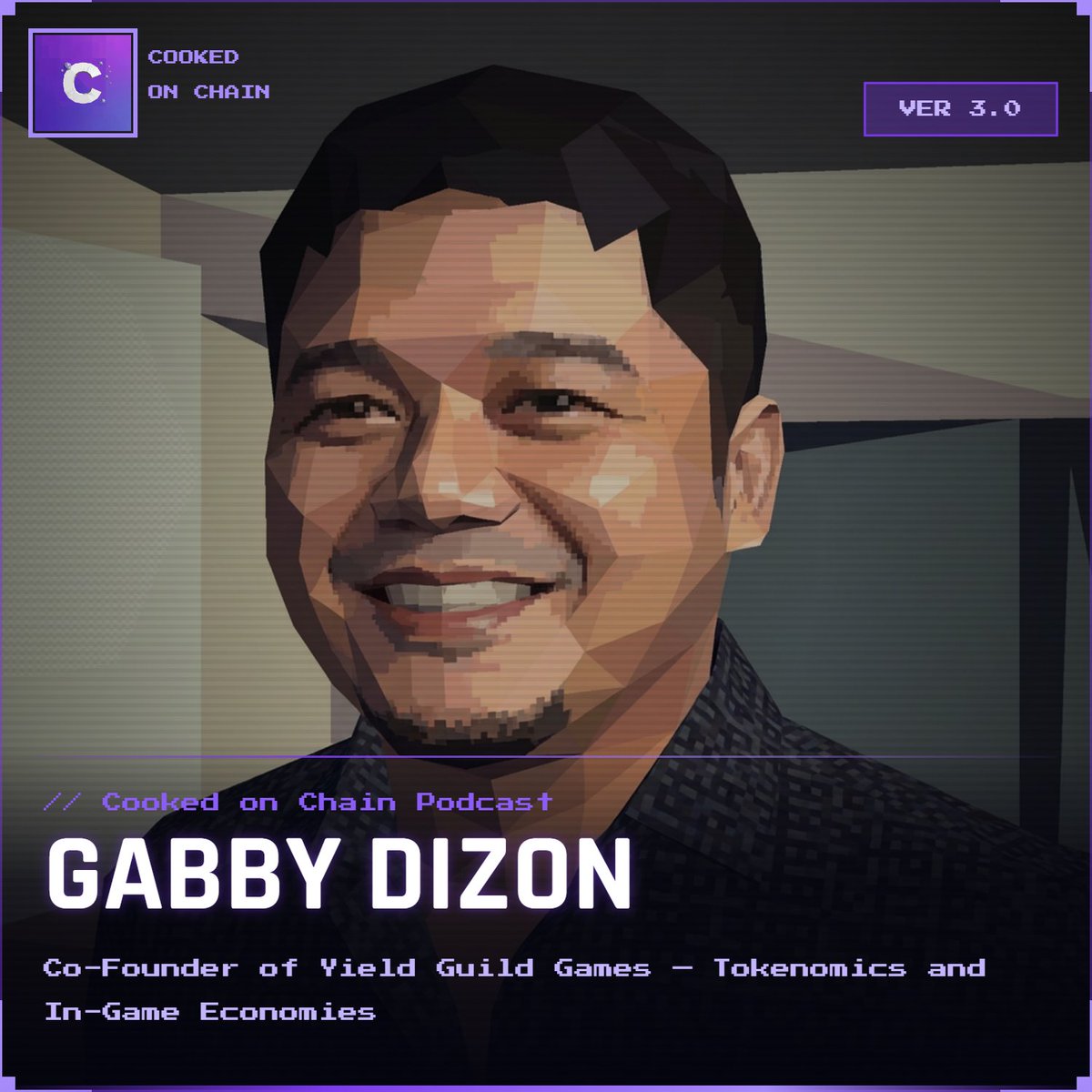
Cooking Guild Economies: Gabby Dizon, Co-Founder of Yield Guild Games In this episode of Cooked on Chain, we sit down with Gabby Dizon, Co-Founder of Yield Guild Games, to unpack what makes Web3 gaming economies actually work - and why most of them don't. Gabby shares his journey from PC gamer to Web3 pioneer and what he's learned after years of watching in-game economies succeed, fail, and evolve. We get into tokenomics that actually sustain player behavior rather than just pump and dump incentives, how guilds change the onboarding equation, and why mainstream adoption won't happen until the product experience competes with the best of Web2 - not just on ownership, but on fun. We also dive into the future of Web3 gaming - where AI might reshape both game design and player markets, what qualities founders need to survive long cycles, and how YGG has evolved from a play-to-earn guild into experiments with onchain guilds and more decentralized coordination models. Gabby is a game industry veteran with 18+ years of experience. Beyond YGG he's a founding board member of the Blockchain Game Alliance, and his mission is simple but massive - onboarding millions of gamers into new digital opportunity, with a belief that the future of work will be built inside an open metaverse. open.spotify.com/episode/7nIw1z…
Cooked On Chain Podcast tweet media
English
23
0
152
12.3K