The German Chemical Society (GDCh) is awarding Helma Wennemers, Professor of organic chemistry at D-CHAB, the Emil Fischer Medal for her research into synthetic peptides. @GDCh_aktuell
Learn more:
ethz.ch/staffnet/en/ne…
Application of tetrachloro-𝘕-hydroxyphthalimide (TCNHPI) esters expands the scope of cross-coupling reactions by unlocking the synthesis of sterically hindered or otherwise less reactive substrates: bit.ly/3Sb2Upz
Try our TCNHPI esters in your research!
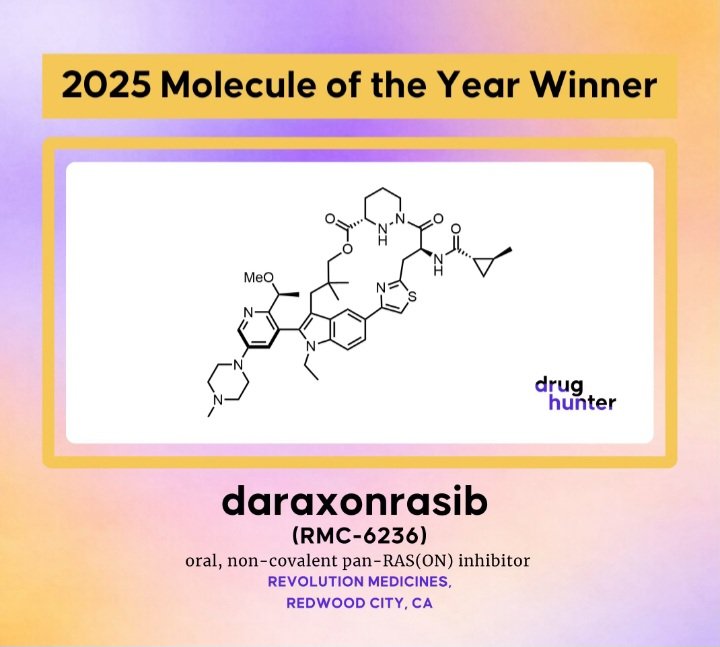
"Revolution Medicines is building
a deep pipeline to enable the discovery, development and
delivery of innovative targeted
medicines to patients with
RAS-addicted cancers."
PIPELINE
Daraxonrasib
revmed.com/pipeline
🌻Rest in peace, Günther Maier. The chemist who made one “impossible molecule” after another died on April 10 at the age of 94.
A Swabian by birth, he began studying chemistry at TH Karlsruhe in 1952, today’s KIT. He worked with Rudolf Criegee and obtained his Diploma in 1957 and his PhD degree in 1959. After a postdoc at Johns Hopkins University @JohnsHopkins with Emil H. White, a pioneer in #photobiochemistry, Maier returned to the Criegee lab and completed his habilitation in 1964. His work then dealt with valence isomerization, a topic about which he wrote a legendary monograph.
#Cyclobutadiene and #tetrahedrane were signature molecules of the Maier lab, which he established in Karlsruhe. From there he moved to the University of Marburg in 1970 and to the University of Giessen in 1978, where he remained until his retirement in 2000.
Not only C₄H₄ but also C₁₀H₁₀ molecules fascinated Günther Maier and the wider chemistry community in the 1960s and 1970s, and he was a grand master of such reactive compounds. While his group isolated cyclobutadiene and tetrahedrane derivatives at room temperature, they also performed matrix-isolation #spectroscopy studies at extremely low temperatures in parallel. In this way, not only reactive hydrocarbon species could be detected, but also heteroatom molecules such as sila- and borabenzene, as well as disilene and disilyne.
One could go on (see figure), but this must suffice to demonstrate the impact of Maier’s work on modern organic chemistry and beyond. More can be found in Maier’s autobiography, “Das war’s—Erinnerungen eines Doktorvaters” (l-i-c.org/1125), published in 2021.
Günther Maier was a modest man who meticulously trained a large number of PhD students. His achievements were recognized with the Adolf von Baeyer Memorial Medal of the German Chemical Society.
PS: His autobiography was the first volume in the “Lives in Chemistry” (LiC) book series, which would not exist without him. He and his former PhD student Karl Reuter were instrumental in starting LiC, which has since grown into a “library” of 15 volumes. Maier was a founding member and later an honorary member of the LiC Advisory Board.
Incredibly proud to share our group's latest publication, now out in JACS! Thanks to MSc student Luise and collaborator Robert for making this happen.
pubs.acs.org/doi/10.1021/ja…
Many congratulations to Tom Maimone (University of California-Berkeley) on receiving the A.R. Katritzky Junior Award.
Tom will present his prize lecture at the 30th Congress in Sao Carlos, Brazil 🇧🇷 in July 2026. ishc-brazil2026.com
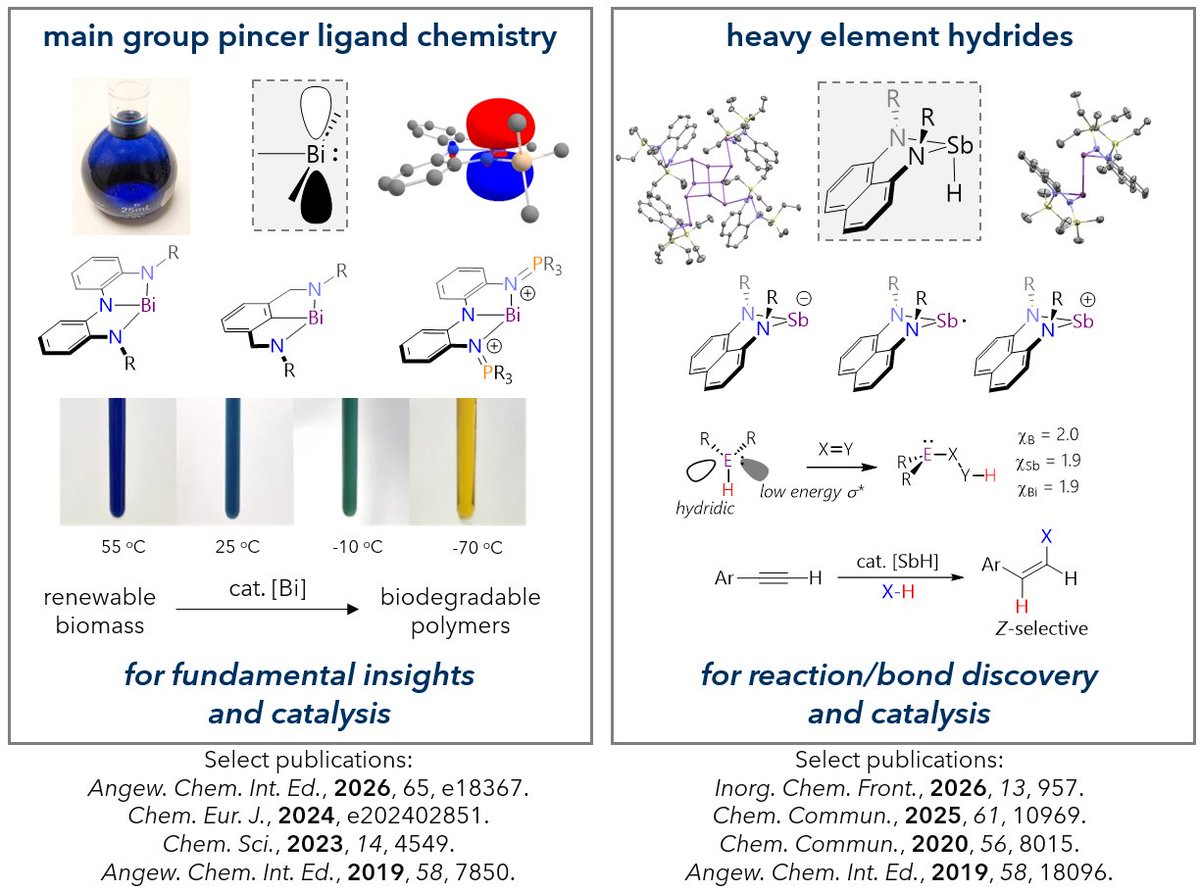
📣I have a PhD position in main group chem @UVic. Project areas⬇️
Start: 09/26, 01/27, or 04/27.
Must have: completed/in-progress research-based MSc in MainGroup/Organomet/Inorg chem + strong academic record.
Open globally.
Email CV + cover letter: bit.ly/4rLSFonPls
RT!
Scripps Research Prof. Kim Janda (@LabJanda) was featured by @KPBS for his work redesigning fentanyl’s core structure to preserve pain relief while reducing dangerous respiratory depression, highlighting potential new paths toward safer pain therapies. ow.ly/S3vt50Yiqha
Aluminum: lightest p-block metal with very low electronegativity. Converting Al(III) to Al(I) in stoichiometric reactions is rare. But now, we've made Al redox catalysis a reality! Check it out @naturenature.com/articles/s4158…
Congratulations to Felix Katzenburg (@FKatzenburg )🐈⬛🏰 on successfully defending his PhD! 🎓 🥂 🏆 We're incredibly happy to have been part of this journey, and wish you all the best for your next chapter at Alán Aspuru-Guzik's group!
#PhDone