Coskun Lipid Cellar @ ZML Dresden
761 posts

Coskun Lipid Cellar @ ZML Dresden
@CoskunPLID
Membrane lipids in health and disease, Structure Bio, Cell signaling, Cellular Metabolism, @lipid for tooth and blue place
Dresden, Germany Katılım Aralık 2017
594 Takip Edilen1.2K Takipçiler

Glad to see this news story highlighting our recent lipid interactome database, a resource we hope will help the broader scientific community.
@OHSUNews @SchultzLabOHSU
news.ohsu.edu/2026/02/25/new…
English

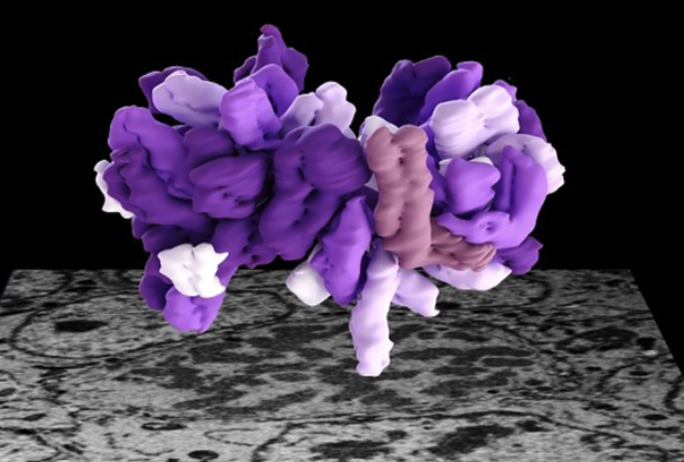
How does mitosis look in its native environment?
New article from our group where we used volume EM to describe the 3D ultrastructure of dividing cells in a real tissue context. Congratulations to Nick, Sai and all the collaborators. journals.biologists.com/jcs/article/13…

English

@DanielJDrucker On can discuss (in)sanity of using a dual chamber syringe, different buffer conditions and a lot more. But about few % difference? My bet anyway is Cagri in its current form will be discontinued.
English

@DanielJDrucker It is so crazy how badly things a communicated. We are comparing 2.5 mg vs 15 mg! dose. One should discuss how Cagri-Sema can be increased before having problems in terms of biochemistry as well as side-effects.
English


Please sign up on coming-soon.embo.org/w26-51 to be informed once the website is live.
English

Ups we did it again! Please mark you calendar: EMBO Workshop “Lipid Code to Life”, taking place September 7–11, 2026, in Dresden, organized by Maria Fedorova, @CoskunPLID , Valerie O'Donnell, Joost Holthuis, Liana C Silva. More details where the Skies are blue!
English

@OlzmannLab @NatureCellBio @MikeLangePhD super awesome its finally out. just fantastic work. #lipidlove
English

Excited to share our new study out in @NatureCellBio! Led by postdoc @MikeLangePhD, we identify the first #LipidDroplet lipid quality control pathway: LD-localized FSP1 protects stored lipids from oxidative damage and prevents LD-initiated #ferroptosis.
nature.com/articles/s4155…
English

@jnkath @katherlab wrong address Jakob. Right one is just 400 m across the street :)
English

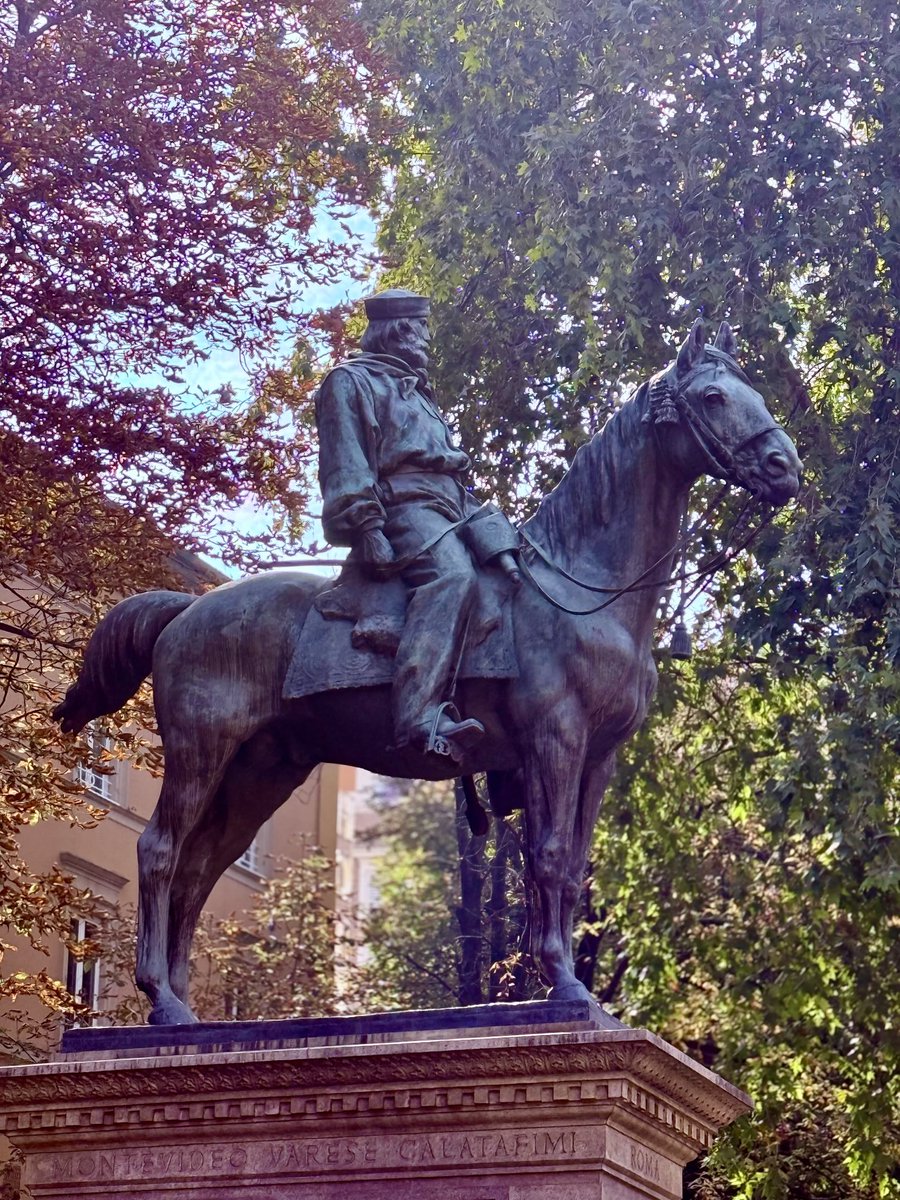
@mmbronstein What a coincidence, just returned from another amazing day on La Maddalena and Caprera 😍
English

@DeryaTR_ Mechanism, mechanism, mechanism. Biochemistry is key to get rid of the many maybe, might or could be.
English

In my opinion, this is the most important aging-related paper of the year! It identifies a critical protein that could eventually extend lifespan by many years. Not surprisingly, it involves DNA repair and regulation of the immune response. Below is a breakdown of the key points (via GPT-5):
What did they find and why important?
•Naked mole-rats live a very long time and rarely get cancer.
•A key reason is a tiny change in a cell sensor called cGAS. This sensor usually detects stray DNA inside cells and sounds an alarm to the immune system.
•In humans, cGAS can drift into the nucleus and get in the way of one of our best DNA repair tools (called homologous recombination). That means more un-fixed DNA damage over time.
•In naked mole-rats, four small amino acid changes in cGAS flip the script. Their version does not block repair. Instead, it helps the high-fidelity repair process work better.
Why is this big for aging?
•Aging is partly the story of accumulating DNA damage. Better repair means fewer mutations, less cellular dysfunction, and a slower march toward age-related diseases.
•If we can make human cGAS behave more like the mole-rat version, we might reduce the daily damage load, which could:
•Lower cancer risk
•Preserve tissue function longer
•Delay multiple age-related declines at once
How could this translate to people?
1.Drug design: Create small molecules that keep human cGAS from interfering with DNA repair inside the nucleus, while still letting it do its normal immune-sensing job in the cytosol.
2.Protein engineering or gene therapy: Introduce cGAS variants that mimic the mole-rat’s four changes in high-risk tissues, carefully and locally.
3.Biomarkers and screening: Use cGAS activity and DNA repair efficiency as readouts to find who might benefit and to measure whether a therapy is working.
4.Combination strategies: Pair cGAS-tuning with other repair boosters and senescence-reducers for a bigger effect.
Bottom line:
A few precise tweaks to one protein can shift the balance from ongoing damage toward cleaner, faster DNA repair. That is exactly the kind of leverage aging research needs: change a small control knob, get system-wide benefits. The naked mole-rat just showed us one such knob.
Paper link in the thread.

English

@Honigmann_Lab Very well deserved! Lipid research made in Dresden 😍
English

We made it on the cover of Nature: nature.com/nature/volumes… 🤯
English

It is out now with some interesting revision results: nature.com/articles/s4158…
André Nadler@nadlerlab
Here’s the big one: In collaboration with @Honigmann_Lab, @LabShevchenko, Björn Drobot and Martin Hof we present a general workflow for imaging the localization and transport of individual lipids in cells and mapping their metabolism. biorxiv.org/content/10.110…
English

@NatRevNeurol Many many years ago we tested aSyn lipid species specificity for some colleagues without any success. One of the biggest problems in all these studies is lack of lipid quality controls and quantitative binding assays. I remain skeptical.
English


@cohenlaboratory @EMBO K=C otherwise Bianca will kill me. Anyway, greetings from the Lipidcrew in Dresden
English

@cohenlaboratory @EMBO Please give Robin, Bianka et al from me. Super nice pics
English

Fabulous @EMBO #LipidDroplets workshop in Sant Feliu de Guixols, Costa Brava. A huge thank you to the organizers: Maria Bohnert, Robin Klemm, and Bianca Schrul, for hosting such an inspiring gathering!


English

🎊Für sein herausragendes wissenschaftliches Lebenswerk wird Kai Simons die Cothenius-Medaille überreicht. Simons ist Direktor emeritus am Max-Planck-Institut für molekulare Zellbiologie und Genetik in Dresden @maxplanckpress und seit 1999 Mitglied der Leopoldina.

Deutsch

@ibudin No idea where I have been back then 😂
English

New #lipidtime paper out today about a new approach - FACES - for selectively imaging of phospholipids and other biomolecules at spatial resolutions down to individual membrane leaflets
nature.com/articles/s4158…
English

@mmbronstein I was taught an expression that may also apply here 😁 Wiktor Stepanowitsch Tschernomyrdin “ Хотели как лучше, а получилось как всегда”

@CoskunPLID There is a Russian expression «шито белыми нитками» (stitched with a white thread) that roughly translates as “poor cover-up” coming from bespoke tailoring practice of using a white thread for basted fitting