@BitwayOfficial @BinanceWallet @Aster_DEX When are you converting the $SIDE tokens of all the early community to $BTW?
English
Cosmic Validator ⚛️
5K posts

@CosmicValidator
OG @Cosmos validator⚛ 📽Cosmos ecosystem news & educational videos $ATOM $MON $IP

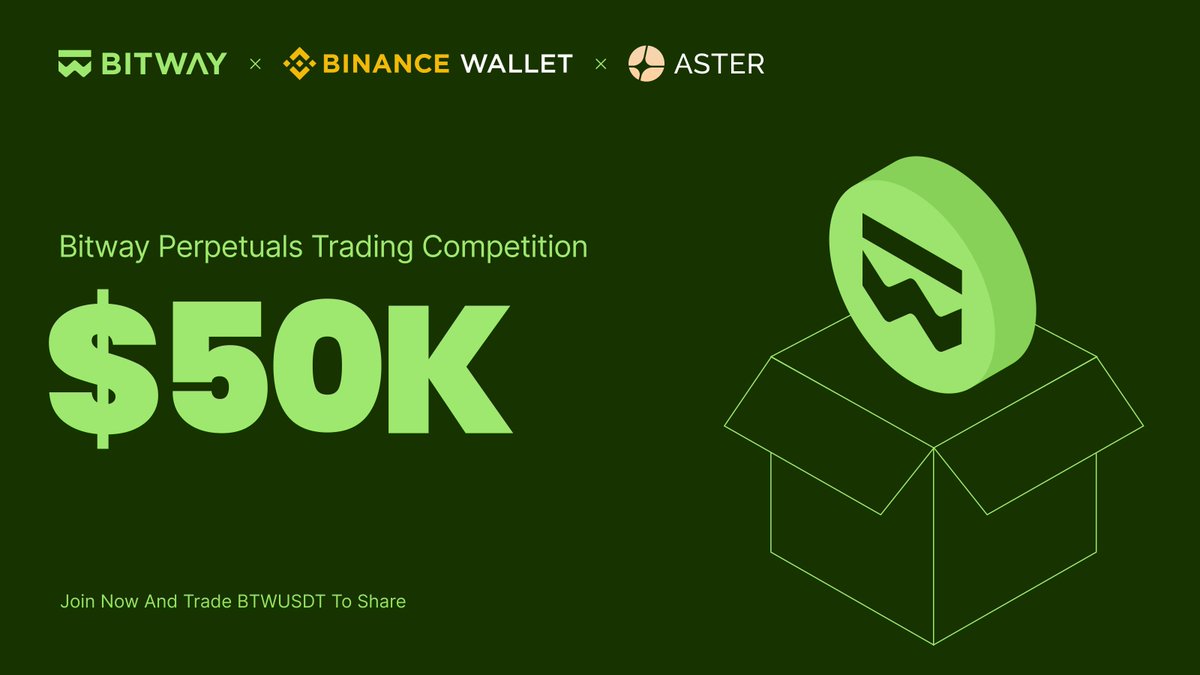
Join the #Binance Wallet Bitway Perpetuals Trading Competition now! 🔸 Trade BTWUSDT with $50K worth of rewards up for grabs. 🔸 Click [Join] on the Binance App event page to start tracking trade volume. 🔸 Both opening and closing volumes count, across long and short trades 🔸 Minimum trading volume requirement: 500 USDT Don’t miss out 👇 binance.com/en/support/ann…
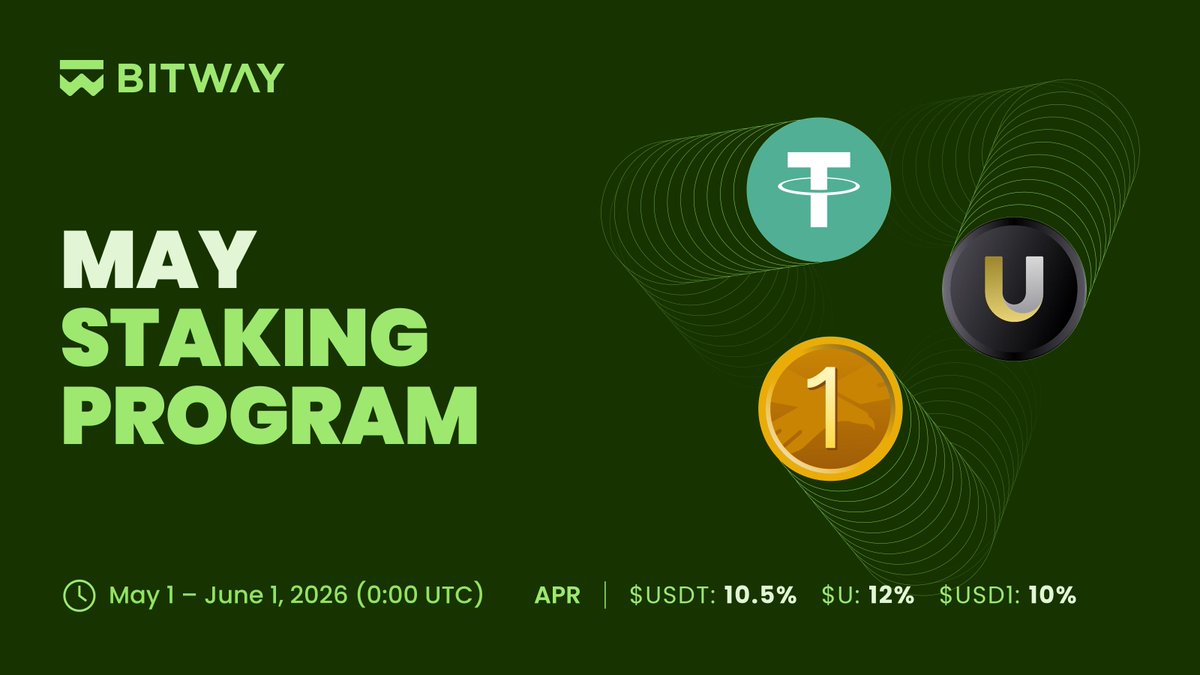
For Bitway Core Alpha users: Zero-fee Flash Unstaking is now live for the next 24 hours. The conversion ratio for BW Points accumulated during April is set to provide an additional 4.5% APR, with the $BTW distribution scheduled for May 8. Bitway May Staking Program Details: 🗓 Duration: May 1 – June 1, 2026 (0:00 UTC) 💰 Base APR: 10.5% ($USDT) | 12% ($U) | 10% ($USD1) 🏦 Vault Cap: 18M ($USDT) | 5M ($U) | 2M ($USD1) 👤 Per-Address Cap: 200K ($USDT) | 10K ($U) 🎁 Bonus: BW Points ($USDT, $U, $USD1) Join here: app.bitway.com

PRESIDENTIAL UNSEALING FOR UAP ENCOUNTERS. Per President Trump's directive, the @DeptofWar has declassified & released unresolved UAP records. This is an unprecedented level of transparency, no other admin has gone this far. Files now live on WAR.GOV/UFO — additional files will be released by the Dept. of War on a rolling basis.📂

Season 2 is loading… 👀 @BitwayOfficial BinanceWallet Booster Earn Season 2 is back from tomorrow! From April 30, 2026 00:00 UTC, subscribe at least 100 U in the Bitway U Vault via #Binance Wallet Earn to enjoy $100k BTW in Season 2 rewards. Don't miss out 🔗 binance.onelink.me/mL1z/ybu0mne6?…


Check out BTX, our new Batched Threshold Encryption (BTE) scheme, which achieves: ⚡️Shortest ciphertext (same as ElGamal) ⚡️Epochless and collision-free properties ⚡️Fastest decryption (<1 ms per core per ciphertext with our AVX implementation) ⚡️Computation scales with ACTUAL (as opposed to MAX) batch size Some of the key ideas are inspired by the recent BTE paper by Boneh et al. (eprint 2026/674) and our prior work (eprint 2025/2115). Hitting your nearest eprint server soon!


New Mainnet validators incoming..

Important Update Going forward, zero-fee Flash Unstake will be available on the 1st of every month. Additionally, BW Points conversion details will be announced on the 1st, with distribution taking place on the 8th. For this month, the BW Points conversion ratio is set to offer an additional 5% APR, with $BTW distribution taking place on Apr 8. Alongside these updates, we are excited to launch our latest staking program for the Bitway Core Alpha strategy: 🗓 Duration: Apr 5 – May 1, 2026 (0:00 UTC) 💰 Base APR: 11% ($USDT) | 13% ($U) 🏦 Vault Cap: 15M ($USDT) | 2M ($U) 👤 Per Address Cap: 200K ($USDT) | 10K ($U) 🎁 Bonus: BW Points ($USDT, $U) Join here: app.bitway.com
Important Update Going forward, zero-fee Flash Unstake will be available on the 1st of every month. Additionally, BW Points conversion details will be announced on the 1st, with distribution taking place on the 8th. For this month, the BW Points conversion ratio is set to offer an additional 5% APR, with $BTW distribution taking place on Apr 8. Alongside these updates, we are excited to launch our latest staking program for the Bitway Core Alpha strategy: 🗓 Duration: Apr 5 – May 1, 2026 (0:00 UTC) 💰 Base APR: 11% ($USDT) | 13% ($U) 🏦 Vault Cap: 15M ($USDT) | 2M ($U) 👤 Per Address Cap: 200K ($USDT) | 10K ($U) 🎁 Bonus: BW Points ($USDT, $U) Join here: app.bitway.com