@lucyerber @VanCharleston One of Newton’s laws if thermodynamics: action, reaction -equal and opposite. Karma?
English
You don’t want to start from here🥸
3.6K posts



22 March 1933 | Dutch Jewish girl, Bertha Schielaar, was born in Rotterdam. She was deported to #Auschwitz from #Westerbork in September 1943. She was murdered in a gas chamber after arrival selection. --- 📖The fate of Jews deported from the German-occupied Netherlands to Auschwitz: lekcja.auschwitz.org/32_en/


🧵 The Big Myth: Britain is “High-Tax, High-Welfare”. Every day we are told the UK is drowning under record taxes and runaway welfare. It is repeated so relentlessly that it now passes for ‘common sense’. The problem is that, in international terms, it’s simply not true.
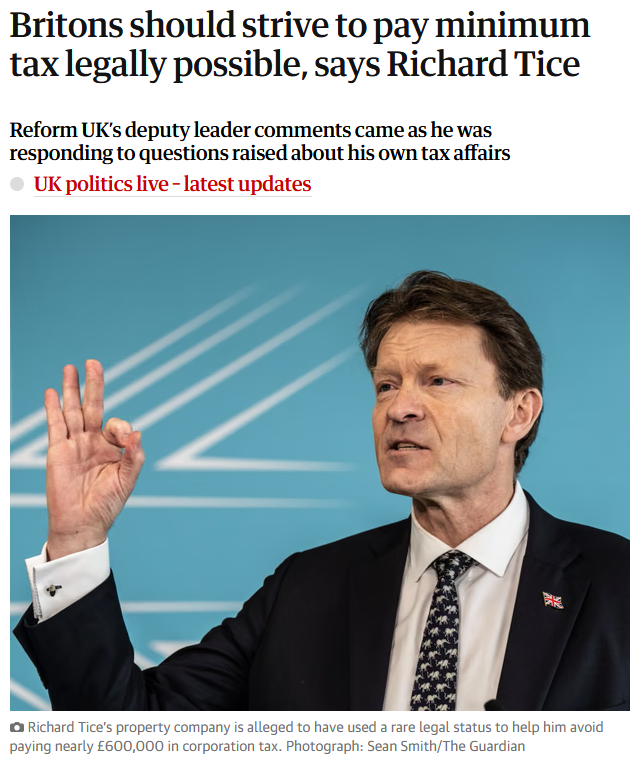
🚨 PATRIOTS PAY THEIR TAXES. Reform UK’s deputy leader, Richard Tice, argues that all Britons should try to pay the minimum tax possible, dismissing questions about his own tax affairs after a newspaper investigation. I disagree. For most people, Britain only works when we all put something in, and when we all play by the same rules. Real patriotism isn’t just about flags, slogans, or pride in the past. It’s about taking responsibility for the country we share today and the future we leave behind. One of the most practical and meaningful ways citizens show that commitment is by contributing through taxes. Paying tax isn’t simply a legal obligation. It’s an investment in Britain itself: in our communities, our security, and in the idea that we look after our own. For generations, working people built the institutions that make this country strong. The schools that educate our children. The hospitals that save our lives. The roads and railways that keep the economy moving. The armed forces that defend our freedoms. These things don’t appear by magic, nor do they depend on the whim or approval of the ultra-rich. They exist because citizens collectively decide that a strong country looks after its people. Taxes fund the services and infrastructure that hold the nation together. In recent years the UK’s public spending has been around £1.3 trillion a year, supporting essential goods and services used by everyone. The largest share goes to social protection, including state pensions for retirees who worked their whole lives, disability support for people facing challenges through no fault of their own, and benefits for carers looking after loved ones. This spending (roughly £380 billion) reflects a basic national principle embraced by British people in the aftermath of the sacrifices of WWII: people who contribute to society should never be abandoned when they need help. Another major investment is in healthcare through our incredible #NHS, costing over £200 billion a year. The NHS is one of Britain’s proudest achievements because it embodies a deeply patriotic idea: that when a fellow citizen is sick, they receive treatment based on need, not on wealth. Whether you’re a cleaner, a builder, a teacher, or a millionaire, the same ambulance comes when you call. Taxes also fund education, with around £95–£110 billion spent on schools, universities, early-years education, and skills training. This investment gives every child, including those from working-class backgrounds, the chance to build a better future. It also creates the skilled workforce that keeps Britain competitive in the modern world. A patriotic nation must also protect itself. Around £60–£70 billion goes to defence, supporting our brave military personnel, equipment, and national security operations. These resources safeguard the country’s sovereignty, protect allies, and defend the freedoms that citizens cherish. Public safety is another essential duty of a strong state. Around £50 billion funds police forces, courts, prisons, fire services, and emergency services, the people who respond in times of crisis, help keep communities safe, and uphold the rule of law. Taxes also fund transport and infrastructure: our roads, railways, and public transport systems that allow people to get to work and businesses to move goods across the country. They support economic development, including help for farmers, industry, and energy security. They contribute to housing and local communities, helping tackle homelessness and regenerate struggling neighbourhoods. Even the protection of Britain’s landscapes, including flood defences, wildlife conservation, pollution control, and our amazing national parks, is funded collectively, ensuring that the countryside and our nation’s incredible natural beauty are preserved for future generations. And when tragedies or injustices occur, taxes fund public inquiries that uncover the truth, hold the powerful accountable, and ensure lessons are learned, whether that’s major disasters, institutional failures, or historic injustices. Accountability and common decency are part of what make a democracy strong. In other words, taxes support the foundations of a functioning country: security; fairness; opportunity; and shared responsibility. For many working people, the idea of paying tax can feel frustrating, especially when wages are tight and living costs are high. And especially when billionaire-funded media constantly promote the myth that Britain is a ‘high tax, high welfare’ society. That frustration is understandable. People want to know that the money they contribute is being used properly and fairly. But it’s important to remember something fundamental: the institutions funded by taxes exist largely to protect and support ordinary people. Multimillionaires like Richard Tice, Nigel Farage, and Rupert Lowe, who benefited from wealthy parents and some of the most expensive educations on earth, can afford private healthcare, private security, and insulation from many of the pressures ordinary people face. They do not rely on public services, state pensions, the NHS, or taxpayer-funded schools in the same way that ordinary British families do. But they still depend on our military, our police, and other emergency services. They still depend on our legal system to protect them and their loved ones from harm. And the stability and prosperity that allowed them to build their fortunes in the first place was created by the very institutions funded by taxpayers. The NHS protects families from medical bankruptcy. State pensions ensure dignity in retirement. Schools give working-class children opportunities their parents may never have had. Police and fire services keep communities safe. Infrastructure creates jobs and keeps the economy moving. These aren’t luxuries. They are the building blocks of a stable society. The truth is that Britain has always been strongest when people recognise that they are part of something bigger than themselves. After WWII, citizens across the political spectrum supported building the welfare state, the NHS, and modern public services because they understood that a country where people look after each other is stronger than one where everyone is left to fend for themselves. That spirit still matters today. Patriotism isn’t measured by how loudly someone talks about loving their country or how frequently they engage in virtue-signalling about Britain, even as some self-proclaimed ‘patriots’ spend their days criticising, moaning, and complaining about our country, often to overseas audiences. It is measured by what people are willing to do to support it. Contributing fairly through taxes helps educate the next generation, care for the elderly, protect communities, defend the nation, and ensure justice when things go wrong. It is the practical expression of a simple national value: we take care of our own. A strong Britain is not built by individuals standing alone. It is built by good citizens who invest in each other and in the country we share. And that is something any true patriot can be proud of. 🇬🇧