Andrew Crawford🚜

8.4K posts

Andrew Crawford🚜

Andrew Crawford🚜

@Crawdaddy1971

Katılım Temmuz 2016
86 Takip Edilen76 Takipçiler
Andrew Crawford🚜 retweetledi

Guido Fawkes
Guido Fawkes@GuidoFawkes·
Just checking in on what Miliband's ministers are up to. One of them went to Chile and enjoyed a day stroll to a glacier. Courtesy of taxpayers in Blighty. Must be nice...
English
79
1.1K
2.4K
48.2K
Andrew Crawford🚜 retweetledi
Andrew Crawford🚜
Andrew Crawford🚜@Crawdaddy1971·
Be honest and stop being a twat...a,mayor of one of the worlds greatest cities.... you are saying nasty things, please stop. Khan accuses social media sites of waging war on London telegraph.co.uk/business/2026/…
English
0
0
0
5
Andrew Crawford🚜 retweetledi
Unearthed 🏺
Unearthed 🏺@UnearthedHQ·
It’s hard to believe this was built nearly 1,000 years ago. Bamburgh Castle in England has stood since the 11th century—a timeless symbol of medieval brilliance.
English
5
24
150
1.9K
Andrew Crawford🚜 retweetledi
Talk
Talk@TalkTV·
🚨 Former Head of MI6 Sir Richard Dearlove says rapper Kanye West should be banned from entering Britain. "I think it's a pretty clear-cut issue. We need to protect the Jewish community from this appalling prejudice." @JuliaHB1
English
38
9
94
13.1K
Andrew Crawford🚜 retweetledi
Basil the Great
Basil the Great@BasilTheGreat·
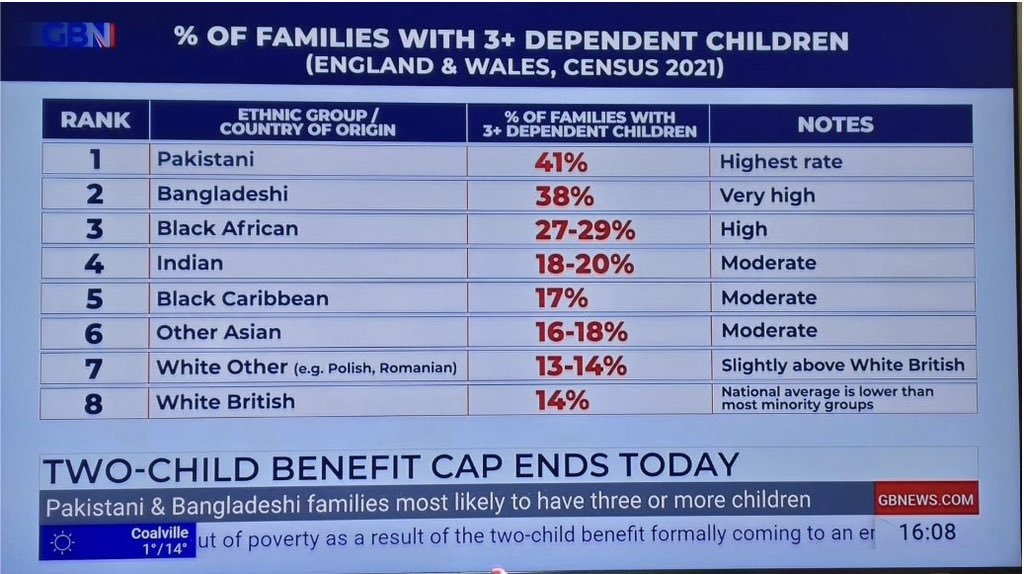
WOW. Who benefits from the removal of the two child benefit cap in order 1. Pakistani 2. Bangladeshi 3. Black African 4. Indian 5. Black Caribbean 6. Asian Other 7. White Other 8. White British Once again the White Brits are being forced to fund our own replacement
Basil the Great tweet media
English
316
3K
8.6K
136.4K
Andrew Crawford🚜 retweetledi
Rupert Lowe MP
Rupert Lowe MP@RupertLowe10·
Deporting foreign shoplifters is a very solid Restore Britain policy.
English
281
1.5K
23.3K
199.7K
Talk
Talk@TalkTV·
Strikes by BMA resident doctors have cost the NHS £3bn since 2023. How would YOU deal with the doctors’ 26% pay demand? 📞0344 499 1000 @JuliaHB1
Talk tweet media
English
23
6
19
7.6K
Andrew Crawford🚜 retweetledi
Archaeo - Histories
Archaeo - Histories@archeohistories·
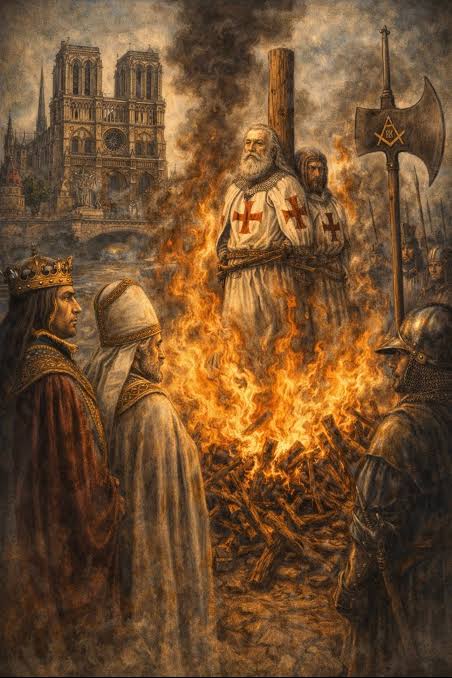
On the evening of March 18, 1314, the last Grand Master of the Knights Templar stood upon a small island in the Seine, within sight of Notre Dame. Jacques de Molay was an old man now—white-haired, gaunt from years of imprisonment. For seven years he had endured interrogations, torture, and humiliation at the hands of the French crown. Now the sentence was to be carried out. A wooden stake rose from the platform. Bundles of kindling had been piled around it. Soldiers ringed the square. A crowd gathered along the riverbanks to watch the end of one of the most powerful institutions in medieval Christendom. The Order of the Temple had once stood at the center of the Crusading world. Founded in 1119 to protect pilgrims traveling to Jerusalem, the Knights Templar had become both monks and warriors—men sworn to poverty, chastity, and obedience who nevertheless commanded fortresses, armies, and immense wealth. Their red-cross banner had flown above the walls of crusader strongholds from Antioch to Acre. Over time they built something else as well: the first international banking network in Europe. Kings deposited their treasure with them. Princes borrowed from them. Pilgrims could deposit funds in one city and withdraw them safely in another. Their reputation for reliability made the system possible; men trusted the Templars with fortunes. In an age when most rulers struggled simply to maintain authority over their own lands, the Templars answered only to the Pope. That independence made them powerful. It also made them dangerous. Among those who feared—and envied—them most was Philip IV of France, a king as coldly calculating as he was outwardly magnificent. Years of war had drained his treasury, and the Templars held much of the crown’s debt. Destroying them would solve several problems at once. On Friday the 13th in 1307, Philip struck. Across France, royal agents opened sealed orders at dawn and arrested hundreds of Templars in a single coordinated sweep. They were accused of heresy—of spitting upon the Cross, worshiping idols, and consorting with demons. Under torture, some confessed to whatever their captors demanded. Others held firm. The accusations spread through tribunals and inquisitions while the crown seized Templar lands and treasure. Even Pope Clement V, heavily influenced by Philip, eventually dissolved the order in 1312. But Jacques de Molay refused to die quietly. That evening in March 1314, as the flames began to rise around him, the old knight raised his voice before the watching crowd. He proclaimed the innocence of the Templars and condemned the injustice of their destruction. Then, according to chroniclers, he issued a final challenge: “God knows who is wrong and has sinned. Soon a calamity will come upon those who have condemned us falsely.” It sounded like the desperate cry of a man about to die. Yet the prophecy quickly became legend. Within weeks, Pope Clement V was dead. Before the year ended, Philip IV of France also died after a sudden illness following a hunting accident. To many across Europe, it seemed as though the condemned Grand Master had summoned judgment from beyond the flames. The Knights Templar were gone, their order extinguished. But their story did not end on that island in the Seine. Across the centuries that followed, the image of Jacques de Molay at the stake—an old knight defying kings as the fire closed around him—would endure as one of the most haunting symbols of medieval injustice. #archaeohistories
Archaeo - Histories tweet media
English
8
96
357
16.3K
Andrew Crawford🚜 retweetledi
Archaeo - Histories
Archaeo - Histories@archeohistories·
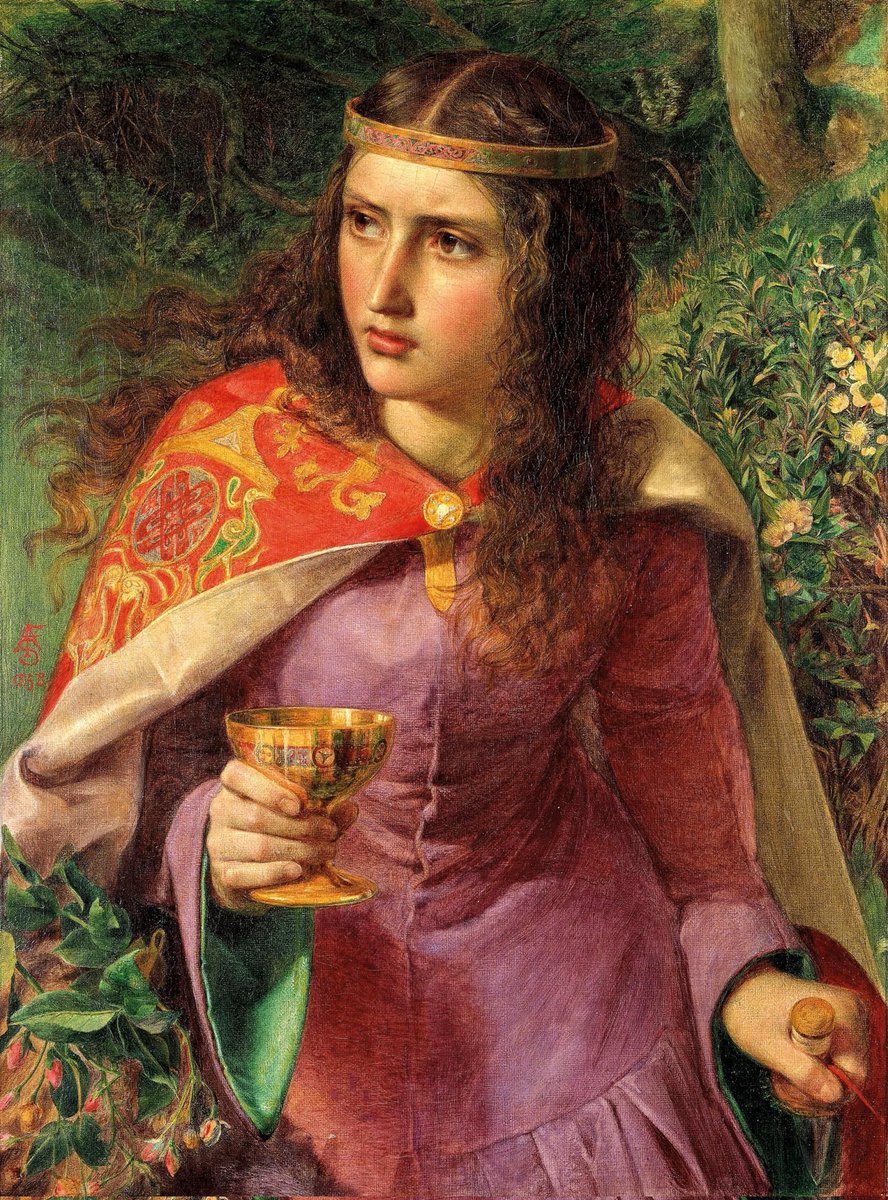
She entered the world in 1122, born to William X, Duke of Aquitaine, heir to a land so vast and rich that it dwarfed the holdings of the French crown. From the moment of her birth, Eleanor of Aquitaine was not simply a noblewoman—she was a prize, a dynastic treasure whose very existence invited schemes and ambition. When her father died unexpectedly in 1137, she became the most sought-after bride in Christendom. Her inheritance made her one of the most powerful and sought-after heiresses in Europe, and with that wealth came trouble. The danger of abduction was real, and powerful men watched closely for their chance. But fate—or the foresight of her father—had intervened. Within months, she was wedded to the young Louis VII, newly crowned King of France, and thus her lands, for a time, belonged to him. But Eleanor was no passive consort. She rode beside Louis on the ill-fated Second Crusade, her presence scandalizing some and thrilling the soldiers. Chroniclers whispered of a queen who refused to remain in the background. She quarreled openly with her husband, dismissed him as a monk in a king’s robes, and, upon their return, sought to sever the union that had bound them in name but never in spirit. The official reason for the annulment in 1152 was the all-too-convenient claim of consanguinity, but the truth was far simpler—Eleanor had found Louis wanting, and the Church, weary of their poisonous marriage, was happy to set her free. Mere weeks later, she astonished Europe by wedding the young, tempestuous Henry, Duke of Normandy, a man eleven years her junior. This was no marriage of quiet obedience—it was a collision of two titanic wills. When Henry ascended the English throne as Henry II in 1154, Eleanor became queen of a realm that dwarfed the French crown itself, ruling over an empire that stretched from the windswept highlands of Scotland to the sun-drenched vineyards of Aquitaine. She bore him eight children, including Richard the Lionheart and the treacherous John, men who would shape England for generations. But her marriage, as passionate as it was volatile, crumbled under Henry’s infidelities and iron-fisted rule. Eleanor, never one to submit, even took up arms against her own husband, aiding her sons in rebellion against their father. For this, Henry did what few husbands—and fewer kings—had ever done: he locked her away. Fifteen years passed, years in which her name was barely whispered outside the cold stone walls of her prison. But Eleanor was patient. When Henry finally succumbed to death in 1189, she emerged once more, not as a broken prisoner, but as the de facto ruler of England. Her son, Richard, the crusading king, left her to govern in his absence, trusting in her wisdom as few men had trusted in any woman before. She held the kingdom together, negotiated alliances, arranged marriages that shaped the course of European history, and outmaneuvered those who sought to undermine her. She was old now, older than most women of her time dared to dream of being. But even in the twilight of her life, she remained a force of nature. At nearly 80, she rode across the Pyrenees to arrange a marriage for her granddaughter with the King of France. And when she finally lay down to rest in the Abbey of Fontevraud in 1204, she did so not as a woman broken by time, but as a queen who had defied it. Eleanor of Aquitaine died on March 31 in 1204. She lived not just one life, but a dozen. She was a queen of France and England, a crusader and a rebel, a prisoner and a ruler. She had fought, suffered, and endured—and in the end, she had triumphed. #archaeohistories
Archaeo - Histories tweet media
English
13
152
752
18.2K
Andrew Crawford🚜 retweetledi
Archaeo - Histories
Archaeo - Histories@archeohistories·
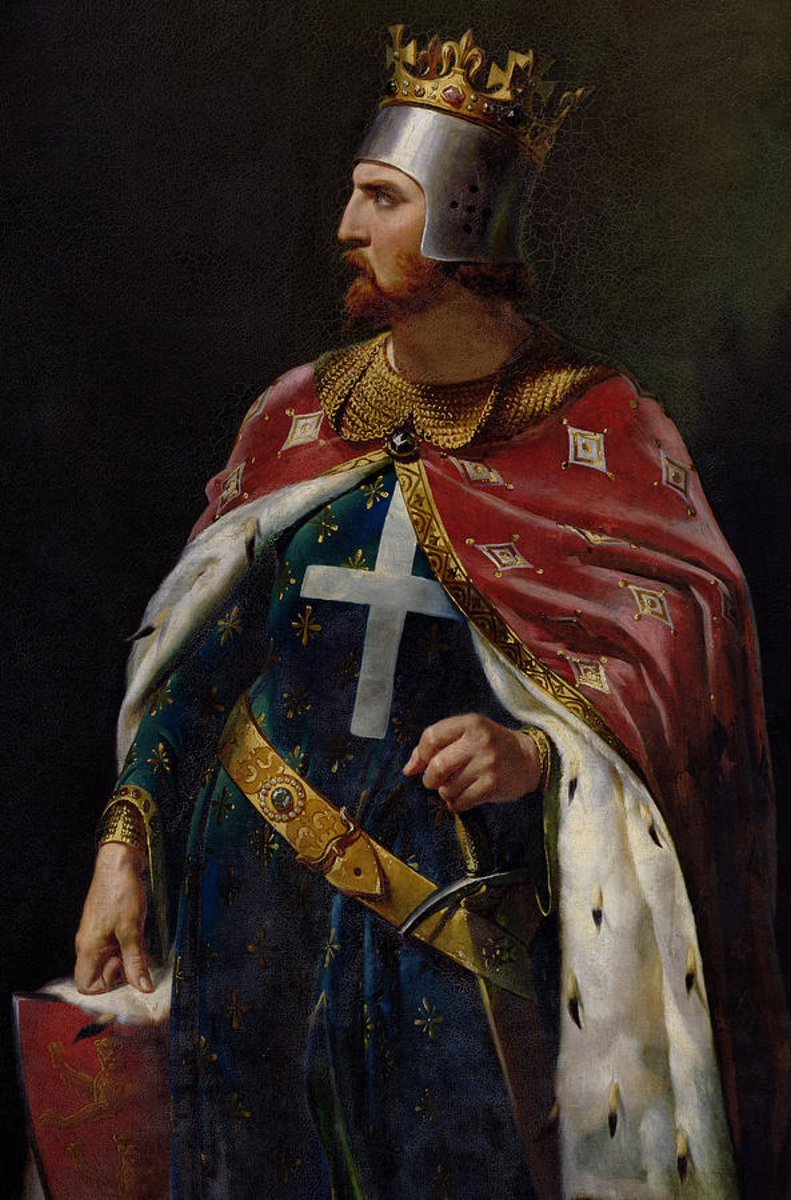
He was the very image of a crusading king—tall, golden-haired, and unspeakably brave, his sword flashing like lightning across the burning sands of the Levant. Richard Plantagenet, called Lionheart, was not merely a monarch but a warrior prince cast in the mold of Arthurian myth, a man who believed that glory on the battlefield was the purest form of kingship. Crowned in Westminster Abbey in 1189, he was an English king who scarcely spoke English, a son of Eleanor of Aquitaine and Henry II who spent more of his life in the saddle than on any throne. Almost at once, he plunged Europe into the Third Crusade, answering the shattering call from Christendom after the fall of Jerusalem to the Muslim general Saladin—Salah ad-Din, the unifier of Islam. Richard sailed to the Holy Land like a thunderbolt loosed from heaven, bringing with him a burning cross and the belief that God had chosen him to strike down the infidel. What followed was a chivalric clash of titans, a battle of steel and spirit between two men who embodied the codes of war and honor. Richard was a storm on horseback, smashing Saladin’s forces at Arsuf in 1191, cutting through Saracen lines with a kind of holy fury. His reputation grew so fearsome that Muslims spoke of him with reverent dread, calling him Melek Ric, the king who came from the sea. Yet there was in this bloodletting a strange nobility—twice, when Richard fell ill, Saladin sent him fruit and snow from the mountains; once, when Richard’s horse was killed, Saladin sent him two more. These were warriors of an older age, when even amidst the slaughter of crusade there could be moments of grace. But Jerusalem remained out of reach. After months of grueling siege and diplomacy, Richard turned back—not defeated, but denied. “I would have sold London to pay for this war,” he later said, “but no one would buy.” He returned to Europe in bitterness and chains, captured en route by the Duke of Austria—an old enemy nursing grievances from the Crusade. A king’s ransom emptied England’s coffers to set him free. In his final years, he rode across his French domains, battling rebellious vassals and pressing his claims with sword and fire. It was in a petty skirmish, during the siege of the trivial castle of Châlus in 1199, that fate took him. Shot in the shoulder by a crossbow bolt—fired, ironically, by a boy—he lingered in agony as infection took hold. His death was less glorious than his life, and yet there was something fitting in its defiance: a king, wounded but unbowed, commanding his enemies to be spared even as he died. So passed Richard the Lionheart, on April 6 in 1199, a king of war who lived by the sword, and in the end, died not for Jerusalem or empire—but for pride. #archaeohistories
Archaeo - Histories tweet media
English
3
19
79
3.8K
Markus
Markus@Markus47076832·
@rosalinda5901 Stop spreading lies, this is not a picture from Artemis 2. Go to NASA's website for the latest images, this is not on there.
English
1
0
0
90
Emma Thompson 🇩🇪 🇪🇺
🌕 One of the highest-quality images of the Moon ever released ✨📸 Artemis II traveled about 406,000 kilometers from Earth 🚀🌍, setting a record for the farthest distance reached in a crewed journey toward the Moon 🌕👨‍🚀
English
7
5
19
1.3K
Andrew Crawford🚜 retweetledi
Proudofus.uk
Proudofus.uk@ProudofusUK·
They didn't wait for the government. They didn't wait for anyone. 🍺🇬🇧 Centuries before the NHS, ordinary British working people built their own system. In secret. In pubs. Every week they pooled their pennies. If you fell ill, they paid your rent. 🏠 If you died, they buried you. ⚰️ If your family starved, they fed them. 🍞 No government. No institution. Just British working people looking after each other. By 1800. Four million members. 🇬🇧 They called them Friendly Societies. The NHS. The trade unions. The co-operative movement. All of them started the same way. In rooms like this. With people like these. And almost nobody knows this happened. Britain lost its story. We're taking it back. Story by story. Name by name. Nobody is coming to do this for us. If you want to be part of making sure this country remembers who it is: proudofus.co.uk/support Be Part Of Us. Be Proud Of Us. 🇬🇧
English
82
1.8K
6.3K
83.6K
Andrew Crawford🚜 retweetledi
Andrew Wright
Andrew Wright@AndyCountryside·
I think the #bluebells are absolutely in their prime right now. 💙
Andrew Wright tweet media
Outwood, South East 🇬🇧 English
11
52
468
4.9K
Andrew Crawford🚜 retweetledi
Mees Wynants
Mees Wynants@MeesWynants·
The British government hid this data for years. Now it is out. 79% of everyone arrested for theft on British railways was a foreigner. 40% of all arrests. 37% of sexual offenses. 36% of violent crimes. All foreign nationals. They knew exactly what the consequences of their immigration policy were. They just never told you.
English
394
6.2K
18.3K
889.9K
Andrew Crawford🚜 retweetledi
Rupert Lowe MP
Rupert Lowe MP@RupertLowe10·
Under a Restore Britain Government, British social housing would be for British families - young British men and women in genuine need would receive the support they deserve. Social housing would be used to support them, not lazy foreigners. Without compromise or apology.
English
229
1.9K
12.8K
107.8K