Creative Storm

2.1K posts

Creative Storm banner
Creative Storm

Creative Storm

@Creative_Storm

Indie developer of "Sector Unknown", "Age of Gladiators" and "Raiders! Forsaken Earth".

Katılım Mart 2016
904 Takip Edilen2.4K Takipçiler
Sabitlenmiş Tweet
Creative Storm
Creative Storm@Creative_Storm·
Sector Unknown is officially out of Early Access. Full release is live now with a 30% launch discount. Seven months of iteration, feedback, fixes, and polish led to this moment. Grateful to everyone who played along the way! Steam: store.steampowered.com/app/2734270/Se…
English
3
8
30
79.2K
Creative Storm retweetledi
Ihtesham Ali
Ihtesham Ali@ihtesham2005·
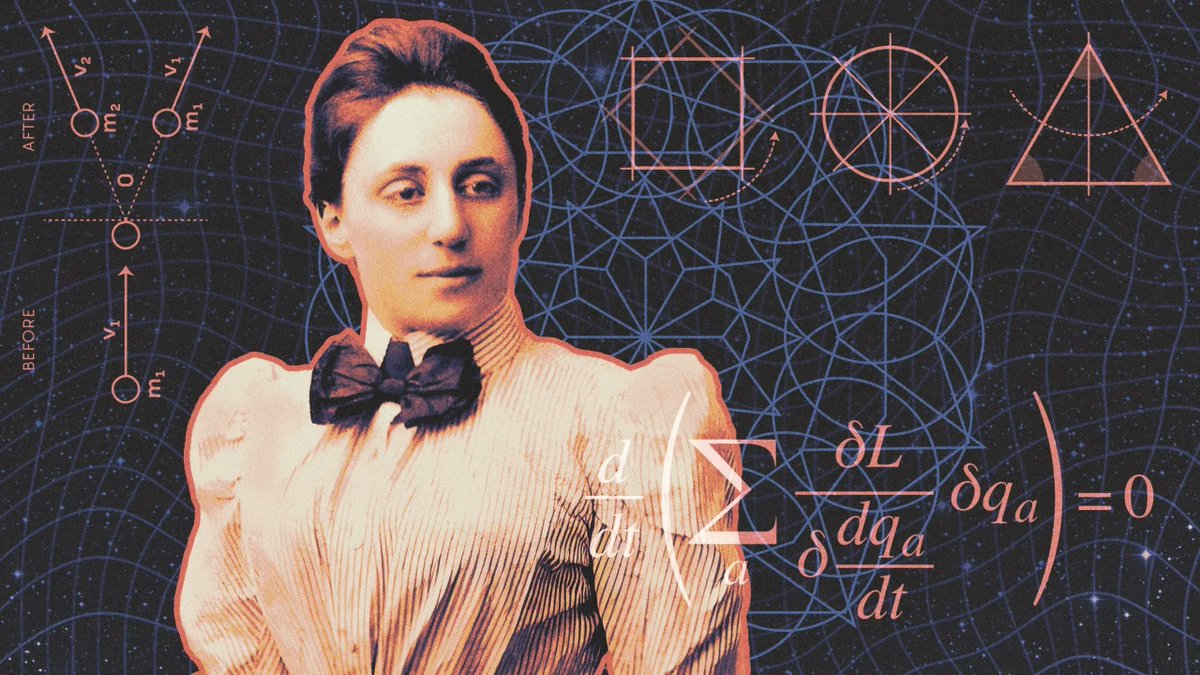
A German woman proved a single theorem in 1915 that quietly became the foundation of every law of physics on Earth. She taught for seven years without pay because the University of Göttingen refused to hire a woman. Then she fled the Nazis and died in Pennsylvania at 53. I started reading about her and could not believe how much of modern physics traces back to one woman the world refused to pay for her work. Her name was Emmy Noether. The theorem is called Noether's theorem. Every law of physics ever discovered. Conservation of energy. Conservation of momentum. The Standard Model. General relativity. Quantum field theory. All of them are direct consequences of a single mathematical insight she proved 110 years ago. And most physics students will graduate without ever hearing her name once. Emmy Noether was born in 1882 in Erlangen, Germany. Her father was a respected mathematician at the local university. The university would not allow women to enroll as students. So she audited classes from the back of the room and was not allowed to receive credit for anything she learned. She finished her PhD anyway in 1907. Then she could not get a job. For seven years she worked at the Mathematical Institute in Erlangen without a single paycheck. She supervised students. She published papers. She filled in for her aging father when he was too sick to teach. She did the work of a full professor and was paid nothing. There was no policy preventing her payment. There was simply no precedent for paying a woman. In 1915 David Hilbert and Felix Klein invited her to Göttingen, the most important mathematics department in the world. Hilbert wanted her there because he was working on Einstein's new general relativity and there was a problem nobody could solve. The philosophy faculty blocked her hiring. They argued returning soldiers should not learn from a woman. Hilbert stood up in the faculty meeting and said the line that has echoed for a century. He did not see how the sex of the candidate could be an argument against her admission, because the university senate was not a bathing establishment. She still was not hired. So Hilbert listed her courses under his own name on the official schedule. She taught them under his title. This is how the most important mathematician of the 20th century was forced to operate for years inside one of the most prestigious universities in the world. That same year she solved Hilbert and Einstein's problem. The puzzle was technical. In general relativity, energy did not seem to be conserved the way classical physics required. Einstein could not figure out why. Hilbert could not figure out why. Noether figured out why in a few months. Then, instead of just solving their specific problem, she proved a much deeper theorem that solved every problem of that shape forever. Her result was this. Every continuous symmetry in a physical system corresponds to a conservation law. If the laws of physics do not change over time, energy must be conserved. If they do not change with location, momentum must be conserved. The conservation laws were not separate facts. They were inevitable consequences of the symmetries underneath the universe. This single theorem is the foundation of every law of physics ever discovered after her. The Standard Model is built on it. The Higgs boson Nobel Prize is built on it. Quantum field theory is built on it. Einstein read her paper and wrote to Hilbert that he was astonished. He had never met anyone with her capacity for abstract thought. She finally got a paid teaching position in 1923. She was 41. She had been doing professor-level work for 16 years without compensation. While the German physicists kept getting credit for the consequences of her theorem, she quietly founded modern abstract algebra. The structures we now call Noetherian rings are named after her. Modern algebraic geometry, the math that powers cryptography and parts of machine learning, runs on her foundations. Then the Nazis came. In 1933 she was fired for being Jewish. Bryn Mawr College in Pennsylvania offered her a position. She took it. She taught there for two years that were among the most productive of her life. In April 1935 she went in for routine surgery to remove an ovarian cyst. Complications developed. She died four days later. She was 53. Einstein wrote a public letter to the New York Times the day after her death. He said she was the most significant creative mathematical genius thus far produced since the higher education of women began. Almost nobody reading that letter knew her name. She is buried in the courtyard of the library at Bryn Mawr College. The grave is small. Most students walk past it without noticing. The woman who built the mathematical foundation of modern physics was paid almost nothing for almost all of it. The world she worked in told her every single day that she did not belong there. She built it anyway.
Ihtesham Ali tweet media
English
22
250
554
22.8K
Creative Storm retweetledi
Umesh Kumar Yadav
Umesh Kumar Yadav@Umesh__digital·
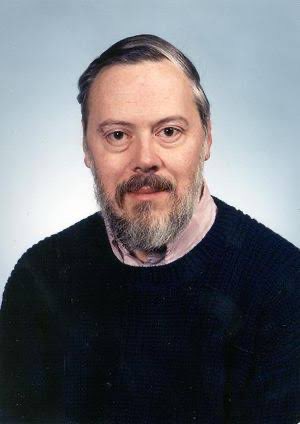
Dennis Ritchie created C in the early 1970s without Google, Stack Overflow, GitHub, or any AI ( Claude, Cursor, Codex) assistant. - No VC funding. - No viral launch. - No TED talk. - Just two engineers at Bell Labs. A terminal. And a problem to solve. He built a language that fit in kilobytes. 50 years later, it runs everything. Linux kernel. Windows. macOS. Every iPhone. Every Android. NASA’s deep space probes. The International Space Station. > Python borrowed from it. > Java borrowed from it. > JavaScript borrowed from it. If you have ever written a single line of code in any language, you did it in Dennis Ritchie’s shadow. He died in 2011. The same week as Steve Jobs. Jobs got the front pages. Ritchie got silence. This Legend deserves to be celebrated.
Umesh Kumar Yadav tweet media
English
182
1.2K
5.8K
127.3K
Creative Storm retweetledi
Ihtesham Ali
Ihtesham Ali@ihtesham2005·
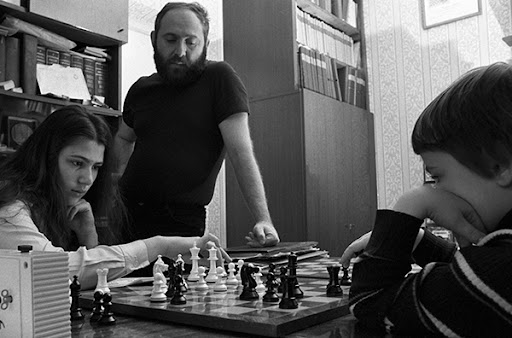
A Hungarian psychologist raised three daughters to prove that any child could become a chess grandmaster through early specialization. He succeeded. Two of them became grandmasters. One became the greatest female chess player who ever lived. Then a sports scientist looked at the data and found something nobody wanted to hear. His name is David Epstein. The book is called "Range." The Polgar experiment is one of the most famous case studies in the history of deliberate practice. Laszlo Polgar wrote a book before his daughters were even born arguing that geniuses are made, not born. He homeschooled all three girls in chess from age four. By their teens, Susan, Sofia, and Judit were dominating tournaments against grown men. Judit became the youngest grandmaster in history at the time, breaking Bobby Fischer's record. The story became the gospel of early specialization. Pick a domain young, drill it hard, and you can manufacture excellence. Epstein opens his book by telling that story honestly and then quietly demolishing the conclusion most people drew from it. Chess works that way. Most things do not. Here is the distinction that took him four years of research to articulate, and that almost nobody who quotes the 10,000 hour rule has ever read. There are two kinds of environments in which humans develop expertise. Psychologists call them kind and wicked. A kind environment has clear rules, immediate feedback, and patterns that repeat reliably. Chess is the cleanest example. Every game ends with a winner and a loser. Every move is recorded. The board never changes shape. The pieces never invent new ways to move. A child who plays ten thousand games will see most of the patterns that exist in the game, and pattern recognition is exactly what chess mastery is built on. A wicked environment is the opposite. Feedback is delayed or misleading. Rules shift. The patterns that worked yesterday may be exactly the wrong patterns to apply tomorrow. Most of the real world looks like this. Medicine is wicked. Investing is wicked. Building a company is wicked. Scientific research is wicked. Almost every job that involves a complex changing system with humans in it is wicked. The Polgar sisters trained in the kindest environment any human can train in. Their success was real and the method was correct. The mistake was generalizing the method to fields where the underlying structure of the environment is completely different. Epstein's research is what made the implication impossible to ignore. He looked at the careers of elite athletes outside of chess and golf and found that the pattern was almost the inverse of what people assumed. The athletes who reached the very top of their sports were overwhelmingly people who had played multiple sports as children, specialized late, and often switched disciplines well into their teens. Roger Federer played squash, badminton, basketball, handball, tennis, table tennis, and soccer before tennis became his focus. The kids who specialized in tennis at age six and trained year-round for a decade mostly burned out, got injured, or topped out at lower levels of the sport. The same pattern showed up everywhere he looked outside of kind environments. Inventors with the most patents had worked in multiple unrelated fields before their breakthrough work. Comic book creators with the longest careers had drawn for the most different genres before settling. Scientists who won Nobel Prizes were dramatically more likely than their peers to be serious amateur musicians, painters, sculptors, or writers. The skill that mattered in wicked environments was not depth in one pattern. It was the ability to recognize when a pattern from one domain applied unexpectedly in another. That kind of thinking cannot be built by drilling a single subject. It can only be built by accumulating mental models from many subjects and learning to move between them. The deeper finding is the one that should change how you think about your own career. Specialists in wicked environments often get worse with experience, not better. Epstein cites studies of doctors, financial analysts, intelligence officers, and forecasters showing that years of experience in a narrow domain frequently produce more confident judgments without producing more accurate ones. The expert builds elaborate mental models that feel comprehensive and turn out to be increasingly disconnected from the actual structure of the problem. They stop noticing what does not fit their framework. They mistake fluency for understanding. Generalists do better in wicked domains for a reason that sounds almost mystical until you understand the mechanism. They have less invested in any single mental model, so they abandon broken models faster. They are used to being a beginner, so they are not threatened by the discomfort of not knowing. They have seen enough different domains that they can usually find an analogy from one field that unlocks a problem in another. The technical name for this is analogical thinking, and the research on it is one of the most underrated bodies of work in cognitive science. The single most useful sentence in the entire book is the one Epstein puts almost as a throwaway. Match quality matters more than head start. A person who tries six different fields in their twenties and finds the one that genuinely fits them will outperform a person who picked one field at fourteen and stuck to it on willpower alone. The lost years were not lost. They were the search process that produced the match. Every field they walked away from taught them something they later imported into the field they finally chose. The reason this is so hard to accept is cultural, not empirical. We tell children to pick a path early. We reward the prodigy who knew at six. We treat the late bloomer as someone who failed to launch on time, when the data suggests they were running an entirely different and often more effective optimization process underneath. The Polgar sisters were not wrong. The conclusion the world drew from them was. If your environment is genuinely kind, specialize early and drill hard. If it is wicked, and almost every interesting human problem is, then the people who win are the ones who refused to specialize until they had seen enough to know what was actually worth specializing in. You are not behind. You were running the right experiment all along.
Ihtesham Ali tweet media
English
380
2.9K
11.2K
1M
Creative Storm retweetledi
Fermat's Library
Fermat's Library@fermatslibrary·
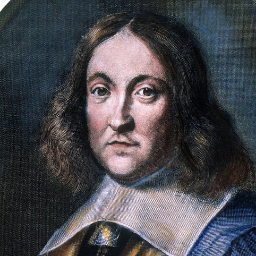
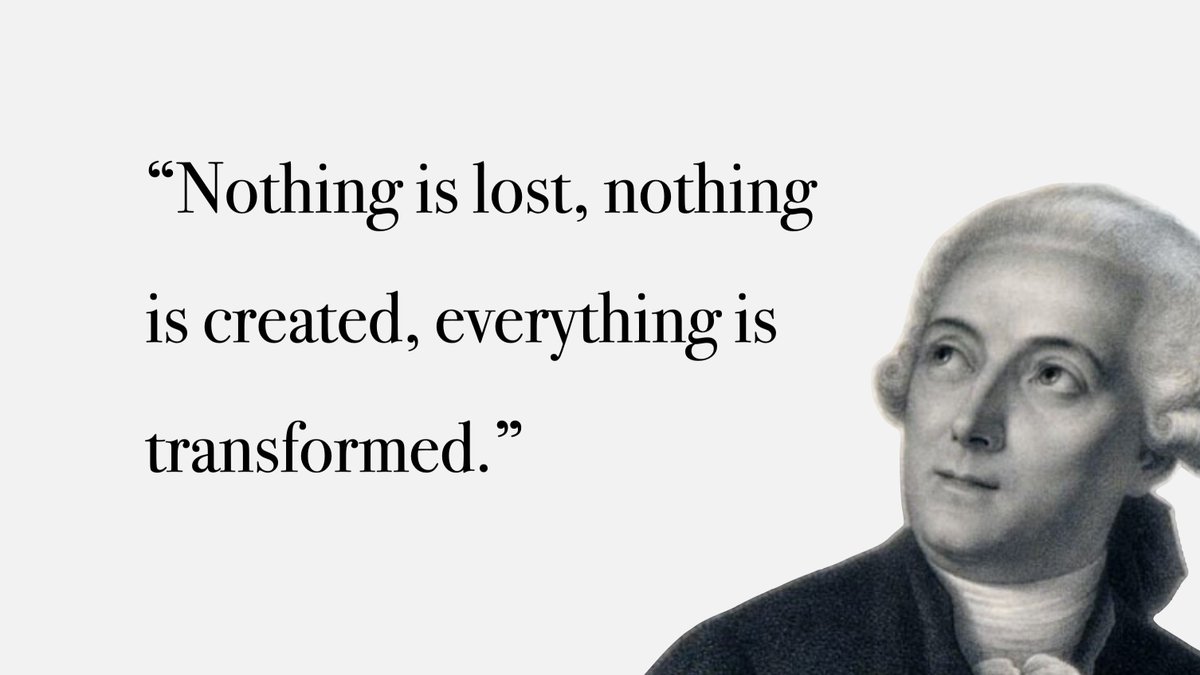
On this day in 1794 the French Republic guillotined Antoine Lavoisier. He had named oxygen, formulated the law of conservation of mass and founded modern chemistry. Appeals were rejected with the line "the Republic has no need of scientists." The next day Lagrange said: "It took only a moment to cause this head to fall, and a hundred years will not suffice to produce its like."
Fermat's Library tweet media
English
162
1.6K
8.1K
517.2K
Creative Storm retweetledi
ColorsFadeGaming
ColorsFadeGaming@fade_colors·
Well, it's a bummer I haven't been able to grow my YouTube channel enough to do it full time because I just got laid off after 16 years (along with a bunch of others in our IT department; we were gutted). So, if anyone needs a remote software dev with 25 years experience in the C# .Net stack, Javascript/Jquery/Html/Sql, who likes solving problems and is a nerd with Excel, hit me up. Bummer of a Friday, Hal.
English
4
1
6
171
Creative Storm retweetledi
LaurieWired
LaurieWired@lauriewired·
There’s a famous Usenet story about a programmer (Mel) who refused higher level abstractions. It was the late 1950s, and even in that era, Mel was…well today we’d call him a boomer. Mel only wrote in raw hexadecimal. He didn’t approve of compilers, and refused to use optimizing assemblers. "You never know where it's going to put things”, he said. Everyone else in the company was moving on to FORTRAN, and they didn’t understand why Mel was so stubborn about using new tools. He *loved* self-modifying code. “If a program can’t rewrite its own code”, he asked, “what good is it?” Mel eventually left the company, and other engineers were tasked with understanding what was left. Mel’s hand-optimized routines always beat the assemblers; but some of it looked absolutely bizarre. One engineer took ~2 weeks to understand why there were loops with no exit condition…yet the program worked fine. I won’t spoil all the details, you should really read it, it’s short. But it’s a fantastic piece on “what defines a real programmer?”…which is becoming increasingly relevant in this vibe-coded era. I strive to understand computers as deeply as Mel! If we aren’t careful, we’re going to lose the “Mels” of this world to time. That’s part of why I go so deep in my youtube videos. I hope that younger viewers are genuinely fascinated by the inner workings of our machines, instead of handing everything off to higher abstractions.
solst/ICE of Astarte@IceSolst

Interesting article on treating agent output like compiler output (and why) skiplabs.io/blog/codegen_a…

English
200
722
8.8K
580.2K
Creative Storm retweetledi
RPL Johnson
RPL Johnson@RPLJohnson·
@ThatMoviePage There's a great quote from Lord of the Rings. In one night scene one of the actors asked, "Where is that light supposed to be coming from?" And one of the crew replied, "Same place as the music." Movies aren't reality, they're something more.
English
0
1
9
566
Creative Storm retweetledi
Vala Afshar
Vala Afshar@ValaAfshar·
In Japanese swordsmanship, drawing a katana in limited space—such as narrow corridors or low-ceilinged rooms—requires specialized techniques that prioritize economy of motion and vertical control.
English
104
1.1K
8.8K
1M
Creative Storm retweetledi
GINA NÄUMAN • جینا نعمان
It’s no coincidence birdsong regulates our nervous systems & lowers cortisol. Birdsong is how birds announce the area is free from predators. They don’t just signal safety to fellow birds, they signal to the entire ecosystem. The human brain attuned to this signal over centuries.
Earth@earthcurated

High-frequency patterns in birdsong can signal safety to the brain, helping the body unwind, ease stress, and restore mental clarity. At times, nothing soothes the mind more effectively than the quiet rhythms of the natural world.

English
117
6.1K
40.1K
983.5K
Creative Storm retweetledi
İzafiyet
İzafiyet@Statikoo·
bir su kaynağının doğduğu yere güçlü bir su altı kamerası ile bakıyorlar görüntüler çok ama çok iyi
Türkçe
120
4.8K
45.1K
908K
Creative Storm retweetledi
Anish Moonka
Anish Moonka@anishmoonka·
The research behind this is wild. A baby owl can sit and starve to death right next to a pile of food. Put a stuffed owl next to it, like in the video, and suddenly it'll eat. An Austrian zoologist, Konrad Lorenz, won the 1973 Nobel Prize for figuring out why. He showed that young birds aren't born knowing who their mom is. In the first few days of life, their brain takes a kind of mental photograph. Whatever they see moving around gets locked in as "parent." After that, only that figure can switch on their feeding instinct. He called it imprinting. Owls have it worse than most birds. They're born blind, naked, and totally helpless. A baby barn owl needs feeding every two to three hours for weeks. It can't even keep itself warm until its feathers come in. And right around the time its eyes finally open, between days 15 and 20, its brain locks onto whoever's been taking care of it. Miss that window with the wrong face nearby, and the owl is wired wrong for life. Even the begging is automatic. In the 1950s, a Dutch scientist named Niko Tinbergen ran experiments with baby seagulls. He found the chicks were pecking at a specific shape. A long thin thing with a colored spot was enough to trigger the full begging routine, even when it was just a painted wooden stick. Take the stick away and the whole sequence shuts down. The chick can be staring straight at food, but if there's no parent-shaped trigger, its body doesn't know how to swallow. There's a tiny patch in the bird brain that runs this whole show. It's the same part that learns and stores faces. Researchers at Cambridge and labs in Japan have mapped it down to the chemistry. They've even found a hormone that, if you inject it in the right spot, can re-open the imprinting window after it closes. That dummy owl in the video carries 40 years of conservation work behind it. In 1982 there were only 22 California condors left in the entire world. The San Diego Zoo started feeding hatchlings with hand puppets shaped like adult condors, hiding the human handler behind a curtain. The condor population is now 607. The Bronx Zoo did the same thing last spring with a baby king vulture. The Barn Owl Trust in the UK feeds orphaned owls through owl puppets while wearing camouflage hoods, because an owl raised by humans can never be released back into the wild. It'll fly toward people, beg from them, and starve. The dummy is the only signal the chick's brain still accepts as "mom." Evolution carved a very specific lock into its brain, and only the right shape fits.
Manoco@Moonlighhy

The baby owl, which refused to eat after being orphaned, was fed using a dummy owl that resembled its mother.

English
87
4.5K
29.1K
1.4M
Creative Storm retweetledi
Math Lady Hazel 🇦🇷
Math Lady Hazel 🇦🇷@mathladyhazel·
What Quantum Physics does to a man.
Math Lady Hazel 🇦🇷 tweet media
English
260
1.5K
14.7K
339.8K
Creative Storm retweetledi
Hei Wa Wa
Hei Wa Wa@yaqobhyndes·
This group of French researchers (Sur le champ) trained about 200 re-enactors to test the crowd dynamics of hoplite warfare and routing more generally. It's really interesting how the often frustratingly vague statements of ancient writers become clear with this footage
English
188
1.8K
15.9K
3.7M
Creative Storm retweetledi
Math Files
Math Files@Math_files·
Ukrainian mathematician Maryna Viazovska solved a problem that had puzzled mathematicians for over 400 years. Even Johannes Kepler and Isaac Newton couldn’t crack it. We live in a three-dimensional world, but Maryna solved a puzzle in an eight-dimensional space—something that’s very hard even to imagine. She was born in Kyiv, studied at Taras Shevchenko University, worked in Bonn and Berlin, and at just 33 became a professor in Lausanne. So what was the problem? It’s about how to pack identical spheres as tightly as possible in space. This question was first asked by Kepler back in 1611. Over time, scientists found answers for two and three dimensions—but not for eight. Maryna proved that in eight dimensions, the densest packing is formed by a special mathematical structure called a lattice. What’s even more amazing is that she did it in just 23 pages, while earlier attempts took hundreds. In 2022, she was awarded the Fields Medal, the most prestigious prize in mathematics. She became only the second woman in history to receive it. Today, Maryna Viazovska works in Lausanne, supports Ukrainian mathematicians, and brings pride to Ukraine with her achievements.
Math Files tweet media
English
302
5K
21.4K
623.7K
Creative Storm retweetledi
Ihtesham Ali
Ihtesham Ali@ihtesham2005·
An MIT professor taught the same math course for 62 years, and the day he retired, students from every country on earth showed up online to watch him give his final lecture. I opened the playlist at 2am and ended up watching three of them back to back. His name is Gilbert Strang. The course is MIT 18.06 Linear Algebra. Every machine learning engineer, every data scientist, every quant, every self-taught programmer who actually understands how AI works learned the math from this one man. Most of them never set foot on MIT's campus. They just opened a free playlist on YouTube and let him teach. Here's the story almost nobody tells you. Strang joined the MIT math faculty in 1962. He retired in 2023. That is 61 years of standing at the same chalkboard teaching the same subject to 18-year-olds. The interesting part is what he did when MIT launched OpenCourseWare in 2002. Most professors were skeptical. They worried that putting their lectures online would make their classrooms irrelevant. Strang did not hesitate. He said his life's mission was to open mathematics to students everywhere. He filmed every lecture and gave it away. The decision quietly changed how the world learns math. For decades linear algebra was taught the wrong way. Professors started with abstract vector spaces and proofs about field axioms. Students drowned in the abstraction. Most never recovered. They walked out believing they were bad at math when they had simply been taught in an order that nobody's brain is built to absorb. Strang inverted the entire curriculum. He started with matrix multiplication. Something you can write down on paper. Something you can compute by hand. Something you can see. Then he showed his students that everything else in linear algebra eigenvectors, singular value decomposition, orthogonality, the four fundamental subspaces was just a different lens for understanding what the matrix was actually doing under the hood. His rule was strict. If a student could not explain a concept using a concrete 3 by 3 example, that student did not actually understand the concept yet. The abstraction was supposed to come last, not first. The intuition was the foundation. The proofs were just confirmation that the intuition was correct. The second thing Strang changed was the classroom itself. He said please and thank you to his students. Every single lecture. He paused mid-derivation to ask "am I OK?" to check if anyone was lost. He never used the word "obviously" or "trivially" because he knew exactly what those words do to a student who is one step behind. He treated 19-year-olds learning math for the first time the way he treated his own colleagues. With patience. With respect. With the assumption that they belonged in the room. For 62 years. The result is something that has never happened in the history of education. A single math professor became the default teacher of his subject for the entire planet. Universities in India, China, Brazil, Nigeria, every country with a computer science department, started telling their own students to just watch Strang's lectures. The University of Illinois revised its linear algebra course to do almost no in-person lecturing. The reason was honest. The professor said they could not compete with the videos. His final lecture was in May 2023. The auditorium was packed with students who had never met him before. He walked to the chalkboard, taught for an hour, and at the end the entire room stood and applauded. He looked confused for a moment, like he genuinely did not understand why they were cheering. Then he smiled and waved them off and walked out. His written comment under the YouTube video of that final lecture was four sentences long. He said teaching had been a wonderful life. He said he was grateful to everyone who saw the importance of linear algebra. He said the movement of teaching it well would continue because it was right. That was it. No book promotion. No farewell speech. No legacy management. The man whose teaching is the foundation of modern AI just thanked the audience and went home. 20 million views. Zero ego. The entire engine of the AI revolution sits on top of math that millions of people learned for free from one quiet professor in Cambridge. The course is still on MIT OpenCourseWare. Every lecture, every problem set, every exam, every solution. Free. The most important math course of the 21st century is sitting one click away from you. Most people will never open it.
Ihtesham Ali tweet media
English
547
8.3K
32.1K
2.4M
Creative Storm retweetledi
Black Hole
Black Hole@konstructivizm·
This is one of the most jaw-dropping images humanity has ever captured — a close-up of an alien world billions of kilometers from Earth.It shows the rugged, sun-baked surface of Comet 67P/Churyumov-Gerasimenko, taken in November 2014 by the Philae lander as it made its historic (and slightly bouncy) touchdown. Shot by the CIVA camera just moments after separation from the Rosetta spacecraft, the photo reveals jagged rock formations, dramatic cliffs, and deep shadows stretching across the comet’s dusty, icy terrain.Think about what this picture represents: a tiny, refrigerator-sized robot successfully rendezvoused with a mountain-sized chunk of ice and rock racing through space at over 50,000 km/h. After a 10-year journey that began in 2004, Rosetta and Philae pulled off one of the most audacious feats in space exploration — landing on a comet and sending back images from its very surface.It’s not just a photo. It’s proof of what human ingenuity can achieve when we chase the unknown. ESA / CIVA, processed by Mattias Malmer
Black Hole tweet media
English
10
147
1.5K
89.6K
Creative Storm retweetledi
The Pets 𝕏
The Pets 𝕏@ThePetsX·
So your game is more important than me huh?
English
841
14.1K
103.4K
6.7M
Creative Storm retweetledi
萩原幸也 ®️
萩原幸也 ®️@onipro·
全長17メートルのキネティックウォール。人が中を歩くとその重みに反応して壁がしなやかに広がり空間が変化する。ギリシャのデザイナー兼エンジニアであるナシア・イングレッシス率いるStudio INIによる作品。
日本語
314
3.2K
31.9K
2.8M