
The Crochet Tim retweetledi
The Crochet Tim
2.9K posts

The Crochet Tim
@Crochet_Tim
Crocheted astronaut. Unofficially supporting @astro_timpeake on #Principia mission. Usually found in the company of @mrsdenyer. Taller in real life! #STEM insta
Katılım Kasım 2016
449 Takip Edilen325 Takipçiler

O.M.G! Happy 40th Birthday Top Gun - a treat tonight watching my favourite film in 4DX @cineworld
Seriously @astro_timpeake I want to know if it’s anything like flying a real fighter plane?!✈️
I sat in my car afterwards and it felt like I was still moving! #needforspeed
GIF
English
The Crochet Tim retweetledi
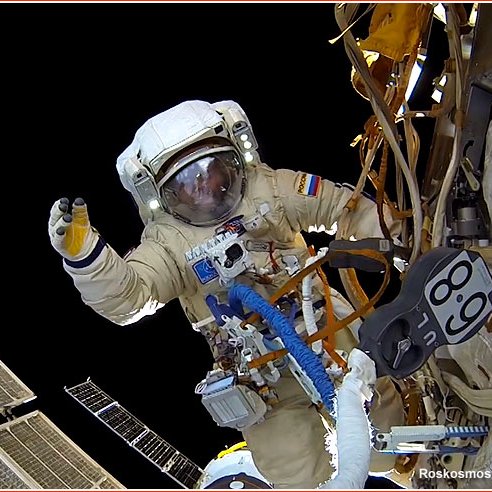
Celebrating the day Helen Sharman made history. 🚀 Britain’s first astronaut, first woman to visit Mir, and a trailblazer who showed an entire generation what’s possible when ambition meets opportunity. Her 1991 mission still inspires explorers across the UK and beyond. 🚀🇬🇧
Mark Stewart@pendragonmist
"The English Cosmonaut": Celebrating Helen Sharman’s record breaking spaceflight and the Soyuz TM-12 mission which launched from the Baikonur Cosmodrome on 18 May 1991. Helen spent eight days in space, six of them onboard the Mir Space Station: markdestewart.wixsite.com/the-metaphor-e… #OTD
English
The Crochet Tim retweetledi

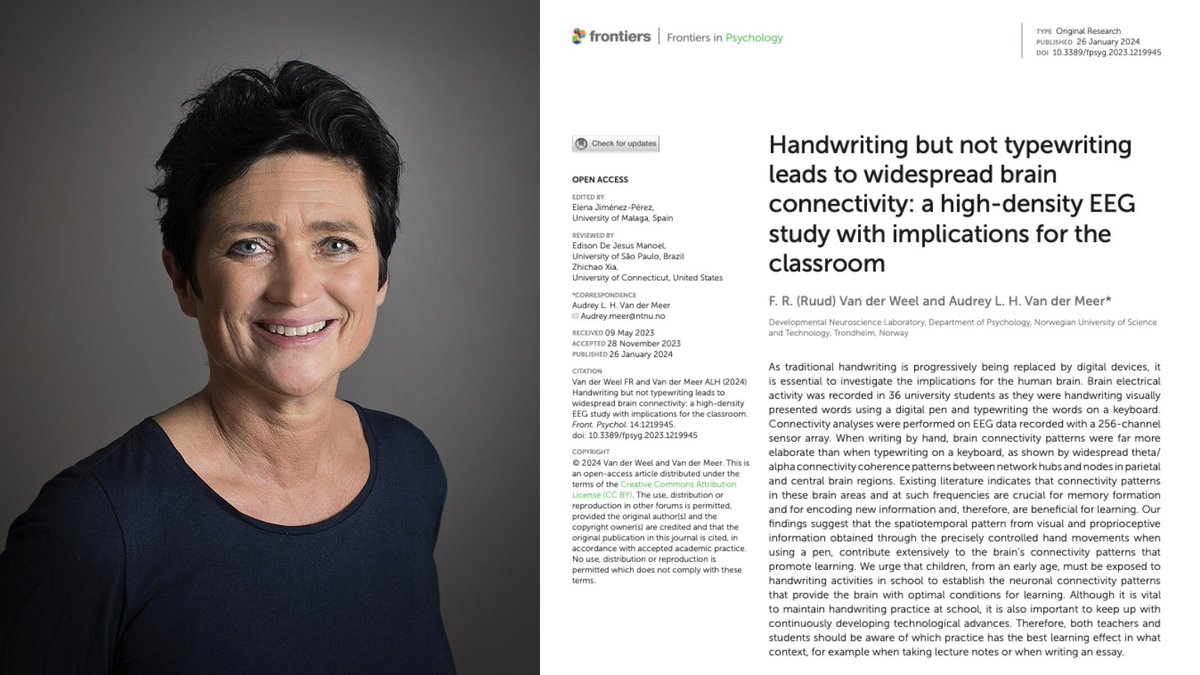
A Norwegian neuroscientist spent 20 years proving that the act of writing by hand changes the human brain in ways typing physically cannot, and almost nobody outside her field has read the paper.
Her name is Audrey van der Meer.
She runs a brain research lab in Trondheim, and the paper that closed the argument was published in 2024 in a journal called Frontiers in Psychology. The finding is brutal enough that it should have changed every classroom on Earth.
The experiment was simple. She recruited 36 university students and put each one in a cap with 256 sensors pressed against their scalp to record brain activity. Words flashed on a screen one at a time.
Sometimes the students wrote the word by hand on a touchscreen using a digital pen, and sometimes they typed the same word on a keyboard. Every neural response was recorded for the full five seconds the word stayed on screen.
Then her team looked at the part of the data most researchers had ignored for years, which is how different parts of the brain were communicating with each other during the task.
When the students wrote by hand, the brain lit up everywhere at once.
The regions responsible for memory, sensory integration, and the encoding of new information were all firing together in a coordinated pattern that spread across the entire cortex. The whole network was awake and connected.
When the same students typed the same word, that pattern collapsed almost completely.
Most of the brain went quiet, and the connections between regions that had been alive seconds earlier were nowhere to be found on the EEG.
Same word, same brain, same person, and two completely different neurological events.
The reason turned out to be something nobody had really paid attention to before her work. Writing by hand is not one motion but a sequence of thousands of tiny micro-movements coordinated with your eyes in real time, where each letter is a different shape that requires the brain to solve a slightly different spatial problem.
Your fingers, wrist, vision, and the parts of your brain that track position in space are all working together to produce one letter, then the next, then the next.
Typing throws all of that away. Every key on a keyboard requires the exact same finger motion regardless of which letter you are pressing, which means the brain has almost nothing to integrate and almost no problem to solve.
Van der Meer said it plainly in her interviews.
Pressing the same key with the same finger over and over does not stimulate the brain in any meaningful way, and she pointed out something that should scare every parent who handed their kid an iPad.
Children who learn to read and write on tablets often cannot tell letters like b and d apart, because they have never physically felt with their bodies what it takes to actually produce those letters on a page.
A decade before her, two researchers at Princeton ran the same fight using a completely different method and ended up at the same answer. Pam Mueller and Daniel Oppenheimer tested 327 students across three experiments, where half took notes on laptops with the internet disabled and half took notes by hand, before testing everyone on what they actually understood from the lectures they had watched.
The handwriting group won by a wide margin on every question that required real understanding rather than surface recall.
The reason was hiding in the transcripts of what the two groups had actually written down.
The laptop students typed almost word for word, capturing more total content but processing almost none of it as they went, while the handwriting students physically could not write fast enough to transcribe a lecture in real time, which forced them to listen carefully, decide what actually mattered, and put it in their own words on the page.
That single act of choosing what to keep was the learning itself, and the keyboard had quietly skipped the choosing and skipped the learning along with it.
Two studies. Two countries. Same answer.
Handwriting makes the brain work. Typing lets it coast.
Every note you have ever typed instead of written went into your brain through a thinner pipe. Every meeting, every book highlight, every idea you captured on your phone instead of on paper was processed at half depth.
You did not forget those things because your memory is bad. You forgot them because typing never woke the part of the brain that would have made them stick.
The fix is the thing your grandmother already knew.
Pick up a pen. Write the thing down. The slower road is the faster one.
English

The Crochet Tim retweetledi

Science communicator Hank Green launched a specialized website that organizes every publicly released photo from the #ArtemisII mission into an interactive, live timeline. Located at artemistimeline(dot)com, the site syncs each image with the crew's official mission schedule and the real-time position of the Orion spacecraft during its 10 day journey around the Moon. By utilizing EXIF metadata from NASA's Flickr archives and trajectory data from public APIs, the platform allows users to see exactly where the crew was when a specific photograph was captured. Green utilized AI tools to assist with the massive data correlation required to align thousands of images with the spacecraft's orbital path.
Source: artemistimeline.com

English
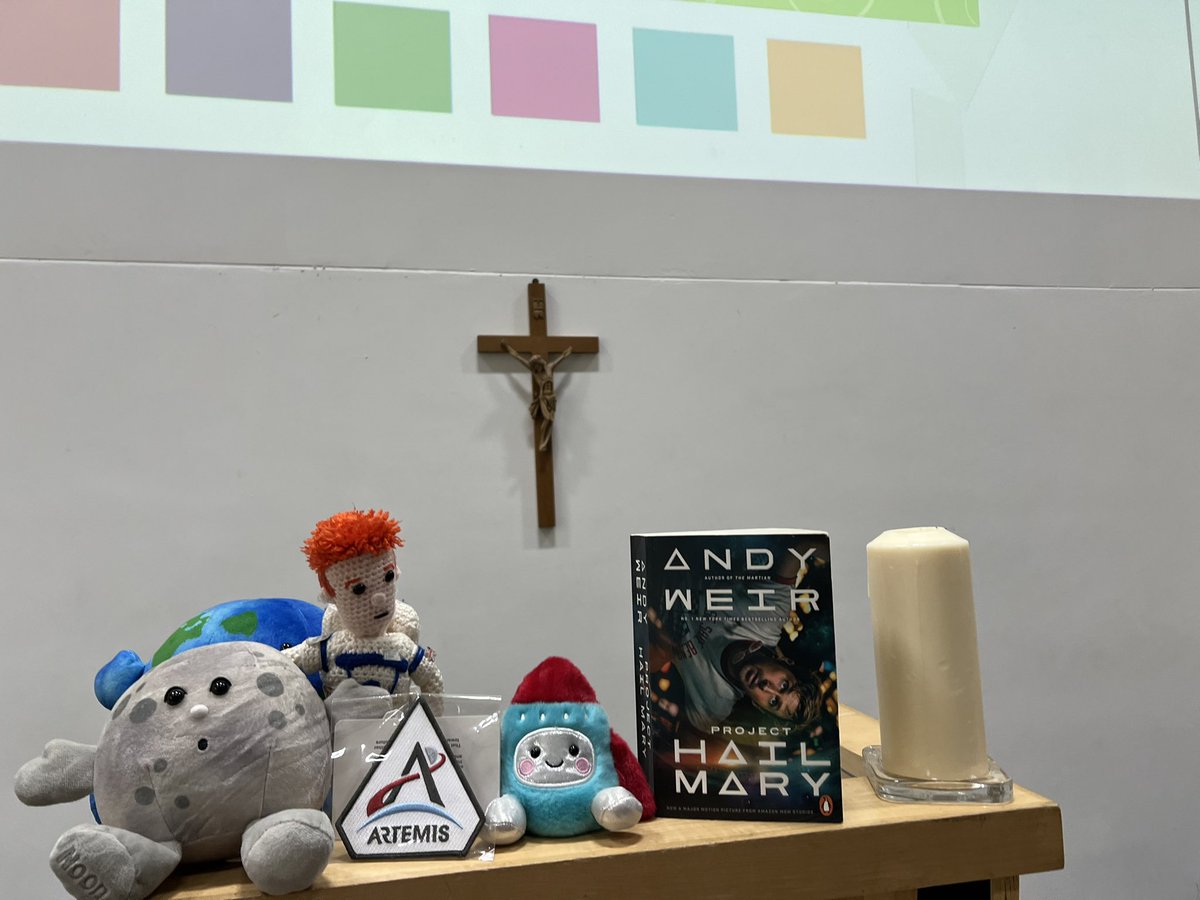
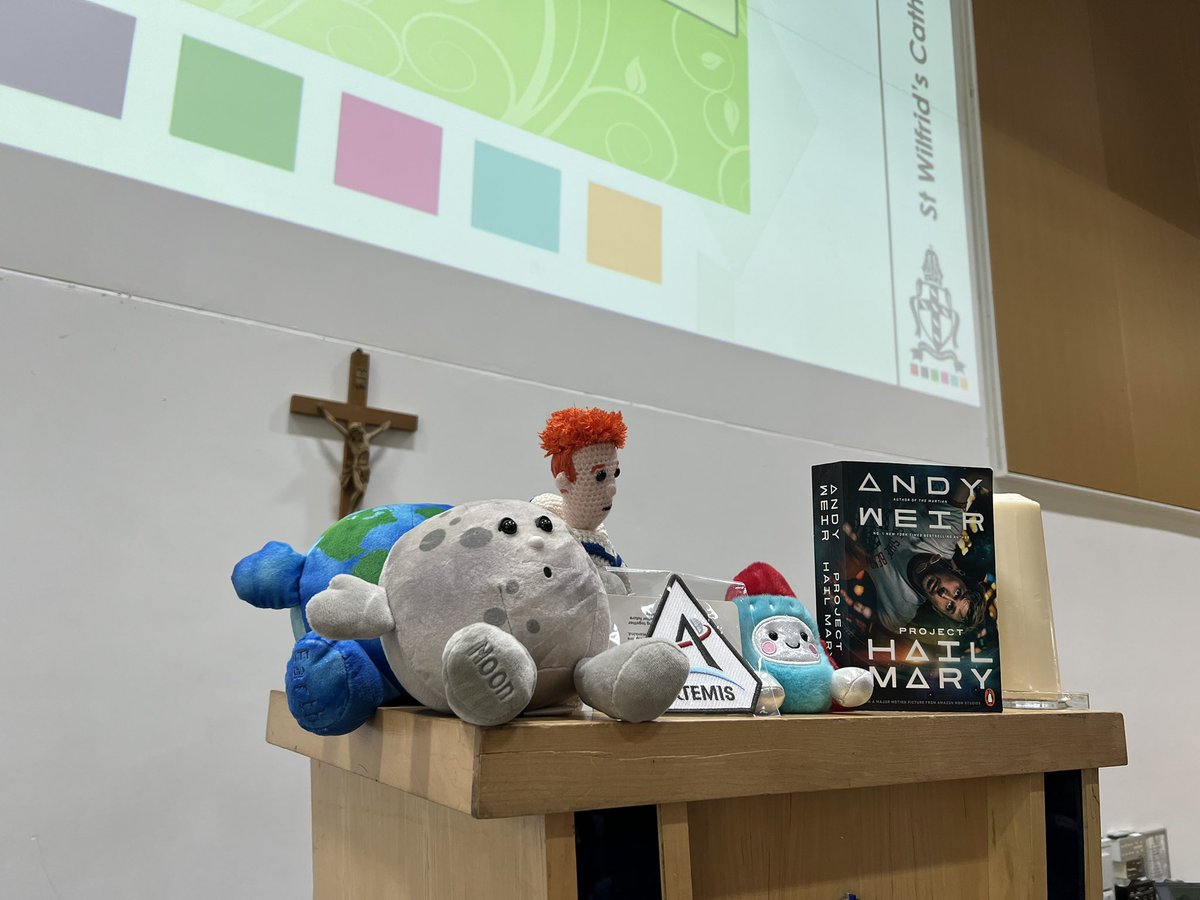
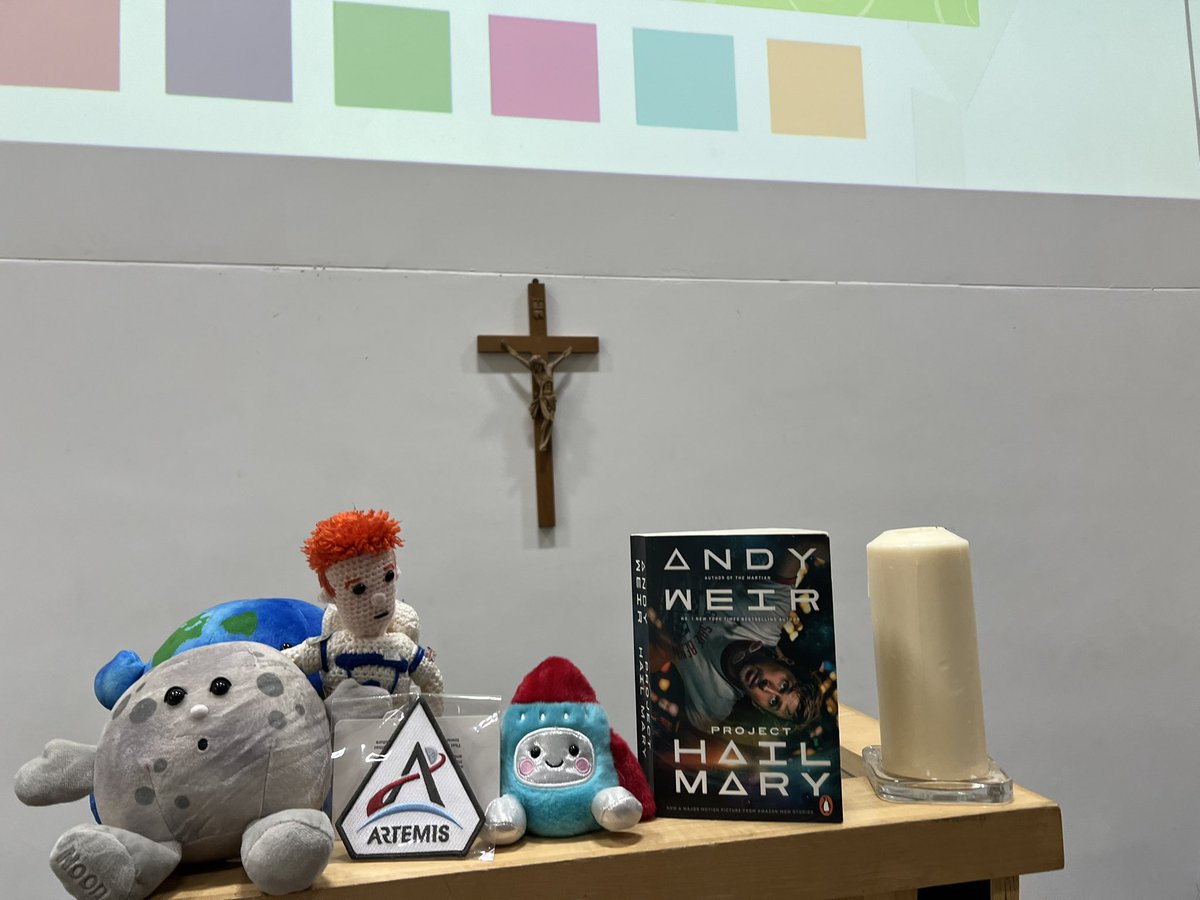
Assembly today!
Fullness of life/Bluebells/ Artemis/Project Hail Mary ✅✅✅✅
(And I got a shout out too!)
Lots of amazing photos to share.
@NASAArtemis @astro_timpeake @projecthailmary
The students loved @Astro_Christina talking about #CrewEarth 😍

English
The Crochet Tim retweetledi

Did you know that the Milky Way is even milkier when viewed from the Southern Hemisphere? This is because from the southern side of our planet, we get a clearer, more direct view of the dense galactic core.
Here’s a look at the Milky Way starting over the Southern Ocean (between Australia and Antarctica) from our @SpaceX Dragon window, complete with some aurora (Southern Lights) and fleeting Starlink satellites. Enjoy the view!

English
The Crochet Tim retweetledi
The Crochet Tim retweetledi

PS- it’s hard not to love this little guy. I cant let Rise out of my sight…currently tethered to my water bottle.

English
@philcrump2 @MattCosby @mrsdenyer Then life with an elderly parent happened….. arghh! Thank you for checking anyway 😬
English

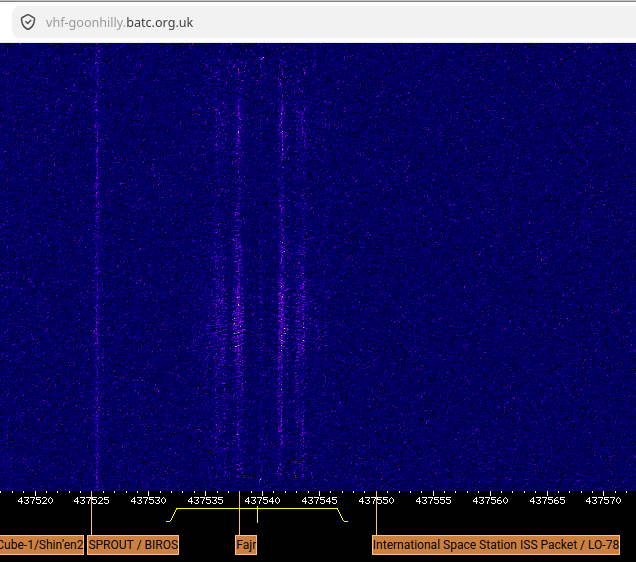
@Crochet_Tim @MattCosby @mrsdenyer Didn't get the SSTV software set up to get a decode while it was strong but it was there. Here's a screenshot of it a lot weaker here at about 5 deg, very late in the pass.
English
English
@philcrump2 @MattCosby @mrsdenyer I’ll have a look later / Sunday - currently at a Mathsconf in Londonium.
English
@Crochet_Tim @MattCosby Ah ok - I'll note to check it out on the passes tomorrow.
English
@philcrump2 @MattCosby Hmmm I looked at lunchtime for the first pass - must have missed it?!
English
@Crochet_Tim @MattCosby If you're looking for the upcoming SSTV 31 on 437.550MHz, then we already have that on the Goonhilly WebSDR for you!
vhf-goonhilly.batc.org.uk/?tune=437550fm
English
@NASAArtemis we were looking after you whilst you were sleeping - Rocky would be happy! #ArtemisII 🌎🚀🌓

English
The Crochet Tim retweetledi

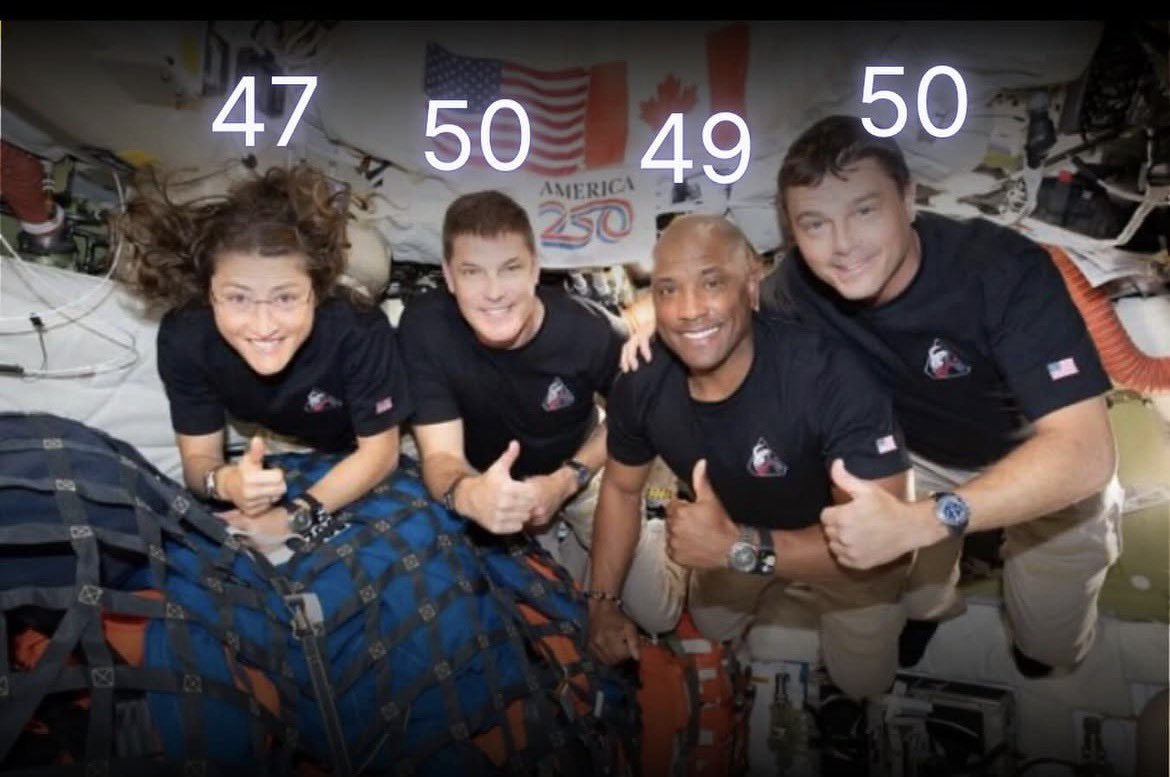
Society “you’re too old”
Artemis 2 Crew: “hold my beer”
English