IW

34.6K posts

IW

IW

@CryptoISFreedom

Earn the yield.Dont BE the yield / Clean, honest defi education.

Farmer, yield farmer.. Katılım Aralık 2014
858 Takip Edilen1.9K Takipçiler
Sabitlenmiş Tweet
IW
IW@CryptoISFreedom·
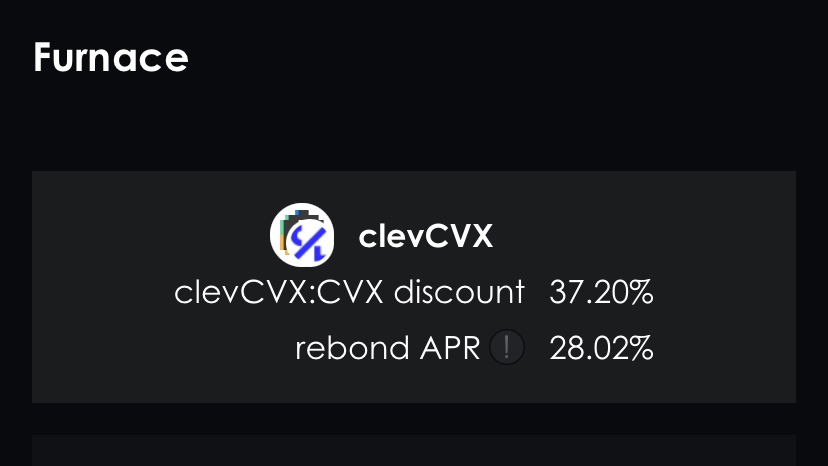
And what a time to enter AbcCVX right now. U get to take advantage of the discount on ur way in too, currently its a bit wider than been for awhile. Result? Even more CVX working for yah, autocompounding and up to 40% APR.. (veCLEV Max boosted) Higher than vlCVX, as usual.. This is my vault, this is my yield, this is my boost!
IW tweet media
AWat3r@Awater14539727

Want to long $CVX but have commitment issues? Don't want to actively manage a position, but need that good good 30 plus % APY stuff? Autocompound + cash out instantly w/ $afCVX, built on @0xC_Lever tech. Or bring cozy $abcCvx into your home + get big brain yield plus $Clev rewards on top. Shiny.

English
10
5
40
1.8K
IW
IW@CryptoISFreedom·
most ppl read “safe stable” and stop there wrong test if someone can freeze it do u achually own it? that’s why fully onchain custody + zero blacklist exposure hits harder than a pretty wrapper ever will fxUSD still feels underowned
Pharos@PharosWatch

Stablecoin Spotlight of the Week: fxUSD fxUSD by @protocol_fx does not get talked about enough but the risk profile is remarkably clean. Here’s what our data has to say about it. Market cap: $17M Peg score: 98/100 Resilience score: 87/100 (A+) Collateral risk: Medium (61/100) Custody: Fully on-chain (100/100) Blacklist risk: None (100/100) DEWS rating: 5/100 (Very safe) Net flow 24h: +$152,000 Capital is moving in, not out. fxUSD is a CDP stablecoin backed by wstETH at 42.5% and WBTC at 57.5%. The peg is maintained through a USDC/fxUSD Stability Pool on @CurveFinance, overcollateralization, and direct collateral redemption at oracle price. Three layers of defense. fxSAVE handles passive yield for idle holders. The 98/100 peg score and fully on-chain custody with zero blacklist exposure are the standout strengths here. No centralized chokepoint. No censorship risk. The medium collateral score of 61 is worth watching. WBTC carries custodial considerations and both assets carry volatility risk in extreme market conditions. Liquidity depth is also still maturing at this market cap size. Overall, fxUSD is underrated and the fundamentals are solid.

English
0
1
0
34
IW
IW@CryptoISFreedom·
@bitsofwealth No more bear?? To soon for moon
English
1
0
0
77
IW
IW@CryptoISFreedom·
peter schiff spent his whole life asking ppl to worship a rock that does nothing RAAC took the same rock strapped curve muscle to it and called it pmUSD much better use of gold dead capital was boring dead capital with teeth is a lot more fun
RAAC@Raacfi

x.com/i/article/2034…

English
0
0
3
127
IW
IW@CryptoISFreedom·
@Rozengarden_eth Just dont lock in wif that shit. Shipping shit, and shitposting to ship, slippery slope there fren..
English
0
0
1
14
アリス.eth
アリス.eth@Rozengarden_eth·
@CryptoISFreedom Shitpost is an important part of shipping any stuff that needs me to thinks for long 'nouf, locking in is a meme
English
1
0
1
21
アリス.eth
アリス.eth@Rozengarden_eth·
ain't no way I can ship this project in time
English
2
0
4
73
IW
IW@CryptoISFreedom·
@fiddyresearch Ouch, and here everybody praises it for being so gud.. What sucks wif it tho?
English
0
0
0
35
fiddy
fiddy@fiddyresearch·
every time i use claude i get a better understanding of why violence exists in this world. what a garbage model and yet i have to use it ...
English
1
0
4
563
IW
IW@CryptoISFreedom·
that’s why @protocol_fx stands out to me it doesn’t start from “ok whose pnl do we raid when stress shows up” rebalancing brakes gradual adjustment different machine different morals
English
0
0
1
39
IW
IW@CryptoISFreedom·
what kind of fugged design starts from “someone has to get sacrificed so the venue can stay balanced” @Richard_ISC has the right instinct here stop calling that market structure it’s predation with better branding
ak0@annanay

ADL (Auto-Deleveraging) [the fun part] When designing our ADL system, we noticed a critical flaw in current implementations (it has everything to do with the chart attached). No matter what others tell you, ADL is necessary - even in regulated, tradfi markets (eg ‘tear-ups’ in futures markets). Without it, the exchange itself risks bankruptcy and unlimited liability to all users. Researchers like @tarunchitra and @danrobinson have written about how subtle and complex these systems can become. ADL is strictly a last-resort mechanism, but when designed well, it can aid market design and price discovery, not hinder it. At a high level, ADL socializes losses across profitable traders when the exchange can no longer safely close losing positions. Instead of closing the losing trader’s position in the market, the exchange forcibly matches it with a profitable trader on the other side. This means the winning trader: has their position partially or fully closed, and and may lose part of their unrealized profit (aka variation margin gains haircutting). For clarity, we refer to traders who absorb these positions as ADL Liquidity Providers (ALPs). Designing a fair ADL system raises several difficult questions: >How should the ADL trade price be determined? >Which traders should be selected as ALPs? >How should liquidation quantities be distributed across ALPs? >How do we guarantee the system converges to a stable state with no remaining positions? A natural first idea would be to close all ADL trades at the current mark price. If we settle positions at the current mark price, we are simply converting unrealized PnL into realized PnL. The trader’s equity does not change, which means a trader who has already gone negative would remain negative. Therefore, the ADL mechanism must close some positions at a better price for the liquidated user so that their equity can be restored to a non-negative level. One way to achieve this is to track the last mark price at which the trader still had positive equity during the previous liquidation cycle. If we close the position at that price, we effectively restore their account equity to what it was at that point. This has problems. Consider a trader who profited on AAPL, but lost heavily on TSLA. If we revert both positions to the previous mark price: >the TSLA loss gets reduced, which is necessary to restore equity, >but the AAPL profit also gets removed. Now remember that every long has a short on the other side. If we revert the AAPL profit, the short counterparty would regain the loss they previously incurred, effectively receiving free money, even though their position had nothing to do with the liquidation problem. This would create unnecessary wealth transfers between unrelated traders. The correct approach is therefore asymmetric: >losing positions are settled at the previous mark price to cover the loss. >winning positions are settled at the current mark price, leaving those profits untouched. This guarantees that only the losses required to stabilize the system are socialized, while profitable trades that are unrelated to the liquidation remain unaffected. In other words, ADL redistributes only the losses, never the profits. ALP Selection Many exchanges determine ADL priority using the metric profit × leverage The intuition is that traders with the highest profits and the highest leverage should be the first to absorb ADL trades. At first glance, this seems reasonable. However, this rule is fundamentally a heuristic with no clear mathematical justification, and it leads to unintuitive outcomes. In fact, we can formally show that this metric can mis-rank traders in the ADL priority queue. Specifically, there exist cases where an ALP with percentage return < R is ranked ahead of another ALP whose percentage return > R. In other words, a trader who has achieved higher returns on their capital can still receive lower ADL priority than a trader with worse performance, purely because of the way the profit × leverage heuristic behaves. See the graph attached. This is tends to affect new traders with small positions. A user who has just started trading and makes a modest profit can suddenly appear near the top of the ADL queue and get force-closed early. From a UX perspective, this is extremely undesirable: you start trading, make a profit, and immediately get ADL’d. That is not the behavior we want from a fair liquidation system. At QFEX, we rank ALPs purely by effective leverage, removing the profit component entirely. Users with the highest leverage across their positions are prioritized for ADL. This aligns the ADL mechanism with the actual objective of the risk engine: system-wide de-risking. Traders with the highest leverage contribute the most to systemic risk, so reducing their exposure first naturally stabilizes the system. You might now wonder: What happens if the selected ALP does not have enough profit to absorb the losses? We address that tomorrow.

English
1
0
2
129
De~Dentist
De~Dentist@DF_chuddy·
So @wallchain has been quiet for awhile, and everyone thinks it’s over? Nahhh… the team has been hard at work shipping, and we are in for a treat very soon. Been seeing a lot of people earning quacks daily by just spreading the word. Do you want to make it? Well, aim for 1k quacks and above. As always, keep quacking homies.
De~Dentist tweet media
English
82
0
69
262
IW
IW@CryptoISFreedom·
@lordjorx cashflow yes but the underrated bit is not having to marry the lock before u even know fair value if ur still sizing liquid wins
English
0
0
0
41
Jordi in Cryptoland
Jordi in Cryptoland@lordjorx·
The CVX token is officially my new DCA target. I believe investing in cash flow tokens is essential if you are looking for alternatives to Bitcoin. While BTC remains my priority, when it comes to altcoins, I only look for assets that generate real yield and have controlled future inflation. This is why I prefer it over options like YieldBasis, where a 150% annual inflation makes things very difficult. I used @DefiLlama AI to project my earnings based on Convex yields and potential price action. According to Asymmetry Finance data, the average yield over the last two years has been 15%. However, in bull markets, protocols start bribing with real money and yields often climb above 25%. If we assume a linear price move and a $1,000 monthly investment: > At a 15% yield with the current price for 5 years, we are looking at $30,000 in profit. > If CVX only doubles in value, the total jumps to $111,000 (after a $60,000 total investment). This cash flow creates a massive snowball effect. My plan is not to DCA indefinitely, but only as long as CVX stays below $4. The best part about using @asymmetryfin is the liquidity. You aren't locked for the 4 months required by @ConvexFinance, or the 4 years required by @CurveFinance, which is simply too long for my investment strategy.
Jordi in Cryptoland tweet mediaJordi in Cryptoland tweet mediaJordi in Cryptoland tweet media
English
12
11
90
5.3K
IkeBillion.eth
IkeBillion.eth@Ikebillion_·
I agree with you on this, Wals, but it still begs the question: how much time do we have left? Yes, for now, it seems like the gap between human-AI will be clearly seen and not something that can be bridged, but as time and technology advance, we expect to see that line blurred even further. How much time do we have left until the gap is almost unrecognizable?
English
2
0
3
70
Wals
Wals@walsxbt·
As someone with CMO experience, you won't replace me with AI for $99/month I'm worth 100x more, companies pay for skills Why CMO's in Web3 are currently irreplaceable: - Constant need to communicate with lots of teams, go on calls and connect - Ability to network and bring results from human interactions (new deals, collabs, investments) - Uniqueness. Shitposting is an art, it stands out - Skills to organize the marketing team for effective workflow - Trust & Knowledge (try trusting AI with $10-100k+ in marketing spend) - Creating and running marketing campaigns requires too much communication and trust - They're HUMANS. Humans like working with humans. AI is nowhere near replacing a human in their current Web3 day-to-day marketing activities Don't let AI steal your best talent, too early for that
Okara@askOkara

Today we're introducing the world's first AI CMO. Enter your website and it deploys a team of agents to help you get traffic and users. Try it now at okara.ai/cmo

English
42
5
121
6.8K
IW
IW@CryptoISFreedom·
@walsxbt Hmm, wasnt @AnthropicAI marketing department a solo guy operation? I think we Are already there, and if ur not using AI today, ur already behind.
English
0
0
0
14
IW
IW@CryptoISFreedom·
@Ikebillion_ Heads down building.. Expect the Yieldtern comeback arc. Its time, ur doing great already, love ur new pieces.
English
1
0
1
16
IkeBillion.eth
IkeBillion.eth@Ikebillion_·
USG might be the missing piece in DeFi I have been looking into new stablecoin launches lately and this upcoming launch caught my attention immediately. The core idea is simple but the execution is sharp. DeFi has always forced a choice. You either lock your assets to earn yield or you keep them liquid to trade and farm. @Tangent_fi's USG removes that trade-off entirely. Users mint $USG, a dollar-pegged stablecoin, directly against yield-bearing assets like @CurveFinance LP tokens and @pendle_fi PTs. Your collateral keeps earning in the background through @ConvexFinance and @StakeDAOHQ, giving LPs boosted rewards while they borrow. You get liquidity without giving up returns. Both at the same time. What makes this even more interesting is the 0% interest model. Tangent has structured the protocol to offer interest-free loans while remaining profitable at the protocol level. Sustainable zero-interest borrowing is not something DeFi has pulled off cleanly before. At launch, accepted collateral includes productive Curve LP tokens featuring assets from Frax Finance, Ethena, @ResupplyFi, @protocol_fx, @OriginProtocol, @MetronomeDAO, GHO, and stablecoins from Circle, Tether, and PayPal. More collateral options including Yearn vaults and Pendle LP tokens are coming post-launch. For its PegKeeper pools, USG uses crvUSD and frxUSD as its anchors, with frxUSD as the primary PegKeeper. I ran both through @PharosWatch, my default tool for stablecoin risk analysis. crvUSD scored 97/100. frxUSD scored 99/100. The peg infrastructure here is about as solid as it gets. USG is worth watching closely.
IkeBillion.eth tweet mediaIkeBillion.eth tweet mediaIkeBillion.eth tweet mediaIkeBillion.eth tweet media
English
5
3
28
856
IW
IW@CryptoISFreedom·
@Raacfi $10m is nice i care more about what it takes off the stack next when protocol rev starts paying debt down, that's when it's doing real work
English
0
0
1
12
RAAC
RAAC@Raacfi·
Time to pause & thank the community for the support🙏 RAAC has generated $10m+ in protocol revenue, building great traction for pmUSD. $iREET is next Unlocking real estate will allow more off chain capital to fuel on-chain distribution. There's more, but you'll realize soon👀
English
25
22
104
6.5K
IW
IW@CryptoISFreedom·
@RuneCrypto_ the scandal isn’t that size needs care the scandal is that execution is still this primitive in 2026 when moving real size means praying u didn’t route into a six-figure tax, the rail is unfinished not just the user
English
0
0
0
13
Rune
Rune@RuneCrypto_·
a guy lost $50M swapping on Aave frontend not only he lost $50m but he paid $600,000 in fees who pays 1.2% in fees for a $50M swap in 2026?
English
20
1
92
12.8K
IW
IW@CryptoISFreedom·
old world leverage keeps explaining why this is “just how it works” cool then admit what “it works” means someone else blows up the venue reaches into ur trade for relief and calls it a feature
English
0
0
0
44
IW
IW@CryptoISFreedom·
@kingfxyo that slippage box was less a warning and more a prophecy
English
0
0
0
68
fxyo
fxyo@kingfxyo·
well… today I managed to completely nuke $50M on a swap. tried to buy AAVE with $50M USDT, got the slippage warning, clicked the confirmation box anyway on my phone thinking it would be fine. it's not fine ended up receiving 324 AAVE second worst trade i've ever done
fxyo tweet media
English
207
19
299
287.6K