Michal Asaan Vítek retweetledi
🚨THIS IS NOT FINAL TRAP
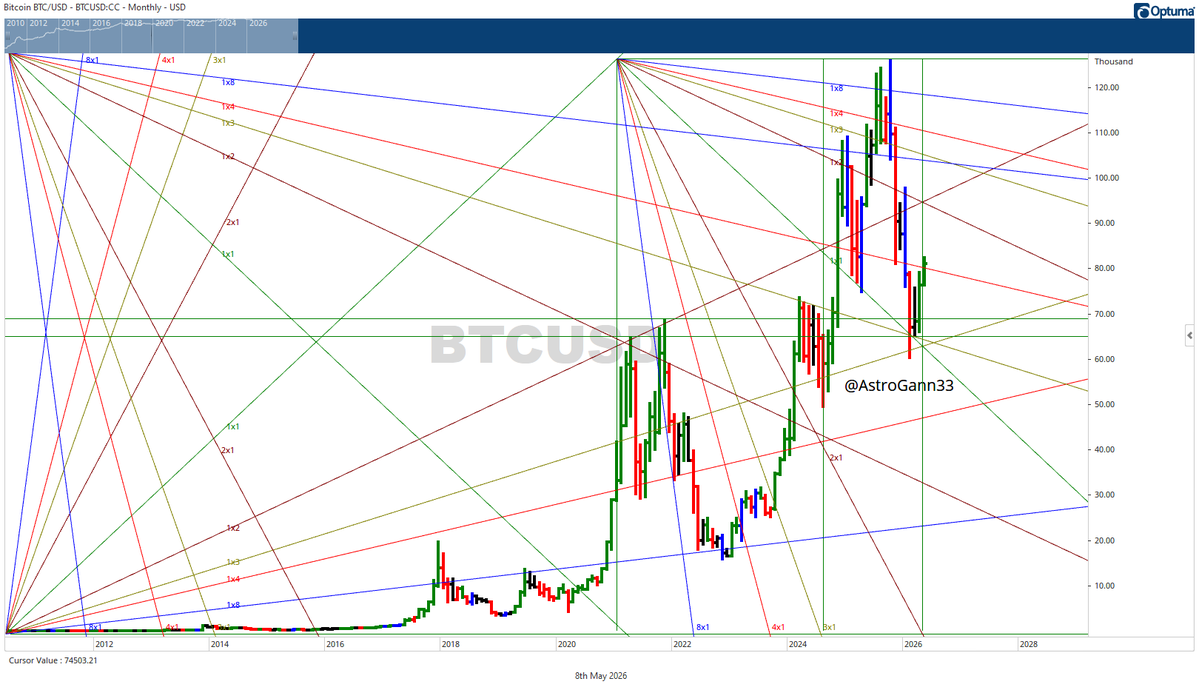
Bitcoin is stuck in the 79k-81k zone (riskiest place on the chart)
I called this exact trap back in March.
I warned you $BTC would head into the 79-85k area.
Back when we were trading at $65k.
Here we are. May. Same prices. Same setup. Same trap.
Now here's what the liquidation map is screaming at anyone who knows how to read it:
➮ Short liq at $83k: $300M
➮ Short liq at $84k-$86k: $1.2B
➮ Long liq at $70k: $900M
➮ Long liq at $65k-$60k: $2.8B
That's $1.5B of liquidity sitting above us.
And $4B+ of liquidity sitting below.
Market makers don't leave that money on the table. Ever.
Here's what I see playing out next.
One final pump into $83k-$86k.
Just enough to sweep the short liquidity and convince the crowd that the bull market is back.
We might not even get there - like I said, we're already in the danger zone
The real move starts sooner or later. Either way, it ends in a crash.
$70k is the first target.
$65k is the next.
And no - the crash isn't a guess. It's a sequence.
Plan A: $78k → $84-86k → $70k → $60k
Plan B: $81k → $70k → $65k
Either way, the destination is the same. Lower.
But here's the part most people are missing.
The crowd isn't greedy yet.
No greed = more upside traps.
That's why we could still see another round of manipulation.
Plan C: pullback to $73k–$70k → $86k+ → $60k
This scenario is designed to make everyone believe the bottom is in.
And right on cue, I'm already seeing it form in real time.
Retail has been piling back in since $74k at an aggressive pace.
Fear is gone.
Altcoin calls everywhere.
Everyone shouting for $100k like it's a done deal.
This is exactly what a final-stage trap looks like from the inside.
But the relief pump is fake.
The bullish sentiment is bait.
The crash is close.
Only the neutral observer sees it clearly right now.
Don't worry though - my system flags the exact moment the market shifts from caution to DANGER.
I called every major top and bottom of the last cycles.
You'll be warned before it hits, like always
Many people will wish they followed me sooner.
Reflection🪩@0xReflection
Yearly chart looks so bullish rn Sadly, it all ends with a sub-$50k close
English