CR

16.7K posts

CR banner
CR

CR

@CuratedByR

I focus on trends.

The Metaverse Katılım Eylül 2019
243 Takip Edilen47.2K Takipçiler
CR
CR@CuratedByR·
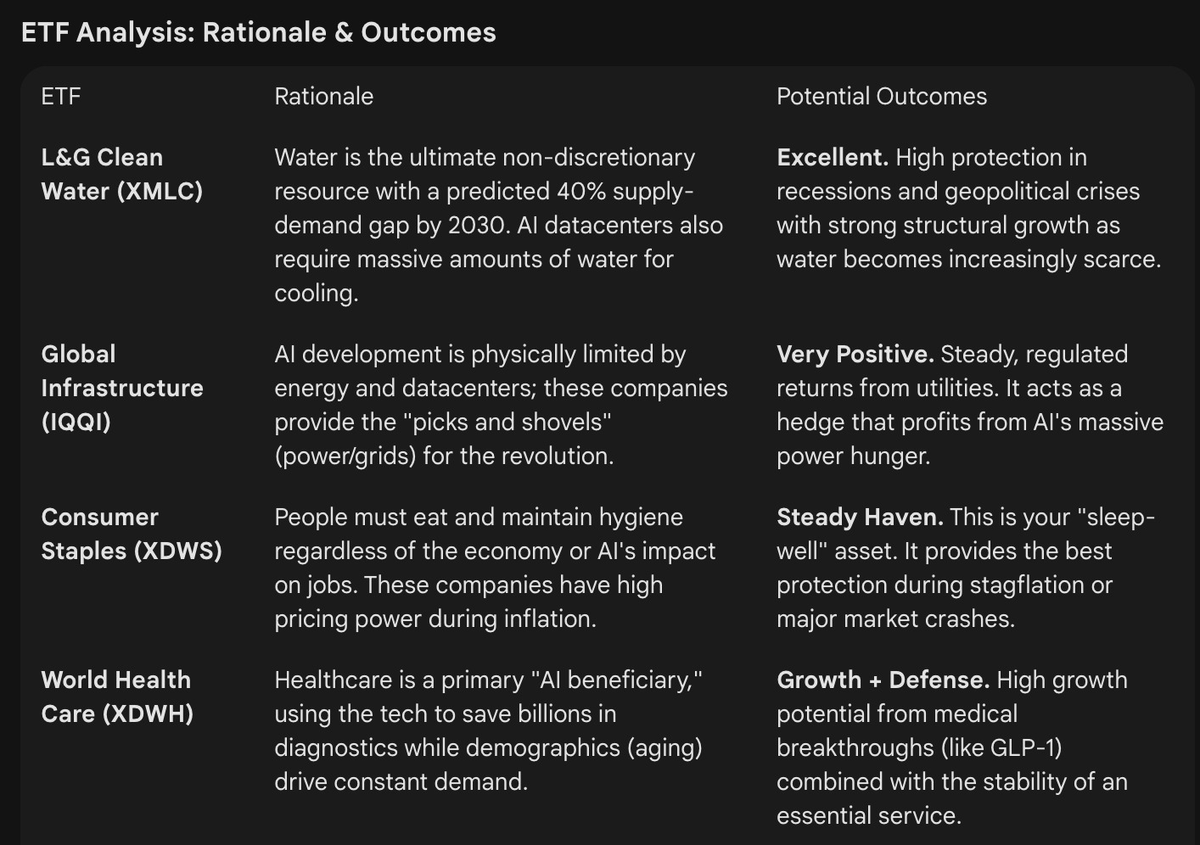
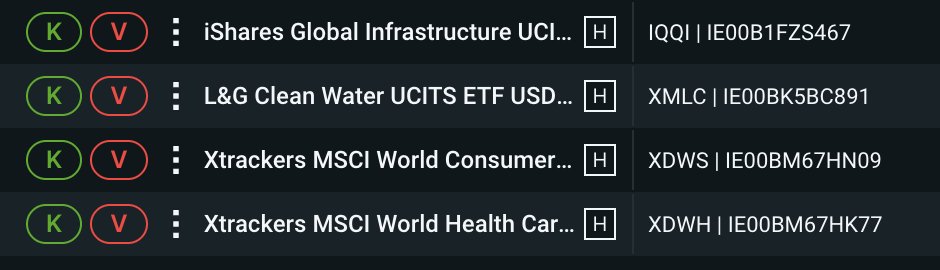
84 million people saw 'Something Big Is Happening.' Most nodded and kept scrolling. If you actually want to do something about it: here's the financial playbook. I told you so.. but not with joy In April 2025 I wrote: "The ease of creating new software also means existing tech products can be copied easily. They will be dismantled like a device and rebuilt by new builders who can do it leaner and cheaper and make it work better for niche segments." YTD 2026, SaaS companies have been in freefall on the markets. Not a correction, but a structural repricing. The market is finally digesting what was obvious to anyone paying attention: if a product only exists as logic on a screen and AI can rebuild that logic from scratch in days.. what exactly are you paying for? But here's what most people outside our little X bubble aren't asking: what's next after SaaS? Because this doesn't stop there. The disruption people aren't seeing yet Everyone's focused on software eating software. That's already happening. The next wave is quieter, and hits things people consider real. Think about office real estate. Not prime, triple-A city centre locations, those adapt. I mean the B and C-grade office parks, the corporate campuses on the edge of town, the floors companies rented because headcount was growing. Remote work cracked the foundation, and now AI is pouring water into those cracks. If knowledge work becomes something one person does with AI tooling; the work of what used to be 5-10 people, you don't need the space anymore. The companies that survive will be leaner by necessity. The buildings they leave behind won't easily find new tenants, and converting them to housing is slow, expensive, and heavily dependent on local regulation and demand. Real estate moguls sitting on non-prime office assets are, in my view, in a similar position to SaaS founders in 2023. The fundamentals changed. The valuation hasn't caught up yet. This is one example. There are dozens of sectors where the same logic applies. Legal support and accountancy, some or most financial advisory. Certain medical diagnostics. Consulting layers that exist purely to synthesise information.. which is exactly what AI does for free. Nevertheless one new release: a Claude instance trained specifically on legal workflows, a model fine-tuned for a specific industry, and an entire sector faces a repricing moment. We've already seen this. It'll keep happening. So how do you actually protect yourself over the next 5 years? First: accept that the index funds you've been told to "just hold" may not be what you think they are. A global Vanguard World ETF has always stood for being diversified and safe, but it’s important to look under the hood. You're heavily exposed to the mega-cap tech names, which is fine for AI, but also to a long tail of traditional SaaS, digital middlemen, legacy enterprise software, and overvalued "digital transformation" companies that are structurally vulnerable to exactly what's happening. You're also implicitly betting on the same economic model that's being disrupted. Software will become cheaper to make, but software will not become worthless. So that doesn't mean sell everything because a tracker like that will always rebalance. But for me it means: be intentional. Here's how I think about building a portfolio for the next 5 years: 1. Get AI exposure, but be realistic about where the upside actually lives The obvious names are already priced. The companies building the actual intelligence, the ones with the real potential already had their price discovery in private markets. That said, exposure still makes sense. Just be focused about what you're buying. We don’t know what AI companies will take the cake and I’m not that sure that they will be willing to share. Overall an AI-focused ETF gives you broad exposure to the infrastructure layer. Chips, cloud, data centres, the picks and shovels. You're not getting OpenAI's upside, you're getting a basket of companies that grow as AI adoption grows. That's a reasonable bet. It's not asymmetric, but it's not nothing either. What I'd look for: beneficiaries that exist outside this circle of obvious names. There’s loads of sectors that can profit off AI automation heavily. Robotics ETF is also ‘only’ up like 10% in a year. 2. Real assets: own things that can't be copied In a world where digital products get rebuilt overnight, physical scarcity becomes a stronger value proposition, not a weaker one. Real estate is the obvious play for those with capital, but be selective. Residential in supply-constrained markets. Industrial and logistics (AI needs physical warehouses, data centres, grid infrastructure). Not speculative commercial in B-grade locations. For those without the capital or appetite for direct property REITs offer exposure to specific asset types without the illiquidity. Look for REITs focused on infrastructure, logistics, or residential. Not office-heavy (I think triple A locations are of great importance here and if you buy a general office REIT you could be doing the same as buying a Vanguard World as mentioned earlier). Not retail-heavy. The principle: own what can't be replicated by a model running on a server. Oh and yes, AI powered robots could eventually make real estate less scarce, hence why I keep mentioning triple A locations. They will keep their scarcity. 3. The ETF layer: build a "Physical Bunker" This is where I spent the most time. I ran constant feedback loops; LLMs, Perplexity and scenario modelling to build a shortlist that covers the major trends without pretending to predict which one wins. The mental model I used: antifragility. Not just protection from downside, but a portfolio that captures upside from AI productivity while sitting on a hard floor of physical assets that software cannot disrupt. The four I landed on: L&G Clean Water (XMLC). Water is non-discretionary. Predicted 40% supply-demand gap by 2030. And something some people miss: AI data centres consume enormous amounts of water for cooling. Even if this doesn’t directly benefit the ETF companies the narrative cannot be unseen. iShares Global Infrastructure (IQQI). AI development is physically limited by energy and grid capacity. These companies own the infrastructure the intelligence explosion runs on. Steady, regulated returns, with structural tailwinds from something most infrastructure ETFs weren't originally designed to capture. Xtrackers MSCI World Consumer Staples (XDWS). People eat and maintain hygiene regardless of AI's impact on employment. High pricing power in inflationary environments. This is the sleep-well holding. Best protection in stagflation or mass unemployment scenarios. Xtrackers MSCI World Health Care (XDWH). Healthcare is a primary AI beneficiary and structurally defensive. Demographics drive constant demand. GLP-1 and AI-assisted diagnostics drive growth. It's one of the rare sectors that benefits from disruption rather than suffering from it. I also looked at agriculture ETFs seriously. The food shortage thesis is real. But pricing pressure keeps the upside capped, too much structural complexity. Left it out. Obviously with the geopolitical situation a Defense ETF makes sense too, I didn’t include it for now because I also took into account timing/recent results. Precious metals (gold, silver) deserve a mention here too, the same logic applies. Physical, scarce, and no software can rebuild them. They’ve seen major rallies already. This ETF portfolio is designed to perform in 3.5 out of 5 major economic scenarios: AI bubble, AI boom, mass unemployment, stagflation, and AGI. In my opinion you cannot hedge for AGI which means we can only plan for 4 scenarios. 3.5 out of 4 is a good score. 4. One more thing: Crypto and AI Agents Short version, it’s the most speculative part. Crypto sentiment right now is somewhere between exhausted and absolute despair. However looking at recent OpenClaw developments (The platform for autonomous AI agents running your business) its showing us a world where AI agents could rely heavily on crypto. Using the traditional banking system is difficult, crypto payments make it much easier. I think it will make sense to have a bit of exposure (apart from the Bitcoin-case in general); There is never better timing than during a period of terrible sentiment. The thread running through all of this: value is shifting. It went from physical to digital, and now back away from things that exist only as logic on a screen. Toward physical scarcity, biological necessity, and the infrastructure that the intelligence revolution actually runs on. The SaaS repricing was only the opening act. Position accordingly. A portfolio is very personal and clearly there is no *one size fits all* solution, hope this post gives you at least one insight you didn't have yet. Not financial advice, just my thoughts. None of this is sponsored. Do your own research. Do your own research. Do your own research.
English
15
29
308
42.1K
CR
CR@CuratedByR·
@Phoenix_Ash3s thnx man, same for you ofcourse 💙
English
0
0
3
304
Phoenix
Phoenix@Phoenix_Ash3s·
@CuratedByR Very good read mate. Hope you’re doing good :)
English
1
0
4
513
CR
CR@CuratedByR·
@GreatBambin0 good to see you too, hope youre good bambino!
English
0
0
1
583
CR
CR@CuratedByR·
@emantradesTV i think upside is capped due to the complex supply chain and regulations/government interventions, meaning price ceiling. And AI and robots could solve the shortages, bringing price floor down. Doesn't work well together
English
1
0
4
810
Emantrades.eth
Emantrades.eth@emantradesTV·
@CuratedByR What did you mean by pricing pressure when you spoke about Agriculture ?
English
1
0
1
1.2K
Duke of Florence🛡️
Duke of Florence🛡️@DukeFlorence69·
Great read...
CR@CuratedByR

84 million people saw 'Something Big Is Happening.' Most nodded and kept scrolling. If you actually want to do something about it: here's the financial playbook. I told you so.. but not with joy In April 2025 I wrote: "The ease of creating new software also means existing tech products can be copied easily. They will be dismantled like a device and rebuilt by new builders who can do it leaner and cheaper and make it work better for niche segments." YTD 2026, SaaS companies have been in freefall on the markets. Not a correction, but a structural repricing. The market is finally digesting what was obvious to anyone paying attention: if a product only exists as logic on a screen and AI can rebuild that logic from scratch in days.. what exactly are you paying for? But here's what most people outside our little X bubble aren't asking: what's next after SaaS? Because this doesn't stop there. The disruption people aren't seeing yet Everyone's focused on software eating software. That's already happening. The next wave is quieter, and hits things people consider real. Think about office real estate. Not prime, triple-A city centre locations, those adapt. I mean the B and C-grade office parks, the corporate campuses on the edge of town, the floors companies rented because headcount was growing. Remote work cracked the foundation, and now AI is pouring water into those cracks. If knowledge work becomes something one person does with AI tooling; the work of what used to be 5-10 people, you don't need the space anymore. The companies that survive will be leaner by necessity. The buildings they leave behind won't easily find new tenants, and converting them to housing is slow, expensive, and heavily dependent on local regulation and demand. Real estate moguls sitting on non-prime office assets are, in my view, in a similar position to SaaS founders in 2023. The fundamentals changed. The valuation hasn't caught up yet. This is one example. There are dozens of sectors where the same logic applies. Legal support and accountancy, some or most financial advisory. Certain medical diagnostics. Consulting layers that exist purely to synthesise information.. which is exactly what AI does for free. Nevertheless one new release: a Claude instance trained specifically on legal workflows, a model fine-tuned for a specific industry, and an entire sector faces a repricing moment. We've already seen this. It'll keep happening. So how do you actually protect yourself over the next 5 years? First: accept that the index funds you've been told to "just hold" may not be what you think they are. A global Vanguard World ETF has always stood for being diversified and safe, but it’s important to look under the hood. You're heavily exposed to the mega-cap tech names, which is fine for AI, but also to a long tail of traditional SaaS, digital middlemen, legacy enterprise software, and overvalued "digital transformation" companies that are structurally vulnerable to exactly what's happening. You're also implicitly betting on the same economic model that's being disrupted. Software will become cheaper to make, but software will not become worthless. So that doesn't mean sell everything because a tracker like that will always rebalance. But for me it means: be intentional. Here's how I think about building a portfolio for the next 5 years: 1. Get AI exposure, but be realistic about where the upside actually lives The obvious names are already priced. The companies building the actual intelligence, the ones with the real potential already had their price discovery in private markets. That said, exposure still makes sense. Just be focused about what you're buying. We don’t know what AI companies will take the cake and I’m not that sure that they will be willing to share. Overall an AI-focused ETF gives you broad exposure to the infrastructure layer. Chips, cloud, data centres, the picks and shovels. You're not getting OpenAI's upside, you're getting a basket of companies that grow as AI adoption grows. That's a reasonable bet. It's not asymmetric, but it's not nothing either. What I'd look for: beneficiaries that exist outside this circle of obvious names. There’s loads of sectors that can profit off AI automation heavily. Robotics ETF is also ‘only’ up like 10% in a year. 2. Real assets: own things that can't be copied In a world where digital products get rebuilt overnight, physical scarcity becomes a stronger value proposition, not a weaker one. Real estate is the obvious play for those with capital, but be selective. Residential in supply-constrained markets. Industrial and logistics (AI needs physical warehouses, data centres, grid infrastructure). Not speculative commercial in B-grade locations. For those without the capital or appetite for direct property REITs offer exposure to specific asset types without the illiquidity. Look for REITs focused on infrastructure, logistics, or residential. Not office-heavy (I think triple A locations are of great importance here and if you buy a general office REIT you could be doing the same as buying a Vanguard World as mentioned earlier). Not retail-heavy. The principle: own what can't be replicated by a model running on a server. Oh and yes, AI powered robots could eventually make real estate less scarce, hence why I keep mentioning triple A locations. They will keep their scarcity. 3. The ETF layer: build a "Physical Bunker" This is where I spent the most time. I ran constant feedback loops; LLMs, Perplexity and scenario modelling to build a shortlist that covers the major trends without pretending to predict which one wins. The mental model I used: antifragility. Not just protection from downside, but a portfolio that captures upside from AI productivity while sitting on a hard floor of physical assets that software cannot disrupt. The four I landed on: L&G Clean Water (XMLC). Water is non-discretionary. Predicted 40% supply-demand gap by 2030. And something some people miss: AI data centres consume enormous amounts of water for cooling. Even if this doesn’t directly benefit the ETF companies the narrative cannot be unseen. iShares Global Infrastructure (IQQI). AI development is physically limited by energy and grid capacity. These companies own the infrastructure the intelligence explosion runs on. Steady, regulated returns, with structural tailwinds from something most infrastructure ETFs weren't originally designed to capture. Xtrackers MSCI World Consumer Staples (XDWS). People eat and maintain hygiene regardless of AI's impact on employment. High pricing power in inflationary environments. This is the sleep-well holding. Best protection in stagflation or mass unemployment scenarios. Xtrackers MSCI World Health Care (XDWH). Healthcare is a primary AI beneficiary and structurally defensive. Demographics drive constant demand. GLP-1 and AI-assisted diagnostics drive growth. It's one of the rare sectors that benefits from disruption rather than suffering from it. I also looked at agriculture ETFs seriously. The food shortage thesis is real. But pricing pressure keeps the upside capped, too much structural complexity. Left it out. Obviously with the geopolitical situation a Defense ETF makes sense too, I didn’t include it for now because I also took into account timing/recent results. Precious metals (gold, silver) deserve a mention here too, the same logic applies. Physical, scarce, and no software can rebuild them. They’ve seen major rallies already. This ETF portfolio is designed to perform in 3.5 out of 5 major economic scenarios: AI bubble, AI boom, mass unemployment, stagflation, and AGI. In my opinion you cannot hedge for AGI which means we can only plan for 4 scenarios. 3.5 out of 4 is a good score. 4. One more thing: Crypto and AI Agents Short version, it’s the most speculative part. Crypto sentiment right now is somewhere between exhausted and absolute despair. However looking at recent OpenClaw developments (The platform for autonomous AI agents running your business) its showing us a world where AI agents could rely heavily on crypto. Using the traditional banking system is difficult, crypto payments make it much easier. I think it will make sense to have a bit of exposure (apart from the Bitcoin-case in general); There is never better timing than during a period of terrible sentiment. The thread running through all of this: value is shifting. It went from physical to digital, and now back away from things that exist only as logic on a screen. Toward physical scarcity, biological necessity, and the infrastructure that the intelligence revolution actually runs on. The SaaS repricing was only the opening act. Position accordingly. A portfolio is very personal and clearly there is no *one size fits all* solution, hope this post gives you at least one insight you didn't have yet. Not financial advice, just my thoughts. None of this is sponsored. Do your own research. Do your own research. Do your own research.

English
1
0
1
486
CR
CR@CuratedByR·
@btc_charlie thank you appreciate that my friend, hope you and the fam are great too!
English
1
0
4
1.1K
Charlie
Charlie@btc_charlie·
@CuratedByR Legendary read brother. Hope you're good.
English
1
0
12
2.2K
CR
CR@CuratedByR·
@btc_charlie you're words are too kind charlie 💙
English
1
0
3
574
Charlie
Charlie@btc_charlie·
Great read by one of the smartest to ever do it.
CR@CuratedByR

84 million people saw 'Something Big Is Happening.' Most nodded and kept scrolling. If you actually want to do something about it: here's the financial playbook. I told you so.. but not with joy In April 2025 I wrote: "The ease of creating new software also means existing tech products can be copied easily. They will be dismantled like a device and rebuilt by new builders who can do it leaner and cheaper and make it work better for niche segments." YTD 2026, SaaS companies have been in freefall on the markets. Not a correction, but a structural repricing. The market is finally digesting what was obvious to anyone paying attention: if a product only exists as logic on a screen and AI can rebuild that logic from scratch in days.. what exactly are you paying for? But here's what most people outside our little X bubble aren't asking: what's next after SaaS? Because this doesn't stop there. The disruption people aren't seeing yet Everyone's focused on software eating software. That's already happening. The next wave is quieter, and hits things people consider real. Think about office real estate. Not prime, triple-A city centre locations, those adapt. I mean the B and C-grade office parks, the corporate campuses on the edge of town, the floors companies rented because headcount was growing. Remote work cracked the foundation, and now AI is pouring water into those cracks. If knowledge work becomes something one person does with AI tooling; the work of what used to be 5-10 people, you don't need the space anymore. The companies that survive will be leaner by necessity. The buildings they leave behind won't easily find new tenants, and converting them to housing is slow, expensive, and heavily dependent on local regulation and demand. Real estate moguls sitting on non-prime office assets are, in my view, in a similar position to SaaS founders in 2023. The fundamentals changed. The valuation hasn't caught up yet. This is one example. There are dozens of sectors where the same logic applies. Legal support and accountancy, some or most financial advisory. Certain medical diagnostics. Consulting layers that exist purely to synthesise information.. which is exactly what AI does for free. Nevertheless one new release: a Claude instance trained specifically on legal workflows, a model fine-tuned for a specific industry, and an entire sector faces a repricing moment. We've already seen this. It'll keep happening. So how do you actually protect yourself over the next 5 years? First: accept that the index funds you've been told to "just hold" may not be what you think they are. A global Vanguard World ETF has always stood for being diversified and safe, but it’s important to look under the hood. You're heavily exposed to the mega-cap tech names, which is fine for AI, but also to a long tail of traditional SaaS, digital middlemen, legacy enterprise software, and overvalued "digital transformation" companies that are structurally vulnerable to exactly what's happening. You're also implicitly betting on the same economic model that's being disrupted. Software will become cheaper to make, but software will not become worthless. So that doesn't mean sell everything because a tracker like that will always rebalance. But for me it means: be intentional. Here's how I think about building a portfolio for the next 5 years: 1. Get AI exposure, but be realistic about where the upside actually lives The obvious names are already priced. The companies building the actual intelligence, the ones with the real potential already had their price discovery in private markets. That said, exposure still makes sense. Just be focused about what you're buying. We don’t know what AI companies will take the cake and I’m not that sure that they will be willing to share. Overall an AI-focused ETF gives you broad exposure to the infrastructure layer. Chips, cloud, data centres, the picks and shovels. You're not getting OpenAI's upside, you're getting a basket of companies that grow as AI adoption grows. That's a reasonable bet. It's not asymmetric, but it's not nothing either. What I'd look for: beneficiaries that exist outside this circle of obvious names. There’s loads of sectors that can profit off AI automation heavily. Robotics ETF is also ‘only’ up like 10% in a year. 2. Real assets: own things that can't be copied In a world where digital products get rebuilt overnight, physical scarcity becomes a stronger value proposition, not a weaker one. Real estate is the obvious play for those with capital, but be selective. Residential in supply-constrained markets. Industrial and logistics (AI needs physical warehouses, data centres, grid infrastructure). Not speculative commercial in B-grade locations. For those without the capital or appetite for direct property REITs offer exposure to specific asset types without the illiquidity. Look for REITs focused on infrastructure, logistics, or residential. Not office-heavy (I think triple A locations are of great importance here and if you buy a general office REIT you could be doing the same as buying a Vanguard World as mentioned earlier). Not retail-heavy. The principle: own what can't be replicated by a model running on a server. Oh and yes, AI powered robots could eventually make real estate less scarce, hence why I keep mentioning triple A locations. They will keep their scarcity. 3. The ETF layer: build a "Physical Bunker" This is where I spent the most time. I ran constant feedback loops; LLMs, Perplexity and scenario modelling to build a shortlist that covers the major trends without pretending to predict which one wins. The mental model I used: antifragility. Not just protection from downside, but a portfolio that captures upside from AI productivity while sitting on a hard floor of physical assets that software cannot disrupt. The four I landed on: L&G Clean Water (XMLC). Water is non-discretionary. Predicted 40% supply-demand gap by 2030. And something some people miss: AI data centres consume enormous amounts of water for cooling. Even if this doesn’t directly benefit the ETF companies the narrative cannot be unseen. iShares Global Infrastructure (IQQI). AI development is physically limited by energy and grid capacity. These companies own the infrastructure the intelligence explosion runs on. Steady, regulated returns, with structural tailwinds from something most infrastructure ETFs weren't originally designed to capture. Xtrackers MSCI World Consumer Staples (XDWS). People eat and maintain hygiene regardless of AI's impact on employment. High pricing power in inflationary environments. This is the sleep-well holding. Best protection in stagflation or mass unemployment scenarios. Xtrackers MSCI World Health Care (XDWH). Healthcare is a primary AI beneficiary and structurally defensive. Demographics drive constant demand. GLP-1 and AI-assisted diagnostics drive growth. It's one of the rare sectors that benefits from disruption rather than suffering from it. I also looked at agriculture ETFs seriously. The food shortage thesis is real. But pricing pressure keeps the upside capped, too much structural complexity. Left it out. Obviously with the geopolitical situation a Defense ETF makes sense too, I didn’t include it for now because I also took into account timing/recent results. Precious metals (gold, silver) deserve a mention here too, the same logic applies. Physical, scarce, and no software can rebuild them. They’ve seen major rallies already. This ETF portfolio is designed to perform in 3.5 out of 5 major economic scenarios: AI bubble, AI boom, mass unemployment, stagflation, and AGI. In my opinion you cannot hedge for AGI which means we can only plan for 4 scenarios. 3.5 out of 4 is a good score. 4. One more thing: Crypto and AI Agents Short version, it’s the most speculative part. Crypto sentiment right now is somewhere between exhausted and absolute despair. However looking at recent OpenClaw developments (The platform for autonomous AI agents running your business) its showing us a world where AI agents could rely heavily on crypto. Using the traditional banking system is difficult, crypto payments make it much easier. I think it will make sense to have a bit of exposure (apart from the Bitcoin-case in general); There is never better timing than during a period of terrible sentiment. The thread running through all of this: value is shifting. It went from physical to digital, and now back away from things that exist only as logic on a screen. Toward physical scarcity, biological necessity, and the infrastructure that the intelligence revolution actually runs on. The SaaS repricing was only the opening act. Position accordingly. A portfolio is very personal and clearly there is no *one size fits all* solution, hope this post gives you at least one insight you didn't have yet. Not financial advice, just my thoughts. None of this is sponsored. Do your own research. Do your own research. Do your own research.

English
9
4
81
25.5K
CR
CR@CuratedByR·
@edwinrwa excellent work
English
0
0
0
60
edwinrwa
edwinrwa@edwinrwa·
Here's a decision framework based on verifiable checkpoints: THE FOUR QUESTIONS: Is the MAS-regulated dashboard TVL real and growing? (Verify: Chintai Nexus) Is CEO accumulation ($2M+ personal money, never sold) a credible signal? (Verify: On-chain data, AMA statements) Has the distribution breakthrough solved the revenue bottleneck? (Verify: Splyce launch, HoneyB progress, Maluku buyside) Is RWA tokenization a multi-trillion dollar market by 2030? (Verify: BCG, McKinsey, Citi reports) If YES to 3 or more → the risk/reward at $0.04 is asymmetric in your favor MONTHLY VERIFICATION SCHEDULE: David committed to monthly AMAs going forward. By June 2026: Dashboard > $1.5B? Funding closed? Market making active? By September 2026: Dashboard > $3B? Distribution channels producing revenue? By December 2026: Dashboard > $5B? Utility activated? On-chain buybacks visible? Let me close with what this comes down to. The market is pricing CHEX at 10-15% odds of utility activation. The CEO says "100% this year." Community polls (N=120) show 60% believe 75-100% odds. The dashboard (MAS-regulated) projects $5-10B TVL for 2026. If right: The expected return is ~10x before supply shock mechanics amplify it further. That's the asymmetry. Not hype — math. The thesis is simple: Dashboard hits $5B TVL (Q3-Q4 2026) Utility activates (5% buybacks + staking) Supply shock mechanics work (burns + locks reduce tradable float) Price discovers fair value The execution is brutal: No hype, no marketing, no hand-holding Macro remains volatile 6-12 months of patience required for those who hold This isn't financial advice. This is 40+ hours of research so YOU can make an informed decision. $CHEX | NFA | DYOR
edwinrwa tweet media
English
4
0
43
389
edwinrwa
edwinrwa@edwinrwa·
I spent 40+ hours building a forensic case on $CHEX — Chintai's RWA tokenization infrastructure token. What I found is the single largest valuation disconnect I've ever seen in crypto. Not because of hype. Because of math. Chintai sits at ~$40M market cap with $723.5M in verified, MAS-regulated TVL. That's a ~0.055x TVL multiple. The leading RWA token — ONDO — trades at ~0.5x its $2.5B TVL with a $1.3B market cap. Different business models, but a striking 30x+ valuation gap between two regulated RWA protocols in the same sector. This thread walks through the data, the risks, and the catalysts — with sources you can verify yourself. No hopium. No price targets. Just analysis.
edwinrwa tweet media
English
9
71
152
6.6K
CR
CR@CuratedByR·
@ZssBecker fantastic...
English
0
0
0
381
Alex Becker 🍊🏆🥇
Alex Becker 🍊🏆🥇@ZssBecker·
The biggest opportunity to get super loaded right now is the entertainment industry. Ai is about to bring about a creative renaissance. All the money in Hollywood, Netflix, Amazon prime, actors and IPs is about to go solely to small teams of creators. We will see 2-3 man billion $$ IPs. Imagine Attack On Titan or the entire Hunger Games trilogy… but made by a team of 5 and they get all the money from it with almost no overhead outside marketing. Imagine if George RR was able to produce and distribute Game of Thrones with his own small in house team. 9 and 10 figure pay days left and right without even having to exit. People are not quite seeing the scale of this. The next Walt Disney of AI is being born right now.
English
301
192
2.9K
212.2K
CR
CR@CuratedByR·
@mrjasonchoi i hear you cant get a job being a fresh grad, hyper-gamble mcdonalds wage..?
English
0
0
0
561
Jason Choi
Jason Choi@mrjasonchoi·
If I was a fresh grad again my first priority would be to amass a fortress of solitude portfolio and get to a point where passive returns fund my lifestyle with acceptable principal decay into death before AGI permanukes the job market in 5 years The two ways I would do this in such a short time is either hyper-gamble in crypto/stocks or FOMO VCs into giving me money to vibe code an AI consumer-facing app and aim to get acquihired by a pre-IPO hyperscaler pronto Would not bother wasting time applying to mckinsey et al. or the cliche wharton -> IB -> PE route. Both dead ends
English
46
18
346
136.4K
CR
CR@CuratedByR·
@notesfromnick @mattshumer_ btw this is the result of a constant feedback loop between me, gemini and perplexity to do actual research with some extent of validation.. not just a prompt
English
0
0
0
71
CR
CR@CuratedByR·
sure let me be clear that this is designed to be just a part of a portfolio, for instance already having AI exposure + real estate (hard assets, real world, cannot be replaced). This is an addition. The strategy behind it is the construction of a "Physical Bunker". In a world facing a potential "Intelligence Explosion" where cognitive labor is becoming abundant and digital assets are volatile, value is shifting back to the most fundamental, irreplaceable physical needs of humanity. basically my etf portfolio is designed to be anti-fragile: it captures upside from AI-driven productivity while providing a hard floor through physical assets that cannot be disrupted by software. This portfolio covers Water, Energy, and Health, and should do well in 3.5 out of 5 major economic scenarios: ai bubble, ai boom, mass unemployment, stagflation, agi. You cannot hedge for AGI, so 3 out of 4 is a good score.
CR tweet mediaCR tweet media
English
1
0
2
155
CR
CR@CuratedByR·
@resdegen its only the beginning unfortunately
English
0
0
2
380
David Packham
David Packham@GunnisonCap·
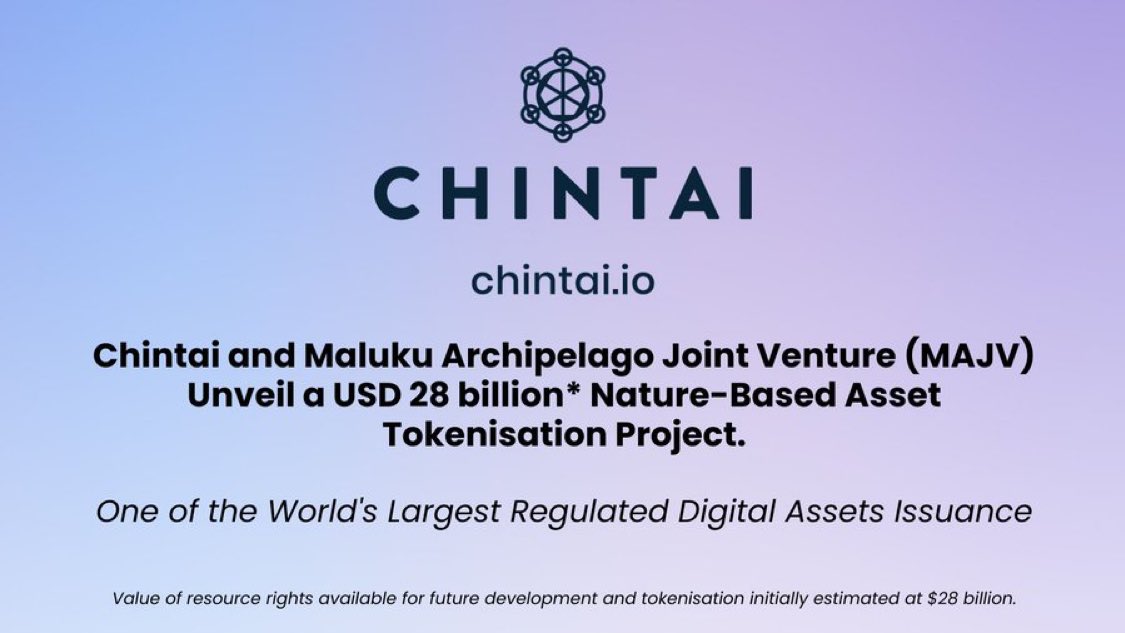
We’re going to just deliver in 2026 and let the results speak for themselves. This partnership is very exciting news for the network, and looks like several hundred million in buy side incoming already. This will be a year of determined focus and execution on the distribution layer, as well as deal flow like this.
David Packham tweet media
Chintai@ChintaiNetwork

Chintai and Maluku Archipelago Joint Venture (MAJV) to tokenise real-world assets tied to the venture's 60-year nature-based development project for the Maluku and North Maluku provinces of Indonesia, valued at USD 28 billion, one of the most significant issuances to date. prnewswire.com/news-releases/…

English
33
88
268
26.3K
CR
CR@CuratedByR·
@resdegen ive used cursor so far but will give this a try!
English
0
0
2
937
Kamino
Kamino@KaminoCrypto·
Finally purchased my first property thanks to crypto. Been 2 tough years but still managed to pay myself something I’d never been able to buy with my regular job. Had to do it to love the crypto game again because it was only a pain in the ass to lock in past 24mo.
English
12
0
58
5.5K