
Danielle Anderson retweetledi
Danielle Anderson
1.1K posts

Danielle Anderson
@DAndersonMFL
Incurably curious. Disney nerd, space geek, MFL HOD 🇪🇸 🇲🇽 🇫🇷 MA EPR; NPQLT. #itfc
Norfolk Katılım Mart 2018
477 Takip Edilen914 Takipçiler

Danielle Anderson retweetledi
In all the 'debate' RE Morsy, we seem to have missed a massive point: the important opinions aren't those of the heterosexual fans, but those in our LGBT+ Community.
The comments online and in-person over the weekend have been troubling (& in some cases, down right homophobic).
Leeds, England 🇬🇧 English
@MissCatnach Hello Fresh/Gousto but I only ever choose the recipes that take less than 20 mins 🤭 or I plan super quick meals like ravioli or stir fry
English

Danielle Anderson retweetledi

Lib Dems Ed Davey has taken a stronger line than the PM:

English
Danielle Anderson retweetledi

First in a new series looking at the History of Sports Badges and what they can teach us! - I'll start with Ipswich - the true Pride of Anglia.
#GetTheBadgeIn @IpswichTown
The Ipswich Town Football Club badge is one of the most recognisable in English football. Friends from Manchester to London have told me they followed Ipswich weekly as kids, drawn by its shield and horse, evoking images of medieval knights and chivalry. They’re not entirely wrong.
The club originally used variations of the town’s crest, featuring three ships—believed to reference a Viking ship-building industry known for its unique stern designs. However, today’s badge was designed in the 1960s by John Gammage, the Supporter’s Association treasurer, who won a club design competition.
At the heart of the badge is the Suffolk Punch, a powerful and durable horse traditionally bred for heavy agricultural work. The horse was effectively a “medieval tractor” and went beyond farming—its strength also supported England’s military, pulling supply wagons for the army. Kings like Richard I and Henry VIII even established stud farms to ensure the Punch’s availability, recognising its role in supporting English soldiers. No Punch, no power.
When not serving the military, the Suffolk Punch led agricultural production in East Anglia. Suffolk was the heart of England’s wool trade for centuries, exporting prized wool through its ports to the continent, where it was seen as a luxury. Before the industrial era, Suffolk’s fields and wool exports contributed significantly to Britain’s economy. Ipswich was a “medieval Chicago,” channelling produce from the region through roads, coastal shipping, and rivers like the Gipping and Orwell to larger ships bound for Europe. The wavy lines on the badge’s base symbolise this maritime history. Ipswich was also an essential member of the Hanseatic League, a medieval trading network around the North Sea, with Ipswich still marked on medieval maps across the Baltics and Germany.
Historically, the title of Duke of Suffolk has been on the most important a King could bestow. The fortress-like crenelations at the badge’s top evoke Ipswich’s medieval buildings, notably Thomas Wolsey’s Wolsey Gate—although no “Ipswich Castle” ever existed. Medieval Ipswich did have town walls, which today lend their names to places like “Northgate” and “Sidegate.” The fortress motif even appears on Ed Sheeran’s recent pink third strip, where Wolsey Gate merges into Framlingham Castle.
Wolsey Gate symbolises Ipswich’s moment of near-global recognition through Thomas Wolsey’s planned “Cardinal’s College.” Wolsey, a butcher’s son, rose to become both Chancellor to Henry VIII and Archbishop of York. He began building a grand college in Ipswich akin to those founding Oxford, but it was left unfinished after his sudden fall from power, later becoming Ipswich School. Shakespeare immortalised Wolsey’s Ipswich vision in Henry VIII, writing:
“Those twins of learning that he rais'd in you,
Ipswich and Oxford! One of which fell with him,
Unwilling to outlive the good that did it;
The other, though unfinish'd, yet so famous.”
Had Wolsey remained in favour, Ipswich might have rivalled Oxford as a university town. Instead, it carries the badge of one of the world’s greatest football teams— we will have to make do with that.

English
Danielle Anderson retweetledi

No Tesco, why don't YOU round up my total to the nearest pound for charity. You're the billion pound company, not me.
English
@paulusher_edu Agreed - even when I trained we had trainees take the £25k and not bother even starting the nqt year.
English

My theory on bursaries… Every trainee should get £20k bursary, no matter what the course. ECT years, £5k top up each year (or FTE) don’t complete ECT induction - pay the lot back. I know some science trainees are taking the £29k tax free and walking.
Dr James Shea@englishspecial
👀Breaking News👀 Thanks to an ABUNDANCE of teachers all over the country, it is announced. BURSARY CUT for English 🤯 Zero bursary for Drama, history, etc. Zero bursary for primary 6500 more teachers here we come! gov.uk/government/pub…
English
@paulusher_edu But still living rent free in your mind 😉
English
@MissCatnach I think the scent throw is much better with a wax melt!
English
Danielle Anderson retweetledi

💙 IPSWICH TOWN FREE MUGS 🚜
Just made some fresh Ipswich Town 22-23 and 23-24 mugs BUT because I’m a clumsy oaf a few have come out a bit faded in a couple of tiny spots, so can’t sell ‘em. Set of four going FREE.
RT if you want them & we’ll pick a lucky(?) winner this eve x


English
Danielle Anderson retweetledi

"if you hate elon so much then why are you still here" BECAUSE I WAS HERE FIRST. WHY SHOULD I LEAVE. HE'S THE ONE WHO SUCKS
English
Danielle Anderson retweetledi

RIP Mother Superior, whose agreement to allow Sister Mary Clarence to run St. Katherine's choir saved the entire parish.

English
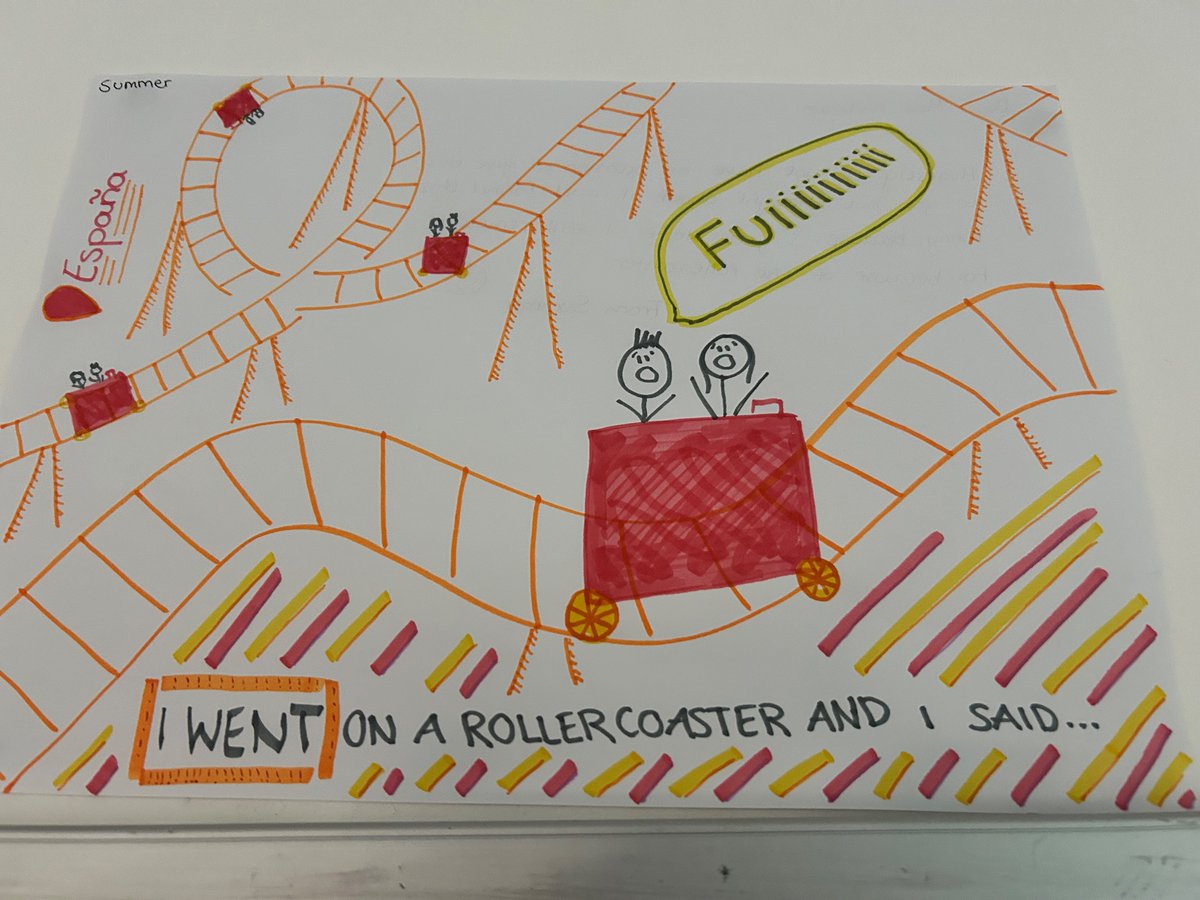
A Y11 student (who I no longer teach) gave me this yesterday… a silly thing I taught them in Y8 to remember ‘fui’ 😭
English
@MissNewnham @languagenut Do you only use it for homework? I’m trying my hardest to move away from Pearson but am struggling to find an in-class alternative
English

Is anyone an experienced user of @languagenut ? We have some teething problems since launching the new homework platform and would be great to connect! ##mfltwitterati
English
@NC_Languages Thank you so much. Your resources are superb… can we put in requests for upcoming units? 😉
English

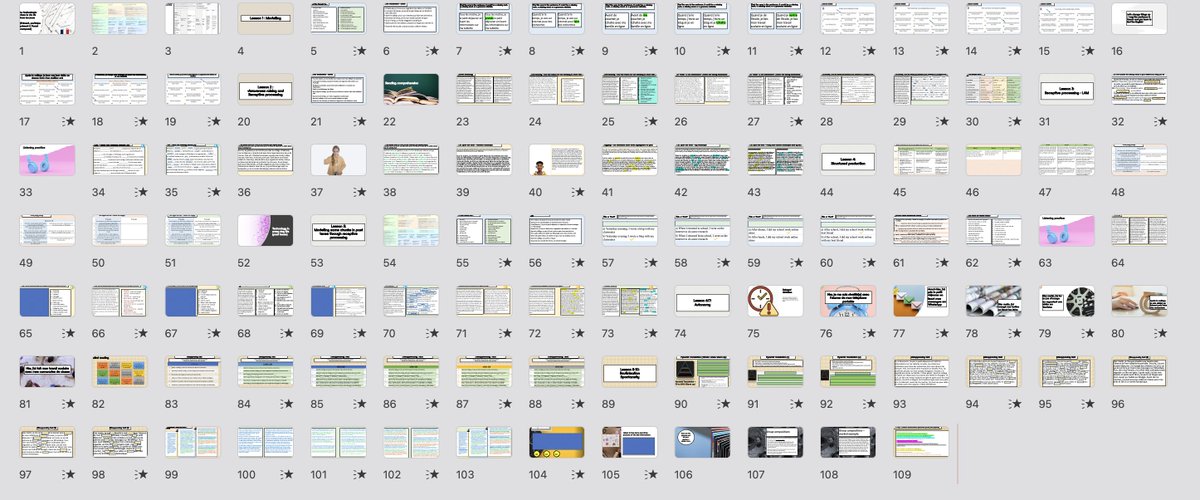
I have just added AI videos and recordings to the following GCSE unit on technology! If you've purchased before, please re-download to get the update! =D
tes.com/teaching-resou…

English
@paulusher_edu Yes, for sure!! Let’s get a date in the diary!!
English
Having driven over both of them, I can say that Lowestoft’s new bridge is better than Great Yarmouth’s new bridge. 1-0 to Lowestoft.
English