

Ibrahim
5K posts

I am privileged to have chaired this high-powered panel on sustaining economic reforms at the 2026 Nasarawa Investment Summit.
Apart from some bad spots at Mararaba and Keffi (due to ongoing construction work), the road from Abuja to Lafia is pretty good. The weather in Lafia is hot though. Phew! 🥵
I don’t think I have seen as many political campaign posters anywhere as I have seen in Nasarawa state.😀
I stopped to buy the famous Akwanga roasted goat meat on my way back. It will go down well with cold beer for the Bayern v PSG match later today. 😀
Nasarawa Invest@NasarawaInvest
This plenary on Institutionalising Reform and Making Economic Progress Irreversible will be chaired by Dr. Joe Abah, Regional Director for Africa, DAI. As the opening substantive session of #NIS2026, it addresses a critical question: how does Nasarawa State ensure that its—
English
English
A little while ago, my brother @pokigbo invited me to join a small book club of select people. Every month, we read a topical book, meet at his lovely home, discuss the book for two hours, and then enjoy a sumptuous dinner prepared by his beautiful, intelligent wife.
Last Saturday, we met in his home to discuss the book ‘How China Escaped The Poverty Trap’ by Yuen Yuen Ang. Remarkably, we were joined online by the author herself and in person by the Chinese Ambassador to Nigeria who shared his lived, empirical experiences of China’s transformation. I actually gave up watching a crucial Arsenal match and braved the Abuja rain to join. 😀
What I found most remarkable about the book was how China used what it already had, including imperfect institutions, to lift their people out of poverty. They did not wait until they had “strong institutions” or to eliminate corruption, before they led their people to prosperity. It was growth and economic prosperity that led to stronger institutions, not the other way round.
They used what could be called ‘Directed Improvisation’ where Beijing set out a vision and then allowed the provinces to innovate and compete among each other. Anything that worked in one province was encouraged and replicated elsewhere. It was humbling that cities like Shenzen alone had double the GDP of Nigeria! And there weee many more cities!
It was a refreshing break from the mud pit that Twitter can be.
And no, you cannot join because he carefully curated who he invited, and each participant brought a particular perspective that complemented others'. From policy makers to academics to senior government officials (current and former) to young men and women.
Although you can’t join this particular book club, you can start your own book club, since I’ve shared his template with you. 😀
I look forward to next month’s book, the informed discussions and intellectual sword crossings, and the lovely dinner and good wine. 😀
English

Video of first Nigerian Air Force M-346FA flight with the NAF rounded and Nigerian flag.
English
@DanEdwardsGoal Ever heard of Christian Okoye - The Nigerian Nightmare
English

How on earth can you go professional in a sport you've never played before?
FearBuck@FearedBuck
The Philadelphia Eagles drafted a 21 year old Nigerian who has never played football but stands 6’5”, 306 lbs with 6% body fat, a 39” vertical, a 10’10” broad jump that is 14 inches longer than any other defensive tackle at the HBCU combine, and a 4.63 40 yard dash
English
Ibrahim retweetledi

Ibrahim retweetledi

Pleased to share my new paper. It examines how the U.S. is using trade policy tools to secure #criticalminerals supply chains. It offers one of the first comprehensive & empirical analysis of the recent U.S. critical minerals trade deals with six countries shorturl.at/DTUEx

English
Ibrahim retweetledi
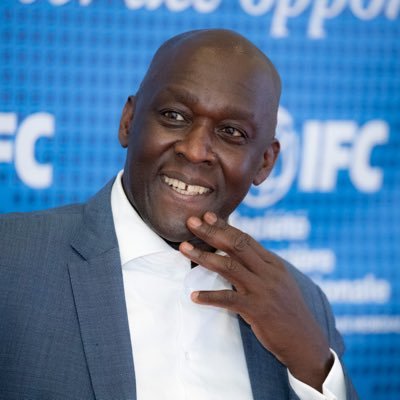
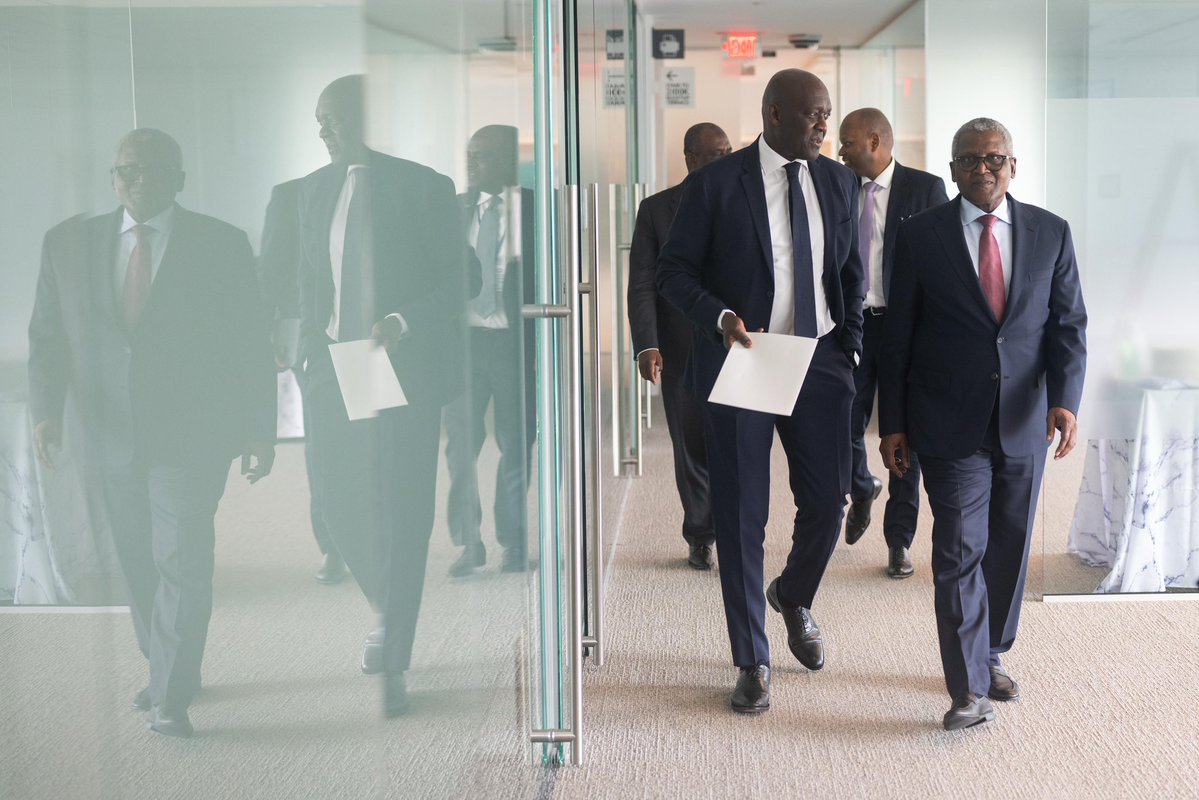
Excellent meeting with @AlikoDangote, one of #Africa's most visionary industrialists, a valued partner of @ifc_org, and a strong supporter of the #WorldBank Group’s #WaterForward initiative.
We also had a great conversation on his ambitions for transforming economies and creating jobs across the continent —coming soon. Watch this space!


English
Ibrahim retweetledi

Ibrahim retweetledi

In 2011, Ford CEO Alan Mulally gave a 52-min masterclass on leading a turnaround when everything is broken.
He walked into a company losing $17B a year.
His frameworks:
- The data sets you free
- One Ford, not 97 distractions
- Weekly truth-telling at 7 a.m.
12 lessons:
English
Ibrahim retweetledi

Do this exercise every day and see the changes in your body.
English
Ibrahim retweetledi

Nigeria is not the GCC — we’re playing a completely different game.
Same oil, yes…
but spread across 200 million people.
So more money doesn’t mean transformation.
Oil wealth alone won’t turn Nigeria into Dubai.
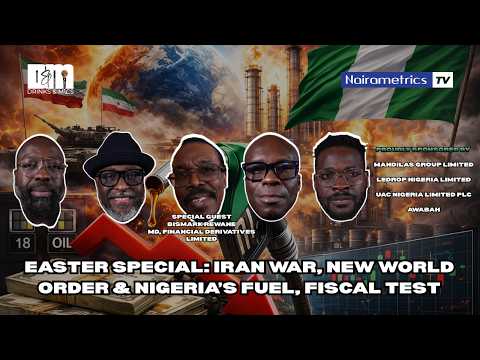
Find out why by watching Drinks & Mics – Season 2, Episode 29 (LIVE SHOW REMAKE)
With Bismarck Rewane, Samson Esemuede, @ugodre, @TunjiAndrews , and arnol_ddg
Watch on YouTube
youtu.be/mbXPqeE4eAA
Proudly sponsored by @ledropnigeria, @mandilasgroup, @uacfoodsng
YouTube
English
Ibrahim retweetledi

UConn 71, Illinois 62: The Final Two Show x.com/i/spaces/1Dxle…
English
Ibrahim retweetledi

1/ A Four-Star’s History Lesson on the Iran War
A must-read summary of a great listen: see @nytimes @DavidAFrench's conversation with former commander of US Special Forces in Afghanistan and Iraq Gen. Stanley McChrystal.
nytimes.com/2026/03/23/opi…
English
Ibrahim retweetledi

The point you have made here is fundamentally sound, and history supports it.
Societies are not transformed by wishful thinking about human nature, they are shaped by the structures that govern incentives, accountability, and consequences. A well-crafted constitution is not merely symbolic, it is an operating system for national behavior. Where it embeds strong checks and balances, it constrains excess, disciplines leadership, and protects the collective from the impulses of a few.
You do not need a different people to produce better outcomes, you need a system that makes bad behavior costly and good behavior rewarding. That is precisely why enduring democracies invest so heavily in institutional guardrails, separation of powers, independent judiciaries, and enforceable rights. These are not luxuries, they are the architecture of stability and fairness.
When constraints are weak or selectively applied, even well-intentioned actors can drift, and bad actors thrive. But when rules are clear, enforced, and difficult to circumvent, behavior adjusts over time. This is how trust is built, how arbitrariness is reduced, and how an egalitarian society begins to take shape, not by accident, but by design.
In that sense, constitutional reform is not about imagining “better Nigerians,” it is about engineering a system that consistently brings out the best in Nigerians while restraining the worst. That is the real foundation of progress.
What we are witnessing today is not accidental, it is the predictable outcome of a weak constitutional and structural framework. When institutions lack clarity, restraint, and enforceable limits, the system naturally produces its worst tendencies. The quality of outcomes in any society is directly proportional to the strength of its rules and the integrity of the structures that uphold them.
English
Ibrahim retweetledi
In 2017, Harvard professor Michael Porter gave a 72-minute masterclass on why most companies fail at strategy.
His frameworks:
- "There is no best company"
- The IKEA test he hated every minute of
- Why happy customers mean you're in trouble
12 lessons on strategy:
English
Ibrahim retweetledi

Ibrahim retweetledi

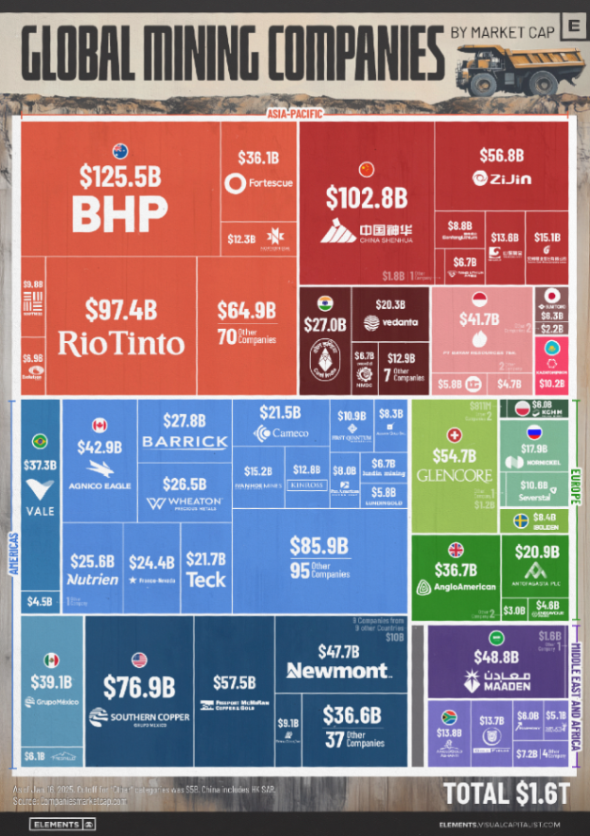
Inside the trillion-dollar global mining industry 🌐
elements.visualcapitalist.com/charted-the-gl…
English