David Spratt

9.1K posts

David Spratt banner
David Spratt

David Spratt

@djspratt

Research Director, Breakthrough National Centre for Climate Restoration. https://t.co/xrB8PG7KJQ. Personal tweets. Blog: https://t.co/x1WZANJEcZ

Melbourne Katılım Mart 2009
2.4K Takip Edilen8.1K Takipçiler
David Spratt retweetledi
How To AI
How To AI@HowToAI_·
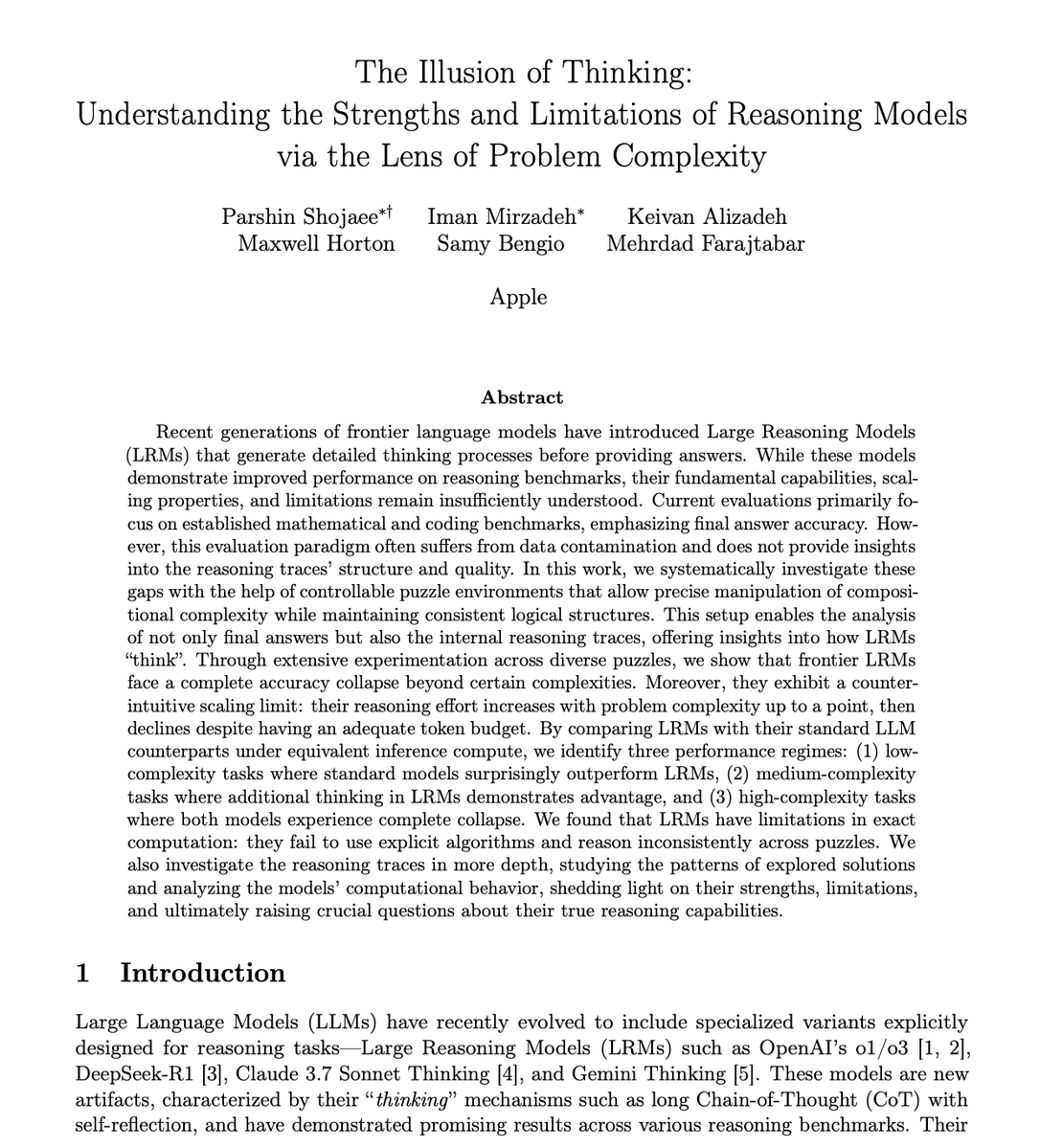
Apple has published a paper with a devastating title: “The Illusion of Thinking” It argues that AI models, no matter how brilliant they may seem, do not understand what they are doing. They do not solve problems. They do not reason. They merely generate text word by word, trying to sound coherent. Apple tested the most advanced reasoning models in the world on controlled puzzle environments. They tore open the internal "thinking" traces. What they found shatters the narrative that we are getting closer to AGI. Current models don't scale with complexity. They have a hard mathematical cliff. And they do not degrade gracefully. They collapse. But here is the most unsettling part. When a problem gets too complex, the AI doesn't use its remaining compute to try harder. It just gives up. Its reasoning effort actually declines. It stops thinking and starts guessing. Then Apple ran the experiment that closes the casket on the reasoning debate. They gave the AI the exact, step-by-step algorithm to solve the puzzle. The cheat codes. All the AI had to do was follow the instructions. It couldn't do it. Performance didn't improve at all. When the complexity gets high enough, these models fail because they cannot actually execute a logical sequence. They are not reasoning. They are just pattern matching. When you give them a simple problem, they overthink. When you give them a hard problem, they collapse. Paper: The Illusion of Thinking, Apple, 2025
How To AI tweet media
English
268
761
2K
89.8K
David Spratt retweetledi
Jeff Berardelli
Jeff Berardelli@WeatherProf·
Audio up! New article on Thwaites Glacier in Antarctica today claims that the ice shelf is deteriorating much faster now leading the team at the British Antarctic Survey to write an obituary for it. These quotes sound alarming, and they are. But deep in the article they mention that this is a “gradually developing crisis rather than an immediate emergency.” Still with comments like this from scientists it’s a good reminder that a whole lot of ice and sea level is sitting behind very fragile ice shelves at the bottom of the World! "Suddenly, large areas are just falling to pieces," says Christian Wild, from the University of Innsbruck in Austria. "It looks like a windscreen that's shattering." “Massive cracks have emerged around the pinning point, where an underwater ridge once anchored the floating ice in position.” "It's essentially in free fall now," says Mr Wild, noting the pace has quickened further over the past five months. “Fresh rifts have appeared along the grounding line, where the glacier transitions from land to floating ice.” Here’s a video I made explaining the ice shelf holds back the Glacier and how the grounding line is destabilizing. Audio up! Article in thread… 1/
English
20
247
522
24.9K
David Spratt retweetledi
Ben Noll
Ben Noll@BenNollWeather·
New ECMWF data shows near a 100 percent chance of a super El Niño by October. The central equatorial Pacific is forecast to surge 2.7˚C above average by then — approaching record levels — and this major climate event will still be intensifying 🧵
English
56
478
1.2K
126.1K
David Spratt retweetledi
Nav Toor
Nav Toor@heynavtoor·
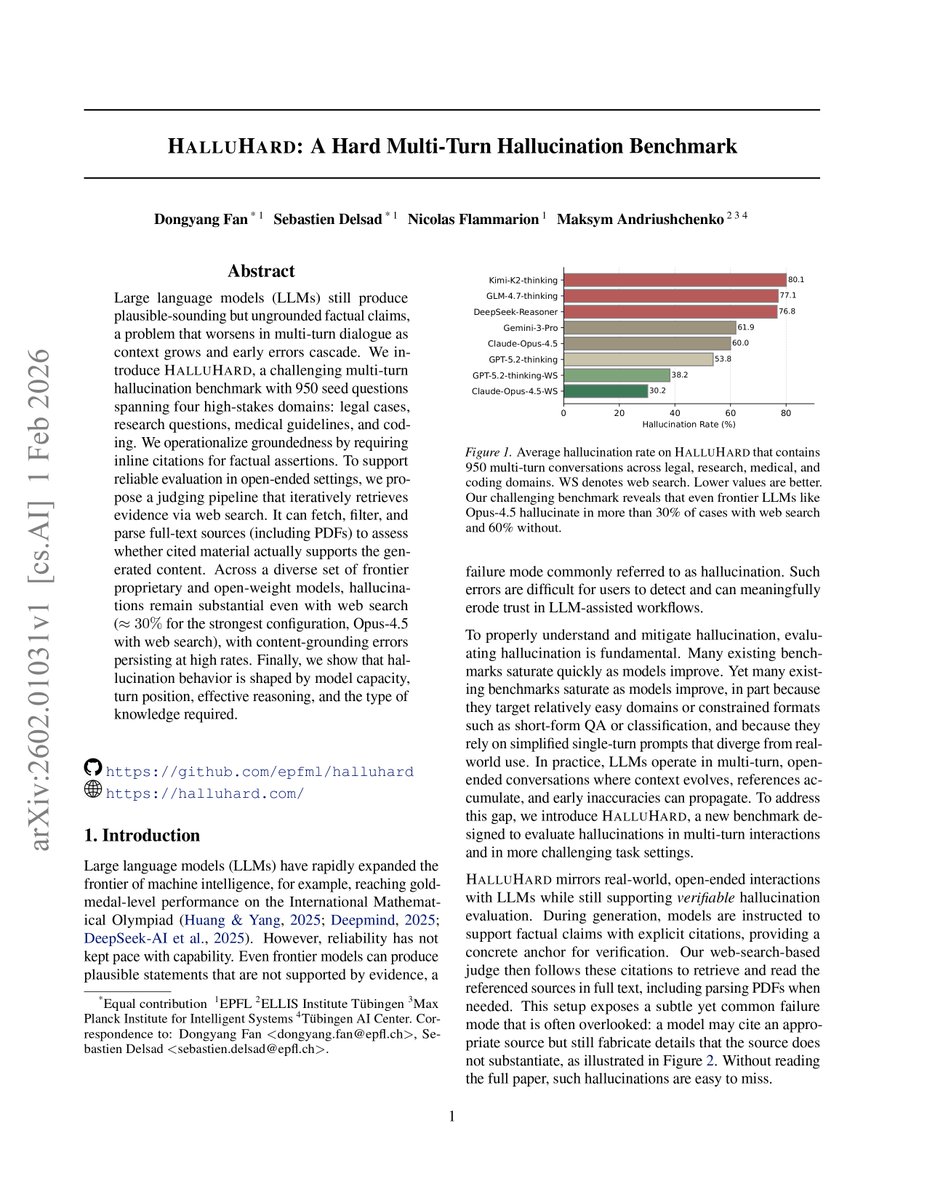
Researchers at EPFL proved your AI is lying to you. Not sometimes. Most of the time. They built one of the hardest hallucination tests ever made with Max Planck Institute. 950 questions. Four domains where being wrong actually hurts. Legal. Medical. Research. Coding. Then they ran every top model on it. The results. GPT-5. Wrong 71.8% of the time. Claude Opus 4.5. Wrong 60% of the time. Gemini 3 Pro. Wrong 61.9% of the time. DeepSeek Reasoner. Wrong 76.8% of the time. These are the smartest AI models on Earth. The ones you trust with your career. Your health. Your money. You think turning on web search fixes it. It doesn't. Claude Opus 4.5 with web search. Still wrong 30.2% of the time. GPT-5.2 thinking with web search. Still wrong 38.2% of the time. The internet attached. Still lying to you in 1 out of every 3 answers. Now the part that should scare you. Medical questions. The one place being wrong can kill you. GPT-5 hallucinated 92.8% of the time on medical guidelines. Claude Haiku 4.5 hallucinated 95.7% of the time. Gemini 3 Flash hallucinated 89% of the time. Nine out of ten medical answers from popular AI models. Wrong. It gets worse. The longer you talk to it, the more it lies. Early mistakes cascade. The model starts citing its own earlier hallucinations as facts. Your third message is more wrong than your first. The paper, in its own words: "hallucinations remain substantial even with web search." This is what hundreds of millions of people are doing right now. Asking software that lies in the majority of its answers. About their health. About their job. About their legal case. About their code. Most are not checking. Most never will. But please. Keep using ChatGPT for medical advice. The doctors need a break. arxiv.org/abs/2602.01031
Nav Toor tweet media
English
156
829
1.8K
155.9K
David Spratt
David Spratt@djspratt·
@RogerHallamCS21 @DrJamesEHansen Last 3 years average above 1.5C. So will next two, likely hottest yet. Yet mainstream climate movement ignores this basic science and carries on about “keeping 1.5C alive”. Triumph of belief and denial over evidence.
English
0
1
1
56
Roger Hallam
Roger Hallam@RogerHallamCS21·
"Even a moderately strong El Niño during the next 12 to 18 months could drive the average global temperature to about 1.7 degrees Celsius above the preindustrial level, climate scientist @DrJamesEHansen told Inside Climate News. Hansen doubts the world will meaningfully cool back down to below the 1.5 degree Celsius mark after the El Niño fades."
Roger Hallam tweet media
Yale Environment 360@YaleE360

The coming El Niño could permanently alter the climate, scientists warn. via @insideclimate e360.yale.edu/digest/super-e…

English
52
211
525
25.6K
David Spratt
David Spratt@djspratt·
@ProfSteveKeen It’s not just supply, but price where cost makes crop uneconomic. And in northern hemisphere the spring planting window is closing/closed.
English
0
1
0
82
Prof. Steve Keen
Prof. Steve Keen@ProfSteveKeen·
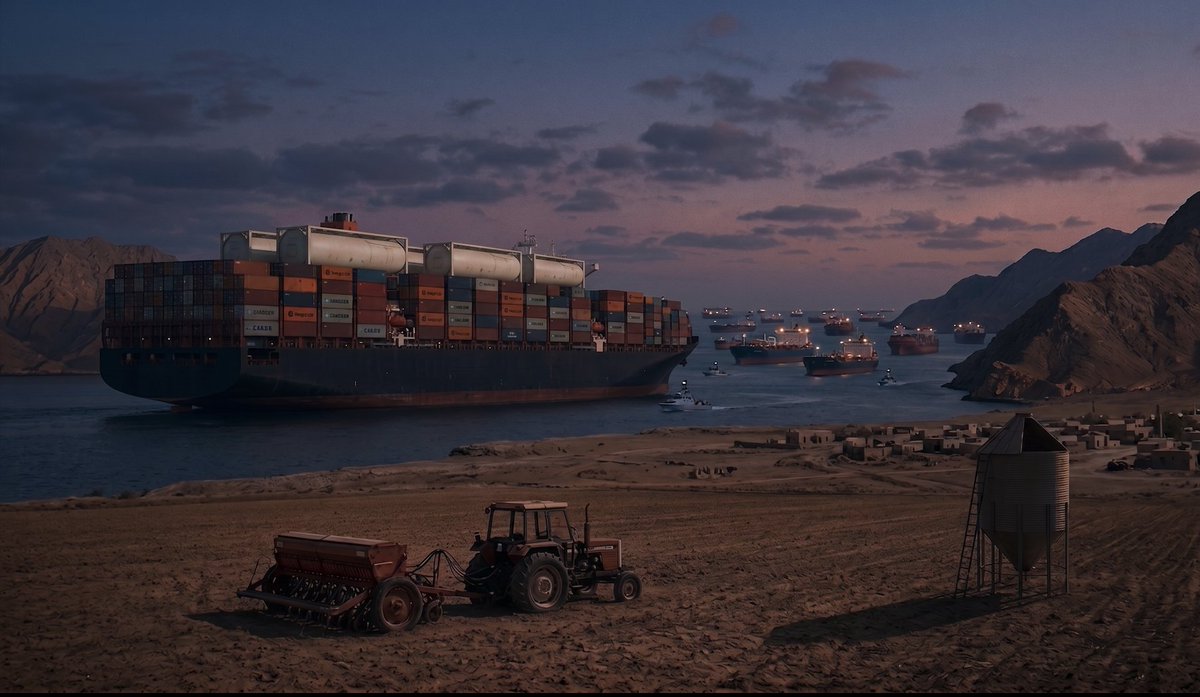
The modern economy runs on just-in-time delivery, from factory parts to fertilizer, and that system has been badly disrupted by the conflict in the Strait of Hormuz. If fertilizer does not reach farms before spring planting, global food production could fall sharply, with the worst effects hitting countries that depend on imports and have little reserve stock. This is not just a financial problem, because when physical supply chains break, food shortages and broader instability can follow. Check out the comment section to see my complete analysis on this situation.
Prof. Steve Keen tweet media
English
21
72
173
6.4K
David Spratt retweetledi
Jeff Berardelli
Jeff Berardelli@WeatherProf·
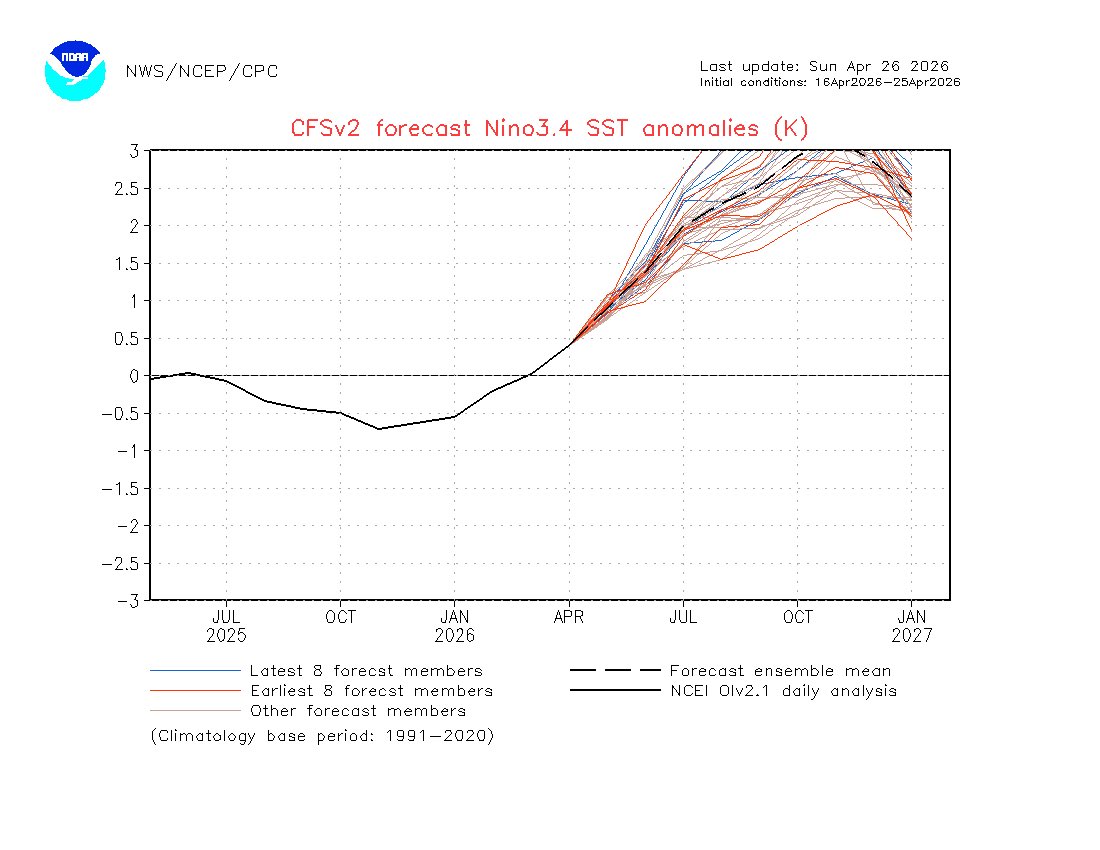
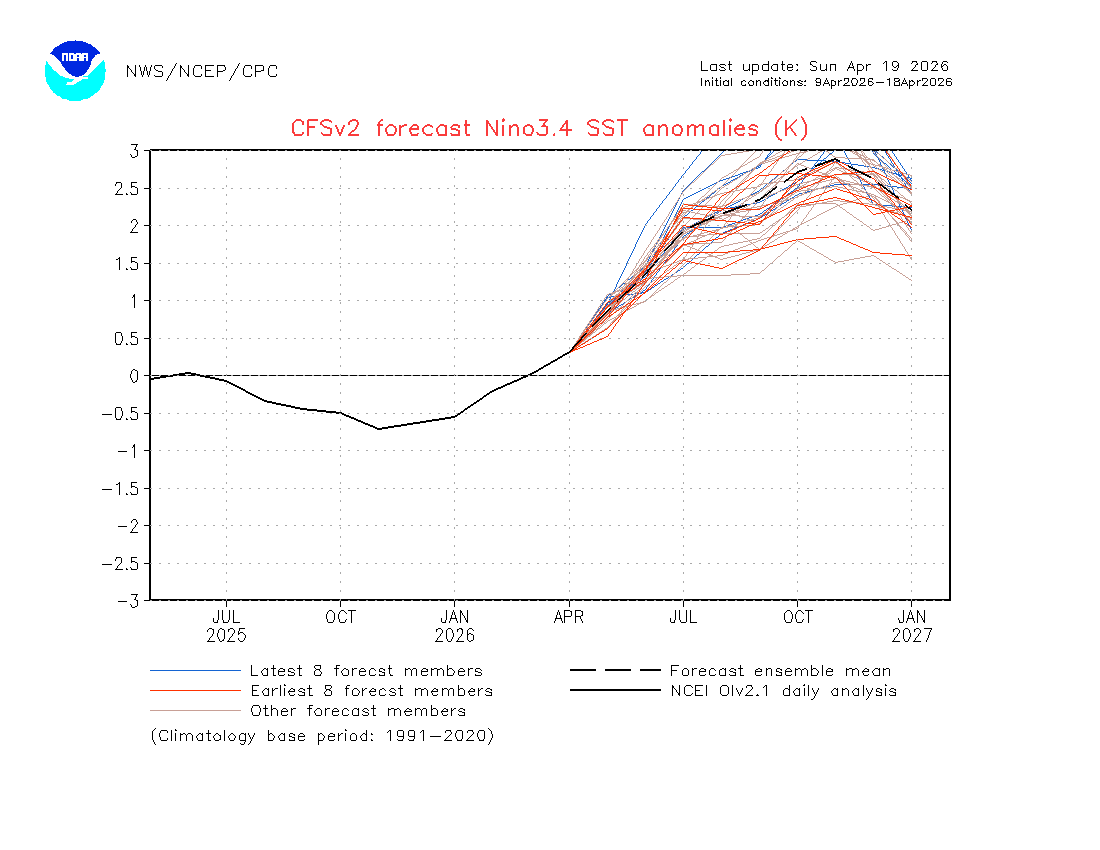
The latest CFS forecasts for El Niño need no hyperbole or exaggeration. The traditional Nino 3.4 region might actually be +3.4°C lol - I can’t tell because some of the members and also the mean are literally off the chart. The RONI.. newer “relative” index - which takes our warmed climate into account - is like 2.7 which would be close to a record (if averaged over 3 months). The current record is +2.5°C in 1982-83. The original index is good to look at for comparison sake. But the Relative index will give us a better idea of the impacts of the event. That’s because El Niño is most impactful when its anomalies are the highest compared to other adjacent regions/ basins. In 2023 there was a strong-ish El Niño but the Atlantic was also warm, diluting the El Niño impacts and allowing major hurricane Idalia to form in the Gulf.
Jeff Berardelli tweet mediaJeff Berardelli tweet media
English
10
75
280
16.6K
David Spratt
David Spratt@djspratt·
Any sane foreign policy would put climate risks, not China, at centre stage. Australia’s security policy settings are focused on geopolitical rivalry, while far greater systemic risks – especially climate disruption – receive little strategic attention. johnmenadue.com/post/2026/04/a…
English
1
0
1
80
David Spratt retweetledi
Ben Noll
Ben Noll@BenNollWeather·
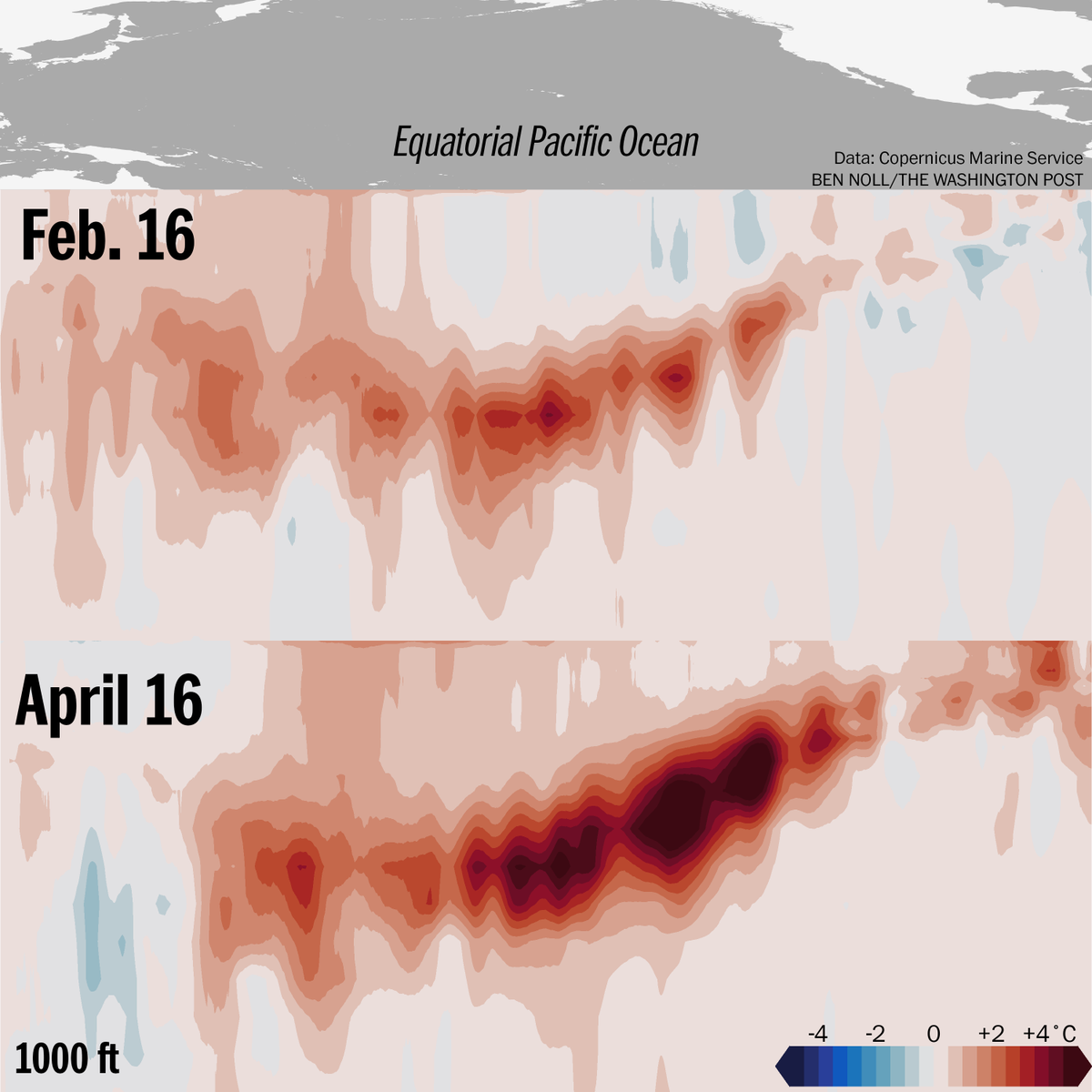
The development of El Niño has progressed rapidly. Waters in the subsurface Pacific Ocean have now reached a gaudy 6˚C (11˚F) above average. This warmth is rising toward the ocean's surface and aligns with projections of a super El Niño later this year.
Ben Noll tweet media
English
30
375
1K
83.8K
David Spratt
David Spratt@djspratt·
AMOC slowdown has profound global #security consequences but I feel 100% confident it will not rate a mention Australia’s new defence strategy to be released today. @aslcg_org
Prof. Stefan Rahmstorf 🌏 🦣@rahmstorf

Breaking: New study using observational constraints projects that the Atlantic Ocean circulation #AMOC will weaken ~50% by 2100, even for medium emissions and without Greenland melting. Seriously bad news. theguardian.com/environment/20…

English
1
1
7
265
David Spratt retweetledi
Ryan Maue
Ryan Maue@RyanWeather·
New maps causing meteorologists to lose their minds in disbelief at massive heat build-up in the Equatorial Pacific The oceans will not literally be boiling red 🔴 in the early autumn, but the Super El Niño will drive unprecedented global extreme weather events.
Ryan Maue tweet mediaRyan Maue tweet media
English
30
324
1K
120K
David Spratt
David Spratt@djspratt·
As we collectively work to try and get political systems to understand the need for urgent #climate interventions, I presume there is an assumption that such processes are fit for purpose.  That is, that climate policy-makers are capable of understanding the risks and acting rationally on that basis. But is that the case? johnmenadue.com/post/2026/04/h…
David Spratt tweet media
English
3
6
10
1.5K