David L
4.9K posts

David L retweetledi
David L retweetledi

There’s a God that taught a tiny bird how to sew.
Jenica Eugenia@2Dinu83028
El pájaro sastre es famoso por su asombrosa habilidad para construir nidos "cosiendo" hojas. 😊
English
David L retweetledi

"Glen Scrivener gives Christians eight killer apps for evangelistic conversations in How to Speak Life: Sharing Your Faith in 321. These eight tools make evangelism easier and more natural."
—Joseph Hewitt
au.thegospelcoalition.org/book-review/sp…
English
David L retweetledi

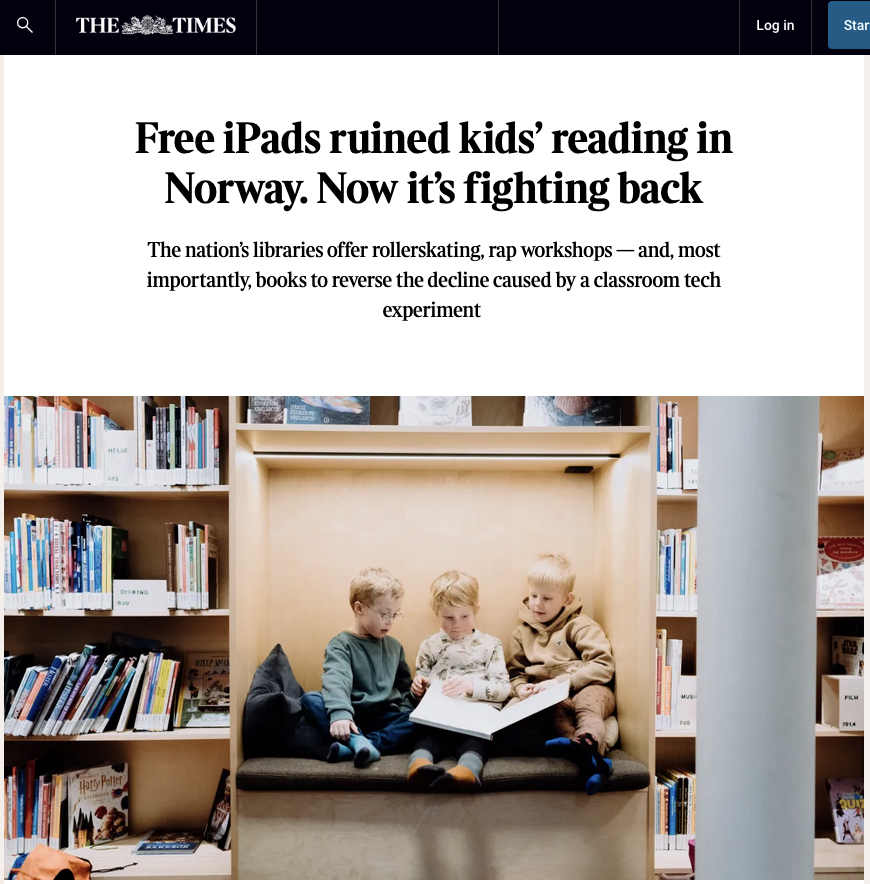
Amazing: LA schools will eliminate personal devices in K and 1st grade, and limit use in grades 2-5, and give parents more options. I think this will catch on nationally:
Good Morning America@GMA
The Los Angeles Unified school board has voted to require screen time limits and encourage the use of pen and paper for assignments, becoming the first major school district to do so. @SamChampion reports.
English
David L retweetledi

@MaxNordau I don't think "failed" is a strong enough expression of the depth and breadth of the human misery communism has caused every time it was tried. It is the shortest, fastest path to human suffering.
English
David L retweetledi

Louisville’s abortion mill (and the last in Kentucky) has been demolished. Praise God. What belongs on its grounds is a memorial to the over 100,000 lives taken within its ghoulish walls. baptistpress.com/resource-libra…
English
David L retweetledi

Praise God.
Encouraging story.
Worth a few minutes of your time.
Billy Wood@1baptistpastor
I know this man personally: David Gibbs. What he’s telling is true; and I love it …
English
David L retweetledi

David L retweetledi
David L retweetledi
David L retweetledi

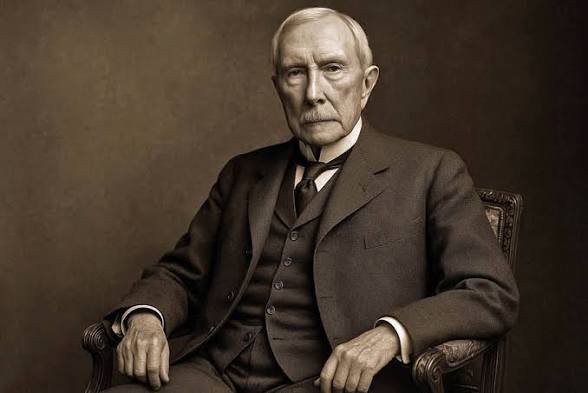
In 1900, John D. Rockefeller controlled approximately 90 percent of all petroleum refining in the United States. He was, by some calculations, the richest private individual who had ever lived.
He had a problem. Scientists were discovering that compounds derived from coal tar, a petroleum byproduct, could be used as synthetic medicines. Aspirin, derived from coal tar, had been launched by Bayer in 1899. The petroleum waste stream Rockefeller had previously had to dispose of could now be sold back to the public as medicine at a markup of roughly 10,000 percent.
He had another problem. American medicine in 1900 was a competitive ecosystem of homeopaths, herbalists, naturopaths, osteopaths, midwives, and traditional doctors who used food, plants, water, and lifestyle as the primary tools of healing. Approximately half of all American medical schools taught some form of natural or alternative medicine.
Rockefeller bought into the German pharmaceutical industry, eventually taking a substantial stake in IG Farben, the conglomerate that included Bayer, BASF, and Hoechst. He then commissioned a report.
The report was written by Abraham Flexner, an educator with no medical training, funded by the Rockefeller and Carnegie Foundations, and published in 1910. It declared that natural and alternative medical schools were unscientific quackery. It recommended the closure of more than half of all American medical schools and the standardisation of the rest around medicine based on synthetic patented drugs.
Congress acted. Half of American medical schools closed within a decade. The remainder accepted Rockefeller and Carnegie funding on the condition that their curricula be reorganised around pharmaceutical treatment. Nutrition was removed. Herbal medicine was removed. Lifestyle intervention was removed. The doctor's job was redefined: diagnose the symptom, prescribe the drug.
The drugs were petroleum-derived. The petroleum was supplied by Rockefeller-controlled refineries. The medical schools were funded by Rockefeller. The journals were funded by Rockefeller. The AMA was supported by Rockefeller. The hospitals were funded by Rockefeller.
By 1925, the American medical system was a vertically integrated extension of the petroleum industry, operating under the marketing slogan that it was scientific.
This is the system that exists today.
The pharmaceutical industry generates approximately $1.5 trillion in annual revenue. The American population, 4 percent of the global total, consumes approximately 50 percent of all pharmaceuticals manufactured.
The system was not designed to make people healthy. The system was designed to manage symptoms in a way that produces lifetime customers. A healthy patient is a former customer. A managed patient, who takes the pill every day for the rest of their life, is an annuity.
The objective has always been to keep you in that profitable corridor between healthy and dead.
Long enough to keep buying. Not so well that you stop.
The doctor who advises you to fix your metabolism by changing your diet is, from the point of view of the system that trained him, a defective product. The doctor who prescribes you a statin, a metformin, an antidepressant, and a blood pressure medication for life is performing exactly as designed.
The system was designed by an oil baron who needed to sell the waste products of his refineries.
It still functions, 116 years after the Flexner Report, exactly the way he designed it.
You are the customer.
The corridor is where you live.

English

David L retweetledi
David L retweetledi
David L retweetledi

On day 1 of my high school history class, our professor got up and said
You are 15 or 16 years old. 200 years ago people your age were married, planted crops, had children, and built a cabin by winter. You can do your homework. The bar set for you historically is embarrassingly low. You are not dealing with regional famine or plague. You do not have to save your family from marauders or go into battle to destroy your enemies. You have to sit down and learn from someone who cares about you in a safe, air-conditioned room. You have no excuses.
English
David L retweetledi

Every oncologist should watch Ben Sasse’s interview with Ross Douthat. I was captivated by his courage, serenity, and his ability to articulate what so many of our patients feel and experience. Ben and I don’t share the same political or religious beliefs, which made it all the more compelling.
A few things stood out:
* His physicians struggled to deliver the “hard facts.” They led with advances in oncology before telling him he had cancer, wanting to stay positive. I’ve been there - it’s incredibly tough to balance truth with hope. We need to be frank with our patients, even when it’s difficult. I also imagine that the story didn’t play out exactly as Ben recollected, but perception is reality for our patients.
* Ben asked for “Oncology 101”: chemo vs. radiation vs. surgery vs. targeted therapy. He kept saying “teach me” - he needed a map. I love that. Every patient deserves this navigation. Cancer is overwhelming without a clear direction.
* He’s on a drug targeting a cancer gene long considered “undruggable.” We’re making real progress and occasionally witnessing “miracles” in clinic - responses grounded in cancer biology. This progress depends on funding and clinical trials. This is how we move the field forward.
* The flip side is that these treatments carry real toxicity. Ben’s face makes this painfully clear. I am constantly amazed at what many patients are willing to endure and the resilience that they show.
* Ben loves his hospice team. They gave him a practical framework for managing four variables: cancer pain, nausea, balancing diarrhea and constipation, and energy/fatigue. He noted that oncologists often steer conversations to their own agenda (scans, treatment, etc). I’ve been guilty of this too. We need to listen more.
* Despite being given a prognosis of a few months, Ben keeps his great sense of humor. After watching this, I feel we could actually be friends. Political labels might once have gotten in the way - and that’s on me. Confronting death strips away differences and magnifies what we share.
* Ben on the digital culture we live in: “These super-devices in our pockets, the largest tools any individual has ever had, allow our consciousness to leave the time and place where we actually live… the places where we break bread, the people we can physically touch and hug.” This is so true.
* Ben doesn’t fear death, but he fears misprioritization. Dinner time is precious. There’s a limit to work trips. Live near family. Cancer forces laser focus on what matters most. When people who are dying share these pearls, all of us need to listen and consider it a gift.
Highly recommended. Wishing you the best, @BenSasse.
nytimes.com/2026/04/09/opi…
English
David L retweetledi

I'm not sure I've personally witnessed anyone die as well as @BenSasse.
He's set the standard in my mind for when it's my time.
English