
Alex & Books 📚

31.2K posts

Alex & Books 📚 banner
Alex & Books 📚

Alex & Books 📚

@AlexAndBooks_

📖 Helping people find amazing books & develop a reading habit. 📧 Get my list of 100 life-changing books (link in bio).

👉 Katılım Mart 2017
509 Takip Edilen362.9K Takipçiler
Sabitlenmiş Tweet
Alex & Books 📚
Alex & Books 📚@AlexAndBooks_·
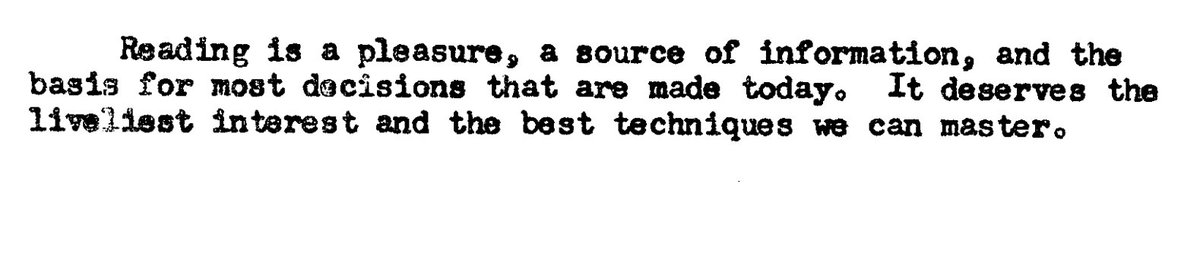
The CIA released a "Reading Improvement Course" that had been hidden from the public since 1955. I read all 117 pages so you don't have to. Here are the 10 most interesting quotes from it: 1) "Good reading is not necessarily rapid reading. The rate must be adjusted to comprehension requirements." 2) "To read well you must concentrate. No activity except perhaps writing or thinking makes more rigorous demands upon the whole mind than reading." 3) "Suggestions to develop your ability to concentrate: Be interested. There is no spur to concentration like honest interest." 4) "Some readers have found certain devices useful in keeping their minds on the subject. One device is to jot down key thoughts as one reads. These words act as a fence to confine our wandering thoughts. The practice of underlining key ideas and making notes at the end of each section serves the same purpose. 5) "Concentration is a habit and must be formed. Habits require, at first, a conscious effort of the will. Force yourself to let nothing come between your mind and the matter on the page before you." 6) "When our attention wanders, words slip by us and leave no trace of meaning. Under such conditions we cannot expect a harvest of logical thought. We go through the motions of study or reading, but do not get results. We waste time that could be used far more pleasantly and profitably." 7) "Drawing conclusions is the final step of the reading process and should be based on sound judgment of the author's qualifications, facts presented, methods of presentation, validity of arguments, or style of presentation." 8) There are 3 types of reading: Intensive reading: when the purpose is to master new subject material, the skills required are translation, integration, analysis and evaluation. The best procedure is (a) rapid preliminary survey of the material, (b) formulation of questions prior to the reading, (c) careful reading, and (d) review and recitation of important points. Extensive reading: with the purpose of acquiring a broader frame of reference and widening the range of knowledge. The skills required are integration, analysis, and evaluation. The best procedure is rapid and thorough reading of the material. The extensive reading rate should be as fast as the thinking process permits. Scanning: for (a) the main idea, (b) specific information and (c) a preview of the material. To read effectively the reader must first review the material and the specific purpose for the reading. 9) The SQAR3 Reading Strategy: "Scan: Quickly scan the introductory paragraph, subtitles, key sentences, key words, summary. Decide on the author's plan. Question: Turn the title or key sentences into questions. Anticipate: Before reading, try to answer these questions mentally. Read: Read the entire selection and look for the author's ideas to answer your questions. Recite: Close the book or magazine. Tell yourself in your own words what you have learned. Write notes on material that must be remembered. Review: Later, to make your knowledge stick, review the gist of the article or chapter, again in your own words." 10) How to read with purpose: -"Have definite questions which you wish answered through reading a given selection. -While reading, make a mental note of the main points in the paragraph or article. -From time to time stop to think over the material just read in preceding section. -Notice the illustrations and examples that are used. -Develop the habit of criticizing what you read." My favorite quote from the report: "Reading is a pleasure, a source of information, and the basis for most decisions that are made today. It deserves the liveliest interest and the best techniques we can master."
Alex & Books 📚 tweet media
English
49
591
3.1K
230.6K
Alex & Books 📚
Alex & Books 📚@AlexAndBooks_·
Alex & Books 📚@AlexAndBooks_

The CIA released a "Reading Improvement Course" that had been hidden from the public since 1955. I read all 117 pages so you don't have to. Here are the 10 most interesting quotes from it: 1) "Good reading is not necessarily rapid reading. The rate must be adjusted to comprehension requirements." 2) "To read well you must concentrate. No activity except perhaps writing or thinking makes more rigorous demands upon the whole mind than reading." 3) "Suggestions to develop your ability to concentrate: Be interested. There is no spur to concentration like honest interest." 4) "Some readers have found certain devices useful in keeping their minds on the subject. One device is to jot down key thoughts as one reads. These words act as a fence to confine our wandering thoughts. The practice of underlining key ideas and making notes at the end of each section serves the same purpose. 5) "Concentration is a habit and must be formed. Habits require, at first, a conscious effort of the will. Force yourself to let nothing come between your mind and the matter on the page before you." 6) "When our attention wanders, words slip by us and leave no trace of meaning. Under such conditions we cannot expect a harvest of logical thought. We go through the motions of study or reading, but do not get results. We waste time that could be used far more pleasantly and profitably." 7) "Drawing conclusions is the final step of the reading process and should be based on sound judgment of the author's qualifications, facts presented, methods of presentation, validity of arguments, or style of presentation." 8) There are 3 types of reading: Intensive reading: when the purpose is to master new subject material, the skills required are translation, integration, analysis and evaluation. The best procedure is (a) rapid preliminary survey of the material, (b) formulation of questions prior to the reading, (c) careful reading, and (d) review and recitation of important points. Extensive reading: with the purpose of acquiring a broader frame of reference and widening the range of knowledge. The skills required are integration, analysis, and evaluation. The best procedure is rapid and thorough reading of the material. The extensive reading rate should be as fast as the thinking process permits. Scanning: for (a) the main idea, (b) specific information and (c) a preview of the material. To read effectively the reader must first review the material and the specific purpose for the reading. 9) The SQAR3 Reading Strategy: "Scan: Quickly scan the introductory paragraph, subtitles, key sentences, key words, summary. Decide on the author's plan. Question: Turn the title or key sentences into questions. Anticipate: Before reading, try to answer these questions mentally. Read: Read the entire selection and look for the author's ideas to answer your questions. Recite: Close the book or magazine. Tell yourself in your own words what you have learned. Write notes on material that must be remembered. Review: Later, to make your knowledge stick, review the gist of the article or chapter, again in your own words." 10) How to read with purpose: -"Have definite questions which you wish answered through reading a given selection. -While reading, make a mental note of the main points in the paragraph or article. -From time to time stop to think over the material just read in preceding section. -Notice the illustrations and examples that are used. -Develop the habit of criticizing what you read." My favorite quote from the report: "Reading is a pleasure, a source of information, and the basis for most decisions that are made today. It deserves the liveliest interest and the best techniques we can master."

QME
0
0
1
56
Alex & Books 📚
Alex & Books 📚@AlexAndBooks_·
Found this powerful quote about reading from a declassified CIA report from 1955: "Reading is a pleasure, a source of information, and the basis for most decisions that are made today. It deserves the liveliest interest and the best techniques we can master."
Alex & Books 📚 tweet media
English
4
11
76
6.7K
Alex & Books 📚
Alex & Books 📚@AlexAndBooks_·
@drgurner 30 minutes for thinking/writing 30 minutes for reading 30 minutes for exercising Do all three and that's an awesome day
English
1
0
7
686
Dr. Julie Gurner
Dr. Julie Gurner@drgurner·
Build in 30 min of space every day to think. If you are always back-to-back busy, you'll always stay smaller than you could be. You'll miss opportunities. The people who have leverage, have space. They can think, see the field, be deliberate, and strike with intention.
English
35
39
533
17.5K
Alex & Books 📚
Alex & Books 📚@AlexAndBooks_·
The 7 Habits of Highly Effective Readers: 1) They quit bad books to make room for better ones. 2) They read multiple books at a time so they always have a book to fit their mood. 3) They take notes in their books or in their notebooks to remember the most important lessons. 4) They schedule reading into their calendar as they would with any other important task. 5) They read books using all three formats (print books, ebooks, and audiobooks). 6) They leave their phone in another room before starting their reading session. 7) They always carry a book with them whenever they go, just in case they find themselves with extra free time.
English
7
5
86
11.4K
Ti Morse
Ti Morse@ti_morse·
Just had our first interview break 200k views on YT! LFG I sincerely appreciate all 203.4k lads, and 7 ladies, who watch relentless. Step by step, ferociously 🏴‍☠️
Ti Morse tweet media
English
66
5
420
23.8K
Dipeeka Vaghela
Dipeeka Vaghela@DipeekaVag6947·
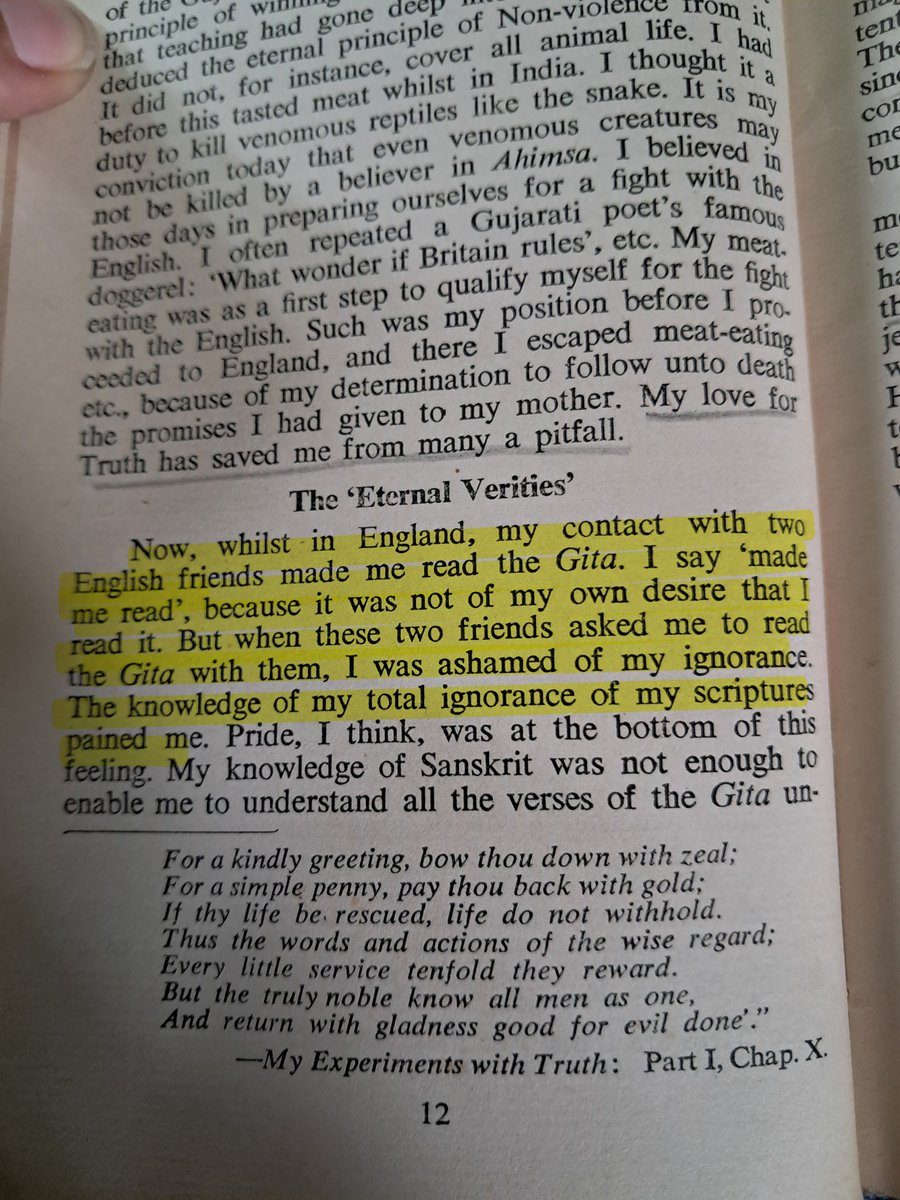
@AlexAndBooks_ And this reading changed the life of lakhs of people of India and South Africa, if Gandhi had not read Gita at that time he might have not come to some principles of him like nonviolence and trusteeship which are still followed, and the history of India might be different !
Dipeeka Vaghela tweet media
English
1
0
1
70
Alex & Books 📚
Alex & Books 📚@AlexAndBooks_·
“What are you reading? isn’t a simple question when asked with genuine curiosity; it’s really a way of asking, Who are you now and who are you becoming?” –Will Schwalbe
Alex & Books 📚 tweet media
English
6
6
63
11.6K
Gautham Pai
Gautham Pai@gauthampai·
@AlexAndBooks_ I would lean towards 2 or 3. But not sure if you cover "absorbing" or "remembering" in the book.
English
1
0
1
20
Alex & Books 📚
Alex & Books 📚@AlexAndBooks_·
Hey guys, can you help pick a subtitle for my book? Context: It's a book about how to read more books, get more out of every book you read, and become a better, smarter, and more skilled reader. Here are the options: 1) How to Get More Books Into Your Life & More Life Out of Your Books 2) A Modern Guide to Choosing, Absorbing, and Applying What You Read 3) The Simple System to Read Smarter, Remember More, and Apply What Matters Or if none of the above, comment your idea below. I'd greatly appreciate your input! 🙏
Alex & Books 📚 tweet media
English
28
0
28
12K
Moiz Ali
Moiz Ali@moizali·
Ten years from now, we'll be doing a business case study on this brand and this fruit. Zespri is single handedly changed Kiwis. They've invented a sweeter (less sour) Kiwi, and are marketing it as a to-go fruit. - They are making it more consumable. The worst part about Kiwis is how hard they are to eat. Zespri is saying you don't need to peel it any more. Cut it open and eat it with a fork. I think they will get to the point of saying just wash it and eat it like an apple. - Their marketing campaign is just handing out free Kiwis everywhere. I've probably eaten a dozen free ones myself. In an age where apples are $4 per pound, this fruit is part of the Clean15 and you don't even to buy organic. - In 50 years, Zespri will have folks thinking that the color of Kiwi is gold, not green.
Moiz Ali tweet media
English
43
2
102
15.8K
joshua steinman (🇺🇸,🇺🇸)
Here’s an idea for @sama @DarioAmodei et al: - buy the books - scan the books - employ the best book binders and book restorers in the world to re-bind the books - enlist @mspringut to build a gorgeous, classical stone and glass library whose mere edifice stands as a testament to human knowledge, never mind its contents - and its contents are all the rare books in the world, preserved for our posterity - put them in the library - require (free) membership to visit (now it’s non-public, members only, might get you around the legal stuff) >> new human library of Alexandria
Hedgie@HedgieMarkets

🦔AI companies are bulk-buying rare books, scanning them through high-speed machines that cut the spines off, and shredding the originals. A service called ISBNdb facilitates orders of up to a million books and keeps buyers anonymous. Pre-2022 books are premium because they're free of AI-generated text. A federal judge ruled the practice is fair use because eliminating the original means only one copy exists at a time. Anthropic hired the former head of Google Books partnerships to obtain "all the books in the world." My Take This got to me. A bookseller told 404 Media that rare books with almost no surviving copies are being fed into this pipeline. Books that survived wars, fires, and centuries of handling are being shredded so an AI can learn to write a better marketing email. ISBNdb's website literally says "'AI company destroys two million books' is not a headline that generates sympathy," and they still built an entire business around making it happen quietly. They offer NDAs as a feature. They coach clients to call it "digital preservation." I've covered AI companies scraping the internet, torrenting libraries, and stealing music. This is worse because it's irreversible. You can re-upload a website. You can reprint a bestseller. You can't replace the last three copies of an 18th-century botanical text once someone shreds them for training data. And the judge said it's legal. So it's going to accelerate. "We shred rare books and offer NDAs so nobody finds out" is a legitimate business model in 2026. What a timeline. Hedgie🤗

English
78
177
1K
122K
Andrea Waltz
Andrea Waltz@GoforNo·
@AlexAndBooks_ Thank you, I know kind of a lot. I'm opinionated haha. And really excited for you!
English
1
0
1
3
Jack Raines
Jack Raines@Jack_Raines·
New merch
Jack Raines tweet media
English
8
0
89
18.5K
Karen Vaites
Karen Vaites@karenvaites·
This one hits like a gut punch: Austin Sarat, my favorite college professor, pens a fierce OpEd on @AmherstCollege students’ inability to read challenging texts. He rightly pins blame on “a K-12 system that has quietly stopped asking them to finish books at all.” “This past term, I enlisted a few colleagues to teach a short course called “Why Read?” We spent three weeks working through essays on the value of reading by scholars like Martha Nussbaum and Edward Said. What struck me wasn’t students’ lack of interest — it was how unevenly prepared they were even to attempt something long and difficult. It was clear to me that the students had very different approaches to and comfort with reading difficult material. I tried to help them see that when it comes to reading, similar to physical exercise, the most benefit comes with the most exertion. Reading longer things requires patience and attentiveness, it cultivates the capacity to follow an argument or a plot, and it requires sustained effort to decode meanings. Surely, this single course won’t end students’ entrenched habits and reverse their retreat from reading. But before we ask our students to read difficult material, those of us who teach in college owe it to all of them to explain that reading books in their entirety matters. If we won’t, or can’t, then higher education will have a bleak future.”
Karen Vaites tweet media
English
150
208
946
131.2K
📚 David Kadavy, author
@AlexAndBooks_ This order: 2, 3, 1. 2 I personally like best, 3 might be more appealing to a mainstream audience, 1 is too clever for a subtitle.
English
1
0
1
79
Joel J Miller
Joel J Miller@joeljmiller·
@AlexAndBooks_ No. 3 is very practical, which has its merits, but No. 1 is more aspirational while still alluding to the practicality. I think I’d vote No. 1.
English
1
0
2
64
Mary Julia Koch
Mary Julia Koch@MJ_Koch·
Many young people today have historical amnesia. They say life was better before the Industrial Revolution, when people lived on farms and could “just enjoy life” and “spend time with each other.” Reality check: people have never had more free time than they do now. @WSJFreeEx:
Mary Julia Koch tweet media
English
117
208
1.5K
99.8K