
Dimiter Toshkov

2.8K posts

Dimiter Toshkov banner
Dimiter Toshkov

Dimiter Toshkov

@DToshkov

European Union politics and governance, research methods and design, data visualization, bureaucracy and public administration @PA_UniLeiden

The Hague Katılım Haziran 2014
1.2K Takip Edilen2.2K Takipçiler
Dimiter Toshkov
Dimiter Toshkov@DToshkov·
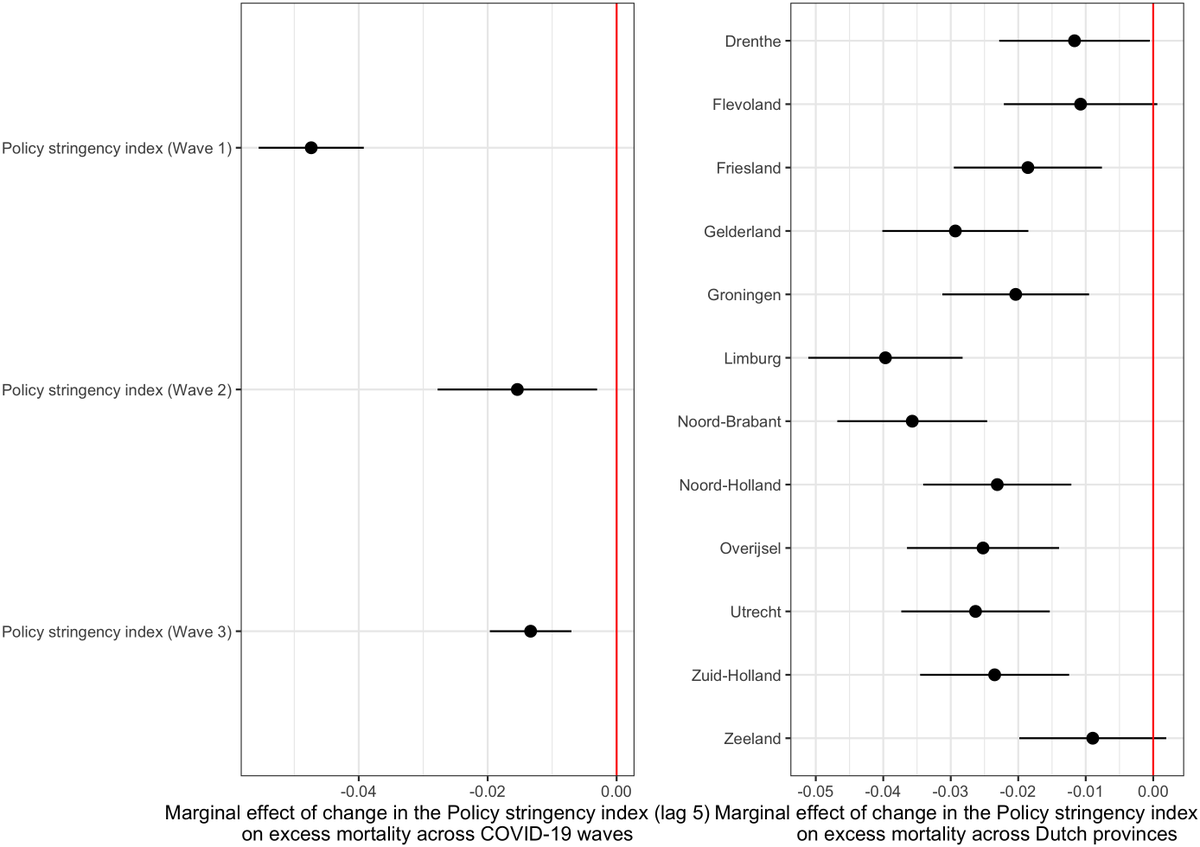
New study shows that the policy measures introduced by the Dutch govenrment during the #Covid19 pandemic reduced excess mortality (= saved lives). The effects were greatest during the first wave of the pandemic (2000) and declined in size, but remained significant, afterwards.
Dimiter Toshkov tweet media
English
1
0
2
178
Dimiter Toshkov retweetledi
Johanna Rickne
Johanna Rickne@johannarickne·
🚨 REPLICATION REPORT UPDATE: One year ago, a tweet by @JohnHolbein1 alerted me, @OlleFolke, and Joop Adema (@Jopieboy) to a paper with a shocking result about Sweden’s law criminalizing the purchase of sex.🧵
English
6
94
373
124.9K
Branislav Slantchev
Branislav Slantchev@slantchev·
New meta analysis of the effect of lockdowns on COVID-19 mortality shows that they were quite ineffective and avoided an estimated 23,000 deaths in Europe and 16,000 in the U.S. (For comparison, the flu kills 72,000 in Europe and 38,000 in the US in a year). Social distancing did save hundreds of thousands of lives but 91% of these were due to voluntary adjustments in behaviors that people would have made anyway rather than the mandated lockdowns. Given the well-documented major downsides from the lockdowns on student mental health and learning outcomes, massive increase in public debt, and a huge decline in public trust in government, we would do well to draw appropriate conclusions for handling the next pandemic. Here in coastal SoCal, I remember well the government asking us to practice social distancing and stay home as much as possible in order to “bend the curve”. It made sense and we did it. But I am lucky to live in an area where we would go and hang out with neighbors in the street, and spend a lot of times in the garden or wandering about. Nobody came by to ensure we stayed inside. The first crack in the voluntary mutual trust approach for me was when the authorities declare the beaches off limits. It made no sense. It seemed unreasonable and the explanations provided were weird and unsatisfactory. People staged protests immediately and went to the beaches anyway—you can’t pry Southern Californians from the beaches—and the authorities relented. But the trust was shaken. When the schools began reopening even partially, we immediately sent both our kids back to school. It was so clear that they needed the social interaction with their peers and in-person attention from their teachers. My friends in Washington, D.C. couldn’t send their children to school for many months after we could send ours. (They never got COVID at school.) The unevenly applied measures showed that they were being imposed arbitrarily. In short, a total disaster in public relations for the government. And then came the scandalous revelations that while some politicians were demanding lockdowns and masking, they themselves were breaking the rules they were impressing on others. One doesn’t have to look far to understand that a government that does not trust the citizens cannot possibly expect the citizens to trust it.
Branislav Slantchev tweet media
English
4
2
24
1.3K
Dimiter Toshkov
Dimiter Toshkov@DToshkov·
We hope this paper will open a research agenda to study how motivated reasoning affects causal judgments across diff. contexts (e.g. party conflict over policy & coalition bargaining). We should also uncover the way bias works (e.g. the role of intentions & foresight). /END
English
0
0
3
80
Dimiter Toshkov
Dimiter Toshkov@DToshkov·
If our guys bomb a hospital, they are *not* the ones causing the deaths of the civilians: it is the responsibility of the defending soldiers who hid there. But not when our enemies bomb a hospital where *our* soldiers hid: then the attackers caused the deaths! Depressing.
English
1
0
2
87
Dimiter Toshkov
Dimiter Toshkov@DToshkov·
If an army bombs a hospital, killing the civilians inside, it clearly *caused* their deaths & bears responsibility. But what if enemy soldiers moved to the hospital first. Does the causal power of the attackers diminish? Do the enemy soldiers bear responsibility? [THREAD]
Dimiter Toshkov tweet media
English
1
2
2
190
Dimiter Toshkov retweetledi
Matt Grossmann
Matt Grossmann@MattGrossmann·
Attitudinal sorting, based on symbolic ideology, policy attitudes, & group sentiments has risen substantially & explains most of the rise of affective polarization. Demographic sorting is stable & explains little osf.io/preprints/osf/…
English
0
30
115
62.5K
Dimiter Toshkov
Dimiter Toshkov@DToshkov·
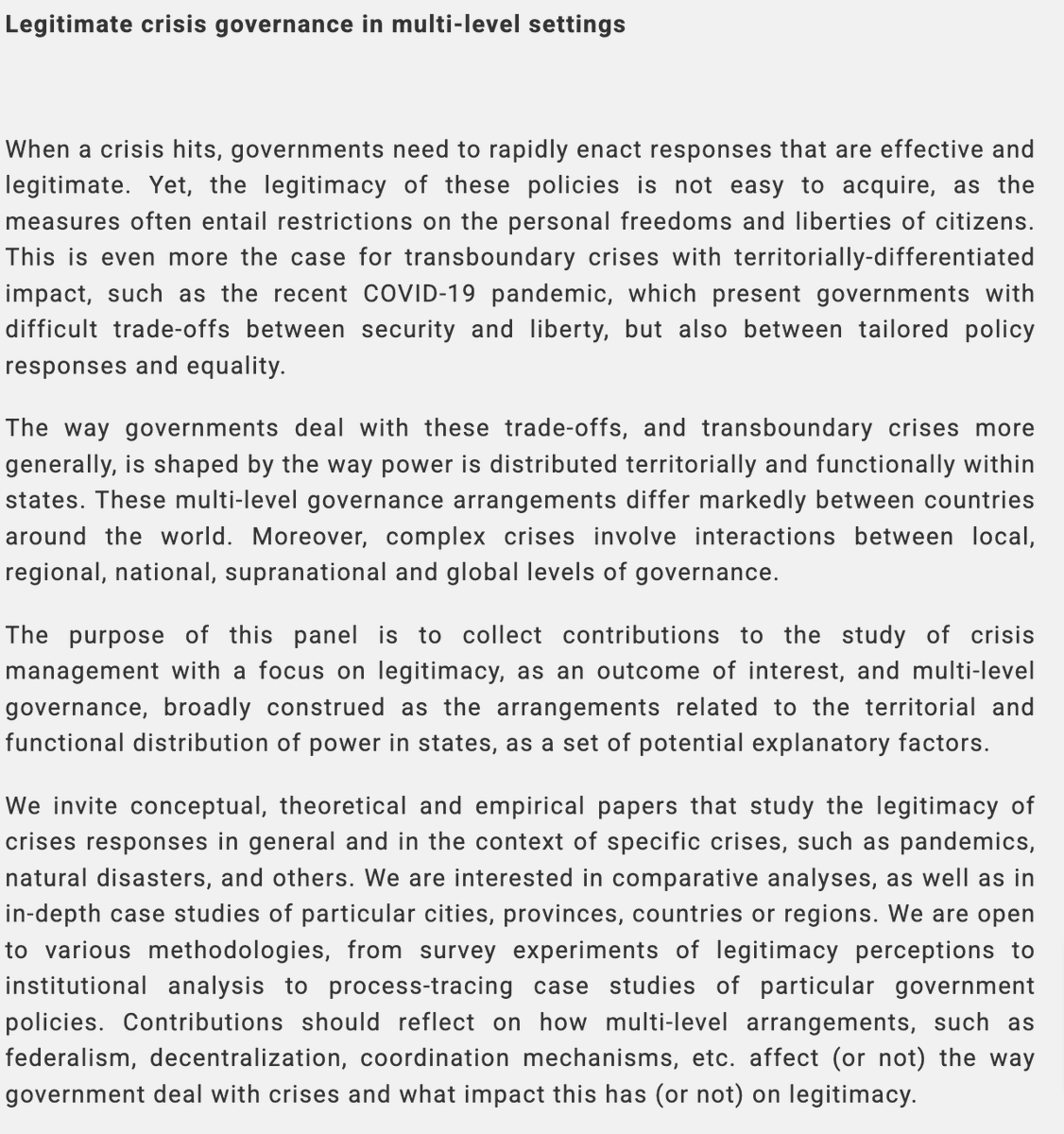
Are you doing research on legitimacy, crises, and multilevel governance? Then apply to our panel at the International Public Policy Conference in July 2025 (Chiang Mai, Thailand 🇹🇭)! Papers on different kinds of crises and regions of the world are welcome!
Dimiter Toshkov tweet media
English
1
0
3
277
Dimiter Toshkov
Dimiter Toshkov@DToshkov·
@wrongkindadoc Thanks, credit goes to our LUMC colleagues, I only played a minor role for this paper
English
0
0
1
10
Matt Young
Matt Young@wrongkindadoc·
@DToshkov but I also agree there's more variation in your analysis than my off-the-cuff hypothesis can explain :). For the record, this is very cool work!
English
1
0
0
16
Dimiter Toshkov
Dimiter Toshkov@DToshkov·
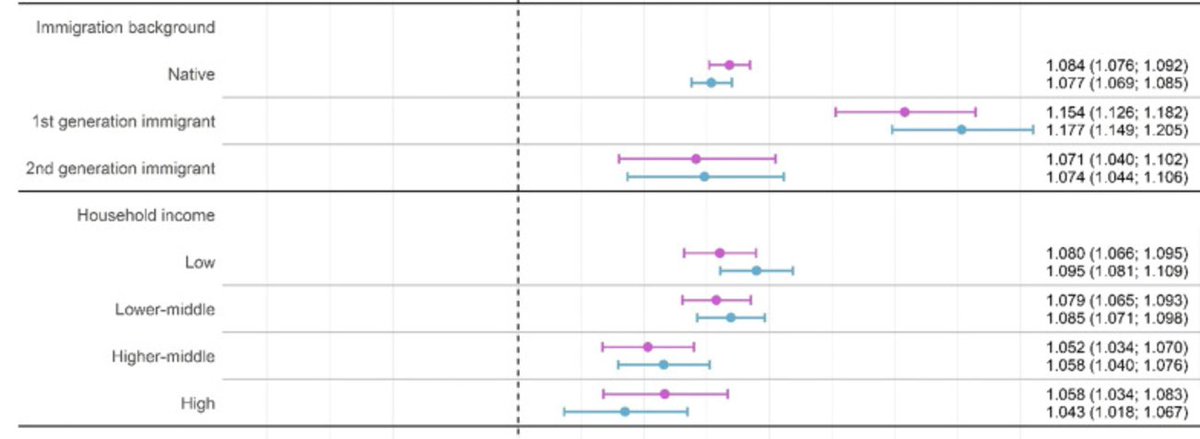
Remember #COVID-19? We have a new article estimating excess mortality in The Netherlands based on register data from @statistiekcbs. Overall, we find 8.9% excess deaths in 2020, 8.5% in 2021. However, for first generation immigrants, excess mortality was much higher: 15% -18%.
Dimiter Toshkov tweet media
English
1
1
6
697
Dimiter Toshkov
Dimiter Toshkov@DToshkov·
@wrongkindadoc My hypothesis for the CEE puzzle is that it has to do with CEE immigrants leaving the NL for their countries of origin (and some dying there) without de-registering from the population register in NL. This is just a hypothesis - we couldn't test it directly in this paper.
English
1
0
1
17
Matt Young
Matt Young@wrongkindadoc·
@DToshkov Realistically, everyone had been exposed multiple times by the end of your observation period. But the rate of reexposure is conditional on behavior, and whether you spend your working day e.g., in a classroom with sick kids or working from home or working outdoors matters.
English
2
0
0
29