

D P
20 posts

@archeohistories Interesting how people in the comments wanna apply this to today. When women risk as much then they deserve as much. Funny how my body my chose never seemed to extend to the draft or being culturally expected to go die in a foreign country over biased agenda.
English

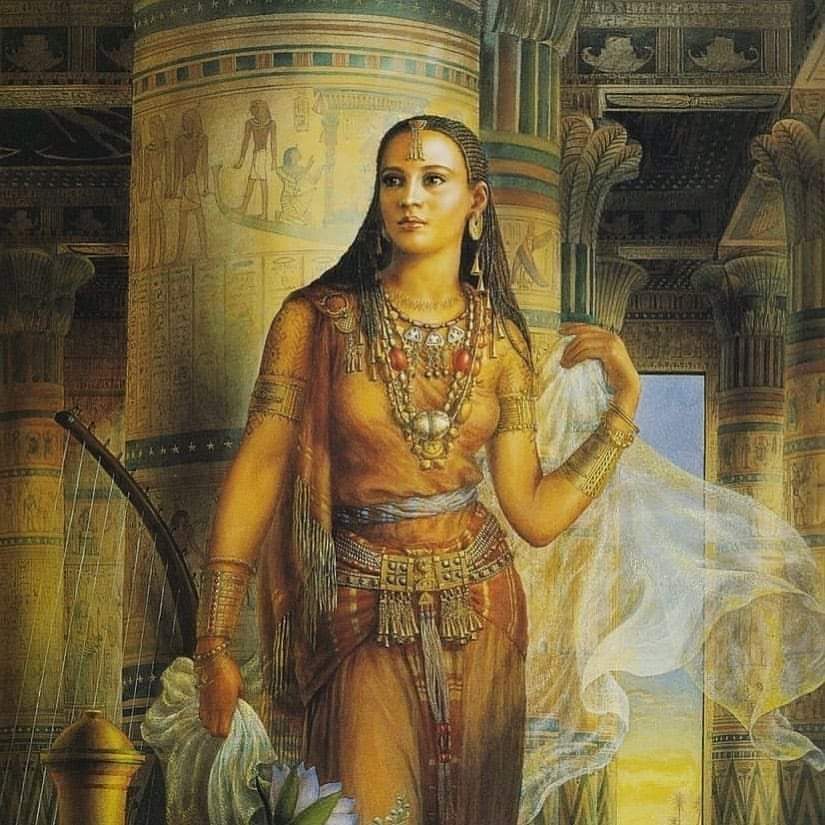
Women in ancient Egypt were regarded as the equals of men in every aspect save that of occupation. It is often assumed that women in the ancient world held little power or influence. However, women in ancient Egypt could become highly influential physicians, political advisors, scribes or even rulers. But like women in many cultures throughout history and today, they had to fight to acquire and hold onto their rights. The man was the head of the household and nation, but women ran the home and contributed to the stability of that nation as artisans, brewers, doctors, musicians, scribes, and many other jobs, sometimes even those involving authority over men.
One of central values of ancient Egyptian civilization, arguably the central value, was ma'at – the concept of harmony and balance in all aspects of one's life. This ideal was the most important duty observed by the pharaoh who, as the mediator between the gods and the people, was supposed to be a role model for how one lived a balanced life. Egyptian art, architecture, religious practices, and even governmental agencies all exhibit a perfect symmetry of balance and this can also be seen in gender roles throughout the history of ancient Egyptian civilization.
Women's social standing, however, depended on the support and approval of men and, in some cases, was denied or challenged. It also seems clear that many women were not aware of their rights and so never exercised them. Even so, the respect accorded to women in ancient Egypt is evident in almost every aspect of the civilization from religious beliefs to social customs. The gods were both male and female, and each had their own equally important areas of expertise. Women could marry who they wanted and divorce those who no longer suited them, could hold what jobs they liked – within limits – and travel as they pleased. The earliest creation myths of the culture all emphasize, to greater or lesser degrees, the value of the feminine principle.
Women in ancient Egypt worked in many jobs traditionally dedicated to them, but they were powerful enough to be independent, have their own workshops producing textiles, jewelry and other goods, and even take an important role in political life, become physicians or scribes. Although, they were underestimated by many historians for centuries, their strong position in the powerful civilization of ancient Egypt could be an inspiration for modern women in many parts of the world.
After thousands of years of equal rights, Ptolemy IV tried to stop the strong tradition of cults of women. He changed the law and canceled many rights that had made women equal to men. It was the beginning of the dark age characteristic for the upcoming dominating beliefs, which had their roots in Rome and Greece. However, Egyptian women didn't want to accept a patriarchal society. Until the power of the Egyptian civilization came to an end, they fought for their rights. Commonly, researchers accept that the end of Egyptian women’s independence arrived with the death of the great scientist Hypatia in 415 AD. Before that event took place, Ancient Egyptian women had thrived in society for more than three millennia.
#archaeohistories
English



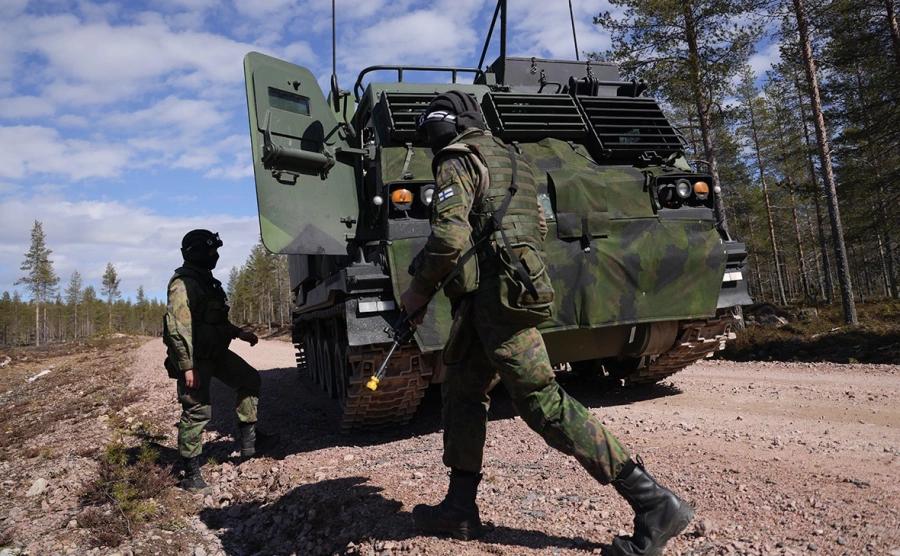
U.S. troops dislike losing so much that during drills others were asked to “go easy.”
During NATO’s Joint Viking exercises in northern Norway in March 2025, Finnish reservists repeatedly outperformed U.S. units.
According to The Times, organizers later asked the Finnish side to ease the pressure, citing the humiliating nature of the losses and their impact on U.S. troop morale.
On a real battlefield, will anyone hold back — or do the dead not take offense?
English
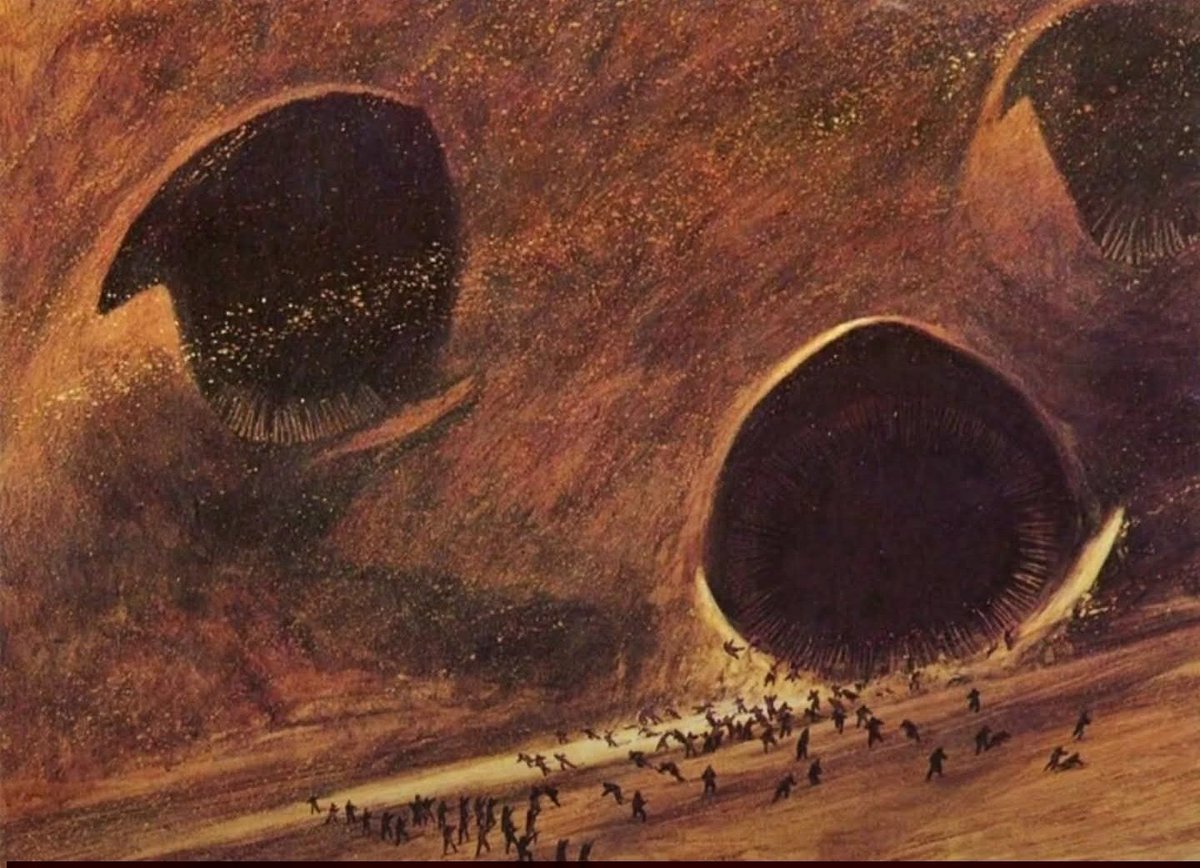
According to the history referenced in Dune, humanity once relied heavily on advanced computers and artificial intelligence.
Over time, power concentrated in the hands of those who controlled the machines. This led to oppression and a loss of human autonomy. The revolt that followed destroyed the machines and produced a lasting religious and cultural prohibition.
The commandment from the Orange Catholic Bible sums it up: “Thou shalt not make a machine in the likeness of a human mind.”
As a result, any device that imitates or replaces human cognition is forbidden. Instead of computers, humans trained themselves to fill those roles. Mentats perform complex calculations and data analysis. The Bene Gesserit refine mental and physical control to extraordinary levels. The Spacing Guild Navigators use prescience, enhanced by spice, to plot safe faster than light travel routes that a computer would otherwise calculate.
Herbert was concerned about dependence on systems that centralize power and reduce human responsibility. In the world of Dune, banning thinking machines forces humanity to develop its own latent abilities rather than surrender decision making to technology.
Art by by John Schoenherr
#drthehistories
English
@akafaceUS I'm sure there's some black-owned hospitals in Africa. Why don't you go there?
English


I wonder what makes grown women behave like this? There is something so condescending about these people.
English

Liberal woman refuses to sleep with MAGA men.
What is your response to her?
English

@MbarkCherguia If everyone's treating you like a bitch, it's probably because you're a bitch!
English

She claims she's NEVER met a good man in her entire life... 😭
Why do you think that is?
x.com/JebraFaushay/s…
English
@RealAlexJones Once we're out of NATO, Canada and Greenland will BEG to join the United States.
Who will they have to defend them? Europe? LOL
English

EXCLUSIVE ANALYSIS: President Trump's Latest Greenland Move Is Pure Genius, And Is Ultimately Designed To Get The US Out Of NATO & Decouple From The Tyrannical & Unelected EU!
English
@Gap030473 @archeohistories Please give the nickel to your mom and tell her to hold it between her knees, forever!! Heaven forbid she has any more children like you.
English
For centuries, when harvests failed and hunger set in, societies looked for someone to blame—and too often, they chose women. Not in metaphor, but in flesh. In a world without climate science, where droughts or crop disease couldn’t be explained, fear demanded a scapegoat. And women—especially those who bled, aged, gave birth, or simply lived outside the bounds of obedience—were cast as the cause.
In early modern Europe, during times of environmental collapse like the Little Ice Age, this fear sharpened. Crops withered, winters dragged on, and instead of facing nature’s chaos, communities turned inward. Widows, midwives, healers, or women who simply spoke too much were accused of tampering with the natural world. A failed harvest wasn’t random—it was a sign of moral failure. And hunger demanded someone to punish.
Witch trials didn’t erupt in times of abundance—they followed famine, plague, and crisis. Women were blamed for ruining crops, killing livestock, even causing bad weather. Their “crimes” were often just being too visible, too sexual, too old, too independent. In some courts, a dream about a woman’s spirit damaging crops was enough to convict her. Her actual presence wasn’t even required.
Menstruation became a powerful symbol of this fear. Across cultures, menstrual blood was seen as poison—thought to ruin seeds, spoil wine, blight gardens. Farming manuals warned women not to touch plants during their cycle. Religious texts framed them as impure. Over time, this wasn’t just superstition—it became a system of control.
The cruelest irony? Women were blamed for what they couldn’t control, then pushed out of the very work that sustained their communities. If they helped in the fields, they were punished. If they didn’t, they were called lazy. The logic trapped them either way.
At its core, this wasn’t about crops—it was about power. Regulating women’s bodies became a way to manage fear. And even though the witch trials ended, the logic behind them didn’t vanish. We still see it today, when women are blamed for decline, disorder, or change.
#archaeohistories

English
@bjordan1951 @archeohistories No thanks. I prefer women that look like women
English
@joel417270991 @archeohistories Where did you get that idea from? Did you pull it out of your ass?
English
@DaWave2022 @archeohistories And you want to give non-citezens that privilege.
English


@DaWave2022 @archeohistories Give who the right to vote ? Please clarify.
English
