
Sabitlenmiş Tweet
Othello
929.7K posts


Othello
@Dahmolah
Interests: Game | Music | Documentary
Lagos, Nigeria Katılım Kasım 2009
992 Takip Edilen3K Takipçiler
Othello retweetledi

Everyone who's a serious business at scale runs graduate trainee/intern programs. Tech people always think they're above some things in their landscape because they write and ship Javascript 😅
English
Othello retweetledi
Nigerians are trying, mehn
These conversations rub me the wrong way because, for what our money is worth and what the global landscape looks like, Nigerian talents are truly battling a lot.
English
Othello retweetledi

If this was the phrasing i'd have agreed. But to say the people are not employable? This can be phrased as challenges of keeping talent in Nigeria. You address the risks and make it a little more bearable. Actual incentives have to be there.
Babájídé@Babajiide
Most of the people who are arguing about this talent pipeline issue, when you open their profile, you see “England” lmao 😂 the people you are saying should invest and train talent pipeline, who was supposed to train them? Is it not you who went away for greener pastures? Abi, who did you think filled up that middle management layer you all left for a better life? The position that was suppose to provide the on the job training. Moniepoint might have issues but this is a bigger problem in our industries and not only moniepoint facing it.
English
Othello retweetledi

Othello retweetledi

Othello retweetledi

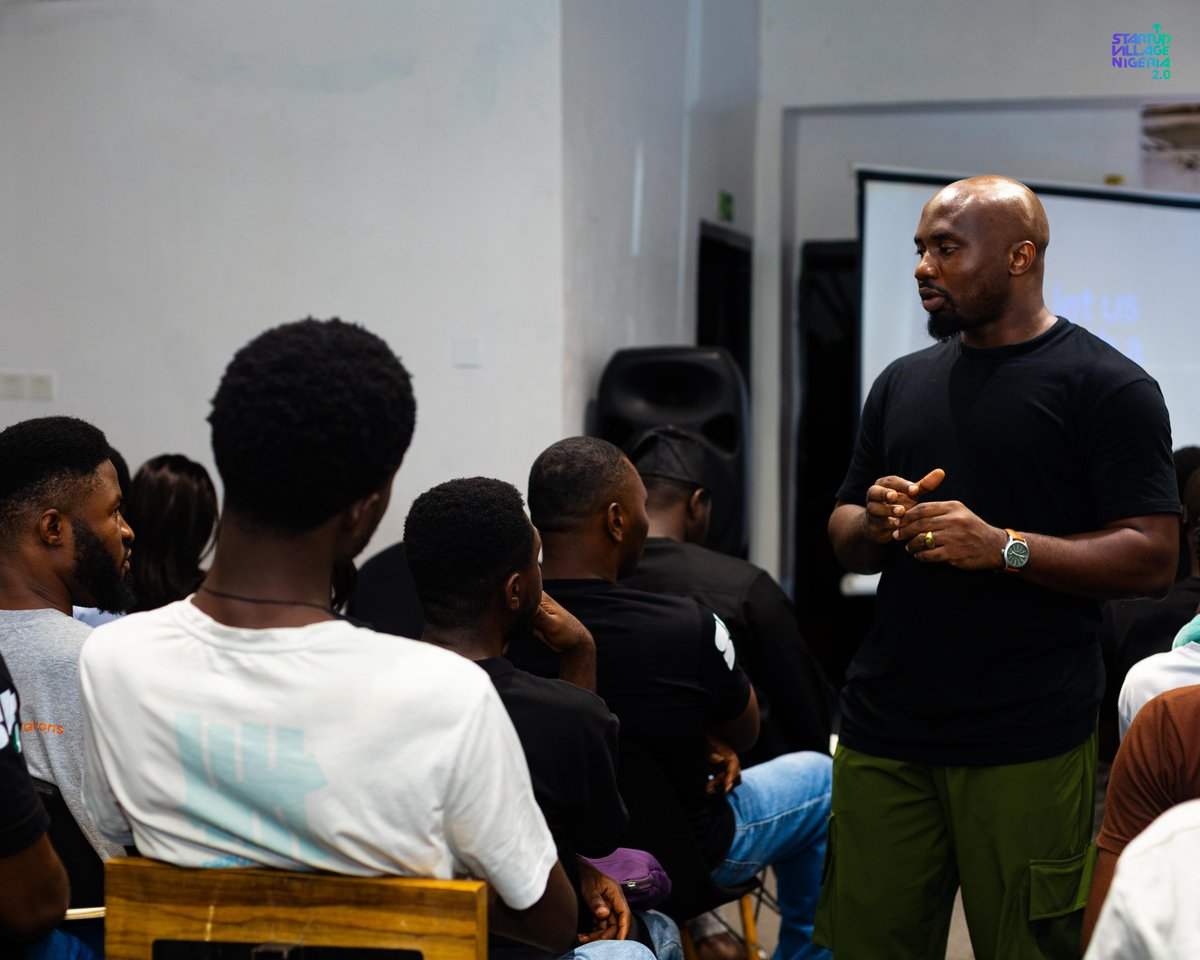
Today, we discussed positioning. Tomorrow, we will discuss the business of product and metrics to track.
Thank you @SuperteamNG for the opportunity to speak with your founders.


English
Othello retweetledi

Typical Nigerian employer 😂 I used to fight this battle but at this point I no really care.
L@lanreadelowo
Person wey dey pay senior dev 600k dey follow talk say no talent in Nigeria.
English
Othello retweetledi

Othello retweetledi

Othello retweetledi

Othello retweetledi

Othello retweetledi

Senior People Operations Analyst at Cowrywise cowrywise.breezy.hr/p/8e40882ea185…
English
Othello retweetledi
They'd rather pay Oyinbos the same amount and give Oyinbos remote work than pay competent Nigerians who are abroad foreign competitive rates; You only want to hire Nigerians IN NIGERIA and pay them Nigerian wages to "build for the world"
English
Othello retweetledi

In traditional banking, you can find several CEOs who got their start from older or now defunct banks.
Even in law, several rapidly growing firms cut their teeth with tier 1 firms.
But Africa's biggest industrialist has no similar story.
We can clap for Dangote, but ultimately, his monopoly is bad for the wider Nigerian economy.
Tuchel@Officially_Kriz
In the early 1990s, three ambitious bankers, Segun Agbaje, Aigboje Aig-Imoukhuede, and Herbert Wigwe, were rising stars at Guaranty Trust Bank. GTBank was known for its professionalism and strong corporate banking culture, and that environment shaped their thinking, discipline, and appetite for excellence. But those men wanted more than just successful careers, two of them(Aig and Herbert) wanted to build something of their own. While Segun decided to stay back at GT Bank. In 2002, an opportunity came. Access Bank Plc was a relatively small, struggling bank at the time, far from the top tier in Nigeria’s banking industry. Rather than start a bank from scratch, they made a bold move: they acquired a controlling stake in Access Bank and took over its leadership. Aig-Imoukhuede became CEO, while Wigwe served as his deputy. What followed was a story of vision and execution. They restructured the bank, strengthened risk management, improved corporate governance, and aggressively pursued growth. When the Nigerian banking consolidation happened in 2004–2005, they used it as a springboard to expand. Over the next decade, Access Bank transformed from a struggling institution into one of Nigeria’s leading banks. Later, under Herbert Wigwe’s leadership, the bank expanded across Africa and beyond, becoming a major player on the continent. Segun Agbaje went on to become the Group CEO of GTCO. Herbert Wigwe was the CEO of Access Holdings until his early demise, while Aig is the current chairman of the Board of Access Holdings
English
Othello retweetledi



Othello retweetledi
Why is everybody complaining about the quality of engineers? I thought we are all using AI to generate 10k lines of code a day. Why are you complaining?
GIF
English
Othello retweetledi

Lesson: Platform should give speakers more time. Clearly different from what was said, perhaps if there was enough time to probably pass this across 👀
Tosin Eniolorunda@Eniolorunda
I have followed with rapt attention the discourse that followed my conversation at the Platform Nigeria on May Day. The stark reality is this - opportunities are few and far between, unemployment/underemployment is high and sadly there are too few employers for a huge market such as ours, at least when compared to other markets such as China, India that have similar youth bulge. We Nigerians are some of the most hardworking and gritty people in the world. But we must tell ourselves the truth. Nigeria currently doesn’t have enough highly skilled technical talent resident in Nigeria to build companies that can scale globally. Interestingly, I have also read a lot of employers double down and agree with my current diagnosis around our country’s technical talent pipeline gap and confirmed it is true. Former Minister, Kemi Adeosun also referenced Africa’s richest man, Alhaji Aliko Dangote comments around finding the right quality and quantity of talents for his refinery project. Let me ask a hard question - can we say that Nigeria has enough highly skilled technical talent still resident in Nigeria? That's a huge conundrum that any organization that wants to maintain market leadership must solve for. How many engineering executives do we have remaining in Nigeria that lead a payments team that handles payments infrastructure processing tens millions of transactions daily without fail? How many senior data scientists do we have in Nigeria that can create data models to appraise millions of customers while managing prudent NPLs? How many senior growth executives in Nigeria have the experience of growing a digital apps towards acquiring 80k customers a day through digital and offline channels while maintaining prudent CACs? It is important to note that this is not about Nigerians generally, this is about senior Nigerian talents still resident in Nigeria. Nigeria is not producing enough high quality senior technical talent and the little we have are emigrating. I can explain these to be that Nigeria does not have too many feeder industries across the board. As such, there are fewer starter companies that young talent can come from to feed into senior roles in other companies. Every one then ends up fighting for the same pool of senior leaders that have experience and bandwidth to deliver and win in the market. The effect of the Japa wave has been very well chronicled and I must add that this has been a trans-generational challenge. Remember that time in the early 80s where a lot of our medical professionals left for places like Saudi and the UAE? As at March 2024, Nigeria had lost around 16,000 medical doctors to other countries, most especially the US and the UK. The quality of technical education is also falling as our standard of education is lagging behind global counterparts. Can we say we have enough senior technical talent in Nigeria to compete with global competition especially China? But Moniepoint, Dangote, Flutterwave, LemFi are competing with them. Training young talents can fill the gap for the future but is inadequate for today. Companies need senior talent and cannot wait the eight to ten years needed to get them to senior levels to compete. In training young talent, Moniepoint has seen a lot of bright spots through our various interventions that are aimed at deepening the talent pool. So we are indeed doing something about improving talent density for the ecosystem. Through our DreamDevs programme, which is in its second year, we're training talented young engineering graduates with the skills they need to enter the workforce as top talent. We have supported the government's 3MTT agenda as well as a partnership with Unilag’s NITHUB to push the HatchDev initiative. Our Women in Tech internship programme, which now in its sixth year, provides women with the access, training and opportunities they need to build careers in tech. I also personally have a scholarship program for STEM students across select Nigerian universities in every geo-political zone. Competing globally also means that you spend top dollars to retain top Nigerian talents that you have nurtured. We routinely retain Nigerians that emigrate and pay them according to their local market standards. A recent example is an exceptional first class graduate we nurtured through our women in Tech program and had to go to school just as a path to emigrate and we had to retain abroad and offer an alternative naturalization path for her. Moniepoint has over 3,500 full time employees with over 90% Nigerian talents, and we’re growing 20% YoY. We’d love a world where this is at 99% while building for the world. Self deception isn’t a virtue and we must tell ourselves the home truth - we need to raise the quantity and quality of our technical talents resident in Nigeria to compete. No organization can rise above the quality of its output and execution is everything in this game. Nigeria will be great. Let’s all do the work together. By the way, top tech talents still resident in Nigeria, we need you badly. We pay above market rates and you will make real impact. Please apply here: moniepoint.com/careers For top Nigerian talents out of the country, we hire out of the UK, Portugal, Spain, India and Pakistan. Also apply, we are building digital banking infrastructure that provides financial happiness for emerging markets.
English
Othello retweetledi

This is another issue.
Real talents can’t survive in highly politicized workplace. They get frustrated and leave quietly. You won’t realize what hit you until months or years later
English