
Daniel W. Linna Jr.

11.9K posts

Daniel W. Linna Jr. banner
Daniel W. Linna Jr.

Daniel W. Linna Jr.

@DanLinna

prof & Dir Law & Technology, @NorthwesternLaw & @NorthwesternEng; @CodeXStanford Affiliated Faculty; frmr #BigLaw partner; AI4Law; Law4AI; ppl+process+data+tech

Chicago, IL @NorthwesternU Katılım Şubat 2013
7.7K Takip Edilen10.1K Takipçiler
Daniel W. Linna Jr.
Daniel W. Linna Jr.@DanLinna·
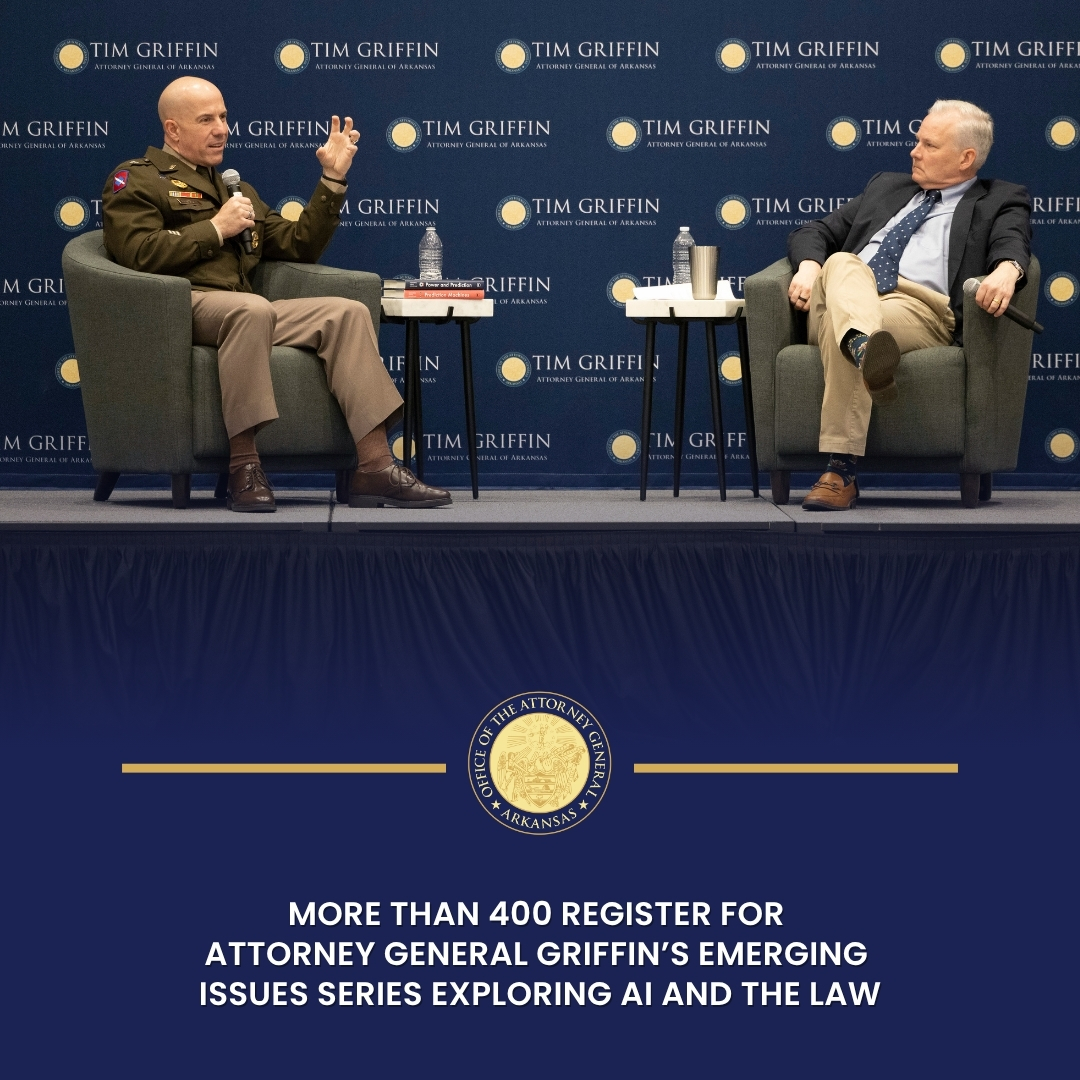
How are judges and lawyers using AI in courts and law practice? How capable is AI for legal reasoning and adjudication? What are the possible benefits and risks of using AI for legal tasks? How might AI transform courts, dispute resolution, access to the law and legal services, and the rule of law? An outstanding lineup of judges, practitioners, and academics will speak about these topics and more on Thursday, April 2, 2026 (8:30 am to 5:00 pm) in Thorne Auditorium at Northwestern Pritzker School of Law. Register to join us in person or on Zoom.
Daniel W. Linna Jr. tweet media
English
3
32
101
6.2K
Daniel W. Linna Jr. retweetledi
Nina Kilbride
Nina Kilbride@ninakilbride·
Claude's take on OpenAI being sued for unlicensed practice of law: "The real threat to the insurance litigation model isn't that AI gives bad legal advice. It's that it gives adequate legal advice at zero marginal cost to people who were previously priced out of fighting back. That's what $10.3 million in damages is really trying to price in."
Nina Kilbride tweet media
English
3
2
24
3K
Daniel W. Linna Jr. retweetledi
Jessica Hullman
Jessica Hullman@JessicaHullman·
This winter I co-taught a grad seminar on when & how LLMs can stand in for human subjects in social science research, to a mix of CS & social science students. It was fun (albeit w/occasional friction) to talk methods w/such a diverse group. Reading list: statmodeling.stat.columbia.edu/2026/03/10/new…
English
0
18
107
7.3K
Daniel W. Linna Jr. retweetledi
Harry Surden
Harry Surden@HarrySurden·
Join us on next Friday March 6 for a timely conference on Artificial Intelligence and Law at CU Law School's @SiliconFlatiron center. Leading AI experts will discuss ways to nudge AI use, and data centers, down socially beneficial paths. siliconflatirons.org/events/annual-…
Harry Surden tweet media
English
0
2
2
171
Daniel W. Linna Jr. retweetledi
Harry Surden
Harry Surden@HarrySurden·
Join me for an Artificial Intelligence Conference at @SiliconFlatiron @ColoLaw on Friday March 6! "Using AI Well — and Building a Data Infrastructure to Support It" This will be a fascinating and timely discussion with leading AI experts. Register here: siliconflatirons.org/events/annual-…
Harry Surden tweet media
English
0
4
4
311
Daniel W. Linna Jr. retweetledi
Seyfarth
Seyfarth@seyfarthshawLLP·
On this week Pioneers and Pathfinders episode Stephen Poor welcomes returning guest, Dan Linna, director of law and technology initiatives and senior lecturer at Northwestern Pritzker School of Law and the McCormick School of Engineering. Listen here: ow.ly/VBGT50Y8Yp9
English
0
1
2
164
Daniel W. Linna Jr.
Daniel W. Linna Jr.@DanLinna·
Great @dhadfieldmenell thread about software projects, which is relevant for AI for Law. In law, in addition to the difficulties of specifying everything up front, we lack metrics for quality and evals for outputs. Law has not had a quality movement. Law is not evidence based. AI is forcing change. People-Process-Data-Tech approaches are key. Designing AI for Law interfaces to require user engagement is crucial. These domain-specific pieces are missing in general purpose AI tools. For the foreseeable future, domain-specific approaches are needed to increase accuracy to reasonable levels.
Dylan HadfieldMenell@dhadfieldmenell

I understand that this is where the trend points, but I don’t believe it. Not because models won’t be capable of it, but because you don’t know the feature set and tradeoffs of what you want in a development project that complex.

English
3
0
1
406
Daniel W. Linna Jr. retweetledi
RebeccaWexler
RebeccaWexler@RebeccaWexler·
Excited to share my latest paper, co-authored with 3 computer scientists, about how AI e-discovery software can either hide or help to expose Brady evidence, depending on configuration. papers.ssrn.com/sol3/papers.cf…
English
1
6
11
1.9K
Daniel W. Linna Jr. retweetledi
Ben Golub
Ben Golub@ben_golub·
If the wildest AI bulls are right and all knowledge work is about to disappear fast, that implies a lot for today: nobody should be using AI to learn job skills, or automate their daily workflows, or anything else, since the work world is about to become unrecognizable 1/
English
18
14
184
52.7K
Daniel W. Linna Jr.
Daniel W. Linna Jr.@DanLinna·
Lawyers and law professors should be preparing for the impact of AI on the profession and rule of law. At the same time, we should be skeptical about the claims of the leaders of AI labs. This matters because where we predict AI will be in 2, 5, 10 years and more should influence our learning objectives for students today. Our predictions about AI also heavily influence policy, law, and scholarship. We should prepare for the (small?) possibility of super intelligent AI in the near term, but many (most?) sober computer scientists argue that it is much further off. For example, I find Andrew Ng's predictions to be based in evidence rather than appeals to exponentialism. Gary Marcus, while too skeptical, identifies important evidence about the limitations of LLMs for discussion. Yann LeCun has also concluded that LLMs are a dead end to artificial general intelligence. Nonetheless, existing AI tools, while limited, are quite capable for augmenting many legal tasks, and automating some, especially when the tools are engineered into a system designed for those specific legal tasks. Andrew Ng: nbcnews.com/tech/innovatio… Gary Marcus: garymarcus.substack.com/p/the-last-few… Yann LeCun: fastcompany.com/91462273/yann-…
English
0
1
1
236
Daniel W. Linna Jr.
Daniel W. Linna Jr.@DanLinna·
Deal on @Instacart for @FreshThymeFM $10 off on $50. Put $50 in cart. No discount. Go back and click on link: "Here is a coupon for $10 off a restaurant order!" Misleading. Deceptive. Unfair.
Daniel W. Linna Jr. tweet media
English
0
0
0
250
Daniel W. Linna Jr. retweetledi
François Chollet
François Chollet@fchollet·
One of the most common mistakes people make when evaluating the pace of AI research is to look at progress on one type of task and extrapolate it to all tasks that humans can do. AI progress is extremely vertical-specific. In the past year, verifiable domains and in particular code have shown fast progress, which does not extend to other domains. This is because the main driver of AI capabilities remains, to this day, the memorization and operationalization of past data, which can be generated in unlimited quantity in the case of verifiable domains.
English
53
85
891
74.1K
Daniel W. Linna Jr. retweetledi
Sergio Servantez
Sergio Servantez@SergioServantez·
Today we are releasing OpenExempt, a new framework and benchmark for diagnostic evaluation of legal reasoning in language models. OpenExempt rethinks evaluation by shifting control to the benchmark user. Moving beyond static datasets, the OpenExempt Framework generates complex legal reasoning tasks on demand, where each scenario is dynamically shaped by a user-defined configuration to target their evaluation goals. OpenExempt computes gold solutions for each task using expert-crafted symbolic representations of relevant U.S. federal and state statutes, an approach inspired by legal DSLs such as Catala and Accord. Using this framework, we construct the OpenExempt Benchmark, a diagnostic benchmark with 9,765 samples across nine evaluation suites, designed to carefully probe model capabilities through controlled task variation. OpenExempt was developed by an interdisciplinary team with my coauthors: Sarah Lawsky (@sarahlawsky), Rajiv Jain, Daniel W. Linna Jr. (@DanLinna), and Kristian Hammond (@KJ_Hammond). We release OpenExempt to the public under a permissive license (CC BY 4.0) to support further research and encourage collaboration between the legal and NLP communities. • Evaluation: If you are evaluating language model reasoning internally, easily incorporate the OpenExempt Benchmark to complement these efforts. • Customization: If the standard benchmark doesn’t fit your evaluation goals, the OpenExempt Framework lets you construct a custom benchmark that does. • Collaboration: We are interested in research collaborations focused on substantial extensions to this work. If that’s you, reach out and let’s discuss. Read the paper: arxiv.org/abs/2601.13183 Run the code: github.com/servantez/Open… Access the benchmark: huggingface.co/datasets/Sergi… This work was supported by the Center for Advancing Safety of Machine Intelligence (CASMI) at Northwestern University.
English
0
2
6
562
Daniel W. Linna Jr. retweetledi
Biff poggi
Biff poggi@BiffPoggi·
To Michigan ,all of our former Michigan Men players , Warde Manuel our Regents, President and our fans. Thank you for the honor of serving. I will always call Michigan my football home. God Bless you with true meaning in your lives of service to others, a deep faith in God and the love of your families. Please positively support Kyle and the players. Be true GoBlue.
English
462
584
11.7K
317.8K
Daniel W. Linna Jr.
Daniel W. Linna Jr.@DanLinna·
The Guild Strikes Back? Lawyer protectionism is a terrible look. It will be less and less effective in the future. UPL is crumbling. New regulatory structures that are faithful to competition law and theory are needed. There will be plenty of legal tasks to be done in the future, and plenty of opportunities for lawyers and other professionals to contribute to improving access to law, legal services, and justice and the rule of law. The economics and who benefits will change. Not all lawyers will benefit and it will not be only lawyers. Embracing AI and other emerging technologies is the only way to remain relevant and serve society.
Luiza Jarovsky, PhD@LuizaJarovsky

As a lawyer, let me tell you the main reason why AI will likely NOT kill all lawyers, and why law is actually one of the most 'AI-safe' professions today: The legal profession is very good at protecting itself. It's built around the idea of competence, authority, credibility, and gatekeeping. That's how it has been for centuries. If AI systems become very good at generating structurally complex and legally accurate outputs, legal procedure rules will be amended to make sure that: - a human lawyer is always involved in a legal case; - every legally relevant document is reviewed and signed by a human lawyer. Also, bar associations worldwide will likely create new rules around legal representation, including procedural and behavioral rules, in a way that a human lawyer will always be necessary. I don't see it changing in the next 15-20 years. After that, lawyers will probably find a new way to gatekeep. I view law as one of the 'AI safest' professions to pursue today (much safer than computer programming, by the way).

English
1
0
1
429