Daniel Pangburn

2.1K posts

Daniel Pangburn

Daniel Pangburn

@DanPangburn

MSME, P.E. (ret), climate research since 2006

Katılım Eylül 2014
58 Takip Edilen354 Takipçiler
Daniel Pangburn
Daniel Pangburn@DanPangburn·
Burning fossil fuels (CO2 increase) has no significant net effect on climate. Slight warming in the troposphere from increased CO2 is countered by enhanced cooling from added CO2 in the troposphere and above. Radiant energy absorbed by CO2 in the troposphere is thermalized and radiated to space by water vapor.
Daniel Pangburn tweet media
English
2
0
0
81
Suvrat Kher
Suvrat Kher@rapiduplift·
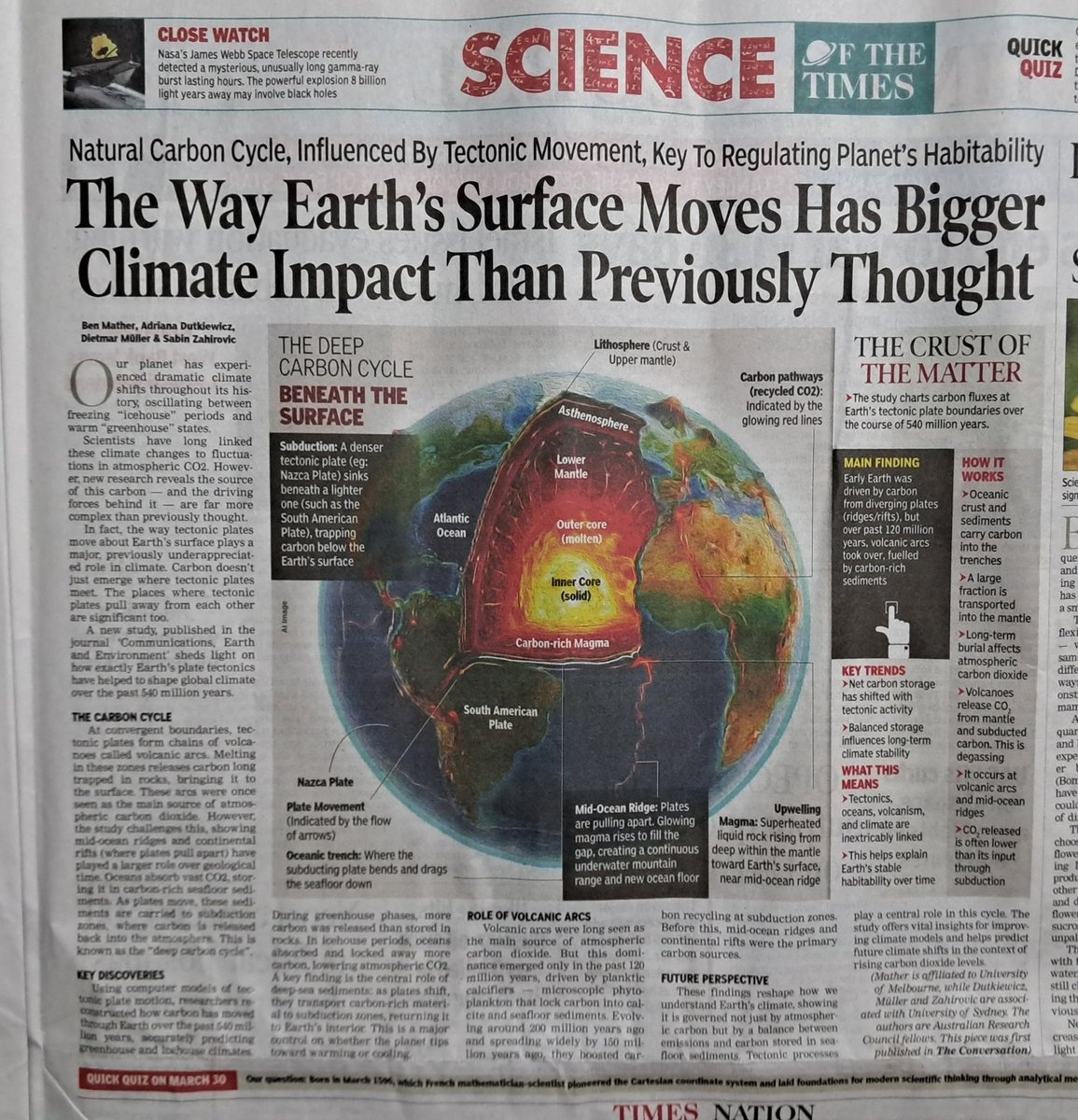
Interesting article on the deep geological cycle of carbon. Important to understand that climate change via this natural cycle takes place over hundreds of thousands of years. Humans r emitting CO2 at many times natural rates, resulting in warming over few decades.
Suvrat Kher tweet media
English
13
50
167
6.9K
Genius Tech
Genius Tech@Geniustechw·
ICE in Phoenix, Arizona just raided a home in Estrella Village and dragged the dad away to deport him. Did you vote for this?
English
2.5K
773
6.6K
60K
Daniel Pangburn
Daniel Pangburn@DanPangburn·
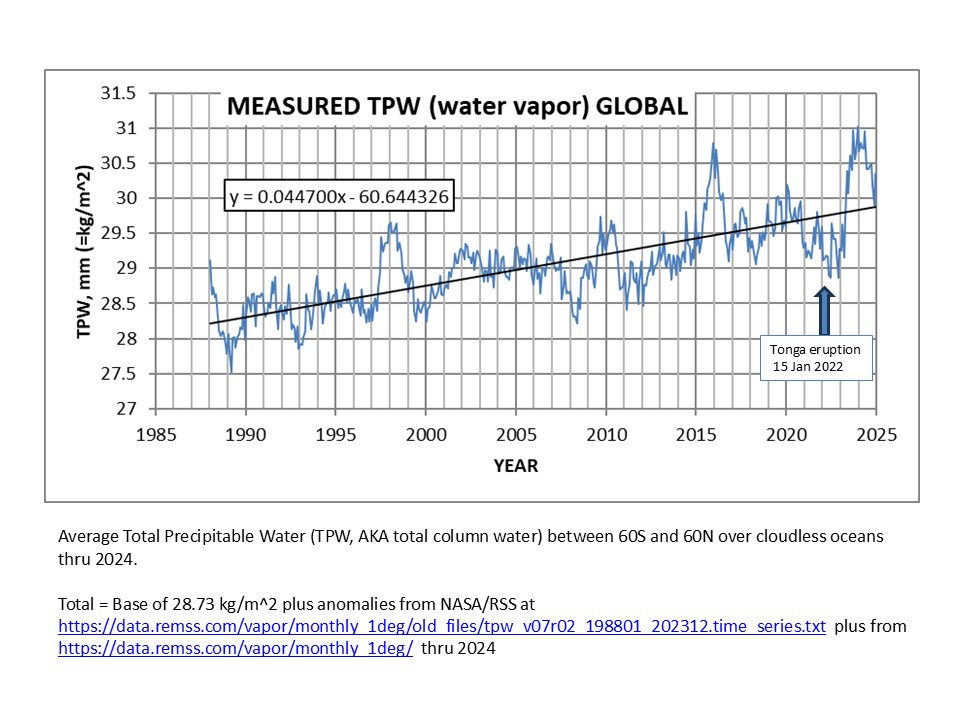
Temperature increase did not start until a year after Tonga. Also, there was no indication of the Tonga event in water vapor measurements.
Daniel Pangburn tweet mediaDaniel Pangburn tweet media
English
0
0
0
24
Daniel Pangburn
Daniel Pangburn@DanPangburn·
“One of the problems with successfully dealing with threats is people start believing there was no threat.” Thomas Sowell
English
0
0
0
13
Daniel Pangburn
Daniel Pangburn@DanPangburn·
@EliotJacobson Because about 10 people die from the cold for each death from the heat, a warming planet is a good thing.
English
1
0
0
96
Prof. Eliot Jacobson
Prof. Eliot Jacobson@EliotJacobson·
Your 'moment of doom' for Apr. 30, 2026 ~ Hot off the press. "... we are willing to make the prediction that 2026 will be the warmest year in the period of instrumental temperature measurements. Of course, 2027 will be still hotter." jimehansen.substack.com/p/2026-on-trac…
Prof. Eliot Jacobson tweet media
English
14
112
261
7.2K
GO GREEN
GO GREEN@ECOWARRIORSS·
One million species are close to extinction, thanks to Homo sapiens There’s a reason that oxygen is in the air. It doesn’t come out of the ground. Organisms have to put it there Now humans destroying these organisms forbes.com/sites/jamescon…
GO GREEN tweet media
English
8
161
272
6K
Roger Hallam
Roger Hallam@RogerHallamCS21·
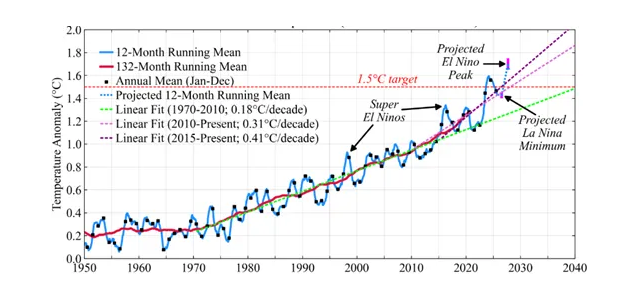
"Even a moderately strong El Niño during the next 12 to 18 months could drive the average global temperature to about 1.7 degrees Celsius above the preindustrial level, climate scientist @DrJamesEHansen told Inside Climate News. Hansen doubts the world will meaningfully cool back down to below the 1.5 degree Celsius mark after the El Niño fades."
Roger Hallam tweet media
Yale Environment 360@YaleE360

The coming El Niño could permanently alter the climate, scientists warn. via @insideclimate e360.yale.edu/digest/super-e…

English

52
211
524
25.4K
Daniel Pangburn
Daniel Pangburn@DanPangburn·
@RARohde @Pinheir58339900 The effect of inaccuracy in individual measurements is substantially cancelled by using trends. The longer the trend the smaller the uncertainty in the trend.
English
0
0
0
8
Dr. Robert Rohde
Dr. Robert Rohde@RARohde·
@Pinheir58339900 According to the authors, the uncertainty on satellite-derived TLT is appreciably greater than the uncertainty on land-based measurements.
English
2
0
1
150
Dr. Robert Rohde
Dr. Robert Rohde@RARohde·
One frequently sees headlines that X is warming faster than the global average. That's true of nearly everywhere that humans live, but only because humans nearly all live on land. The process of global warming will generally warm land faster than the oceans.
Dr. Robert Rohde tweet media
English
16
40
150
6.8K
Daniel Pangburn
Daniel Pangburn@DanPangburn·
@RARohde The equatorial Pacific has had a flat temperature trend since before 1981.
Daniel Pangburn tweet media
English
0
0
0
25
GO GREEN
GO GREEN@ECOWARRIORSS·
For over 100,000 years, the Earth had only 10 million people on it at any one time Then 2 billion in 1927, 3 billion in 1960, 4 billion in 1974, 5 billion in 1987, 6 billion in 1999 and 7 billion in 2011. 8 billion by 2022, 9 billion by 2030 and 10 billion before 2040.
GO GREEN tweet media
English
28
70
139
3.4K
Daniel Pangburn
Daniel Pangburn@DanPangburn·
The irony is that all this fuss about burning fossil fuels (CO2 increase) is a huge mistake. The only greenhouse gas that has a significant effect on climate is water vapor. Global WV is measured by NASA/RSS and the trend has been increasing about 1.5 % per decade which is substantially faster than possible from just temperature increase of the planet (net effect of all forcings and feedbacks). WV has increased more than 3 molecules (more than 5 at ground level) for each molecule of CO2 increase. The WV increase is substantially more than possible from just planet warming (more than twice as fast). The WV increase can account for all of climate change attributable to humanity with no significant net contribution from CO2. watervaporandwarming.blogspot.com
Daniel Pangburn tweet media
English
1
0
2
41
Daniel Pangburn
Daniel Pangburn@DanPangburn·
@PCarterClimate The mistake is blaming the temperature increase on the burning of fossil fuels. The only human contribution to temperature increase is water vapor increase due mainly to increased population (especially in desert areas) and irrigation increase.
Daniel Pangburn tweet media
English
0
0
0
12
Hayek-Club Weimar
Hayek-Club Weimar@WeimarClub·
Es ist ein weit verbreiteter Irrtum, zu glauben, dass Sozialismus irgendwann einmal dazu beigetragen hat, das Leben von Menschen zu verbessern. Wann immer Sozialismus umgesetzt wurde, war das Ergebnis stets Unterdrückung und wirtschaftlicher Ruin.
Deutsch
38
211
1K
9.2K
Willis Eschenbach
Willis Eschenbach@WEschenbach·
Fact check. Ryan is making things up. There is NO evidence that it is happening or, if it is, that it is a result of "climate change." w. === With current evidence, “yes, large hail events are clearly becoming more frequent because of climate change” is too strong; the observational record is noisy and biased, and recent peer‑reviewed work finds at best mixed or regionally variable trends, not a clear, robust global or U.S.‑wide increase in golf‑ball‑size (or larger) hail frequency attributable to climate change. Direct observations of large hail The main high‑quality long‑term dataset for large hail in the United States is the NOAA Storm Events Database and related Severe Weather Data Inventory, which show strong inhomogeneities over time due to changes in reporting practices, population, radar coverage, and spotter networks. Peer‑reviewed analyses using these data generally conclude that raw trends in reports of large hail are not reliable indicators of physical frequency because of those non‑climatic artifacts, and that after statistical adjustments, trends are weak, inconsistent, or regionally varying rather than clearly increasing everywhere for hail larger than about 2.5 cm. NOAA National Centers for Environmental Information – Storm Events Database ncei.noaa.gov/maps/severe-we… NOAA NCEI Severe Weather Data Inventory ncei.noaa.gov/access/s severe-weather-data-inventory Recent U.S. hail‑climate studies A 2020 review paper by Allen and others in Nature Reviews Earth & Environment surveyed global and U.S. hail research and concluded that observed long‑term trends in severe hail are “highly uncertain” because of reporting biases and short records, and that robust detection of climate‑change‑driven changes in large hail frequency has not yet been achieved. Individual regional studies using radar or environment‑based proxies (such as significant severe hail parameter indices) often find changes in the environments favorable for severe hail in parts of North America, but they do not always translate into statistically significant observed increases in actual large hail events, particularly at the golf‑ball‑size (about 1.75 inch, 4.4 cm) threshold. Allen, J. T., et al., “Global hailstorm climatology and trends,” Nature Reviews Earth & Environment (2020) doi.org/10.1038/s43017… The 2024 Northern Illinois University study The referenced 2024 Northern Illinois University work appears to be part of a line of research that uses climate models and severe‑storm environment indices to project how warming may affect conditions conducive to very large hail in the future, particularly in the central United States. These model-based studies generally find that, under high‑emissions scenarios, CAPE and other ingredients favorable for intense convective storms increase, which could lead to more days with environments supportive of large hail in some regions, while wind shear changes may reduce hail risk in others; however, this is a projection of future potential, not a direct observation that golf‑ball‑size hail events have already become more frequent and clearly attributable to climate change. Northern Illinois University – research news release on projected changes in severe hail environments (2024) niu.edu/news/2024/niu-… Attribution versus mechanism From a physical‑mechanism standpoint, it is plausible that a warmer, moister climate can energize deep convection, which is one ingredient for producing large hail, and model‑based studies often point to an increase in the most extreme convective environments even if overall thunderstorm days decline. But a physically plausible mechanism plus altered environments does not by itself prove that the observed frequency of golf‑ball‑size hail has already increased in a statistically robust way; because of the data limitations above, recent IPCC assessments and specialist reviews emphasize that attribution of historical changes in severe hail to anthropogenic climate change remains low‑confidence compared with, say, heatwaves or heavy rainfall. IPCC Sixth Assessment Report, Working Group I, Chapter 11 (Weather and climate extremes) ipcc.ch/report/ar6/wg1… Bottom line for the claim in the article The specific claim that “the types of storms that produce golf ball‑size or larger hail are becoming more frequent, thanks to climate change” overstates what the current literature can actually support: models suggest that environments favorable for very large hail may increase in some regions as the climate warms, but the observational record does not yet show a clear, bias‑corrected, statistically robust increase in the frequency of golf‑ball‑size hail events themselves.
English
3
1
9
249
Ryan Maue
Ryan Maue@RyanWeather·
Fact check: Is the frequency of golf ball-sized hail evidence of climate change? Yes. (Milwaukee Journal Sentinel)
Ryan Maue tweet media
English
14
8
27
7.1K
Jenny
Jenny@Jennnyyyyyy·
This one is actually challenging 😬 Difficulty - Hard 🤯
Jenny tweet media
English
4.7K
101
545
273.7K
Daniel Pangburn
Daniel Pangburn@DanPangburn·
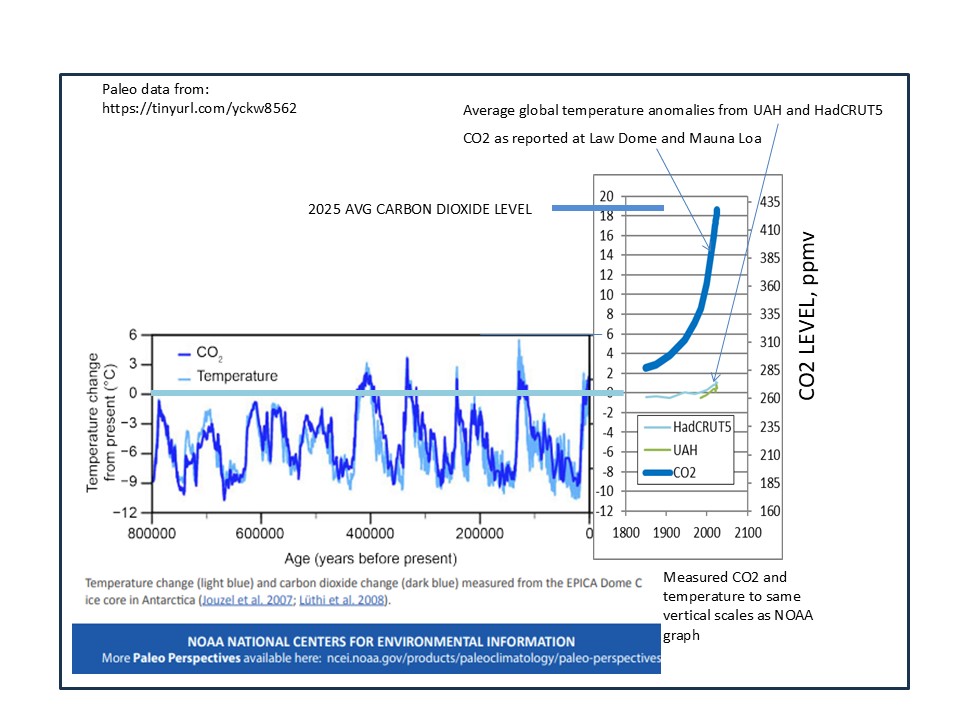
@BrendenMincheff @ABC10 @ClimateCentral CO2 does not now, never has, and never will have a significant effect on climate. I wonder how much wider the separation between the rapidly rising CO2 and barely rising temperature will need to get for some people to realize that.
Daniel Pangburn tweet media
English
1
0
0
17
Brenden Mincheff
Brenden Mincheff@BrendenMincheff·
On Earth Day, it's important to understand we are causing irreparable change to our planet. As more and more CO2 is emitted into our atmosphere – where it remains for decades – global average temperature climbs. #CAwx @ABC10 @ClimateCentral
English
59
79
206
7.9K
Daniel Pangburn
Daniel Pangburn@DanPangburn·
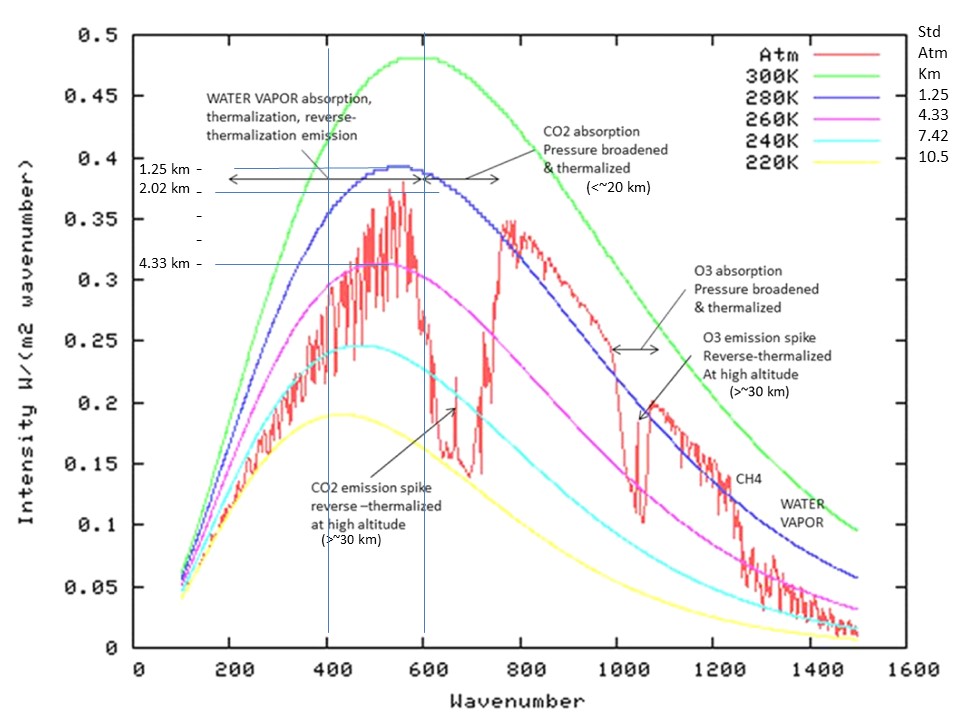
Historical and paleo data, Sect 11 at watervaporandwarming.blogspot.com, show that CO2 has no significant net effect on climate. Some have rejected this evidence on the basis that CO2 is IR active, i.e. a greenhouse gas (ghg) and it is increasing. The accompanying graph shows part of the reason why CO2 has no significant effect on climate. Part of the evidence is the notch which is centered at wavenumber 667/cm which is caused by the presence of CO2. The area of the notch represents power which, for any elapsed time, is energy which per the first law of thermodynamics can not be destroyed. The energy cannot simply accumulate because the temperature of isothermal layers does not change. Thus the photon energy absorbed by CO2 molecules must be emitted at other wavenumbers. Also evident on the graph is the emission from water vapor from about two km and above. This provides a continuous path for energy to exit isothermal layers. In summary, photon energy absorbed by CO2 molecules in isothermal layers is emitted to space by water vapor molecules. In the stratosphere and above, the sparse population of IR-active molecules allows emission to go directly to space. Cooling from increased CO2 there counters the slight warming from increased CO2 in the troposphere.
Daniel Pangburn tweet media
English
0
0
1
21
Daniel Pangburn
Daniel Pangburn@DanPangburn·
The fundamental cause of the phenomena misleadingly called the Greenhouse Effect (GHE) is that IR-active molecules (greenhouse gases (ghg)) can emit photons in any direction. As is known, temperature decreases with altitude. Thus we can speak in terms of an altitude-layer that is at a constant average temperature; an isothermal layer. At an isothermal layer, energy entering the layer is equal to energy exiting the layer. Greenhouse gas molecules in the isothermal layers emit IR-radiation in any direction. Heat is also transferred within the atmosphere via conduction and convection but these processes are comparatively very slow and are ignored. Especially at low altitude, energy entering the atmosphere comes from absorbed radiation, convection, and latent heat from condensing water. Radiant energy entering the atmosphere, that is absorbed by ghg, is partly IR from the surface and partly IR directly from the sun. At TOA all of the energy entering and exiting the planet is radiant. About one in a billion photon emissions is by the molecule that absorbed the photon. The energy in other absorbed photons is thermalized and shared with other molecules in the isothermal layer. Energy emitted is equal to energy absorbed. Because the photons are emitted in any direction, much of the photon travel is not in the outward direction. The result is that, although the photons travel at the speed of light in the atmosphere, the IR energy flows up through the atmosphere at a tiny fraction of that. The GHE is that the earth surface temperature must be higher to maintain the flow of energy equal to the energy absorbed from the sun (for no change in earth’s temperature) to compensate for the slowing of the IR energy flow caused by the photon travel in any direction.
Daniel Pangburn tweet media
English
0
0
0
32