VetWren
2.3K posts

VetWren
@DandersK
WRNS veteran, Royalist, fiercely proud to be English. Elvis fanatic, dog lover, people person. Loves living in the South.
Katılım Nisan 2014
376 Takip Edilen179 Takipçiler

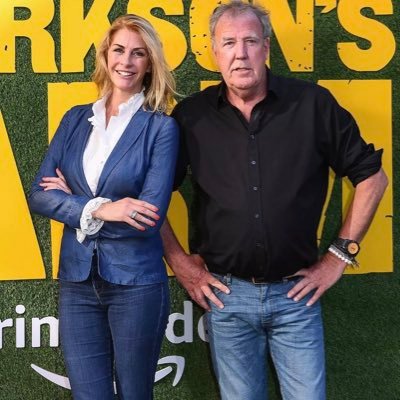
Well, I finally got to see what one of my regular stalkers looks like irl. Presenting Orca - oops, I mean “Orchia” — Minn. Guess which image is really him.
And before anyone yells at me for “bodyshaming” this fugly pervert, allow me to point out that his lie of a profile pic influences the way people see him, and all trans-identifying men. Using filters and fake images, these men have tricked half the country into thinking that they are as they pretend to be.
Well, it’s time for a bit of ugly truth — literally. This is “Orchia” — a degenerate, deviant, lying man — whose insides are even uglier than his fat fvcking face.


English
VetWren retweetledi

I was asked, a few years ago, which I would consider to be more painful, giving birth or having a swift kick in the nuts. Now obviously, the former is for the females among us and the latter is for the males amongst us. 😉😉
This will no doubt start a dabate on gender issues. 🤣
Anyway, the answer is painfully obvious. When did you ever hear of a man, some 12 months or so later, saying, of a kick in the nuts, "hmmm, I think I'd like another one!"
Ergo, the kick in the nuts should be declared the more painful. 😂😂😂
Have a lovely weekend folks.
English
VetWren retweetledi

@LairdOfThManor How her school bullies must be kicking themselves now.
English
VetWren retweetledi

@ToonDazza @Keir_Starmer My thoughts exactly. Always at the back of tge pack but wants to seen like a leader.
English

Imagine hiding under your desk, clutching an International Law book, soiling yourself daily and doing nothing but hinder the process - then jetting off to the middle east the day after the ceasefire to try and bask in the positivity and claim some credit - disgusting, weak, pathetic.@Keir_Starmer .
The ultimate Walter Mitty.
English
VetWren retweetledi
VetWren retweetledi
VetWren retweetledi
VetWren retweetledi

🚨The state pension & triple lock is the hot topic of the day — but almost no one is discussing what actually happened and why we’re in this mess. Instead, governments are dividing older and younger generations with perverse gaslighting. Here’s the truth:
National Insurance was explicitly sold for generations as a contributory scheme. You paid your “stamps” to build entitlement to your state pension — exactly like road tax was introduced and meant to fund the Road Fund for building and maintaining roads.
Both started with a clear promise: pay in for a specific purpose.
Then governments quietly broke the ring-fencing/promise. Road hypothecation ended in 1937. NI became mostly pay-as-you-go — today’s workers funding today’s pensioners, with surpluses spent on the priorities of the day (NHS, welfare, whatever suited the government).
Why are we here now?
• Collapsing birth rates since the 1960s + longer lifespans.
• Mass immigration that failed to fix the worker-to-retiree ratio as promised.
• Decades of political short-termism: treating the National Insurance Fund like a slush fund instead of properly ring-fencing or investing it for the future. See Singapore for the gold standard.
Now the gaslighting ramps up: “No one paid into a pot.” “It’s just a transfer from poorer young to wealthier old.” “The triple lock is unaffordable.”
This is classic deception by government. They collected contributions under one set of expectations, spent the money elsewhere, then rebranded the promise when demographics caught up. Pensioners who worked 40-50 years and upheld their side of the intergenerational contract are suddenly the villains.
It’s perverse. Instead of admitting “we broke the funding model,” politicians pit generations against each other. The young aren’t subsidising the old out of nowhere — they’re paying into the same broken system their elders did.
Honour the existing promises to those who already paid in. Cut the real waste first (illegal migration costs, foreign aid, Net Zero subsidies, welfare bloat). Then reform properly for the future: move towards individual accounts with actual investment and returns — like Singapore’s CPF.
Stop the divisive nonsense. Fix the root causes instead of rewriting history and turning the country against itself.
Feel free to engage👇🏽
#TripleLock #StatePension
English
VetWren retweetledi
VetWren retweetledi

Dear @BBCNews,
You are the BRITISH national broadcaster. We fund your existence, and we expect you to speak for the BRITISH people.
Britain is not a Sharia state.
Britain is not “too dog friendly.”
Britain is a nation of dog-lovers.
Remember who you represent.
English

That's it. No more Subway or KFC for me. Halal slaughter is barbaric.
The British Patriot@TheBritLad
🚨BREAKING: Thousands of furious Brits have taken to social media to declare a full boycott of Subway and KFC. Both chains have recently announced they are switching to Halal meat in their products. Do you support the boycott?
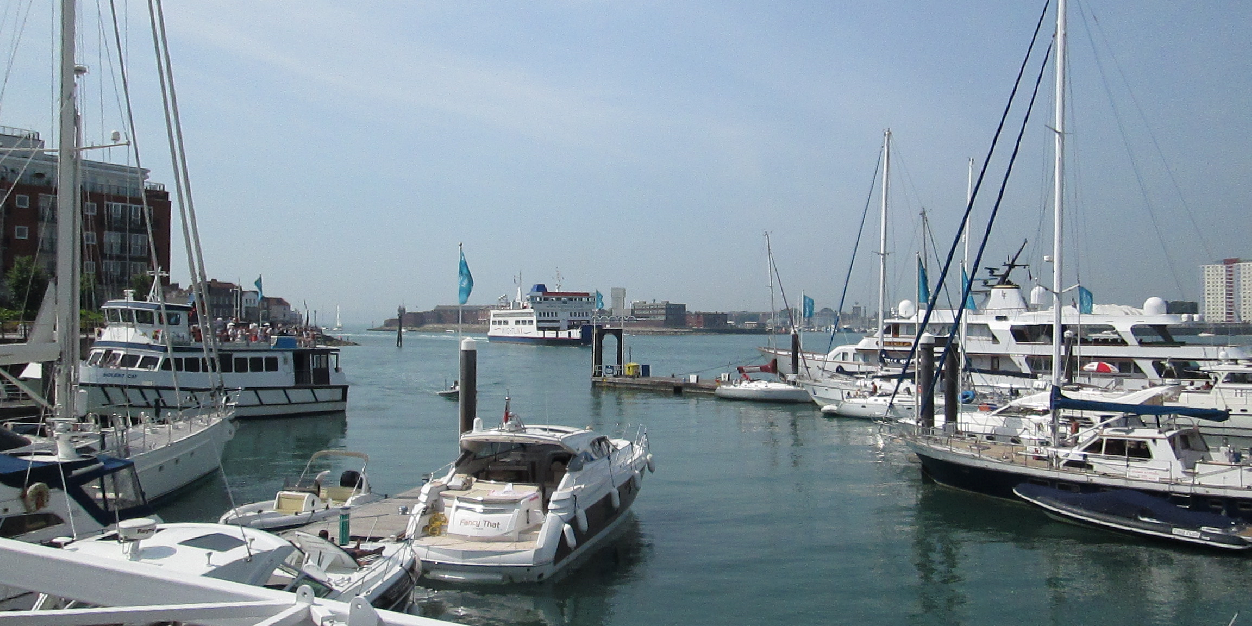
Portsmouth, England 🇬🇧 English
VetWren retweetledi

We are called "the elderly." But that quiet label hides something most people rarely stop to consider. We are the last living witnesses of a world that no longer exists.
Look at us and you might see gray hair, slower steps, and the patience that time teaches.
But listen to our story — really listen — and you'll realize something extraordinary.
We are the only generation in human history to have lived a fully analog childhood and a fully digital adulthood.
That's not a small thing. That's one of the most breathtaking journeys a human being has ever been asked to make.
We were born in the 1940s, 50s, and early 60s, into a world still rebuilding from the rubble of World War II.
Our toys were marbles and hopscotch and card games at kitchen tables. When the streetlights flickered on, that was it — childhood adventures were over, and it was time to go home. No smartphones. No streaming. No endless scroll.
We built our memories in the real world. With scraped knees and laughter echoing down streets and friendships formed face to face.
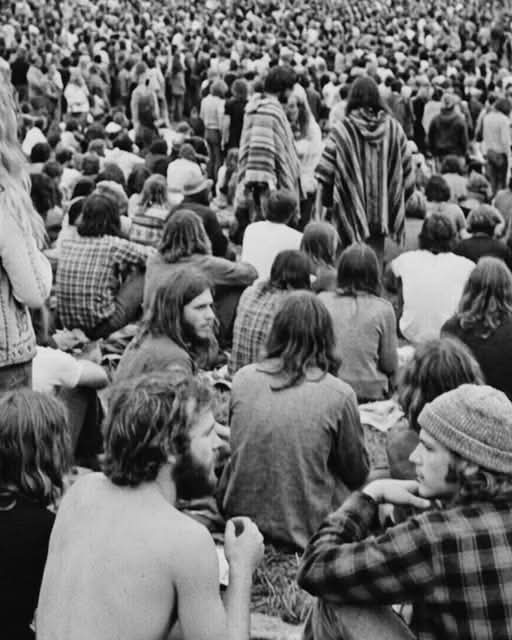
In 1969, we sat in living rooms staring at black-and-white televisions as Neil Armstrong took humanity's first steps on the Moon. Hundreds of thousands of us stood in muddy fields at Woodstock believing — really believing — that music and community could reshape the future.
We fell in love to vinyl records spinning on turntables. We waited days, sometimes weeks, for handwritten letters to arrive. We learned patience because information didn't come instantly. Mistakes were fixed with erasers — not a delete button.
Then the world transformed.
Machines that once filled entire rooms shrank to devices lighter than a paperback. We went from rotary phones and party lines to seeing the face of someone we love on the other side of the ocean — instantly, on something that fits in a pocket.
We watched the birth of the personal computer. The arrival of the internet. The smartphone. Artificial intelligence.
And through every single shift — we adapted.
Not because it was easy. Because that's what our generation does.
We also carry the weight of history in our bodies.
We grew up afraid of polio and tuberculosis. We watched science defeat them. We witnessed the discovery of the structure of DNA, the decoding of the human genome, the transformation of medicine itself. We survived pandemics across decades — and kept going.
Few generations have been asked to absorb so much change in a single lifetime.
And through all of it, certain things never changed.
We still know the joy of a cold glass of lemonade on a hot afternoon. The taste of vegetables picked straight from a garden. The value of a long conversation that unfolds slowly, without a screen interrupting it.
We have celebrated births and mourned losses. Carried the stories of friends who are gone. Watched the world become something our younger selves couldn't have imagined — and found ways to belong in it anyway.
We are not relics.
We are living bridges between two entirely different worlds.
Our memory carries something the modern world needs — proof that progress doesn't have to erase wisdom. That speed doesn't have to replace patience, kindness, or reflection.
So when someone calls us elderly, we can smile.
Because behind that word is something remarkable.
We crossed two centuries. Witnessed eight decades of transformation. Walked from handwritten letters to artificial intelligence — and never lost our sense of what actually matters.

English
VetWren retweetledi