
David Albright

1.1K posts

David Albright banner
David Albright

David Albright

@DAVIDHALBRIGHT1

President and Founder Institute for Science and International Security. A lifetime spent studying secret nuclear weapons efforts

@TheGoodISIS Katılım Ekim 2022
2K Takip Edilen15.2K Takipçiler
David Albright
David Albright@DAVIDHALBRIGHT1·
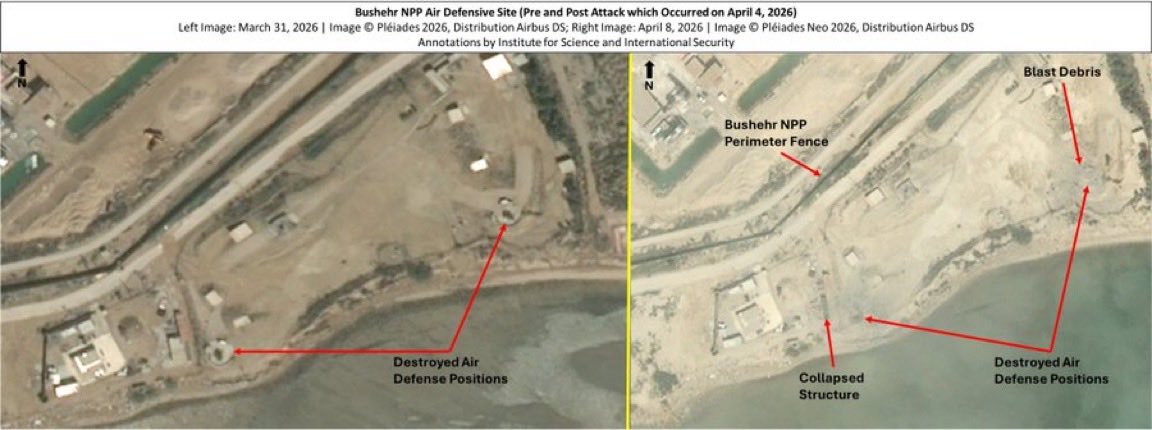
Is Iran Using the Bushehr Nuclear Reactor as a Civilian Nuclear Shield? After a hiatus, the Good ISIS published yesterday a startling discovery of what targets were attacked near the boundary of the Bushehr nuclear powers reactor: Anti-aircraft artillery (AAA) Iran itself has increased the risk, whether deliberately or inadvertently it does not matter, of causing accidental hits on the Bushehr reactor by placing AAA too near its site boundary. Out of concern, I had personally contacted the Israeli government and confirmed that Israel will not target the reactor. Russia knows this, and I believe the Iranian regime does as well. The US will also not attack the Bushehr reactor. But AAA is a different matter. Iran should move any AAA or other air defense systems further from the site boundary until there is a peace deal. Or risk a charge of using a civilian nuclear reactor shield to attack US and Israeli aircraft. isis-online.org/isis-reports/i…
David Albright tweet media
English
0
3
15
656
David Albright
David Albright@DAVIDHALBRIGHT1·
Can’t determine exactly because it is exempted from quarterly reporting. It is safeguards confidential information when it should have been regularly reported upon as part of JCPOA verification. But for some misbegotten reason, the JCPOA negotiators worried about the optics of publicly just saying 20 percent assigned to the TRR did not count against the limits and listing how much is dedicated to the TRR. These exemptions never made sense to me.
English
1
0
0
142
David Albright
David Albright@DAVIDHALBRIGHT1·
“Though this be madness, yet there is method in’t.” -Hamlet Obtuse comments made by special envoy Steve Witkoff in early March 2026 motivated us to take a closer look at Iran’s 20 percent uranium stock and its use in the Tehran Research Reactor (TRR). In the end, we cannot confirm or endorse Steve Witkoff’s exact characterization of the 20 percent enriched uranium stock or of the purpose of the TRR, but the overall thrust of his comments is true. Iran’s production of 20 percent enriched uranium was mostly to get closer to weapon-grade uranium or to prepare to make it. The TRR, the prime rationale Iran gives for making 20 percent enriched uranium, is not a major user of the 20 percent material, makes few medical radioisotopes, and possesses years’ worth of fresh fuel. Witkoff is right to state that further enrichment of 20 percent material is unjustified. Over a roughly fifteen year period, interrupted for several years by the 2013 Joint Plan of Action (JPA) and 2015 JCPOA, based on IAEA quarterly reporting, Iran produced a total of 1235 kilograms (U mass) of 20 percent enriched uranium, of which 302 kilograms were produced from 2010 to 2014 and 933 kilograms were produced from 2021 to June 2025, when enrichment ended as a result of damage incurred during the 12 Day War. The stock produced starting in early 2021 has been largely used to further enrich to make 60 percent enriched uranium. Of the 933 kilograms, 731 kilograms, or 78 percent, were further enriched between December 2024 and June 2025 to 60 percent. This act belies any declaration by Iran that 20 percent enriched uranium was being produced for civil purposes. The stock of 20 percent enriched uranium provided Iran a surge capacity to make 60 percent enriched uranium, aka highly enriched uranium (HEU), 99 percent of the way to weapon-grade uranium. Iran exercised this option starting in late 2024. From April 2021 until December 2024, a three and half year period, Iran made about 230 kilograms of 60 percent enriched uranium. From December 2024 to June 2025, a half year period, Iran almost doubled its stock of 60 percent enriched uranium to 440 kilograms. This action dramatically increased suspicion that Iran was moving toward a decision to build nuclear weapons, significantly shortening timelines to be able to create a nuclear arsenal with up to ten nuclear weapons. A close look at IAEA reporting shows Iran did not need to restart the production of 20 percent enriched uranium in 2021 for civil purposes, i.e. use in the TRR, its only civil use of the 20 percent enriched uranium. Iran loaded minimal amounts of fuel into the TRR in the four years between May 2021 and June 2025. Given the minimal use of the TRR, which after Witkoff’s revelation was also confirmed by IAEA DG Grossi, there was plenty of 20 percent enriched uranium returned from or remaining in Russia, placed there by the JCPOA, to make the needed fuel assemblies. Moreover, the amounts stored in Russia were in forms far easier to turn into finished TRR fuel assemblies than starting with enriched uranium hexafluoride fresh from Iran’s enrichment plants. In the end, only about eight percent of Iran’s total stockpile of 20 percent enriched uranium ended up in TRR fuel assemblies. This number again shows that the civilian justification for producing 20 percent enriched uranium never materialized and could not have in any case, likely due to the age of the reactor and other priorities for the 20 percent enriched uranium. For years, Iran has publicly and diplomatically used the TRR as its main rationale for on-going production of 20 percent enriched uranium, material needed, it claimed, to fuel the TRR. But that rationale has been shown to be vastly overstated, a task made far more difficult because of the secrecy hiding Iran’s actual minimal use of the TRR. Steve Witkoff deserves credit for at long last blowing off the cover of that deception. Read the full paper here: isis-online.org/isis-reports/h
English
5
27
78
11.7K
David Albright
David Albright@DAVIDHALBRIGHT1·
@laurnorman @StrickerNonpro Pretty easily for Iran. The point was to delay its use in a breakout, requiring extra care and time to convert it back. No one thought Iran would find the task overly challenging
English
1
0
1
126
David Albright
David Albright@DAVIDHALBRIGHT1·
We finally could obtain Bushehr imagery for publication, and the Good ISIS team made some startling discoveries
Inst for Science@TheGoodISIS

Airbus high resolution satellite imagery from April 8, 2026, shows projectile impact points on an anti-aircraft artillery (AAA) defensive site about 70 to 110 meters from the perimeter fence of the Bushehr nuclear power plant complex and about 1.5 kilometers away from the still operating Bushehr nuclear reactor. The projectiles appear to have destroyed two anti-aircraft artillery weapons and caused a nearby structure to collapse.  Debris patterns can be seen around both impact sites.  The findings match with the IAEA’s statements on Iranian reports of an attack that occurred on April 4, 2026.  The IAEA states that Iran reported  “that a projectile struck close to the premises of the Bushehr NPP… [and] that one of the site’s physical protection staff members was killed by a projectile fragment and that a building on site was affected by shockwaves and fragments.”  It raises the question whether the "physical protection staff” was manning the anti-aircraft gun.     On balance, the Bushehr nuclear power plant was not the target of the attack, rather a military installation immediately next to the complex was the intended target. The Bushehr nuclear power plant complex is surrounded by multiple AAA positions.  Iran should dismantle these AAA positions near Bushehr, creating a demilitarized zone extending a greater distance from the site perimeter, reducing the chance of an accidental strike against the reactor site.  Both Israel and the United States have made it clear to both Iran and Russia that the Bushehr reactor is not a target, but AAA that has or could fire at their planes is another matter. A previous impact on an unidentified structure within the nuclear reactor perimeter, about 350 meters away from the nuclear reactor, was cleaned up as of March 31, 2026.  While additional incidents were reported by the IAEA, no other damage was identified in imagery dated March 31 or April 8, 2026.

English
1
11
36
6.8K
David Albright retweetledi
Inst for Science
Inst for Science@TheGoodISIS·
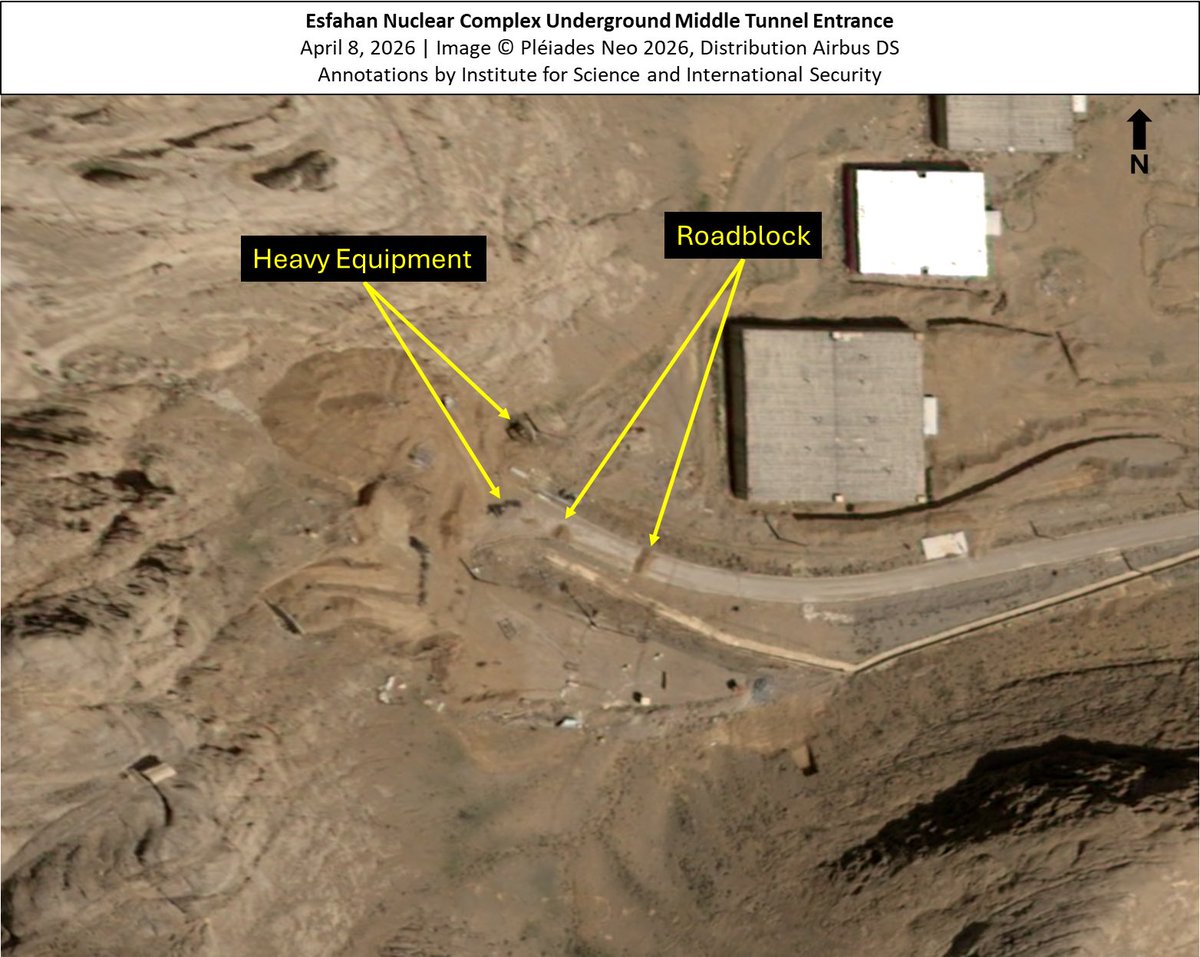
NEW Imagery Update: Makeshift Roadblocks Installed in Front of the Esfahan Underground Complex Tunnel Entrances The roadblocks add physical barriers to accessing the three tunnel entrances, which remain buried. See our analysis of yesterday’s high resolution images: isis-online.org/isis-reports/i…
English

0
14
27
6.4K
David Albright
David Albright@DAVIDHALBRIGHT1·
Witkoff is right, mostly. There are unirradiated, fresh fuel assemblies that the IAEA reports in its quarterly report. About 10 or so. There is an irradiated lot, often lightly irradiated, that is also there and exempted from IAEA reporting. So, there is a stock at TRR not used for isotope production since the reactor is used infrequently. But the amounts are not that large relative to the amount that was used to make 60% On first part, Grossi said it well: The “point Mr. Witkoff is making, which is correct, is that of course from the moment you argue that the research reactor for which you have a lot of fuel for many years even, necessitates, needs you to continue enriching uranium at 20 percent, then it is understandable that this is problematic for the United States in the negotiations because the departure line for the American side is that there should be no enrichment or zero enrichment or as close to zero as possible.”
English
1
7
14
2.9K
laurence norman
laurence norman@laurnorman·
@DAVIDHALBRIGHT1 That’s mostly fair. & useful. But we all knew that Iran was producing 20% to build its enrichment capacity for its nuclear program. No one credible bought the TRR theory. Witkoff claimed Iran was stashing away 20% at TRR unused for isotope process. I see no evidence that’s true?
English
2
0
9
2K
David Albright
David Albright@DAVIDHALBRIGHT1·
There is a stock at TRR exempted under JCPOA rules from being reported by IAEA in its quarterly JCPOA verification reports. So, it is not public. It is safeguarded but that is also confidential. So, yes, there is a stock at TRR that is secret with respect to public reporting but safeguarded by IAEA. This is part of what we called the ghost inventory in our report. The exempted material at TRR is supposed to be used as fuel to produce isotopes but the reactor does not operate much. It is not intended to be used to make 60%
English
0
0
0
92
laurence norman
laurence norman@laurnorman·
@DAVIDHALBRIGHT1 Ie there was no secret stockpile at TRR right? It was just being used eventually for the 60%. No?
English
1
0
3
1K
David Albright retweetledi
Spencer Faragasso
Spencer Faragasso@SFnuclear·
Looks like Iran established makeshift roadblocks outside the three tunnel entrances to the underground facility at the Esfahan Nuclear Complex. This provides an additional obstacle for any potential ground operation to seize the enriched uranium. Essentially an effort to limit freedom of movement and slow down any incursion. The roadblocks can be cleared, it would just be an additional consideration. Good catch, @SarahBurkhard! Stay tuned for more analysis.
Spencer Faragasso tweet mediaSpencer Faragasso tweet mediaSpencer Faragasso tweet media
English
23
168
801
248.1K
David Albright retweetledi
Inst for Science
Inst for Science@TheGoodISIS·
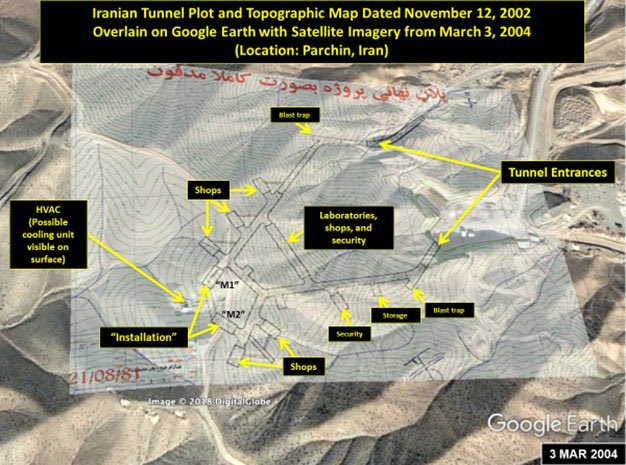
NEW: High resolution satellite imagery taken by Airbus shows a former, likely repurposed, Amad site was attacked between March 24 and April 1, 2026, with bunker busters and other armaments.  The site was built under a mountain within the Parchin military complex and features two tunnel entrances and above-ground support buildings.  The strike targeted the tunnel facility by destroying a ventilation structure, a weak point, and by penetrating the ground mid-way up the mountain ridge, above a main hall of the tunnel complex.  It also destroyed the utilities services building outside the tunnel entrance. During the Amad Plan in the early 2000s, the site called “Shahid Boroujerdi” was being built to be a production-scale facility to make weapon-grade uranium cores of nuclear weapons. At the end of the Amad Plan, the tunnel was largely finished but equipment had not yet been installed. With the closure of the Amad Plan and its replacement by a smaller, more camouflaged nuclear weapons program, the Shahid Boroujerdi project is believed to have been shut down. Nonetheless, after 2003/2004, additional construction was visible right outside the main tunnel entrance, but its purpose could not be ascertained.  The layout of the tunnel facility does not appear to have changed significantly after the Amad Plan.  Schematics of the original Amad facility and numerous other Shahid Boroujerdi blueprints and documents were found in Iran’s Nuclear Archive. A schematic is overlaid with Google Earth imagery, showing that the earth penetrating munitions targeted the area above a main hall in the facility, labelled as “laboratory, shops, and security” in the Shahid Boroujerdi documents.   We were not able to find information posted by the IDF on this site and so the current purpose of the site and whether the US or Israel struck it remain unclear. The IDF may be including the strike on the site in an infographic released about strikes on Wednesday, March 26, 2026, without providing details on the Boroujerdi site.  The attack shows that as in the case of the Fordow centrifuge plant, despite being deeply buried, this mountain complex had vulnerabilities.  Likely, all of them do; it just takes some careful investigating and planning.  It does not take a nuclear weapon, as some have recently been suggesting using against the Esfahan mountain tunnel complex, where over half the highly enriched uranium is reportedly stored. Read the full report here: isis-online.org/isis-reports/s…
Inst for Science tweet mediaInst for Science tweet mediaInst for Science tweet mediaInst for Science tweet media
English
3
48
152
16.8K
David Albright
David Albright@DAVIDHALBRIGHT1·
Iran’s first of its 10 point plan in English: A binding guarantee that the U.S. and allies will not strike Iran again But in Iran’s Farsi version, a key phrase is tacked onto its first point namely the acceptance of Iran’s uranium enrichment. So, Iran’s English version of its 10 point plan makes no mention of nuclear, but its Farsi version, likely approved by the leadership, reiterates the same unacceptable enrichment condition. On the other hand, US first four points 1. Dismantle all major nuclear facilities 2. End all uranium enrichment on Iranian soil 3. Transfer enriched uranium stockpiles out of Iran 4. Accept intrusive international inspections everywhere These will be tough negotiations, made even harder by Iran’s other non-starter demands. The ceasefire may only be a brief interlude between military conflicts.
English
72
282
851
207.5K
David Albright
David Albright@DAVIDHALBRIGHT1·
NEW satellite imagery taken by Airbus today confirms strike and extensive damage inflicted on a building described by the IDF (see below) as producing fentanyl for SPND's research and development of pharmaceutical based agents. PBAs are a form of chemical weapons that misuse chemicals with medical applications. We have reported on evidence that emerged that Iran was working on weaponizing incapacitating and lethal pharmaceuticals like fentanyl, for example by studying their aerosolization, which has no medical purpose whatsoever. See: See: isis-online.org/isis-reports/t… ; isis-online.org/isis-reports/u… The IDF stated in its post (automated translation from Hebrew): "Terror through a civilian company: IDF attacked a factory that systematically transferred chemical materials to the Iranian terror regime The IDF attacked earlier today a research and development factory that systematically transferred chemical materials to the Iranian terror regime. The factory, owned by Tufik Daru Company, served as a key supplier of fentanyls to SPND Organization, which is responsible for developing chemical weapons for the Iranian terror regime. The factory, which presented itself as a civilian company, actually transferred chemical materials, including fentanyl, to the Iranian terror regime, which used them for research and development of chemical warfare agents. Fentanyl is an anesthetic substance which, in high doses, is considered one of the deadliest materials. Tufik Daru Company knowingly and systematically supplied the deadly substance to the SPND Organization, which used it to conduct research and development of chemical warfare agents. The attack constitutes a blow to the Iranian terror regime's chemical weapons production capabilities. Prior to the attack, precautions were taken to minimize potential damage to civilians as much as possible."
David Albright tweet mediaDavid Albright tweet media
English
19
79
242
46.9K
David Albright
David Albright@DAVIDHALBRIGHT1·
Spencer has been monitoring NASA data and is reporting no evidence of fires at the Esfahan nuclear site. But as he says, we are waiting for high res satellite data to become available.
Spencer Faragasso@SFnuclear

Lots of very bad information out there regarding a supposed attack against the Esfahan Nuclear Complex. Right now there is no evidence that the nuclear site has been targeted; we are waiting for satellite imagery to become available (if someone has some that shows damage, post it!) For example one news source (spectrumlocalnews.com/mo/kansas-city…) claims that the NASA FIRMS fire database shows intense fires near Esfahan, claiming it is related to the nuclear complex. This is false, NASA FIRMS shows no fires at the nuclear complex. Let’s try to focus on the facts and not get distracted by bad reporting.

English
5
14
41
9.3K
David Albright
David Albright@DAVIDHALBRIGHT1·
Based on the first paragraph, as I explained, it misquotes me, and calling it a team is inaccurate. Yes, the story links to us but about as buried as possible. Now that you bring it up, It almost looks like the first paragraph was deliberately designed to hype up the Bulletin’s role, beyond what it deserves. I would request you correct the first paragraph.
English
1
0
0
52
John Mecklin
John Mecklin@JohnMeckli86736·
@DAVIDHALBRIGHT1 @francoisdm @BulletinAtomic Our editor spoke with Le Monde ahead of a story in which he was quoted, just like you. Our editor is an expert in nuclear materials who conducted his own analysis. Our story linked to your post. Your complaint is, IMO, unjustified. John Mecklin, editor in chief, @BulletinAtomic
English
1
0
1
78