David Keane

175 posts

David Keane

David Keane

@DavidKeane0808

Katılım Kasım 2023
133 Takip Edilen57 Takipçiler
Best of Star Wars
Best of Star Wars@bestofstarwar·
I genuinely can't understand how the previous generation saw this in 2005 and said, "This sucks."
English
219
392
4.2K
48.2K
David Keane
David Keane@DavidKeane0808·
@scottastevenson And even cleaner and better architected than by some outsourced teams...
English
0
0
1
56
David Keane
David Keane@DavidKeane0808·
As a lot of you know, SCX.ai runs our weekly Acrux Webinar Series each Friday - the one tomorrow is super special. Aleks Smechov, is presenting on "Introducing SCX Playbook" — a transformative approach for organisations to use AI. hello.scx.ai/webinar
David Keane tweet media
English
0
0
1
37
Trung Phan
Trung Phan@TrungTPhan·
Traditional SaaS is dead. I asked Claude to vibe code a Docusign replacement. 6 hours and 450k lines of code later it built a drag-and-drop PDF signer, initials stamps, and a very satisfying “signature complete” animation. So, the first 45 contracts we used it for auto-selected governing law at random. Every agreement is void. We lost $473K in bookings and I have in-person courts dates in 18 countries over the next week. But, man, was the dynamic completion checkmark graphic sick.
English
192
238
5.6K
638.6K
David Keane
David Keane@DavidKeane0808·
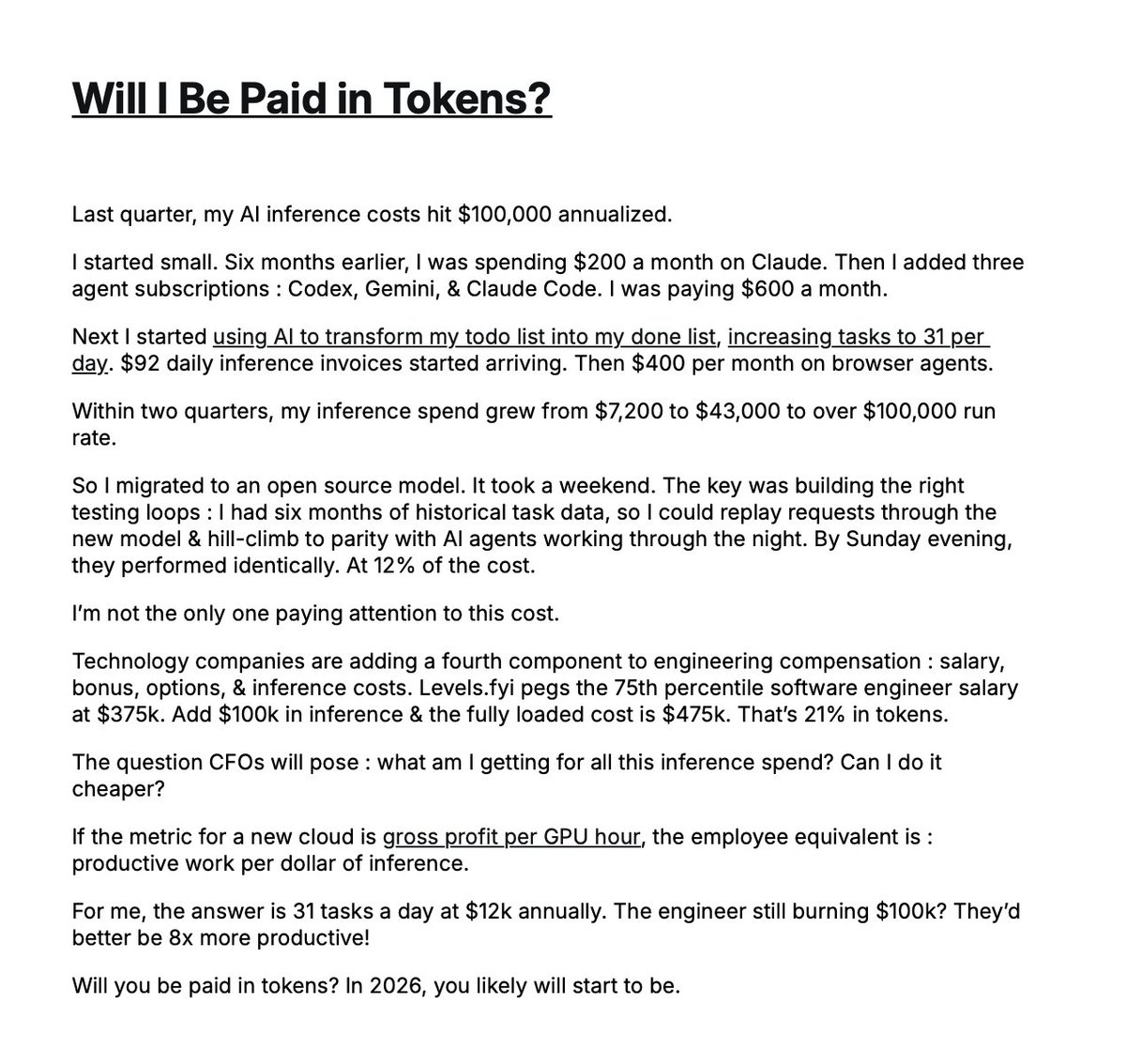
I know we are all busy, but we all have time to save $ - read this post from @ttunguz - save thousands and get the same result as the big guys....if the other points about what we are doing at scx.ai don't toot your horn - saving 88% will ..lets talk
David Keane tweet media
English
0
0
0
10
David Keane
David Keane@DavidKeane0808·
Excited to show you all more - coming soon
English
0
0
0
18
David Keane
David Keane@DavidKeane0808·
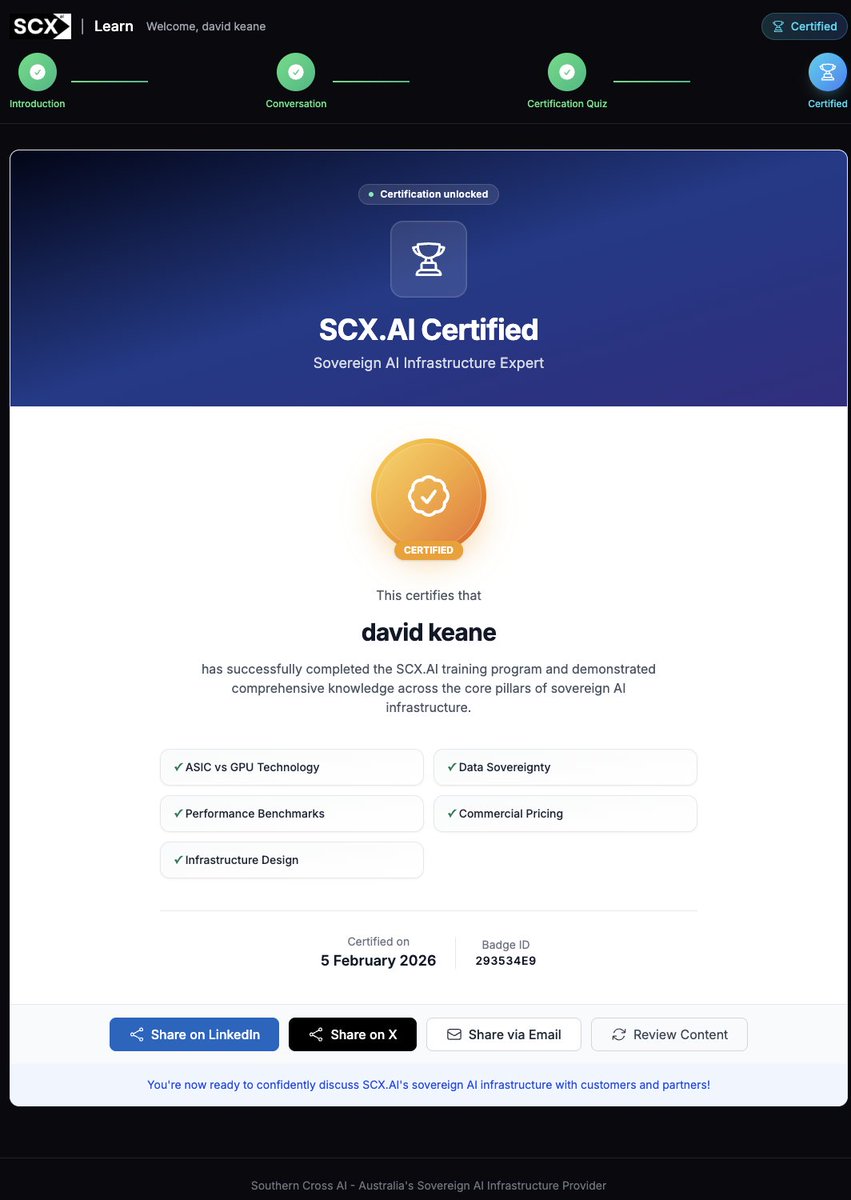
welcome to 2026 - lots to say about where AI will impact business- but mostly the challenge is for organisations of all size to do more than just the’ chat bot with RAG’ - lets see
David Keane tweet media
English
0
0
0
10
David Keane
David Keane@DavidKeane0808·
@mikealfred Glad you like it - similar vibe to some US cities but different
English
2
0
0
47
David Keane
David Keane@DavidKeane0808·
@DaveShapi Many employees are using the newly minted corporate chat bot (happening everywhere now) and copy pasting to perform the intellectual work they were doing previously- there will be a rapid move to employees needing extra work as they will just chat bot their way through the 9-5
English
0
0
0
17
David Shapiro (L/0)
David Shapiro (L/0)@DaveShapi·
Dwarkesh is WRONG about the "Output Gap" The narrative around Artificial Intelligence has shifted perceptibly in late 2025. After years of exponential hype, a sense of disillusionment has begun to settle over the industry. Commentators and analysts, most notably podcaster and writer Dwarkesh Patel, have recently highlighted what is being called the “Output Gap.” This is the uncomfortable discrepancy between our models’ skyrocketing performance on benchmarks and the relatively stagnant growth in macroeconomic productivity. We have reached “superhuman” capability on tests, yet global GDP hasn’t skyrocketed, and the promised revolution feels curiously delayed. This frustration stems from a fundamental misunderstanding of where we are in the technology cycle. The industry is currently fixated on “Day 0” capabilities—the raw intelligence of the models, the scaling laws, and the saturation of academic benchmarks. However, the bottleneck has shifted. We are no longer limited by the intelligence of the model, but by the inertia of the enterprise. The “Output Gap” is not a failure of technology; it is a lag in organizational digestion. We have invented a powerful jet engine, but we are essentially frustrated that it hasn’t revolutionized travel before we’ve even built the airframe to mount it on. The primary fallacy driving this disappointment is the expectation of the “drop-in remote worker.” Many observers equate Artificial General Intelligence (AGI) with a digital human that can be onboarded, culturally assimilated, and left to run autonomously with minimal supervision. Because current agents cannot seamlessly replace a human employee in this one-to-one fashion, the conclusion is often that the technology has stalled. This view misses the forest for the trees. Disruptive technologies rarely act as direct replacements; instead, they require a complete restructuring of how work is done. In reality, the barrier to adoption is what IT professionals call “Day 2 Operations.” Day 0 is the exciting launch; Day 2 is the boring, messy reality of governance, security, and maintenance. For an enterprise to deploy an autonomous agent, it isn’t enough for the model to be smart. The organization must solve for Role-Based Access Control (RBAC), SOC 2 compliance, liability frameworks, and data sovereignty. Right now, most organizations lack the infrastructure to handle “non-human” identities that have access to sensitive corporate data. Consider the security implications. A human employee has physical limitations and a single identity. An AI agent is an “always-on” entity that, if given improper permissions, could theoretically read every email in a company server to “optimize workflow.” Security teams (CISOs) are rightly terrified of this prospect. Until we develop granular access controls specifically designed for agents—effectively an “RBAC for AI”—the widespread deployment of autonomous agents will remain blocked by the “Departments of No”: Legal, HR, and Security. This operational friction explains why we are seeing a massive divergence between individual and enterprise adoption. Individually, adoption is rampant; we are in the “Shadow IT” era of AI, where employees secretly use tools like ChatGPT to boost their personal productivity. However, at the organizational level, adoption is glacial because the institution’s primary mandate is risk management, not speed. The C-suite is asking questions about ROI, liability, and data leakage that the current software ecosystem cannot yet answer satisfactorily. History offers a comforting precedent for this timeline. We are currently effectively in the “2002 era” of virtualization. In the early 2000s, virtualization technology (like VMware) was technically viable, but it took nearly a decade to become the default enterprise standard. It required years of maturing management software, security protocols, and cultural shifts before “The Cloud” became a reality. AI is undergoing the same digestion period. The technology is ready, but the enterprise “rails” required to run it are still being laid. This leads us to the “Mechanical Horse” fallacy. When the automobile was invented, people didn’t need a mechanical horse that walked on four legs; they needed a car. But the car required asphalt roads, not dirt paths. Similarly, we are currently trying to force AI into human-shaped workflows (”jobs”) rather than rebuilding the workflows to suit the AI. We are waiting for the mechanical horse, failing to realize that the true disruption comes from unbundling the work entirely. A “job” is essentially a bundle of tasks, context, and responsibilities aggregated for a single human. AI does not replace jobs; it unbundles tasks. The transition we are navigating involves breaking down these bundles and determining which specific value streams can be automated by agents. This requires task decomposition and new management frameworks—a “Council of AIs” approach—rather than a single omnipotent bot. This restructuring is an organizational physics problem, not a computer science problem. The disconnect is further exacerbated by the differing timelines of developers versus executives. Developers and researchers live in a world of root access and rapid iteration, often blinded to the molasses-like speed of corporate change management. A CFO, conversely, thinks in fiscal quarters and compliance audits. They require proven ROI and standardized best practices before signing off on widespread automation. Currently, there are no industry standards for deploying autonomous agents, which halts most conversations at the boardroom door. Therefore, the “stalling” progress is an illusion caused by looking at the wrong metrics. If you look at model cards and benchmarks, progress is linear and fast. If you look at widespread economic integration, the curve is flat. This S-curve of adoption is always significantly behind the S-curve of capability. We are in the flat part of the adoption curve, characterized by high hype, high friction, and frantic infrastructure building behind the scenes. The next three to five years will likely be dominated not by flashy new model capabilities, but by the “boring” work of integration. We will see the rise of startups and consultancies dedicated solely to “AI Governance,” “Agent Identity Management,” and “Context Orchestration.” These are the boring rails that will eventually allow the high-speed train of AI to actually run. The output gap is a temporary, necessary phase. It is the silence before the orchestra starts playing. The potential energy is building up in the form of capability, but it cannot convert into kinetic economic energy until the friction is reduced. The “stalled” revolution is simply a revolution that is currently under construction. We are not witnessing the ceiling of AI intelligence; we are witnessing the floor of AI adoption. The technology has done its part; now, the organizations must do theirs. The future isn’t late—it’s just waiting for legal to sign off.
English
31
25
198
12.6K
Metatron
Metatron@pureMetatron·
I put no sugar in my coffee. Like a real man. Agree or change my mind.
English
793
26
1.2K
43.7K
Metatron
Metatron@pureMetatron·
Let me make this one 100% clear. This guy was responding under a post of mine where I said something that upset some of the most right wing fans of mine. Your attempt at using this weird "guilty by association" against me to tell me: "look at these awful far right guys you have attracted with your takes!" to manipulate me via shame is void. Radical leftists laughed at my mother's death when she passed away from cancer. Radical leftists flooded my comment section telling me she is burning in hell and so will I. Radical leftists wished me to lose my wife and child. Radical leftists called me racist, a bigot, a fascist, a Nazi for years. Radical leftists have made countless video hit pieces full of lies about me. Radical leftists spammed my chat during my live streams in honor of the children who died during the Texas flood and the church shootings to laugh at the dead "future bigots". I do not give a flying FUCK about what you think about my current audience and their leanings. The left consolidated me into the right. It's forever. Whoever is in my audience knows that I will always say what I think and that I do not pander which means sometimes I will say something even though I know my audience will turn against me as a form or RESPECT for their intelligence. Up to now even when I got nasty comments form the far right it was NOTHING compared to what the left has done to me over the years. As I always say if you are a moderate left wing fan of mine I have nothing against you, but this guilty by association shit gotta go.
João Marinheiro@joaomarinheiro

@EricTropicalTX @pureMetatron This is the kind of audience you attract now Metatron. Despicable

English
86
54
1.1K
24.3K
David Keane
David Keane@DavidKeane0808·
@AppleTLDR Have you tried Demeo ? My fav game - hope they bring the new D&D one to Vision Pro
English
0
0
0
30
JB
JB@AppleTLDR·
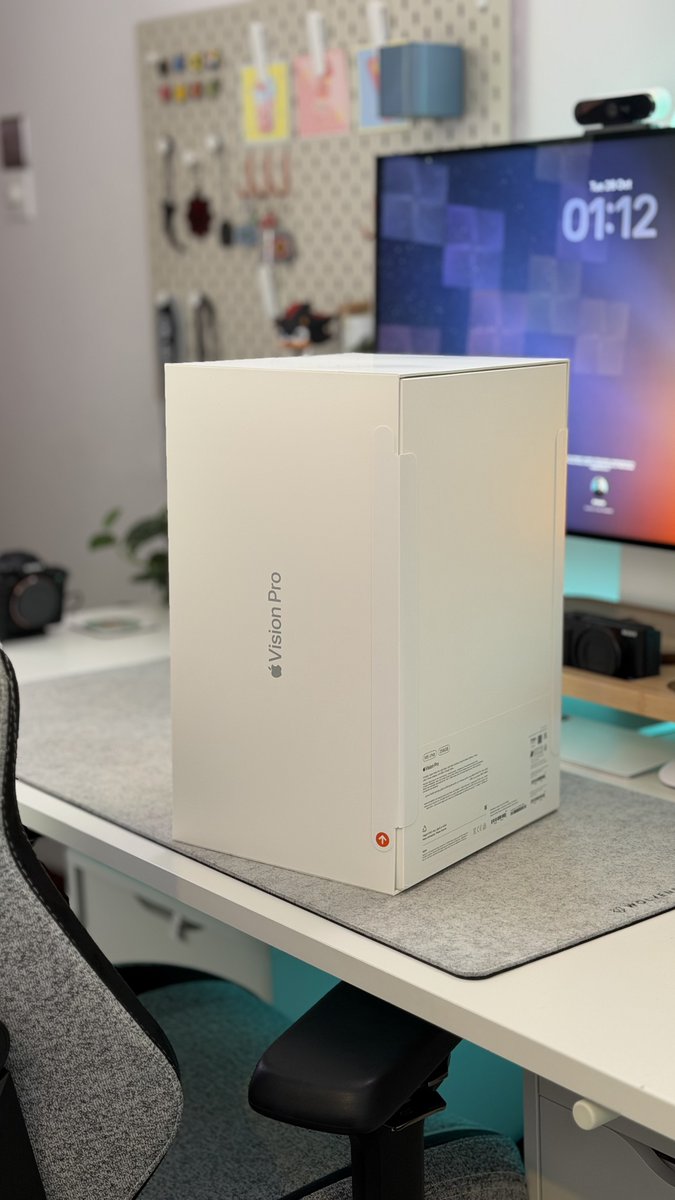
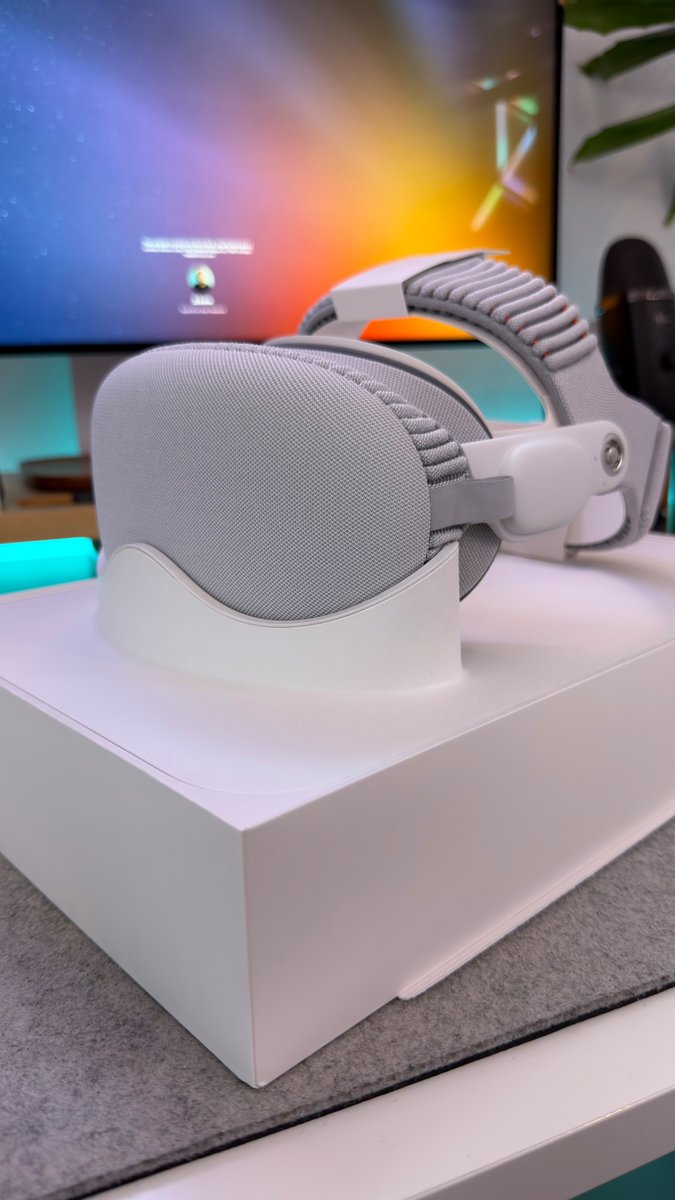
Finally got around to unboxing this 😅 It's been a busy few weeks!
JB tweet mediaJB tweet mediaJB tweet media
English
10
6
324
21.6K
David Keane
David Keane@DavidKeane0808·
@AutismCapital Well for me the machine is still a very powerful tool even without those apps - there are also good third party apps that work well - I hope Apple keeps doing - they just need a 1k vision air and it will do well
English
0
0
0
6
Autism Capital 🧩
Autism Capital 🧩@AutismCapital·
Did Apple give up on the Apple Vision Pro? Spatial computing is actually incredibly awesome but there was no appetite for the AVP. There's no YouTube, Netflix, Spotify app, you can only have 1 screen on a Mac Virtual Display, it's heavy, and it costs $3500+ Do they still care? Is there still a team over there? Have they all transitioned to AR glasses instead? What's the deal?
Autism Capital 🧩 tweet media
English
76
6
126
45.6K
David Keane
David Keane@DavidKeane0808·
the most fun part is the trivia section from min 48:30 - how would you have done?
English
0
0
0
10
David Keane
David Keane@DavidKeane0808·
Great to be on the Spark of Ages podcast - with some wonderful folks in AI - good conversation about the importance of governance and control but also unit economics open.spotify.com/episode/4MaXSE…
English
1
0
0
14
David Keane
David Keane@DavidKeane0808·
About to land in Sydney - would love to meet the AI builders creating the future of AI for Australia - and especially those that have been held back by lack of the infrastructure and the tools to make it work on Australian soil. SCX.ai
English
0
0
2
19