

DAguero ⚡️
784 posts
DAguero ⚡️
@David_Aguero
Live a dream 🌍 Crypto $scrt $link $utk $inj $rio Business and fun 😎 NFA
Croatia Katılım Mayıs 2009
227 Takip Edilen390 Takipçiler

DAguero ⚡️ retweetledi

Imagine a protocol that:
- Has earned $100Ms in fees
- Its core team is buying $1M+ of its token on the open market every week
- Is working with the largest institutions, enterprises & protocols
- Services span both public & private chain ecosystems
The ticker is $LINK
English
DAguero ⚡️ retweetledi

Cycles are a normal part of the crypto industry, what is important is what those cycles reveal about how far the industry has progressed and what next stage/trends of adoption/value creation will go on to define the industry.
So far this cycle reveals two key things for me:
Firstly, there have been no large risk management failures leading to large institutional failures or widespread systemic risks. In the previous cycle you had FTX and multiple lenders cleaned out through large price drops, this time around I am pleasantly surprised to see none of that or at least none of it at any system wide scale. If the crypto industry and its systems are able to successfully weather large drawdowns in price and liquidity issues then it is a more reliable place to put both retail/client capital and institutional capital. This time has been much better managed than last time.
Secondly, real world asset migration on-chain continues to accelerate regardless of Bitcoin/Cryptocurrency prices, signaling that having real world assets on-chain is not tightly coupled to crpytocurrency prices but provides its own unique value that can grow irrespective of market pricing of Bitcoin or other crypto assets. We have seen RWA issuance continue to grow and we've seen leading on-chain perp markets rival tradfi perp markets for very traditional commodities like silver, especially in periods when trading in permissioned traditional markets became harder or more risky vs trading in on-chain permissionless markets. As more and more RWA data goes on-chain to make perps work correctly for more asset types and as more on-chain value is generated as RWAs themselves, I expect these dynamics to only increase regardless of crypto prices.
These are both very positive signals for the assumptions I have been making about three key trends I am expecting to work together to reshape our industry in the next stage of its growth into mainstream adoption.
Firstly, on-chain perps about real world assets and tokenization of the assets on-chain has unique and durable long-term value which is growing regardless of any other dynamics. It is the value of 24/7/365 markets, on-chain collateral management and on-chain data.
Secondly, institutional adoption of our industry will be driven by the fundamental/technology value it provides, accelerated by access to permissionless/always on markets in DeFi, which will grow massively as a result.
Thirdly, the infrastructure that will make RWAs possible will be experiencing much more demand as more of the real world finds itself on-chain. As more RWAs have to go on-chain as perps via on-chan data or tokenization itself and as those RWAs are increasingly complex in how they need to work on-chain, more systems will need to interface with chains to enable those RWAs.
The first two trends are inevitable market forces that are now accelerating regardless of cryptocurrency prices, that is the real insight I see from this part of the cycle. The third trend is where Chainlink is providing the key global standards/protocols/infrastructure that is needed for providing the data, connectivity and orchestration that accelerates the first two trends.
Data is what allows most RWAs to exist on-chain at all. Market data for on-chain perps e.g. on-chain silver markets, Proof of Reserves for Stablecoins, NAV for Tokenized Funds to operate on-chain and many other examples touching every category of RWAs. Chainlink is the largest provider of data to the leading blockchains by far and is successfully servicing the vast majority of DeFi for all their data needs with 70%+ market share. Our new launches with leading institutional data providers like S&P, ICE and many others put Chainlink in a similar position in the growing institutional RWA world.
Connectivity to both other chains and existing backend/accounting/risk management systems is key for liquidity. The ability to connect to the other chains as a system of record/source of liquidity and to the existing centralized systems of record/sources of liquidity are key for scaling RWA adoption globally. Chainlink is the leading provider of these capabilities to institutions and has been chosen by the leading security teams in Web3 to be their official bridging provider due to a superior reliability/security track record. Chainlink is also the only system that successfully pulls TradFi payments into on-chain transactions across multiple chains, integrating existing sources of liquidity and new sources of liquidity into one interoperability layer.
Orchestration is the process of coordinating multiple systems into one workflow/transaction that defines the core value an application is providing to its users. Coordinating between multiple chains, multiple off-chain systems, multiple market data sources and now multiple AIs is a key function that some system needs to play for the more advanced RWAs to function properly. The Chainlink Runtime Environment seems to be the only environment in which you can currently run a workflow that can coordinate all of these key systems into a single application, already in use by enterprises and with advanced integrations into many key systems. Orchestration has an additional critical component of creating privacy, which there are now new and exciting solutions for being built on CRE. More to come on truly useful privacy as a key feature of CRE's orchestration.
If these trends continue I believe what I have been saying for years will happen; on-chain RWAs will surpass cryptocurrency in the total value in our industry and what our industry is about will fundamentally change. This shift will also lead to cryptocurrency's growth as an asset class that benefits from more capital on-chain, but RWAs is how all of this goes mainstream.
I have never been more excited about our industry's potential to become the way a better version of the global financial system works to benefit all of us.
English

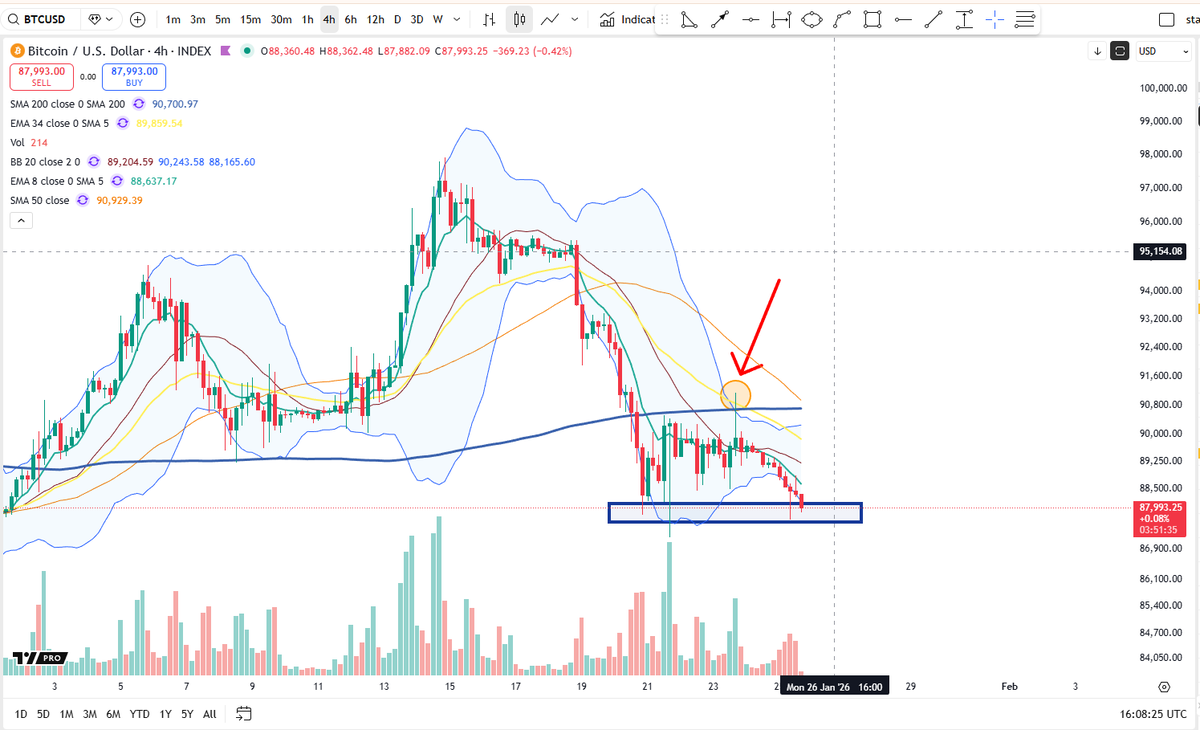
$BTC back to range lows after that bounce fizzles out at 91k
English

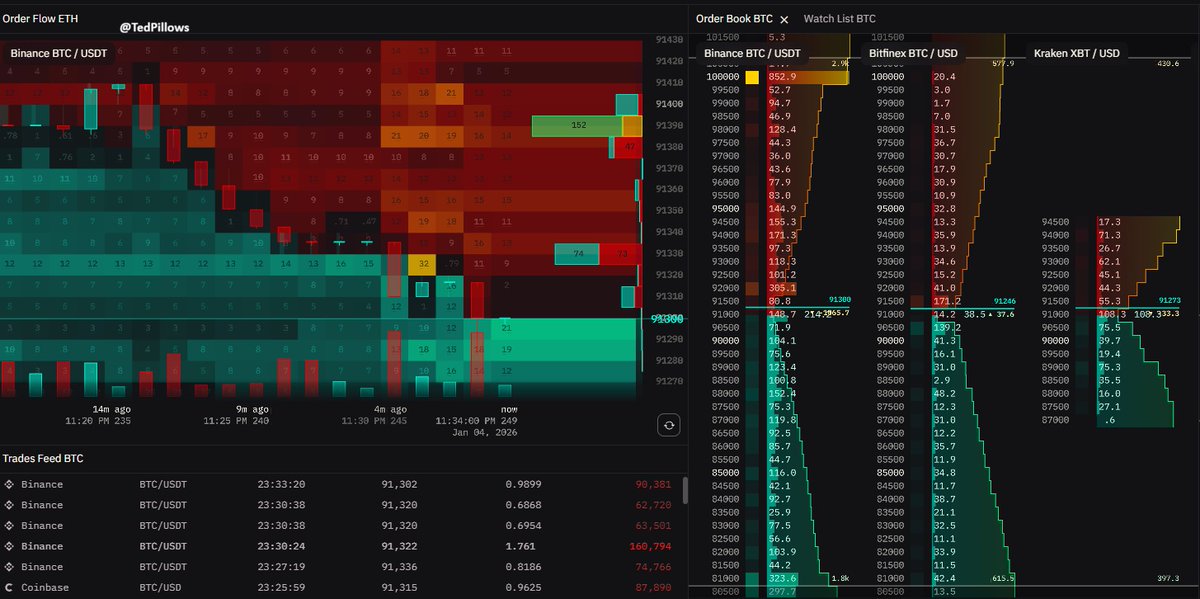

$ZEC $ANYONE $XMR
PRIVACY SEASON 2.0 LOADING
a16z crypto@a16zcrypto
Privacy will be the most important moat in crypto @alive_eth
English

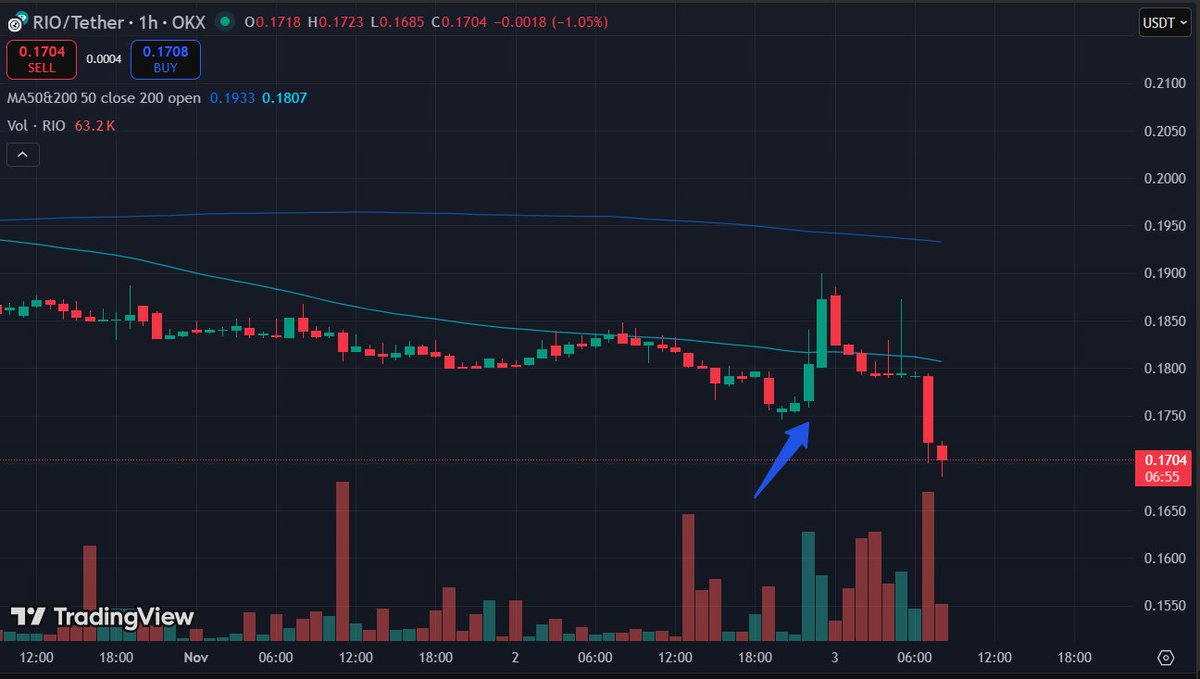
Same whale deposited another $200k USDT to @okx to accumulate more $RIO 11hours ago
Once again retail is following herd consensus that "the cycle is over" and giving up on crypto while 🐋 buy your tokens for cheap 👀

Barry 🏙️@0xBarry_03
I have been tracking wallets for a while that previously interacted with the #Realio ecosystem Yesterday a whale deposited 500k USDT on @okx and few minutes later $RIO price is up 10%+ He didn't spend all of it yet 🤔 Fearful paper hands once again selling to 🐋 #RWA
English
@Nebraskangooner Not sure if they requested rio stock or rio rwa project?
English

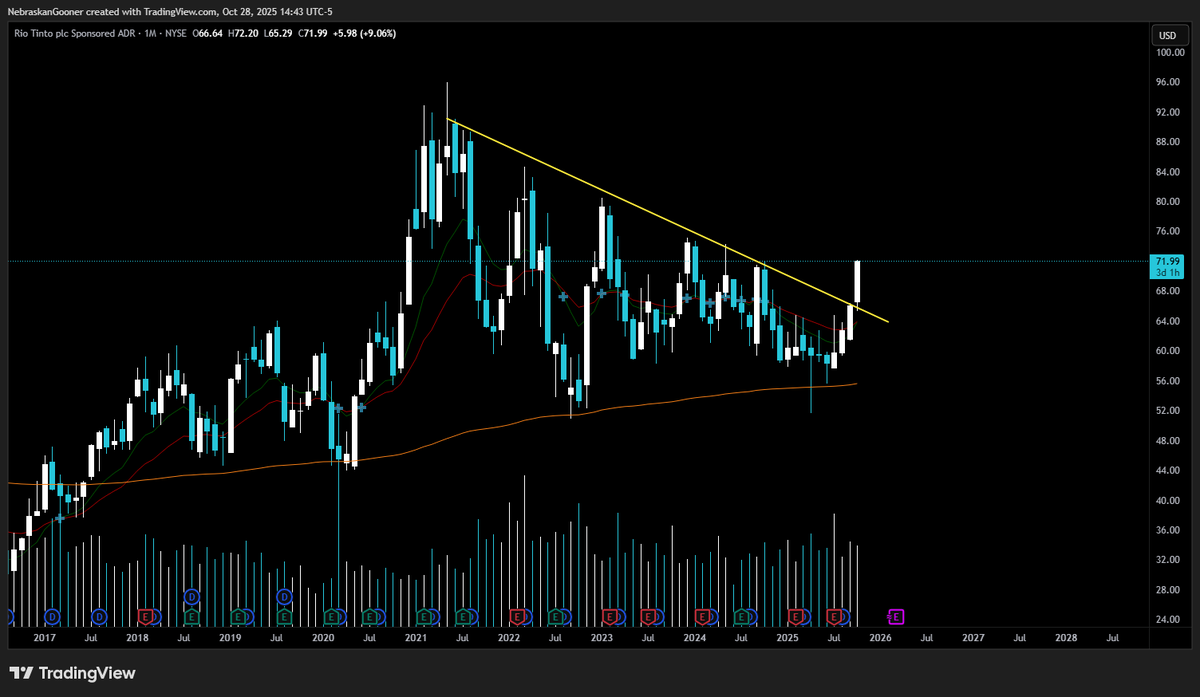
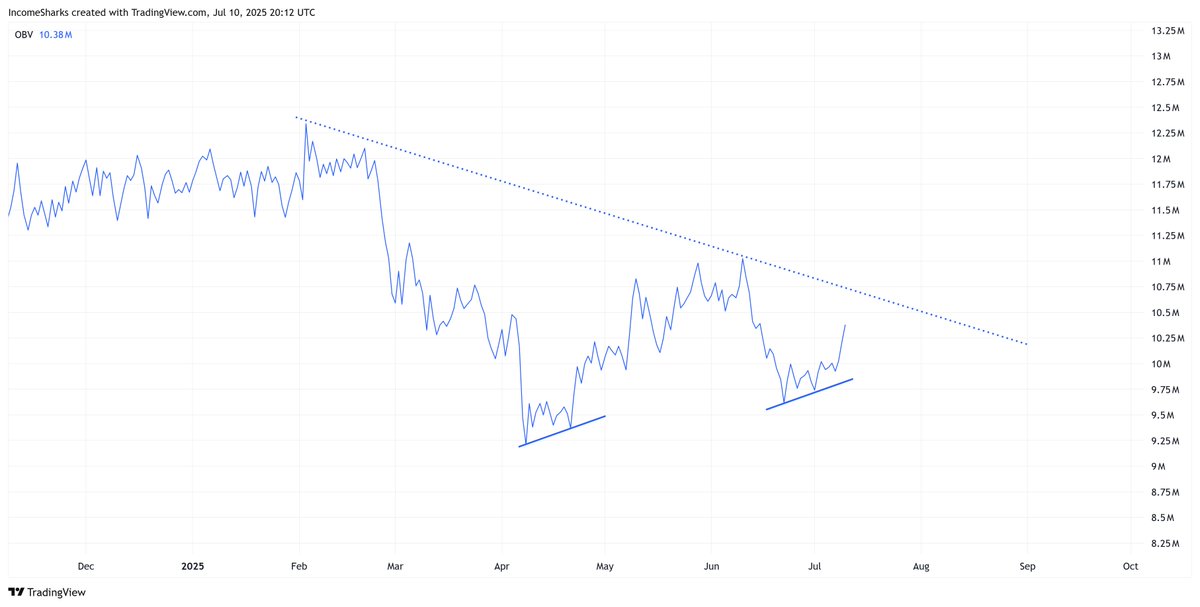
$RIO (per request)
Looks like a nice monthly time frame breakout. As long as it holds this month's low, expecting more upside.
English
DAguero ⚡️ retweetledi

Make Europe Great Again.
▪️Reject Socialism
▪️Restore free speech
▪️Protect the borders
▪️Expose mainstream media lies
▪️Get rid of woke ideology
▪️Promote family values
▪️Don't be ashamed of our heritage
▪️Stop far-left brainwashing in schools
Time to MEGA 💪
English
DAguero ⚡️ retweetledi

Elon is right, Europe is drowning in pessimism, and it’s by design.
The globalist agenda thrives on hopelessness.
When people lose pride in their nations, when they’re told their history is shameful and their future is bleak, they stop fighting.
That’s exactly what “the system” wants, complacency, surrender, and submission.
Europe doesn’t need to end.
It needs to wake up.
It’s not “bad” to love your homeland, to protect your borders, to take pride in your heritage.
It’s not “bad” to want a future where your children are safe, where your culture thrives, and where opportunity flourishes.
The powers that be want you to believe it’s over.
It’s not.
Europe has survived invasions, wars, and plagues, it will survive this, too.
But survival requires action, courage, and belief. Fight for what you love.
Hope isn’t just an idea, it’s the spark that rebuilds nations.
Europe deserves better, and so do you.
English
DAguero ⚡️ retweetledi


DAguero ⚡️ retweetledi

🔒 @SecretNetwork has joined @nvidia Inception, a program that supports startups driving industry innovation through cutting-edge technology! 🚀
Key points of the partnership:
⚙️ Accelerated Development: Leveraging NVIDIA’s AI training and resources to advance Decentralized Confidential Computing (DeCC).
🔒 Enhanced Privacy Solutions: Empowering developers to build dApps with encrypted, secure data processing.
🤝 Strategic Collaboration: Collaborating with industry experts to foster blockchain privacy innovation.
🌐 Broadened Ecosystem Reach: Scaling DeCC solutions across Web3 platforms with NVIDIA’s support.
This partnership paves the way for privacy-focused innovation in blockchain and beyond! #SecretNetwork #NVIDIAInception #Blockchain #Privacy #DeCC
scrt.network/blog/nvidia-in…

English
$scrt & #nvidia nice combo
Secret Network@SecretNetwork
We are working with @nvidia through Inception to build the decentralized confidential computing infrastructure the world needs to safely adopt AI innovations in strategic and sensitive fields. By Joining NVIDIA Inception we gain access to cutting edge resources, data, and experts that perfectly complement our own expertise. We feel like this is the perfect match and there is no limit to what ee can accomplish! We are building the foundational infrastructure that every decentralized AI platform needs. We will be giving exciting updates this week, join us on the journey 🤝 scrt.network/blog/nvidia-in…
Español