
Sabitlenmiş Tweet
Mo. Dawa
18.4K posts


Mo. Dawa retweetledi


Mo. Dawa retweetledi

Mo. Dawa retweetledi

As I have always said, If you have a problem with menstrual blood, then just date a man. Women menstruate it is not news. And sometimes, mistakes will happen.
If you think this little blood messes up your car, then wait till she has to push a baby out in the car while you are stuck in jam rushing to the hospital, you will see real blood.
And if she had a heavy meal before labor begins, Number 2 will actually come out before the baby. So this is nothing lads.
As long as you are straight and love women, then terms and conditions apply.😉 abakyala bazira.
LADE HERSELF@Thebiglade
Bro to bro, your girlfriend did this, what would you do??
English
Mo. Dawa retweetledi


Mo. Dawa retweetledi

Finally a battery that lasts more than 1 day, peak engineering tbh

Peter Mick@ThePeterMick
Bye bye Apple Watch, opening this now
English
Mo. Dawa retweetledi
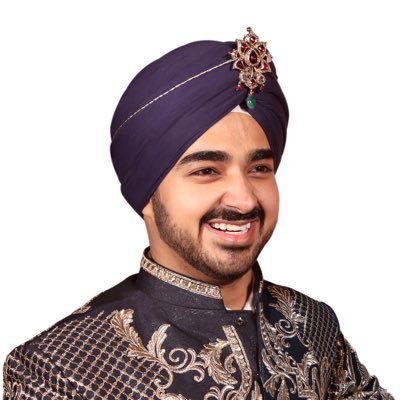
🚨RESEARCHERS JUST MATHEMATICALLY PROVED THAT AI LAYOFFS WILL DESTROY THE ECONOMY.. AND EVERY CEO ALREADY KNOWS IT.. BUT NONE OF THEM CAN STOP..
Two researchers from UPenn and Boston University just published a paper called "The AI Layoff Trap"..
They proved something terrifying..
Every company replacing workers with AI is also firing its own customers.. Every laid-off employee is someone who used to spend money.. When enough people lose their jobs.. Nobody can afford to buy anything.. And the companies that fired everyone go bankrupt selling products to an economy with no purchasing power..
Every CEO can see this coming.. The math is obvious.. Fire workers.. Lose customers.. Lose revenue.. Collapse..
But here's the trap..
No company can afford to stop..
If you don't automate.. Your competitor will.. They cut costs.. Undercut your prices.. Steal your market share.. And you die anyway..
So every company automates.. Knowing it's collectively suicidal.. Because the alternative is dying alone while everyone else survives..
It's a Prisoner's Dilemma.. And the researchers proved it mathematically..
The numbers are already stacking up..
Block cut nearly half its 10,000 employees this year.. CEO Jack Dorsey said AI made those roles unnecessary and that "within the next year, the majority of companies will reach the same conclusion"..
Salesforce replaced 4,000 customer support agents with AI..
Goldman Sachs deployed an AI coder that lets one senior engineer do the work of a five-person team..
Over 100,000 tech workers were laid off in 2025 alone.. AI was cited as the primary driver in more than half the cases..
80% of US workers hold jobs with tasks susceptible to AI automation..
And here's what should scare policymakers..
The researchers tested every proposed solution..
Universal Basic Income.. Doesn't fix it.. It raises living standards but doesn't change a single company's incentive to automate..
Capital income taxes.. Don't fix it.. They change profit levels but not the per-task decision to replace a human..
Worker equity and profit sharing.. Narrows the gap but can't close it..
Collective bargaining.. Can't fix it.. Because automating is a dominant strategy.. No voluntary agreement between companies is self-enforcing..
Only one thing works.. A Pigouvian automation tax.. A per-task charge that forces every company to pay for the demand it destroys when it fires a worker..
The researchers call it a "Red Queen effect".. Better AI doesn't solve the problem.. It makes it worse.. Because every company sees a bigger market share gain from automating faster than rivals.. But at the end.. Everyone automates equally.. The gains cancel out.. And the only thing left is more destroyed demand..
The paper's conclusion is devastating..
This isn't a transfer from workers to company owners.. Both sides lose.. Workers lose their income.. Companies lose their customers.. It's a deadweight loss that harms everyone..
And no market force can break the cycle..
The AI layoff trap isn't a prediction.. It's already happening.. And the math says it won't stop on its own.
English
Mo. Dawa retweetledi

Mo. Dawa retweetledi

ASSALAMUALAIKUM
PLEASE HELP RETWEET
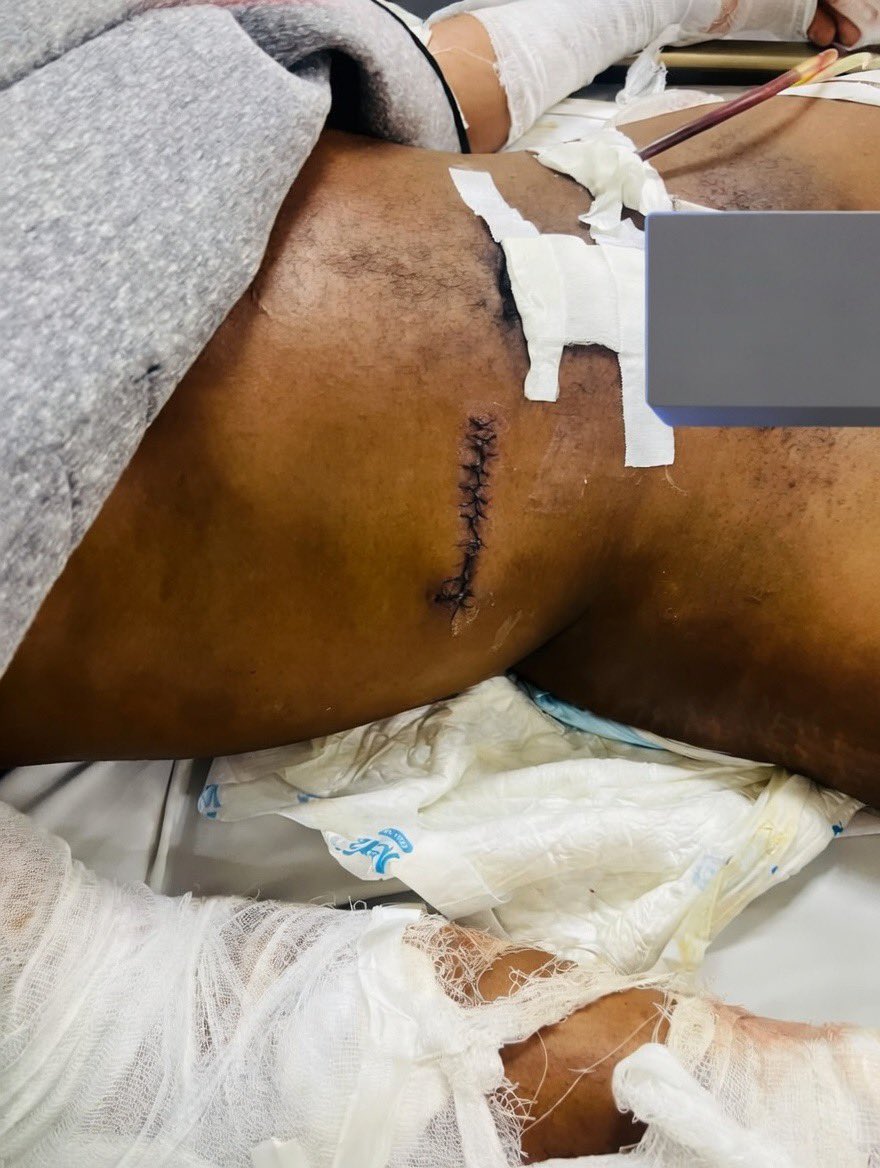
My brother had his first surgery last week. The second surgery has been fixed Wednesday April 8. Pls I am begging everybody to help donate. We currently need #3.6m to reach our target.
ACCT - 8520648877 (ADENIJI OLAOLUWA)
BANK- STERLING

Faridah@faridahhxx
Assalamu Alaikum warahmatullahi wabarakatuh! WE NEED #11m TO SAVE MY MY BROTHER’S LIFE. PLEASE I’M BEGGING EVERYONE TO HELP RETWEET AND DONATE ACCT - 8520648877 (ADENIJI OLAOLUWA) BANK- STERLING Jazakallahu khairan
English
@metrock2015 @RoshanKrRaii They don't back down. The earlier the US psychopath knows this the better for all.
English

@RoshanKrRaii @DawaAbbas The human version of “honey badgers” 😂
English
Mo. Dawa retweetledi

Bro 😭
Iranians 🇮🇷 are literally vibing in the nuclear power plant city of Bushehr which Donald Trump has threatened to blow up.
These people fear absolutely nothing 👏
English
Mo. Dawa retweetledi

So many of you are shocked by Trump's behavior & methods.
But this is what Israel has been doing almost continuously for 80 years & you fucks kept looking the other way.
English
Mo. Dawa retweetledi

Mo. Dawa retweetledi
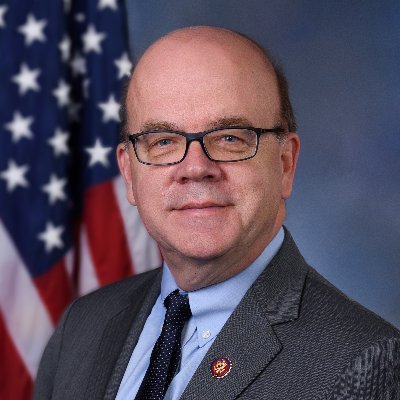
The President of the United States is a madman.
English
Mo. Dawa retweetledi

Mo. Dawa retweetledi
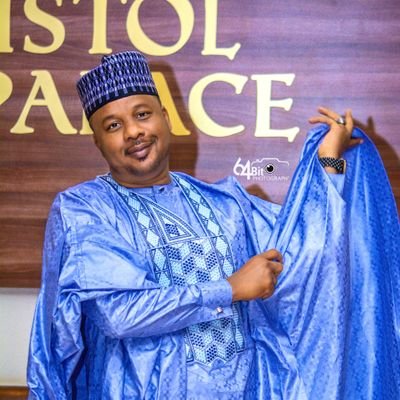
How Tinubu Won and Lost the North
By Salihu Tanko Yakasai
The story of the 2023 presidential election cannot be told without the North. It was central to the emergence of Bola Ahmed Tinubu, not just in votes, but in trust, alliances, and calculated political risk taken by influential Northern actors at critical moments.
Before the primaries, Tinubu’s network in the North was deep and deliberate. He had strong ties with figures like Aliyu Wamakko and Rabiu Musa Kwankwaso, alongside key APC governors such as Abdullahi Umar Ganduje, Nasir El-Rufai, and former Governor Abubakar Badaru. These were not ceremonial relationships - they translated into real political leverage.
At a time when resistance within the ruling party threatened his ambition, these Northern allies stood firm. They backed him through the primaries, even when it meant confronting entrenched interests, or the so-called cabal within the Presidential Villa. Northern governors went as far as meeting late President Muhammadu Buhari to demand clarity on succession. His neutral stance opened the door, and they walked Tinubu through it.
Then came the election season. Policies like the naira redesign, widely seen as an attempt to weaken Tinubu’s chances, were openly resisted by some of these same allies. Their support was not passive - it was active, visible, and costly.
Beyond politics, Tinubu also secured the backing of influential Muslim scholars. The Muslim-Muslim ticket became a rallying point. Clerics framed it as a matter of religious duty and mobilized support, even from the mimbar during Friday prayers.
By the time the votes were counted, the numbers told the story. Tinubu, a Southern candidate, drew the bulk of his strength from the North - 63%, compared to 36% from the South. The North invested in him, and delivered.
But what followed has been a different story.
There is now a growing sense among many of those same Northern allies that the relationship has not translated into inclusive governance. Complaints of exclusion and lack of consultation are widespread. Key figures who helped deliver victory now appear sidelined.
Nasir El-Rufai’s exclusion from the cabinet raised immediate questions. Abdullahi Ganduje was also passed over for executive office, later given the party chairmanship - a role many saw as compensation rather than strategy, and one he eventually exited. Developments involving Abubakar Malami have only deepened perceptions of political distancing and quiet retribution.
Even within government, there are signs of strain. Ministries are underfunded, with allocations falling far below approved budgets. The Minister of Health publicly stated he received just N38 million for capital projects out of a N200 billion proposal. Behind the scenes, some ministers are reportedly funding their roles from personal resources, while others appear better supported. It raises a simple question - what exactly are the priorities?
Religious backing is also shifting. Clerics who once campaigned vigorously are now more critical, especially on issues of trust and fairness. Concerns around INEC and the appointment of a perceived biased umpire have only heightened tensions, with some openly threatening to withdraw support.
A related dimension that is quietly reshaping sentiment in the North is the growing push of what many describe as a “Christian genocide” narrative. While insecurity remains a national crisis, there is increasing resentment in core Northern states where communities have borne some of the heaviest losses over the years. From banditry to insurgency, large swathes of the North have experienced sustained violence affecting predominantly Muslim populations. This has led to a perception that the framing of the crisis is selective and, at times, politically motivated. For many, it raises deeper questions about fairness in national discourse and reinforces a feeling of being misunderstood or deliberately misrepresented 1/2
English


Ni lokacin da nayi aure farko farko, Akwai wata neighbor dinmu Salamatu, Idan tazo ta fara zuba! 😮💨, ko madina maishanu bata nuna mata surutu.
I invented a plan to get rid of her, wata rana ta shigo kawai na shige daki na saka singlet da barkakken wando, I sat right opp..
Drama Queen 👑@Khadeeejaaat
akwai wanda ya shiga dakin ya fito daga shi sai boxers, da sauri kowacce ta tashi ta ware😂 Amma littafin hausa ne
Filipino
Mo. Dawa retweetledi

Mo. Dawa retweetledi

One thing I have learned in my humble time, mocking Allah swt never ends well!

English