Dawid Konotey-Ahulu

10.5K posts

Dawid Konotey-Ahulu banner
Dawid Konotey-Ahulu

Dawid Konotey-Ahulu

@Dawid1

Entrepreneur Founder of Partnership For Change, (Finance, Health, Care, Tech, Govt), mallowstreet (collaboration) & Redington (Pensions).

London Katılım Şubat 2009
12.2K Takip Edilen11.1K Takipçiler
Dawid Konotey-Ahulu retweetledi
Awni Hannun
Awni Hannun@awnihannun·
Adopting Claude speak in my regular life, episode 1: Partner: Did you do the dishes tonight? Me: Yes they're done. Partner: Why are they still dirty? Me: You're right to push back. I didn't actually do them.
English
397
3.8K
55.9K
1.8M
Dawid Konotey-Ahulu retweetledi
nick
nick@nickemmons·
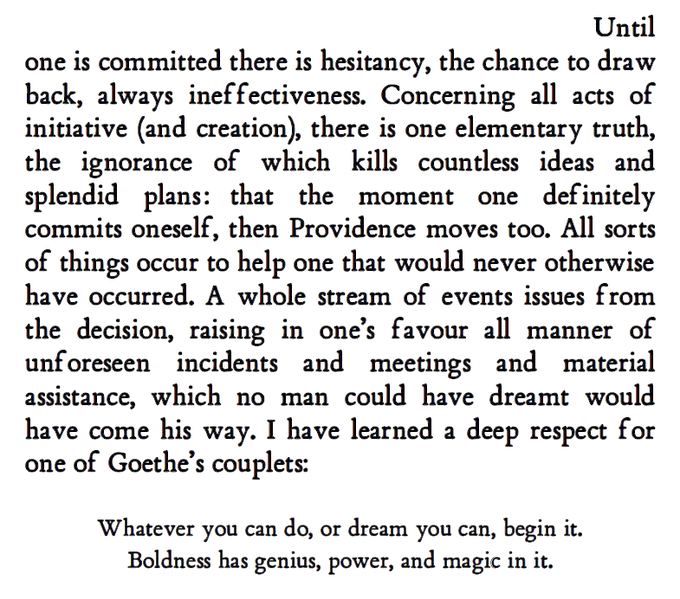
One of my favourite quotes comes from an obscure book written by a Scottish mountaineer in the 50s
nick tweet media
English
22
503
3.2K
72.7K
Dawid Konotey-Ahulu retweetledi
Mr PitBull Stories
Mr PitBull Stories@MrPitbull07·
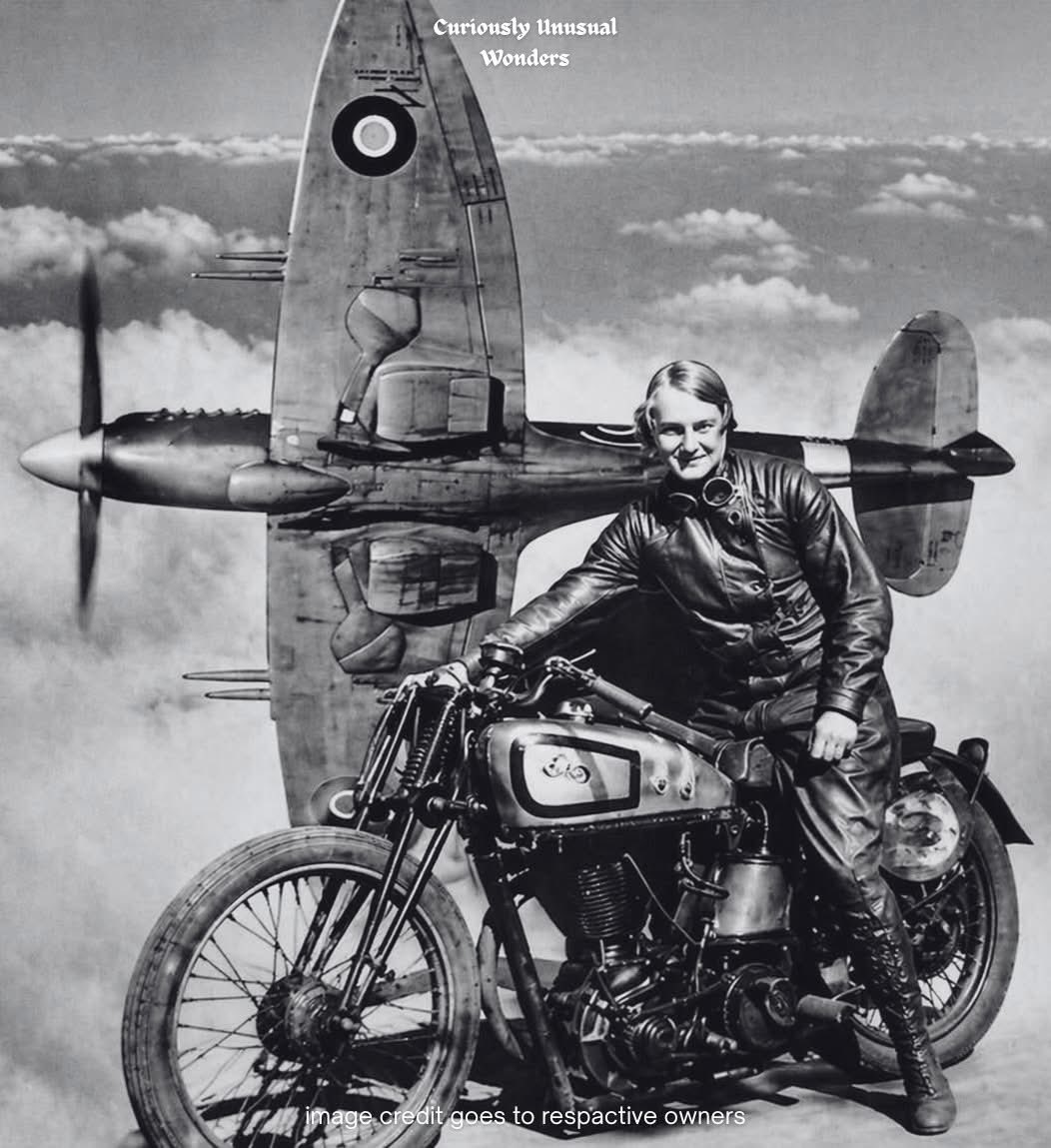
Every time a German Messerschmitt pilot wanted to escape a Spitfire on his tail, he did the same thing. He pushed the nose down. In a dive, the German engine kept running — it used fuel injection. The British Spitfire's engine cut out. For one and a half seconds the Merlin went dead, the aircraft shuddered, and by the time it caught again the German was gone. Worse: if a German was behind a British pilot and the British pilot dove to escape, the German could follow and keep shooting while the British engine was silent. Pilots were dying because of a carburetor. The engineers at Farnborough knew about the problem. They were working on a long-term solution — a redesigned carburetor that would take years to perfect and manufacture. A woman named Beatrice Shilling fixed it with a washer. She was born in Hampshire in 1909 and was the kind of child who spent her pocket money on Meccano sets and tools. At fourteen she bought her first motorbike. Her mother, with the inspired instinct of someone who understood what her daughter actually was, found the Women's Engineering Society and arranged an apprenticeship at an electrical firm. She went to Manchester University — one of the first two women ever to study engineering there — graduated with a degree in electrical engineering, stayed another year for a master's in mechanical engineering, and in 1936 joined the Royal Aircraft Establishment at Farnborough as a scientific officer. By the late 1930s she was one of the best carburetor engineers in Britain. She was also one of only three women to hold the British Motorcycle Racing Club's Gold Star — awarded for lapping the Brooklands racing circuit at over 100 miles per hour on a motorcycle. She had reportedly told her future husband, an engineer named George Naylor, that she wouldn't marry him until he earned his own Brooklands Gold Star first. He earned it. They married in 1938. The problem with the Merlin was specific and lethal. The SU carburetor used a float chamber to regulate fuel flow. Under negative g-forces — the forces experienced in a sudden dive — the fuel flooded to the top of the float chamber and starved the engine for 1.5 seconds. Just enough time for a German pilot to turn the tables entirely. The RAF had known about this since the Battle of France. The formal solution — a redesigned pressure carburetor — was in development but wouldn't be ready for years. Shilling was thirty-one years old, working in carburetor research, and she designed a fix in weeks. A brass thimble with a precisely calibrated hole in the center — later simplified to a flat washer — fitted inline in the fuel line just before the carburetor. It restricted maximum fuel flow to just enough to prevent flooding without cutting off power. The key breakthrough: it could be fitted without taking the aircraft out of service. No downtime. No factory return. The old guard at the RAE looked at it and called it a plumbing fix. They called her a plumber. The first batch of 5,000 units was made by a Birmingham firm that normally manufactured plumbing fixtures, which they found embarrassing. The RAF pilots who flew Spitfires with Messerschmitts on their tails called it something else. They called it Miss Shilling's Orifice. With deep affection. By March 1941 she had organized a small team and was personally touring RAF fighter stations across England — traveling between bases on her old racing motorcycle — fitting the device to every Merlin engine they could reach. Squadron leaders all over the country were demanding installations. The word spread faster than the official channels could keep up with. The Germans noticed. They couldn't explain why British fighter pilots had suddenly started following them into dives. They were baffled by the new aggression. They didn't know about the washer. (More story replies)
Mr PitBull Stories tweet media
English
119
1.3K
6.6K
485.5K
Dawid Konotey-Ahulu retweetledi
Jaynit
Jaynit@jaynitx·
In 1942, the Japanese rounded up all Chinese men in Singapore. They were filtering out the healthy young ones to execute. Lee Kuan Yew was 18. A guard pointed at him and said: "Go to that lorry." He knew what that meant. The lorry went to the beaches. The beaches meant machine guns. He asked: "Can I collect my other things?" They said yes. He walked away, found his family's gardener, and hid in his quarters for two days. When they changed the screening inspectors, he tried again. This time, he got through. The ones sent to that lorry were taken to the beaches and shot. Somewhere between 50,000 and 100,000 didn't survive. 60 years later, he sat down at Harvard to explain how he built Singapore from a tiny island into one of the wealthiest nations on Earth: On what the war did to him: "We lived in happy, placid colonial Singapore in the 1920s and 30s. The British Empire would have lasted another thousand years, so we thought." Then the Japanese came. In less than one and a half months, the British collapsed. "Three and a half years of hell. Butchery. Brutality. Many didn't survive. I was fortunate. I did." "But it changed us." "What right did they have to do this to us? Why did the British let us down so badly?" When the war ended, Lee went to Cambridge to study law. But he was watching with different eyes. "Can they govern me better than I can govern myself? Because they scooted when the Japanese came in. And why shouldn't I be running the place?" On learning languages to lead: Lee was the best speaker in English. But only 20% of Singapore spoke English. The masses spoke Hokkien, Mandarin, and Malay. "So every day at lunchtime, instead of having lunch, I would sit down with a Hokkien teacher and laboriously and painfully learn to convert my Mandarin into Hokkien." "Had I not mastered that, the battle would be lost by default." His first speech in Hokkien, the kids laughed at him. "I said, please don't laugh. Help me. I'm trying to get you to understanding." By 6 months, he could get his ideas across. By 2 years, he was fluent. "Believe it or not, at the end of two years I could speak better than most of them." "That came respect." It showed two things: how determined he was, and how sincere. Here was a man doing all these other things and still learning their language just to talk to them. On fighting the Communists: The Communists had been organizing since 1923. The year Lee was born. "Here we were in the 1950s trying to beat them. And they are professionals at organization." They had elimination squads. Guerrillas in the jungle. Killer squads in the towns. Lee stood up and said no. "They denied that they were Communists. 'We're just left-wing socialists.' So I did a series of 12 broadcasts to set the scene. And I made it in three languages." English. Malay. Mandarin. 20 minutes each. "When I finished each broadcast, the director of the station couldn't see me. Went into the room and found me lying on the floor trying to recover my breath." "But it was a fight for survival. Life or death." On where trust comes from: "It's difficult to establish trust in times of calm. You just say, 'Well, it's an argument, therefore I'm a better guy than you.'" "But when the chips are down and you can get eliminated in a very unpleasant way and you show that you're prepared for it and you'll fight for them, it makes a difference." "Without that trust, we could not have built Singapore." On IQ vs EQ: Harvard asked him: would you prefer high IQ or high EQ in a leader? "IQ, you can get beautiful paper done. Complex formulas worked out. Elegant solutions." "But when you've got to get a team to work and put that formula into practice, you're dealing with human beings." "If you're not good at EQ, you can't sense that A doesn't get on with B, and you put them in the same team. It's no good." He rated his own EQ as 7 or 8 out of 10. His IQ as "maybe 120." But he had colleagues who could sense a person instantly. "He shook hands with the man and said, 'I recoiled when I felt his palm. Evil man.' And he was. How does he know? I don't know." "So I learned whenever I had to do interviews to choose people, I would get people who are very good at seeing through a candidate." On corruption: Singapore in the 1950s was full of deals, bribes, and organized crime. "When we took over, we decided that this was the critical factor. If we did not make it so that every dollar put in at the top reaches the ground as one dollar, we're not going to succeed." "We came in and made a symbolic act. We dressed in white shirts, white trousers, and said we will be what we represent." He put the anti-corruption bureau under his personal portfolio. "I gave the director the authority to investigate everybody and everything. All ministers. Including myself." One of his own colleagues took half a million in bribes. When the investigation started, he asked to see Lee. "I said, if I see you then I'll be a witness in court. So best not see me. Better see your lawyer." The man committed suicide. Left a note saying: "As an oriental gentleman who believes in honor, I have to pay the supreme price." "It's a heavy price. But it reminds every minister that there are no exceptions." On consistency: Lee had three journalists analyze 40 years of his speeches. He asked them: what was the dominant theme? All three said the same thing: consistency. "What I said at the beginning, throughout all that period, the theme stayed loud and clear." "That made it simple. Because you know where you stand with me. And you know what I want to do." On delivering results: "We deliver the homes, the schools, the jobs, the hospitals." "Today, 98% of our people own their own homes. The smallest would be about $100,000 US. The biggest about $300,000." "Once you own that amount of assets, you are not in favor of risking it with a crazy government. Your assets will go down in value." "But that was planned." Why? Because Singapore is small. Everyone does national service. If you're going to fight, you better be fighting for something you own. "So we give everybody a stake." On changing culture slowly: Lee wanted Singapore to speak English. But he couldn't force it. "Had I passed a law and said you will all learn English, we would have had mayhem. Riots." Instead, he let parents watch who got the best jobs. The jobs were already there, from the multinationals and banks. They all used English. "They watched and saw who got the best jobs. And they switched." It took 16 years. "I did not want to have said 16 years. Because in those 16 years I lost 20,000 Chinese graduates who had poor jobs. I wanted to make it shorter. I couldn't. I would have run into flack." On whether leadership can be taught: Lee quoted Isaac Singer, the Nobel Prize winner for Yiddish literature. Someone asked Singer: "Can you make a writer write great literature?" He paused. Then said: "If he has the writer in him, I will make him a good writer in a shorter time." Lee's version: "Can you make a leader of anybody? I don't think so." "He must have some of the ingredients. He must have that high energy level. He must have the ability to project himself, his ideas. He must have the desire, almost instinctively, to say 'let's do something better.' Of wanting to do something for his fellow men and not just for himself and his family." "You can't teach those things. He's either got it or he hasn't got it." "But if he's got that, then you can save him a lot of trouble." On sustaining yourself: Harvard asked how he managed despair over decades of leadership. "If your message is one of despair, then you should not be a leader. You must give people hope." "But there are moments when you feel very down. Either because you're physically down, or emotionally down, or because the world has turned adverse against you." "When you are in that condition, the first thing you do is get a good night's sleep. Then get a swim or chase a ball. Get the cobwebs out of your mind." "If you're not fit, you're going to make mistakes. Physically fit. You must stay physically and mentally fit." In his later years, he learned to meditate. "At the end of 20 minutes to half an hour, my pulse rate can go down from 100 to about 60. You can feel yourself subside. You still your mind. You empty your mind." "Then when you are rested, you resume quietly. You still got the same problems. Maybe you sleep on it. Come back. Look at it for a few days. Then decide." This 2 hour Harvard interview will teach you more about leadership than every business book you've read combined. Bookmark & give it 2 hours this weekend, no matter what.
English
95
1.4K
6.4K
947.1K
Dawid Konotey-Ahulu retweetledi
Ihtesham Ali
Ihtesham Ali@ihtesham2005·
A Soviet psychologist walked into a café in 1927 and watched a waiter do something impossible. He remembered every open order at every table. Perfectly. Without notes. Without effort. Then a table paid their bill. She asked him to repeat the order. He couldn't remember a single item. She spent the next two years figuring out why. What she found is now the operating system underneath every platform fighting for your attention. Her name was Bluma Zeigarnik, and she was a graduate student at the time, sitting with her professor Kurt Lewin, watching the waiters work the room. What caught her attention was something so ordinary that it had been happening in restaurants for centuries without anyone asking why. The waiters could remember every open order with perfect accuracy. Table four wanted the schnitzel with no sauce. Table seven had changed their wine twice. Table twelve owed for three coffees and a dessert. Every detail, held without effort, without notes, without any visible system at all. But the moment a table paid their bill, the information vanished. Completely. Lewin tested it on the spot. He called a waiter back minutes after a table had settled up and asked him to recite the order. The waiter could not do it. Not partially. Not approximately. The information was simply gone. Zeigarnik went back to her lab and spent the next two years turning that observation into one of the most replicated findings in the history of psychology. Here is what she proved, and why it changes how you think about attention, memory, and almost every piece of media you have ever consumed. She gave participants a series of tasks. Some tasks they were allowed to finish. Others were interrupted before completion. Then she tested recall across both groups. The unfinished tasks were remembered at nearly twice the rate of the completed ones. Not slightly better. Nearly twice. The brain was holding the incomplete work in a state of active tension, returning to it, keeping it warm, refusing to file it away. The finished tasks were closed, archived, released. The unfinished ones were still running. She called it the resumption goal. When the brain commits to a task and cannot complete it, it opens a file that stays open until resolution arrives. That open file consumes a portion of your cognitive bandwidth whether you are thinking about it consciously or not. It surfaces in idle moments. It pulls at the edge of your attention during other work. It is the thing you find yourself thinking about in the shower when you were not trying to think about anything at all. This is not a flaw in human cognition. It is a feature. The brain evolved to finish things. An open loop is a signal that something important is unresolved. Keeping that signal active increases the probability that you will return to it and complete it. In an environment where most tasks had real survival stakes, this was an extraordinarily useful mechanism. In the modern world, it is the most exploited vulnerability in human attention. Netflix did not invent the cliffhanger. But it industrialized it in a way no medium before it ever had. When a show ends on an unresolved question, it does not just create curiosity. It opens a file in your brain that stays active until the next episode closes it. The autoplay countdown that begins at 15 seconds is not a convenience feature. It is a precise calculation about how long the average person can tolerate an open loop before the discomfort of not knowing overrides every other intention they had for the evening. One more episode is not a choice. It is your brain doing exactly what it was designed to do: return to what is unfinished. The writers who built Lost, Breaking Bad, and Succession understood this intuitively without ever reading a psychology paper. Every episode ended on an open question. Every season finale answered three things and opened five more. The entire architecture of prestige television is a Zeigarnik machine running at industrial scale. But television is not where this gets dangerous. Every notification on your phone is an open loop. Every unread email is an open loop. Every task you wrote on a list and have not yet crossed off is an open loop. Each one is consuming a small but real portion of your available attention, pulling fractionally at your focus, degrading your capacity to be fully present in whatever you are actually doing right now. TikTok's algorithm does not just serve you content you like. It serves you content that ends one loop and immediately opens another, keeping the resumption system permanently activated so the cost of stopping always feels higher than the cost of continuing. The research on this accumulation effect is striking. Psychologists studying cognitive load have found that unfinished tasks do not sit passively in memory. They actively interrupt. They surface at the wrong moments. They are the reason you are reading something and suddenly remember an email you forgot to send. The brain is not malfunctioning. It is running its resumption system exactly as designed. It is just running it across forty open loops simultaneously, in an environment that generates new ones faster than any human nervous system was built to process. The most important practical implication Zeigarnik's research produced is one that most people use backwards. David Allen built his entire Getting Things Done system on the insight that the only way to close a cognitive open loop is to either complete the task or make a trusted commitment to complete it later. Writing something down in a system you actually trust has the same effect on the brain as finishing it. The file closes. The bandwidth is released. This is why writing a task down feels like relief even before you have done anything about it. You have not solved the problem. You have simply told your brain that the loop is registered and will be returned to, which is enough for the resumption system to stand down. The inverse is equally true and far more destructive. Every task that lives only in your head, unwritten and unscheduled, is an open loop burning cognitive resources around the clock. The mental cost is not proportional to the size of the task. A tiny nagging obligation consumes the same active tension as a major project. Your brain does not discriminate by importance. It discriminates by completion. Zeigarnik published her findings in 1927. The paper sat in academic literature for decades before anyone outside psychology paid attention to it. Then television got good. Then the smartphone arrived. Then the entire attention economy was engineered, largely by people who understood intuitively what she had proven scientifically: an open loop is the most powerful hook available to anyone who wants to hold human attention. Netflix knew it. Instagram knew it. Every designer who ever made a notification badge red instead of grey knew it. The café in Vienna is long gone. The mechanism she discovered there is now the operating system underneath every platform fighting for your time. Every "to be continued." Every unread notification. Every thread that ends with "part 2 tomorrow." All of it is the same waiter, the same unpaid bill, the same brain refusing to let go of what it has not yet finished. Zeigarnik noticed it over coffee in 1927. A century later, it is the most valuable insight in the history of media. And nobody taught it to you in school.
Ihtesham Ali tweet media
English
233
2.5K
8.8K
862.8K
Dawid Konotey-Ahulu retweetledi
Aakash Gupta
Aakash Gupta@aakashgupta·
There's a physicist at Stanford named Safi Bahcall who modeled this exact principle and the math is wild. He calls it "phase transitions in human networks." When you're stationary, your probability of a lucky event is limited to your existing surface area: the people you already know, the places you already go, the ideas you've already been exposed to. Your opportunity window is fixed. When you move, your collision rate with new nodes in a network increases nonlinearly. Double your movement (new conversations, new cities, new projects) and your probability of a serendipitous encounter doesn't double. It roughly quadruples. Because each new node connects you to their entire network, not just to them. Richard Wiseman ran a 10-year study at the University of Hertfordshire tracking self-described "lucky" and "unlucky" people. The single biggest differentiator wasn't IQ, education, or family money. Lucky people scored significantly higher on one trait: openness to experience. They talked to strangers more, varied their routines more, and said yes to invitations at nearly twice the rate. The "unlucky" group followed the same routes, ate at the same restaurants, and talked to the same 5 people. Their networks were closed loops. No new inputs, no new collisions. Luck isn't random. Luck is surface area. And surface area is a function of movement. The lobster emoji is doing more work than most people realize. Lobsters grow by shedding their shell when it gets too tight. The growth requires a period of total vulnerability. No protection, no armor, soft body exposed to the ocean. That's the cost of movement nobody posts about. You have to be uncomfortable first. The new shell only hardens after you've already moved.
@d9vidson

a moving man will meet his luck 🥀

English
505
14K
67.5K
4.5M
Dawid Konotey-Ahulu retweetledi
Elon Musk
Elon Musk@elonmusk·
Elon Musk tweet media
ZXX
7.9K
30.9K
285.3K
28.3M
Dawid Konotey-Ahulu retweetledi
Shanaka Anslem Perera ⚡
Shanaka Anslem Perera ⚡@shanaka86·
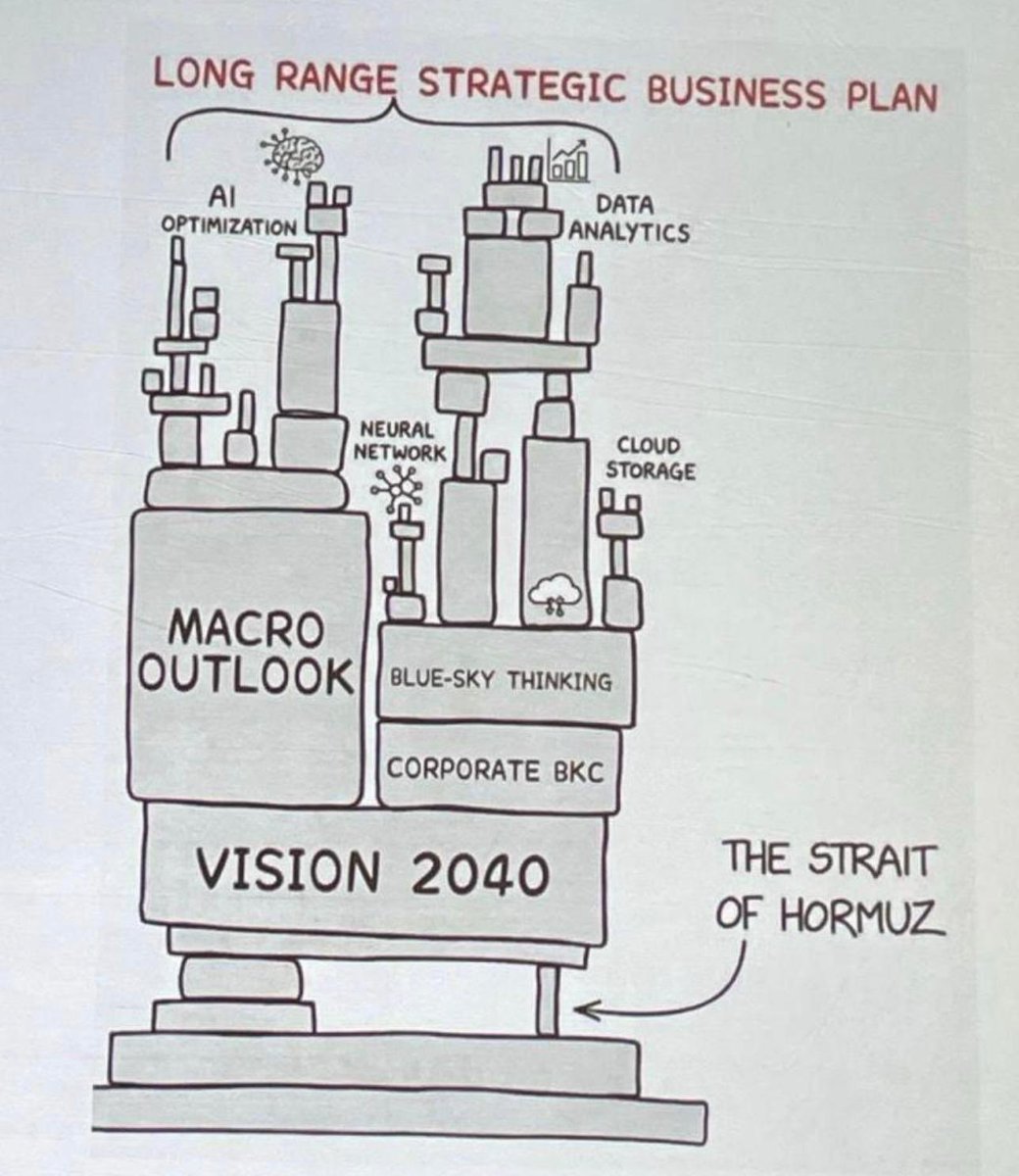
Right now, in barns and equipment sheds across the American Midwest, farmers are making the most consequential decision of this war. Not generals. Not senators. Farmers. At $683 per ton urea, corn economics have collapsed. Nitrogen is the single largest input cost for corn production. At pre-war prices a farmer could justify 180 pounds per acre and expect a margin. At $683 the math breaks. Soybeans fix their own nitrogen from the atmosphere through root bacteria. They do not need the molecule trapped behind the Strait of Hormuz. The seed decision is being made this week across roughly 90 million acres of American cropland. Once the planter rolls into the field, the choice is irreversible. Corn seed in the ground stays corn. Soy seed stays soy. The acreage allocation locks in. USDA Prospective Plantings reports March 31. That report will tell the world how American agriculture responded to the Hormuz blockade. But the decisions it captures are being made now, in conversations between farmers and agronomists and seed dealers who are looking at nitrogen prices and making the rational economic choice: plant the crop that does not need the input you cannot afford. Every acre that shifts from corn to soybeans tightens the corn balance sheet for the rest of the year. Corn feeds livestock. Corn feeds ethanol. The Renewable Fuel Standard mandates 15 billion gallons of corn ethanol annually, consuming roughly 43 percent of the US corn crop regardless of price. That demand is inelastic. If acres shift and production falls while the mandate holds, corn prices spike. Feed costs spike. The protein cascade reverses. The US cattle herd sits at 86.2 million head, a 75-year low. Poultry and pork margins that were benefiting from cheap feed compress when corn crosses $5 per bushel. This is how a naval blockade 7,000 miles from Iowa reaches the American grocery shelf. Not through oil. Not through shipping. Through nitrogen. The farmer cannot afford the molecule. The molecule cannot transit the strait. The farmer plants soy instead. The corn supply tightens. The ethanol mandate consumes its fixed share. The remaining corn reprices. The feed reprices. The meat reprices. The grocery bill reprices. The decision is not political. It is arithmetic performed on a kitchen table by a person who needs to plant in three weeks and cannot wait for a ceasefire, an escort convoy, or an insurance normalisation that the Red Sea precedent says takes years. The deepest penetrator in the American arsenal cannot reach a sealed Iranian doctrinal packet. But the fertiliser price it failed to resolve is reaching every planting decision on 90 million acres of the most productive farmland on Earth. The war’s most irreversible consequence is not happening in a bunker. It is happening in a barn. And by the time USDA publishes the data on March 31, the seeds will already be in the ground. Full analysis in the link. open.substack.com/pub/shanakaans…
Shanaka Anslem Perera ⚡ tweet media
English
372
2.6K
5.8K
1.6M
Dawid Konotey-Ahulu retweetledi
Mark W.
Mark W.@DurhamWASP·
Evelyn Waugh chatting with Elizabeth Jane Howard about being old [he was 60 at the time].
English
48
245
1.2K
130.4K
Dawid Konotey-Ahulu
Dawid Konotey-Ahulu@Dawid1·
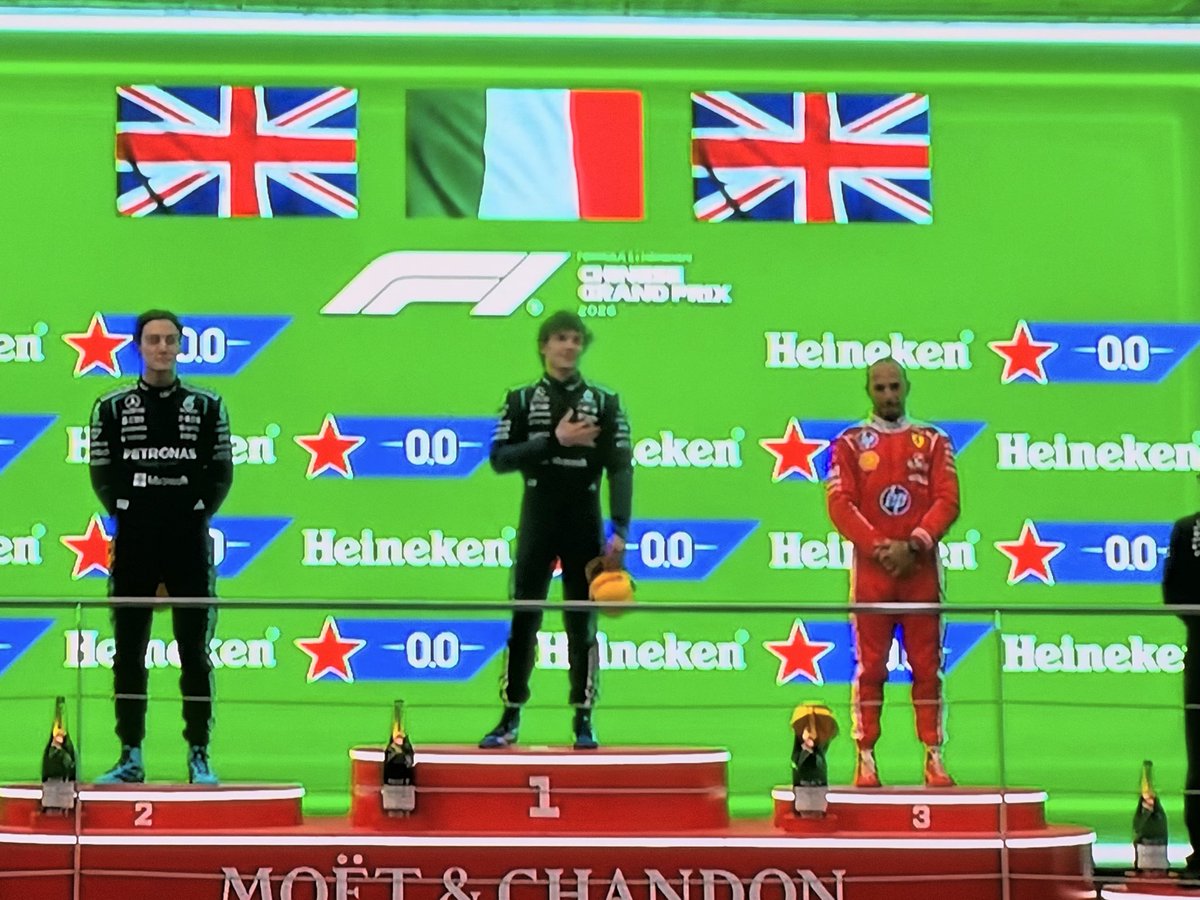
Congratulations Kimi Antonelli! What a drive. And to see Lewis back on the podium. Toto overwhelmed. Joyous stuff.
Dawid Konotey-Ahulu tweet mediaDawid Konotey-Ahulu tweet mediaDawid Konotey-Ahulu tweet media
English
0
2
24
3.2K
Dawid Konotey-Ahulu
Dawid Konotey-Ahulu@Dawid1·
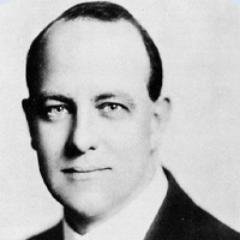
@inimitablepgw Wooster to Jeeves, (who had advised Wooster against wearing some outfit): “But many chaps have asked for details of my tailor.” Jeeves: “Doubtless in order to avoid him, sir”
English
3
17
590
20.2K
Wodehouse Tweets
Wodehouse Tweets@inimitablepgw·
What is the single funniest line Wodehouse ever wrote? No wrong answers, only joy.
English
463
257
1.3K
510.5K
Dawid Konotey-Ahulu retweetledi
💗
💗@ma1ybe·
Women need to speak like this more often. So many of us are conditioned from childhood to downplay our achievements and apologize when asking for clarifications or offering a correction. No apologies, and own your achievements. I love this answer so much.
Zoya🕊️@Zoya_ki_batein

Cheers to women showing us it's ok to be confident.

English
49
3.3K
19.1K
274.8K
Blairsun God save The King! 🇬🇧👑
During an injury break in the Italy v Scotland match in Rome, the camera turned to Princess Anne… and the stadium suddenly filled with heartfelt cheers. It wasn’t just applause — it felt like a tribute to years of dedication, quiet strength, and unwavering duty. She didn’t even realise the cheers were for her until someone gently told her, and her modest, surprised smile said everything 🥹👏
English
223
673
12.3K
829.4K