
Sabitlenmiş Tweet
DeFiTimeZ $DFTZ $SOL
7.2K posts

DeFiTimeZ $DFTZ $SOL
@DeFiTimeZ
The DeFiTimeZ is a FREE weekly digital Magazine . download here for free https://t.co/Fjvd2O1afS join our telegram https://t.co/fmgPZKaFjc
Globall Katılım Mayıs 2023
966 Takip Edilen4.2K Takipçiler

@DeFiTimeZ I guess if we are alive to see if he is right we will know in the next few decades ?? Tik Tok ⏰
English
Michael Saylor: Genius or Pyramid Schemer? Here's Everything You Need To Know — In Plain English
There is a man called Michael Saylor. He runs a company called Strategy, formerly known as MicroStrategy. For years he stood on stages around the world and said one thing louder than anyone else in the room. Buy Bitcoin. Never sell it. Bitcoin is the future of money. Bitcoin is digital gold.
People listened. People trusted him. And then he built something that has the entire financial world asking a very simple question.
Is this the smartest trade in the history of money? Or is it the most elegant pyramid scheme ever constructed?
We are going to explain it simply. No jargon. No complicated finance words. Just the plain truth of what is happening — and then you can decide.
First. What Does Strategy Actually Do?
Strategy is not really a tech company anymore. It is a Bitcoin buying machine.
Saylor's company currently holds over 780,000 Bitcoin. That is worth roughly $54 billion at today's prices. No other public company on earth holds anywhere near that amount.
He buys Bitcoin. He never sells it. That is the whole strategy. His bet is simple — he believes Bitcoin will one day be worth one million dollars per coin. If he is right, Strategy becomes one of the most valuable companies in history.
But here is the problem. Buying that much Bitcoin costs a lot of money. And Strategy does not make enough money from its actual business to fund it. So Saylor built a machine to pull money in from investors. Several machines, actually.
The Jar. A Simple Way To Understand STRC.
Imagine a jar sitting on a table.
Saylor says to you — put your money in this jar. Every single month, I will take some money out of the jar and pay it back to you as a reward. Right now that reward is 11.5% per year. So if you put in $1,000, you get roughly $115 a year paid back to you monthly in cash.
Sounds good. So you put your money in.
Saylor then takes most of what is in the jar and buys Bitcoin with it.
Next month he needs to pay you your reward. But the jar is mostly empty — he spent it on Bitcoin. So he goes and finds new people to put money into the jar. Their money pays your reward.
Then the month after, he needs to pay everyone again. So he finds more new people.
This product is called STRC. It is a preferred stock that trades on the Nasdaq stock exchange. It pays 11.5% annually, monthly in cash. It has already raised over $6.4 billion. Record trading volumes of $1.6 billion in a single day have been reported this week alone.
Saylor calls it his iPhone moment. The greatest capital markets product ever created.
But Wait. It Gets Bigger.
STRC is not the only jar on the table.
Saylor has built four of them. Each one pulls money in from a different type of investor. Each one promises to pay those investors a yield. All of them funded the same way.
STRK — Strike. Pays 8% per year, quarterly in cash. Has a special feature — if Strategy's common stock hits $1,000, you can convert your holding into shares. Raised $563 million.
STRF — Strife. Pays 10% per year, quarterly in cash. No conversion feature. Pure income product aimed at pension funds and conservative investors. The safest of the four. If Strategy misses a payment on this one, the missed amount compounds — growing at up to 18% until it is paid. Raised $711 million.
STRD — Stride. Pays 10% per year. Most junior of all — meaning in a crisis it is last in line before common shareholders. The most dangerous one to hold. If a payment is skipped, it simply disappears — it does not roll forward or compound. It is gone. Raised nearly $1 billion.
STRC — Stretch. The newest and largest. 11.5% variable rate, adjusted monthly, paid in cash. $6.4 billion market cap and growing fast.
Add it up. Over $1 billion per year being paid out across these four products to investors. Every single year. Growing.
Where Does That Money Actually Come From?
This is the most important question. And we have the answer directly from Strategy's own legal filings with the US Securities and Exchange Commission.
Strategy filed with the SEC confirming it has no earnings and no profits — and does not expect to have any for the foreseeable future. Their exact words cover a ten year horizon. Ten years.
So it is not profits paying those dividends. It is not revenue from selling products. The SEC filing uses a specific phrase — return of capital. They are paying investors back with money that came from other investors.
Here is how the machine actually works. Strategy sells shares of its common stock — ticker MSTR — to the market. Investors buy those shares at a premium because they believe Bitcoin is going to keep rising and owning MSTR gives them exposure to that. The cash from selling those shares goes into a reserve pool. That reserve pool pays the dividends across all four preferred products.
The reserve currently holds $2.25 billion. Enough to cover roughly two and a half years of payments if the whole machine stopped tomorrow.
But the machine is not stopping. It is accelerating.
The Bitcoin He Cannot Touch
Here is the part that should make you stop and think.
Saylor owns 780,000 Bitcoin. At $1 million per coin — his dream — that stack is worth $780 billion. Enough to pay every obligation he has ever created a thousand times over.
But he cannot sell it.
The moment he sells even a fraction of that Bitcoin, the price drops. The moment the price drops, investor confidence in MSTR drops. The moment MSTR drops, the premium he sells shares at shrinks. The moment that premium shrinks, the machine has less fuel to pay its investors. The moment investors stop trusting the machine, they stop putting money in the jar.
The entire structure depends on Bitcoin going up. Forever. And Saylor never selling. Ever.
The Bitcoin is the crown jewels of the empire. Everyone can see them. Nobody can spend them.
The Genius Case
Let us be completely fair here. Because there is a genuine argument that this is not a scheme at all. It is a visionary bet.
Saylor only needs Bitcoin to grow at 2.05% per year on average to cover all dividend obligations indefinitely without selling a single coin. Bitcoin's historical average annual return is many times higher than that.
BlackRock holds STRC. Fidelity holds STRC. VanEck holds STRC. These are not naive investors. They are the most sophisticated institutions on earth. They looked at the structure and decided it was worth owning.
If Bitcoin reaches $1 million per coin — and serious analysts believe it will within this decade — Strategy becomes the most powerful financial institution ever built by a private individual. Every product Saylor created looks like genius. Every investor who held on gets paid. The jar never runs out because the Bitcoin backing it is worth more than anyone ever imagined.
The Other Case
Now let us be equally fair in the other direction.
New money is paying old money. That is a fact confirmed by Strategy's own SEC filing — not speculation, not a conspiracy theory. The company itself says it has no earnings. The dividends are classified as return of capital.
The products carry no FDIC insurance. No government protection. STRC holders cannot get their money back from Strategy — they can only sell their shares to another investor. There is no redemption. If nobody wants to buy your shares on the day you need to sell them, you are stuck.
STRD holders can have their payments simply cancelled with no obligation to ever make them up. Skipped — gone — moving on. That is written into the terms.
STRF holders appear safer with the compounding penalty for missed payments — but that safety only exists if Strategy can actually find the cash to pay it. In a deep Bitcoin winter, that assumption gets tested.
The independent analyst Derin Olenik calculated that STRC obligations alone are growing at roughly 30% per month. He calculated that without selling Bitcoin, Strategy would eventually need to issue over one billion new MSTR shares to cover preferred dividends — diluting existing shareholders by nearly 400%. He called it, bluntly, Digital Kamikaze.
Popular investigator Coffeezilla took the story mainstream this week, warning that Strategy's CEO recommended STRC as a savings product for ordinary people — including those living paycheck to paycheck. Coffeezilla's response was simple. This is not fixed income. It is not insured. It is not a savings account. And the dividend is not guaranteed.
So What Is It?
Here is what we know as fact.
Michael Saylor built a machine that takes money from investors, pays them a yield of 8 to 11.5% funded by selling new shares, and uses the rest to buy Bitcoin that he will never sell — hoping that one day the value of that Bitcoin makes every obligation he ever created look like small change.
He has done this across five products simultaneously. He has persuaded BlackRock and Fidelity to participate. He has processed over $1.6 billion in trading volume in a single day. He has bought 780,000 Bitcoin — more than any company on earth.
He is either the greatest capital allocator of his generation. A man who saw Bitcoin's destiny before anyone else and engineered a machine to accumulate as much of it as humanly possible before the rest of the world caught up.
Or he is using other people's money to keep buying Bitcoin — building his company's value on a rising asset he cannot sell, paying investors with new investor money, and betting his entire empire on a number going up forever.
The products are real. The yields are real. The Bitcoin is real.
But the money to pay you comes from the person who buys in after you.
You decide.
@coffeebreak_YT @saylor
GIF
English

I'm Hearing Projects Are Losing Their Accounts — Is X Clearing The Board?
The question is coming from everywhere in the space right now. Projects tagging their own tokens, getting locked out. Accounts discussing crypto for the first time, suddenly frozen. Developer access to platforms built on engagement-based token models, terminated. People are connecting dots and drawing conclusions — @elonmusk is clearing the board before launching his own play.
Let's look at what is actually happening, because the facts tell a more nuanced story than the panic suggests.
What's Actually Happening — Two Separate Crackdowns, Not One
The confusion stems from two distinct policy moves happening in close succession, which have merged in the community's mind into a single narrative.
The first came in January 2026. @nikitabier, X's Head of Product, terminated developer access to so-called "InfoFi" projects — platforms that rewarded users with tokens for posting on X. Projects like Kaito, Cookie DAO, and Loud saw their tokens drop between 11% and 15% within thirty minutes of the announcement. Bier was direct about the reason: these systems were incentivising repetitive, low-quality content at scale. He even offered displaced developers help transitioning to Threads or Bluesky. That is not the language of someone trying to bury a competitor quietly.
The second crackdown came on April 1st, 2026 — and despite the date, it was not a joke. @nikitabier announced that X would implement an automatic account lock for any account posting about cryptocurrency for the first time in its history. Those accounts would then be forced through identity verification before being allowed to post again. The trigger is first-time crypto posting only. Established accounts with a history of crypto discussion are completely unaffected.
Crypto Twitter Did This To Itself
Here is the uncomfortable truth the community does not want to hear: crypto Twitter has been drowning in its own slop for years. Engagement-farming bots, tokenised reply guys posting "gm" one thousand times a day, coordinated raids on comment sections to pump obscure tokens. Legitimate projects — the ones actually building — have been fighting for visibility in a feed polluted by incentivised noise.
X is not wrong on the InfoFi ban. Rewarding users financially for posting created a systematic incentive to generate garbage. The platform was being gamed, and the broader crypto community's credibility was suffering for it. @nikitabier called it bluntly: "Crypto Twitter is dying from suicide, not from the algorithm."
Smart Policy, Poorly Communicated
The first-post auto-lock is, when you read it carefully, a smart and targeted measure. The playbook for crypto account scams is well documented: phish a legitimate account via a fake copyright email, steal the credentials, then immediately blast the audience with fraudulent token promotions. The window between account takeover and damage is minutes. X is closing that window.
The context matters here too. In 2025, X was hit with a €120 million fine by the EU under the Digital Services Act over verification failures. Regulators were watching. Documented cases of high-profile account hacks — the Cardano Foundation account posting fake SEC lawsuits, Drake's account being used to pump a memecoin to $5 million in trading volume, the Animoca Brands co-founder's account hijacked to shill fake tokens — had made the problem impossible to ignore.
The legitimate concern is false positives. New projects, researchers, journalists entering the space for the first time will hit a verification wall. That friction is real and worth acknowledging. But the target of this policy is hijacked accounts and fresh sockpuppets — not your token project's community manager posting for the first time.
The 10K Verification Play Nobody Is Talking About
Here is something that has been largely missed in the coverage: the requirement for accounts over 10,000 followers to undergo ownership verification is not just an anti-scam measure. It is the foundation of a premium, verified crypto audience that X can sell to advertisers.
Right now, crypto advertisers on any platform are buying reach into an audience contaminated with bots, fake accounts, and engagement-farmed followers. A verified, identity-confirmed audience above 10K is a fundamentally different product. X is not destroying the crypto advertising market — it is building a cleaner, more credible version of it that commands higher rates.
For crypto media and legitimate projects, this is actually good news. Fewer bots means your real audience matters more. Verified reach commands premium value.
They're Not Evicting Crypto. They're Building A Mall.
While the community has been focused on what X is taking away, the build happening underneath has been largely ignored. Smart Cashtags — announced by @nikitabier in January 2026 — will deliver near real-time price data for any asset minted on-chain, including small-cap tokens not listed on major exchanges. Users will be able to trade stocks and crypto directly from their timeline. X Money, @elonmusk's payments platform, is in live internal testing with a public beta expected imminently.
X has obtained money transmitter licenses across multiple US states. It is partnering with Visa on its digital wallet infrastructure. @elonmusk has said plainly: "This is really intended to be the place where all the money is."
They are not clearing crypto off the platform. They are clearing the street market to build a regulated, monetised financial ecosystem on top of it.
What's In The Code Doesn't Lie
Now for the detail that adds a layer of intrigue to all of this.
A community account known as X Updates Radar, which monitors changes pushed to X's open-source code, discovered references to "x coins" and "diamonds" embedded in the platform's algorithm. The exact language found in the code: "Diamonds get accumulated by receiving coins on eligible posts. Money earned from diamonds gets added to your estimated earnings." The find was amplified publicly by @AltcoinDailyio's Aaron Arnold, who described it as "a very, very big deal."
When asked directly, @elonmusk denied that this indicated any plan to launch a native X token.
We are reporting the code finding as fact. We are reporting the denial as fact. What sits between those two facts — we leave to you.
The questions the community is asking are reasonable: Will Dogecoin, Musk's long-favoured memecoin, be integrated as the payments rail? Will "x coins" become an in-app rewards currency rather than a tradeable token? Or is the infrastructure sitting in the code waiting for a moment that hasn't arrived yet?
Verdict
Is X clearing the board for its own crypto launch? Not exactly. But it is cleaning house — removing the low-quality noise, building a verified audience, constructing the payments infrastructure, and launching financial tools that put it at the centre of crypto activity rather than the margins of it. The crackdowns are real. The build is real. And somewhere in the open-source code, "x coins" and "diamonds" are sitting quietly, waiting. The CEO says there's no token coming. The code begs to differ. Watch this space.
GIF
English
Morning morning good peeps 🫡 and a very #HappyBirthday 🥳🍾🍻 to @DeFiTimeZ @EntertainerPunk time to get up and get on da vino 🍷🥂
GIF
English
DeFiTimeZ $DFTZ $SOL retweetledi

Set a reminder for my Annual Birthday Roast come and give me your best @DundiesDistrict ! twitter.com/i/spaces/1AxRn…
English
Ceasefire or Rearm? What Markets Aren't Pricing
Markets celebrated Tuesday night. Oil crashed 16%, Bitcoin surged to $72,700, $595 million in shorts got liquidated, and traders who had been sitting on their hands for 40 days finally exhaled. The narrative wrote itself — dealmaker Trump, pragmatic Iran, Pakistan the unlikely hero. Risk on. Buy everything.
But what if the ceasefire was never about peace?
The story markets ignored
While diplomats were shaking hands in principle and Pakistan's PM was posting victory tweets, a different story was quietly circulating inside the Israeli Defence Forces. Reports have emerged of soldiers refusing orders, citing commanding officers who are framing the current conflict not as a geopolitical campaign but as a Biblical one. A war of prophecy. A war that isn't supposed to end with a deal in Islamabad — it's supposed to end with something far more final.
This isn't fringe noise. Religious nationalist ideology has deep roots in Netanyahu's current coalition, the most right-wing government in Israel's history. The belief that this conflict is a precondition for the Messianic age — requiring full Biblical land control and the removal of existential threats — doesn't disappear because Trump announced a ceasefire on Truth Social.
Netanyahu was the first major leader to warn Trump against the deal. Israel's official position is that the ceasefire doesn't cover Lebanon. Israeli strikes continued even as Pakistan was brokering the pause. These aren't the actions of a government that wants two weeks to negotiate. These are the actions of a government that wants two weeks to restock.
What a fake ceasefire means for TradFi
Traditional markets have priced in de-escalation as the base case. The relief rally in equities, the collapse in oil, the drop in the 10-year yield to 4.2% — all of it assumes Islamabad on Friday produces something real.
It probably won't.
Iran's 10-point proposal and Washington's stated positions remain miles apart. There is no binding framework. There is no enforcement mechanism. There is no guarantee Israel — which is not formally party to the Pakistan-brokered deal — holds its fire for 14 days let alone beyond them.
If hostilities resume in two weeks the market reaction will be savage. Oil was at $75 before this war started. It hit $120 at peak. A ceasefire collapse doesn't take it back to $120 — it takes it higher, because the market will have learned that diplomacy doesn't work here. Energy stocks, defence contractors, and inflation hedges reprice violently. The Fed — which already priced out all 2026 rate cuts during the conflict — has no room to manoeuvre. Equity markets that just rallied hard get hit twice as hard on the reversal.
What a fake ceasefire means for DeFi
Crypto told us something important during 40 days of war. The Fear and Greed Index sat at 8. Five bearish posts for every four bullish ones. DeFi protocols contracted. Stablecoin deployment froze. On-chain activity tracked macro fear almost tick for tick.
The $180 billion in stablecoin supply sitting on Ethereum right now is dry powder — but it only deploys into risk if confidence holds. A ceasefire collapse in two weeks doesn't just reverse Tuesday's rally. It resets sentiment to levels worse than the war baseline because markets will have been caught leaning the wrong way twice.
DeFi's structural advantages — 24/7 liquidity, permissionless access, no market close — become vulnerabilities in that scenario. There is no circuit breaker on Uniswap. No trading halt on Aave. When sentiment flips at 3am on a Sunday because a missile alert sounds in Tel Aviv, on-chain positions liquidate in real time with no pause button.
The question markets should be asking
Is this a ceasefire or a resupply operation with a PR wrapper?
If commanding officers in the IDF are telling soldiers this war is Biblical, they are not telling them it ends in a negotiating room in Pakistan. They are telling them it ends on their terms, on their timeline, regardless of what any American president announces on social media.
Markets are pricing a deal. Smart money should be pricing a delay.
The next two weeks in DeFi and TradFi won't be decided in Islamabad. They'll be decided by whether the missiles stay grounded.
This is opinion. DeFiTimeZ covers the intersection of geopolitics, traditional finance, and decentralised markets. Follow us for continuing coverage.
Sound off your opinions in the comments?
English
DeFiTimeZ $DFTZ $SOL retweetledi
That was pure market manipulation. Happy for anyone that won on that trade sorry for the people that believed that the war was over and the people of #Iran
DeFiTimeZ $DFTZ $SOL@DeFiTimeZ
Ceasefire or Rearm? What Markets Aren't Pricing Markets celebrated Tuesday night. Oil crashed 16%, Bitcoin surged to $72,700, $595 million in shorts got liquidated, and traders who had been sitting on their hands for 40 days finally exhaled. The narrative wrote itself — dealmaker Trump, pragmatic Iran, Pakistan the unlikely hero. Risk on. Buy everything. But what if the ceasefire was never about peace? The story markets ignored While diplomats were shaking hands in principle and Pakistan's PM was posting victory tweets, a different story was quietly circulating inside the Israeli Defence Forces. Reports have emerged of soldiers refusing orders, citing commanding officers who are framing the current conflict not as a geopolitical campaign but as a Biblical one. A war of prophecy. A war that isn't supposed to end with a deal in Islamabad — it's supposed to end with something far more final. This isn't fringe noise. Religious nationalist ideology has deep roots in Netanyahu's current coalition, the most right-wing government in Israel's history. The belief that this conflict is a precondition for the Messianic age — requiring full Biblical land control and the removal of existential threats — doesn't disappear because Trump announced a ceasefire on Truth Social. Netanyahu was the first major leader to warn Trump against the deal. Israel's official position is that the ceasefire doesn't cover Lebanon. Israeli strikes continued even as Pakistan was brokering the pause. These aren't the actions of a government that wants two weeks to negotiate. These are the actions of a government that wants two weeks to restock. What a fake ceasefire means for TradFi Traditional markets have priced in de-escalation as the base case. The relief rally in equities, the collapse in oil, the drop in the 10-year yield to 4.2% — all of it assumes Islamabad on Friday produces something real. It probably won't. Iran's 10-point proposal and Washington's stated positions remain miles apart. There is no binding framework. There is no enforcement mechanism. There is no guarantee Israel — which is not formally party to the Pakistan-brokered deal — holds its fire for 14 days let alone beyond them. If hostilities resume in two weeks the market reaction will be savage. Oil was at $75 before this war started. It hit $120 at peak. A ceasefire collapse doesn't take it back to $120 — it takes it higher, because the market will have learned that diplomacy doesn't work here. Energy stocks, defence contractors, and inflation hedges reprice violently. The Fed — which already priced out all 2026 rate cuts during the conflict — has no room to manoeuvre. Equity markets that just rallied hard get hit twice as hard on the reversal. What a fake ceasefire means for DeFi Crypto told us something important during 40 days of war. The Fear and Greed Index sat at 8. Five bearish posts for every four bullish ones. DeFi protocols contracted. Stablecoin deployment froze. On-chain activity tracked macro fear almost tick for tick. The $180 billion in stablecoin supply sitting on Ethereum right now is dry powder — but it only deploys into risk if confidence holds. A ceasefire collapse in two weeks doesn't just reverse Tuesday's rally. It resets sentiment to levels worse than the war baseline because markets will have been caught leaning the wrong way twice. DeFi's structural advantages — 24/7 liquidity, permissionless access, no market close — become vulnerabilities in that scenario. There is no circuit breaker on Uniswap. No trading halt on Aave. When sentiment flips at 3am on a Sunday because a missile alert sounds in Tel Aviv, on-chain positions liquidate in real time with no pause button. The question markets should be asking Is this a ceasefire or a resupply operation with a PR wrapper? If commanding officers in the IDF are telling soldiers this war is Biblical, they are not telling them it ends in a negotiating room in Pakistan. They are telling them it ends on their terms, on their timeline, regardless of what any American president announces on social media. Markets are pricing a deal. Smart money should be pricing a delay. The next two weeks in DeFi and TradFi won't be decided in Islamabad. They'll be decided by whether the missiles stay grounded. This is opinion. DeFiTimeZ covers the intersection of geopolitics, traditional finance, and decentralised markets. Follow us for continuing coverage. Sound off your opinions in the comments?
English
@kenjitokenllc If you like this one wait for the next one about what happens if the Seize Fire doesn't hold
English
Iran-US Ceasefire: What It Means for Finance and DeFi
Forty days of war, a closed Strait of Hormuz, and markets on a knife edge. Then, just before Trump's 8pm Tuesday deadline, Pakistan brokered a two-week ceasefire — and global markets moved instantly and violently.
The immediate numbers
Oil plunged 16% to around $95 a barrel as the Strait reopened. Bitcoin surged to $72,700, up 5% in 24 hours. The move triggered $595 million in total crypto liquidations across 118,489 traders, with short positions accounting for around $427 million — the most aggressive short squeeze since early March.
Crypto-linked equities followed suit, with Strategy, Galaxy Digital, Coinbase and Circle all posting healthy gains. The 10-year bond yield fell to 4.2%, signalling reduced macro stress across the board.
What it means for traditional finance
WTI crude had surged 69% since hostilities began on February 28, while European natural gas prices rallied 61%, reflecting the combined effect of the Strait closure and strikes on power facilities across the region. The ceasefire removes that war premium — at least temporarily.
But analysts are cautioning against reading this as an all-clear. Ras Laffan, the world's largest LNG export complex, had 17% of Qatar's export capacity knocked offline, with repairs expected to take three to five years. Infrastructure damage doesn't heal with a ceasefire announcement.
Iran's 10-point proposal — which Trump described as a workable basis for negotiation — reportedly includes the withdrawal of US combat forces from the region, the lifting of sanctions, and continued Iranian control over the Strait. The gap between both sides remains wide heading into Islamabad talks on Friday.
What it means for DeFi
The war exposed something important about crypto's relationship with geopolitical risk. The Fear and Greed Index sat at 8 throughout the entire conflict, with five bearish social media posts for every four bullish ones. DeFi protocols, stablecoins, and on-chain activity compressed alongside traditional risk assets. Decentralised finance is not yet decoupled from geopolitical fear.
The rally also highlighted DeFi's speed advantage. On-chain positions were liquidated and rebuilt within hours. Ethereum's stablecoin supply had already reached a record $180 billion — capital sitting ready to deploy the moment sentiment shifted.
The bottom line
This is a two-week pause, not a peace deal. The Islamabad talks on April 10 will determine whether this becomes a genuine de-escalation or another false dawn. Whether Bitcoin breaks its $65,000 to $73,000 war range depends entirely on what those two weeks become.
For DeFi specifically, the lesson from 40 days of conflict is clear: liquidity retreats fast when fear spikes, and returns faster when it lifts. That dynamic is only going to intensify as the sector grows.
GIF
English
Oh well 😱 @DeFiTimeZ good to be aware 💯
Crypto Rover@cryptorover
🚨 WE ARE NOW HEADING TOWARDS EVERYTHING CRISIS And you really need to pay attention to it. Most people are only paying attention to the "Energy Crisis." But it's not the tip of the iceberg. Apart from the energy crisis, there are some major crises ongoing that could cripple the global economy. 1) Food crisis For the first time since June 2022, Hedge funds have flipped bullish on wheat. The blockade of Strait has resulted in fertilizer supply crunch, which means good prices are about to go a lot higher. 2) Bond market crisis Japanese bond yields are hitting new highs every day now. This is something that has crashed the markets in the past, and it could happen again. 3) Private Credit Market Crisis JP Morgan CEO Jamie Dimon warned about the private credit market crisis today. Big entities like BlackRock, Blackstone, Morgan Stanley, etc., have halted withdrawals for their private credit fund in the past month. This is a huge worry, as the private credit market is a $2T industry, and a lot of AI companies are dependent on it. 4) Subprime crisis This month, the Subprime loan delinquency rate has reached its highest level in 11 years. If compared with the 2007-08 crisis, we are now in the mid-2007 phase. We all know what happened next. 5) Stagflation crisis The expectations for inflation are going up globally. Today, Saudi Arabia sets record-high oil prices for Asia. Meanwhile, the economic activity is getting slower. This is a classic Stagflation case, and it ends up very badly for the economy. What will happen next? I have been warning about a broader market dump for months now. And it's now playing out in real time. IMO, most governments can't do anything to stop this crisis, so they'll let it play out. Only when most damage is done, the global economy will press the QE button, resulting in a massive bull market.
English


Set a reminder for War Money and Oil what’s the real story? Who has it and who needs it?! twitter.com/i/spaces/1yKAP…
English
@YUNVME7 @World_Affairs11 Not looking good for America for sure
English

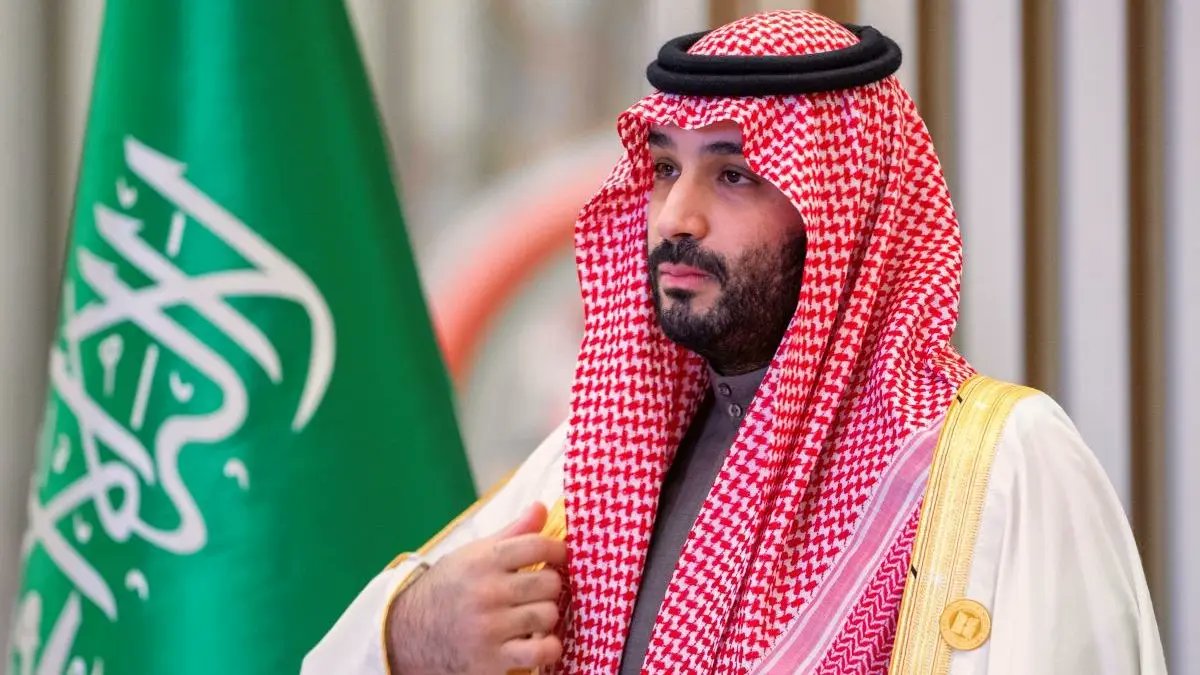
BREAKING:
Saudi Arabia plans to cancel purchase of F-35 fighter jets from the US after it was shot down by Iran.

English
I've just launched a Free Tarot Bot in the DeFiTimeZ Telegram group t.me/DeFiTimeZ go and check it out get a Celtic Cross reading by typing /reading give it a try and let us know what you think? #Tarot #CelticCross #TarotReading
English
@Julioba95197203 @EntertainerPunk Hahahahaha Nah not going to happen
English

@DeFiTimeZ @EntertainerPunk You know that Argentina is taking back the Malvines pretty soon, right?
English
I think someone needs to tell the Donald that the UK has followed America into all of their dumb wars but we took on Argentina on our own and won! The UK doesn’t need your help Bruh

English
DeFiTimeZ $DFTZ $SOL retweetledi

Set a reminder for HipHop Spotlight Kick Push to Conscious King The Lupe Fiasco Legacy! twitter.com/i/spaces/1Xxyg…
English