GAME 🥌 TIME
It’s gold medal game time at the men’s world championship. Canada 🇨🇦 vs Sweden 🇸🇪 for it all. Edin and company start the game with hammer throwing red rocks.
ROLLLLL CALLLLLL — where are you watching from today?
PEAK VIEWERSHIP
Just learning that 661,000 Canadians were watching on CBC TV when the Canadian wheelchair curling team won gold at the Paralympics.
That was the moment skip Mark Ideson delivered the winning stone with 2.8 seconds left on the clock.
@MrPitbull07 I just returned from an EU country. When paying by card, giving a tip was not an option - unless I guess you cancel the transaction and get the server to enter a higher amount. Tipping is such an unusual practice they might not even be set up for the server to be paid out the tip
As a waiter I sat there staring at my one hundred dollar receipt with a zero dollar tip next to it and I could not help thinking about how wild people can be 😒. Eating at a nice restaurant like it is nothing but acting like tipping is optional. The servers are running around all night carrying hot plates, refilling glasses, dealing with loud tables, smiling through attitudes, and somehow a person thinks leaving nothing is fine.
If you do not have money to tip, why walk into a place you cannot afford 💁🏻♀️. Tipping should be automatic. It is part of the cost of dining out. People want luxury food with fast food effort. Meanwhile the servers rely on tips to pay their bills. They go home with sore feet and tired backs while someone who just enjoyed a full meal walks out leaving zero.
It is embarrassing behavior. If you can afford the meal, you can afford to take care of the person who made the experience possible 💸. That is just real life. DO BETTER, TIP NO MATTER WHAT.🗣️🗣️🗣️
Credit: Patricia
@GrandpaKen05 Congratulations to the real teams. This photo, however, is not either team nor Mark Carney. AI photos and videos should have a big AI banner across them!
@Rainmaker1973 "Just" discovered a few years ago; the age of the site was released to the public Feb 2025. The site is also at risk from "potters" coming out and digging around looking for things to take. A very important site nonetheless.
Archaeologists have uncovered one of North America’s oldest Indigenous settlements.
Archaeologists, working closely with Indigenous knowledge keepers, have revealed a remarkable 11,000-year-old settlement site near Sturgeon Lake First Nation along the North Saskatchewan River, just 3 miles (5 km) north of Prince Albert.
Riverbank erosion first exposed the layers, but careful excavation has uncovered clear signs of long-term, organized occupation—not merely a short-term camp.
Among the discoveries: finely crafted stone tools and abundant lithic debris from tool production, multiple fire hearths with charcoal deposits, and substantial remains of ancient bison—including the extinct Bison antiquus, a massive species that could reach 4,400 pounds (2,000 kg). The bone patterns suggest deliberate communal hunting strategies, possibly involving bison pounds or drive-lane kill sites.
These findings upend older models that portrayed early peoples in the northern Plains as purely nomadic. Instead, they demonstrate sustained land use, resource management, and repeated seasonal returns dating to the final centuries of the last Ice Age.
The project is a true partnership led by the Âsowanânihk Council (“A Place to Cross” in Cree), together with archaeologists from the University of Saskatchewan and University of Calgary. Elders and Knowledge Keepers play a central role, linking the archaeological record to deep oral traditions that have long described this area as an important cultural crossroads and trade gathering place.
The site now faces growing risks from nearby logging and industrial development, raising urgent calls for formal protection and preservation.
Far beyond adding another early date, this discovery strengthens the evidence of continuous, sophisticated Indigenous presence on the land—rooted in both tangible artifacts and living memory—for more than 11 millennia.
[“11,000-year-old Indigenous Village Uncovered near Sturgeon Lake.” University of Saskatchewan]
@stevemagness They may have had some help from Johnny Gaudreau too. The amazing game by Hellebuyck was the deciding factor. I don't like the 3 on 3 overtime play, but nonetheless it was an excellent game.
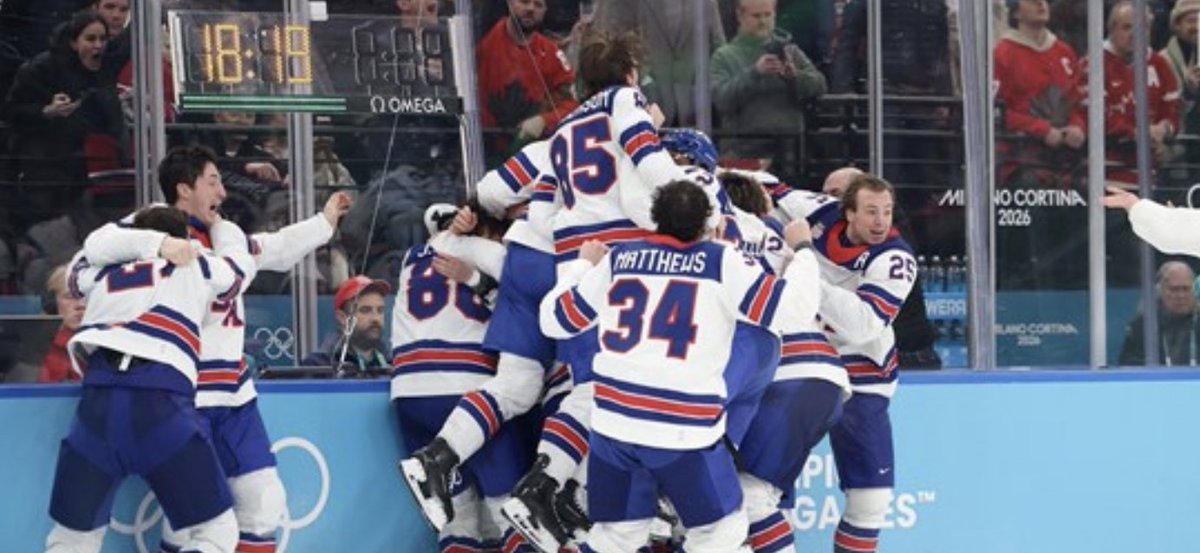
Team USA just won its first Olympic hockey gold in 46 years.
On February 22. The exact anniversary of the Miracle on Ice.
Forget the storybook narrative for a second.
What happened today is a masterclass in what performance science teaches us about pressure, identity, and legacy.
Consider the pressure this team was under.
They walked into today carrying 46 years of near misses.
The US hadn't won Olympic gold since 1980.
They lost the gold medal game in 2002 and 2010...both times to Canada. Last year at the 4 Nations tournament, Canada beat them in overtime. That loss was still raw.
The 1980 hero, Mike Eruzione, was in the building. He told the players before the game: "It's just a hockey game."
It wasn't. And everyone knew it.
Canada outshot the US 41-26.
They dominated the second and third periods.
Nathan MacKinnon missed an open net. Macklin Celebrini had a breakaway and couldn't convert. Devon Toews had Hellebuyck beaten and somehow the puck stayed out. Then Charlie McAvoy cleared a puck off the goal line with his glove.
This was not a dominant performance. It was a team surviving enormous pressure and refusing to break. That distinction matters.
How does a team perform under that kind of weight? It starts with the environment the coach creates.
Mike Sullivan is now the only American-born coach to win multiple Stanley Cups AND Olympic gold.
When he took over the Pittsburgh Penguins in 2015, the team was loaded with talent — Crosby, Malkin, Letang — and completely broken. His description: "There was a dark cloud over the locker room."
His first move wasn't a new system or a motivational speech. It was a reframe.
He told the team: "There are certain things in life we can control and certain things we can't. We needed to focus on the things that we could control and not dedicate any cognitive resources or worry to things we couldn't control."
The team adopted a two-word motto: "Just play."
Six months later, they won the Stanley Cup. Tonight, he helped USA do it again on the biggest stage in the world.
Sullivan builds what he calls a "safe zone for learning."
His video review sessions are explicitly NOT about blame.
"We don't want a player walking into our video room on eggshells worried about 'Am I going to be in the film? Is Coach going to yell at me?' It's a game of mistakes. Our responsibility is to learn from them."
His guiding principle from his college coach:
"Before players want to know what you know, they want to know that you care."
It's the difference between compliance and buy-in. Buy-in wins championships.
Research backs up Sullivan.
Fear-based environments don't produce peak performance. Especially when pressure is already high...
They produce anxiety, risk-aversion, and choking.
When people feel psychologically safe — when they know mistakes won't be weaponized against them — they take smarter risks, recover faster from errors, and perform better under pressure.
We could see it in how Sullivan framed this moment in the weeks before the game.
"What an incredible opportunity we have in front of us."
Not a burden or expectation...Opportunity.
He took the unusual step for a hockey team and kept the team in the Olympic Village instead of a hotel.
His reasoning: "The Village is part of the experience."
The Hughes brothers roomed together. The Tkachuk brothers roomed together.
He didn't try to ignore or isolate them from the pressure. He was embedding them in it, together.
And then there's the guy who scored the goal.
Jack Hughes came into the Olympics injured, underperforming, slotted on the fourth line.
Sullivan moved him up mid-tournament because, as he put it, "We thought by moving him and getting him more ice time, he could impact the game more."
Hughes's response: "I believe in myself more than anyone. Wherever I was slotted coming into this thing, I knew I was going to play well."
A coach who believed in him when results said otherwise. A player who believed in himself when the lineup said otherwise.
Then two teeth got cracked in half by a high stick in the third period. And he scored the golden goal anyway.
Everyone's going to remember this as the night the US ended a 46-year drought.
On the anniversary. In overtime. Against Canada.
But the real lesson is quieter than that.
The environment you create determines the performance you get. A safe zone for learning. A focus on controllables. Relationships built on care, not fear. Pressure reframed as opportunity.
That's what it looks like when a team is ready, with the right environment and support to tackle the ghosts of history.
They built a culture where a team could survive 41 shots and a kid with two broken teeth could score the biggest goal of his life.
The 1980 Miracle was about belief overcoming talent. Today was different.
Today was talent, preparation, identity, and 46 years of accumulated hunger arriving at the same moment.
-Steve
"We moved into this house 3yrs ago and this has stumped everyone. It can’t be moved, it’s next to the stove and it’s the same stone at the counter too." Via Reddit
Anyone know exactly what this is?
@gopherboy316 Diefenbaker Hill (officially Optimist Hill because of funding from the club) has only been a groomed hill with lift for about 10 years. Mount Blackstrap's lift shut down about 2008 and is no longer groomed - but very visible from the highway.
Shoutout to Blackstrap.
Our little mountain on the prairies. If you know, you know. Drove past it too many times to count.
And where Canada's Maïa Schwinghammer started her skiing journey. She's up next folks looking for a medal.
@MadelnCanada@ottawascot The zipper was invented by Swedish-American, Gideon Sundback while in the USA. Sundbäck retained non-U.S. rights and used these to set up Lightning Fastener Co. in St. Catherines, Ontario. leading to the
misperception that he was Cdn and that the zipper originated in Canada
Today, the flag on the Peace Tower will be flown at half-mast from sunrise to sunset to mark the National Day of Remembrance and Action on Violence against Women.
#SenCA#Polytechnique#RememberThe14#December6
On Nov. 16, 1885, Louis Riel was put to death for treason.
One of the most influential figures in Canadian history, he fought to preserve the rights of the Metis and has been called the Father of Manitoba.
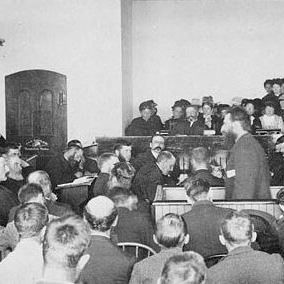
This is the story of his trial.
Following the North West Resistance of 1885 and the Battle of Batoche, Louis Riel surrendered to Canadian forces on May 15, 1885.
There were several attempts to have the trial of Louis Riel moved to Winnipeg over worries of a fair trial but these were refused.
Prime Minister Sir John A. Macdonald ordered that the trial be held in Regina.
Riel was charged with six counts of high treason. The Crown prosecutors George Burbidge, Christopher Robinson, David Lynch Scott, Thomas Chase-Casgrain and Britton Bath Osler.
Riel did not have the funds to hire defence lawyers so supporters in Quebec raised money for him. His defence was led by Charles Fitzpatrick, a lawyer from Quebec who went on to become the Chief Justice of Canada. The trial opened on July 20, 1885.
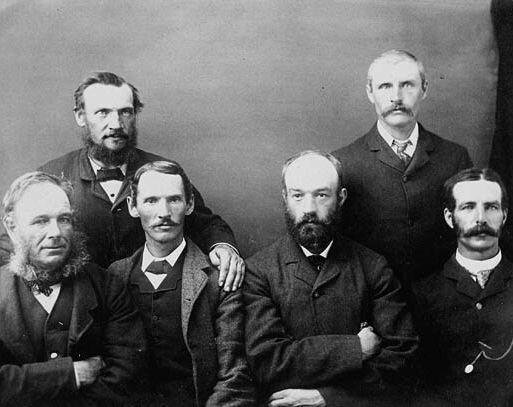
Of the 36 people who received jury summons, only one spoke French. One was Irish and Roman Catholic but was rejected for not being "British stock".
The six men chosen were all English-speaking Protestants from Assiniboia District (now southern Saskatchewan).
Riel's lawyers wanted to argue that he was not guilty by reason of insanity, but Riel objected to this as he believed it would discredit the grievances of the Metis against the Canadian government. He stated his actions were justified and he was not guilty.
Riel often intervened in proceedings to proclaim his sanity. He wanted to cross examine Crown witnesses himself but his counsel refused.
At the end of the trial, Riel delivered two lengthy speeches defending his actions and affirming the rights of the Metis.
Many felt that Riel's speeches, described as eloquent, proved his sanity.
On Aug. 1, 1885, after 80 minutes of deliberation, the jury found him guilty but recommended mercy. The jury foreman was said to be in tears when he delivered the verdict.
Riel was sentenced to death. The original date for his hanging was Sept. 18, 1885 but the date was pushed to Nov. 16.
After his hanging, his body was sent to St. Vital where it lay in state. On Dec. 12, it was buried in the churchyard of the Saint-Boniface Cathedral.
I hope you found the trial of Louis Riel interesting.
If you enjoy my Canadian history content, you can support my work with a donation at 👇
buymeacoffee.com/craigu
Sources:
The Virtual Museum of Metis History and Culture: metismuseum.ca/media/document…
Canadian Encyclopedia: thecanadianencyclopedia.ca/en/article/lou…
Dictionary of Canadian Biography: biographi.ca/en/bio/riel_lo…
@DennisKendel@SKGov@leaderpost@SMA_docs The ads are out. Clinics have started. Our rural clinic was well attended today. Encouragement sure, but people still need to take some initiative and find their local clinic or make an appointment.
Tune into @CBCSask radio The Morning Edition tomorrow morning (Thursday) around 7:40 a.m where I'll have the honour of chatting with @torygillis about storm chasing