Deborah Simpier

4.5K posts

Deborah Simpier banner
Deborah Simpier

Deborah Simpier

@DeborahSimpier

Co-founder @altheanetwork ✨️ | CEO @hawk_networks 📡 | Contributor @gravity_bridge 🌉 | Ham Radio operator KG7NLA 🎙 |

Oregon, USA Katılım Temmuz 2018
2.4K Takip Edilen3K Takipçiler
Deborah Simpier retweetledi
Meltem Demirors
Meltem Demirors@Melt_Dem·
watershed moment for the the crypto industry - grateful to all the teams who dedicated immense amounts of capital and energy to lobbying, advocacy, and litigation over the last decade onward (not sure on the upward for now)
U.S. Securities and Exchange Commission@SECGov

TODAY 🚨: The Commission issued an interpretation that clarifies the application of federal securities laws to crypto assets. This is a major step to provide greater clarity regarding the Commission’s treatment of crypto assets. Read the release here: ow.ly/XhhV50YvxvO

English
28
39
311
41.3K
Deborah Simpier
Deborah Simpier@DeborahSimpier·
@sjdedic It's sort of odd to think this is unique to blockchain - democratic structures of all kinds, such as cooperatives and organizations, suffer from these issues and, more importantly, lack of broad participation. Doesn't mean it is not worth doing.
English
0
0
1
46
Simon Dedic
Simon Dedic@sjdedic·
One of the most misguided concepts crypto ever came up with might be governance tokens. Most companies don’t actually take governance seriously. They use it as regulatory arbitrage. The token exists because it’s essentially free money they can print on top of their equity. They would never hand over real decision-making power for their business to a random community (you). And even when it looks like they do, the vote is usually tilted through insider allocations so the outcome ends up exactly where it was planned from the start. That said, I do feel for the few teams that genuinely tried to make governance work. Ironically, those are often the same teams that truly cared about their token and tried to create real value accrual for it. But in practice, too many cooks spoil the broth. Running a business by democracy is one of the most inefficient structures imaginable. Endless proposal discussions, waiting for alignment, debating every step before anything can move forward. Meanwhile, you end up with a large number of “stakeholders” who aren’t actually interested in the long-term success of the business, but only in extracting short-term value from their position. It starts to resemble German politics: throw ten different groups with completely opposing views into the same room and the end result is that nothing happens at all. Crypto is still a startup industry driven by innovation. That means moving fast, trying things, breaking them, learning, iterating. Sometimes it works. Sometimes it doesn’t. But you learn and adapt. Nothing kills innovation faster than decision paralysis. The recent drama around @aave is a great example of this tension. In my opinion, @StaniKulechov and his team are among the best builders in DeFi and genuinely try to make things work for everyone involved. But when everyone thinks they should have a say (each with different incentives) progress inevitably slows down. I don’t even want to imagine where Aave as a business might already be today if the DAO hadn’t become such a bottleneck. An even clearer example might be @AcrossProtocol and @hal2001’s recent proposal to take the company private again, precisely to avoid these governance gridlocks, while instead making participants true equity stakeholders and aligning everyone around a shared long-term goal. Hearing rumors that apparently even more DAOs are considering this step for quite some time already, so wouldn't be surprised if we see a lot more of these. Governance was one of those ideas that was well-intentioned but poorly implemented. In theory, it sounds beautiful, a decentralized kumbaya world where everyone has a voice. In practice, it simply doesn’t work. The only real path forward for tokens is digital equity onchain, in whatever form that ultimately takes. Stop trying to design structures that artificially separate ownership, control and value. Investors and communities have become far too sophisticated to keep falling for that. Founders who understand this today will be part of the great comeback of this industry tomorrow. But those who still think they can extract value the old way and work around these issues will simply be left behind. Welcome to the new era.
English
57
49
294
15.6K
Deborah Simpier retweetledi
NetBlocks
NetBlocks@netblocks·
⚠️ Confirmed: Metrics indicate a collapse in connectivity on AS12880, a key #Iran telecoms network that had so far remained partly online as part of the ~1% reserved state infrastructure. The incident corroborates reports of instability on the NIN domestic intranet.
NetBlocks tweet media
English
462
2.4K
4.4K
1.2M
Deborah Simpier
Deborah Simpier@DeborahSimpier·
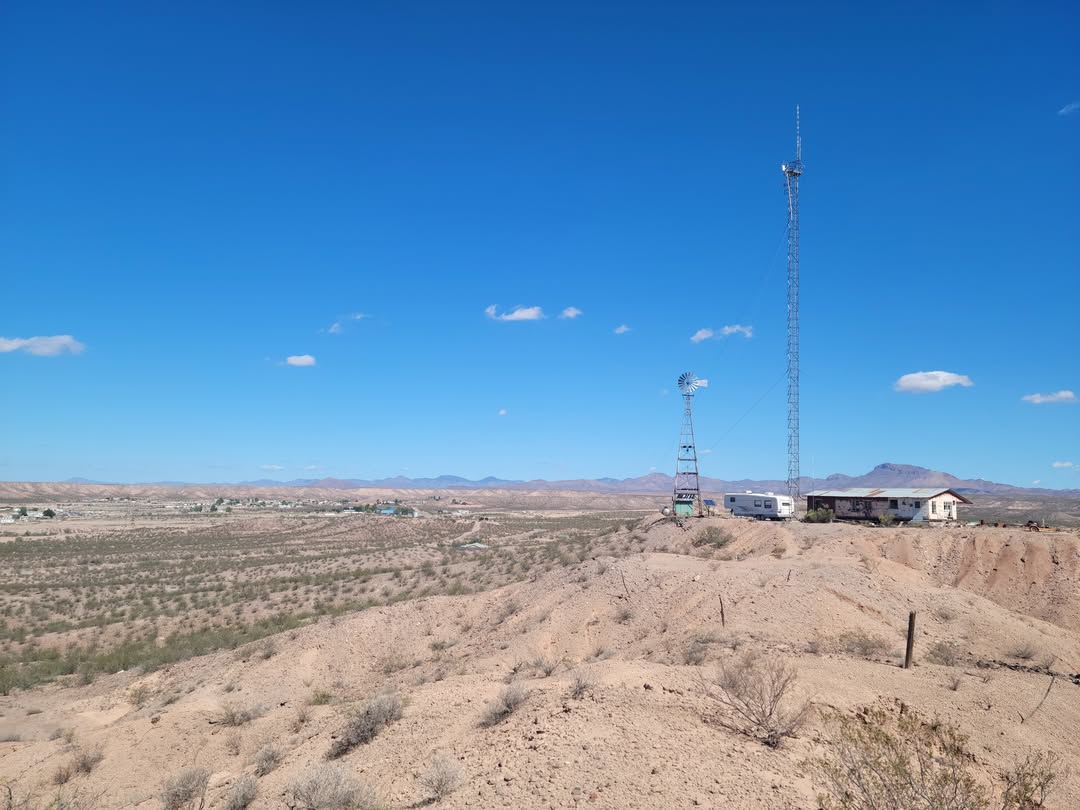
This network is referred to as CACTI: Connecting Arizona Communities Through Infrastructure and is using the power of @AltheaNetwork protocol and L1 blockchain - getting underway now.
English
0
2
7
312
Deborah Simpier retweetledi
Meltem Demirors
Meltem Demirors@Melt_Dem·
are you a founder building something for the data center economy? hosting a "pitch night" on sunday, march 15, in downtown SF before GTC with trillions deployed into compute infrastructure, generational companies will be built here details + apply here: forms.gle/MyxiXb6AdhFGya…
English
18
16
147
40.2K
Deborah Simpier retweetledi
Evan Kirstel #B2B #TechFluencer
Anthony Bourdain spent years trying to get permission to film in Iran. In 2014, he finally got the green light. He landed in Tehran with a small crew, not sure what he'd find. What he found surprised him. "Iran does not look, does not feel the way I had expected," he said. "Neither East nor West, but always somewhere in the middle." His guides were Jason Rezaian the Washington Post's Tehran bureau chief and his wife Yeganeh Salehi, both journalists, both deeply in love with their country. They took Bourdain through the markets and teahouses, introduced him to dizi (a lamb stew that goes back to ancient Mesopotamia), and rode a bus with him out to Isfahan, this stunning ancient city in the southern desert. Persian pizza with ketchup. Non-alcoholic beer on hilltops with young Iranians showing off their classic American cars. Real conversations about what life actually looked like there the contradictions, the warmth, the complexity. The episode aired on CNN that November and became one of the most talked-about Parts Unknown episodes ever. American audiences had never seen Iran like that. The laughter. The generosity. The food. But by the time it aired, things had already gone wrong. Six weeks after filming, Iranian authorities arrested Jason and Yeganeh at their Tehran home. Espionage charges. The charges were absurd. Yeganeh was released after about two months. Jason wasn't. He spent 544 days in Evin Prison: solitary confinement, a sham trial, a conviction that the entire international journalism community rejected. He was finally released in January 2016 as part of a prisoner swap. Bourdain was gutted. He wrote an op-ed in the Washington Post pleading for their release. He called them "a danger to no one" and said there wasn't a hint of anything that should concern any government. "They are nobody's enemy." When Jason eventually wrote a memoir about his imprisonment, Bourdain published it himself through Anthony Bourdain Books. One of the last acts of solidarity between two men who genuinely believed that sharing a meal with a stranger could change something. Bourdain died in 2018. Jason is still at the Washington Post and now co-directs a commission on hostage-taking at CSIS, working to make sure what happened to him doesn't keep happening to others. That Iran episode remains one of the most powerful hours of television Bourdain ever made. Not despite what followed because of it. It captured something real: the warmth of ordinary people can exist right alongside the cruelty of the systems that rule them. Sometimes sitting down and sharing a meal is the most radical thing you can do.
Evan Kirstel #B2B #TechFluencer tweet media
English
1
19
51
8.3K
Deborah Simpier retweetledi
Peter Adderton
Peter Adderton@peter_adderton·
Fun fact: we have zero churn from customers who join @mobileXus with a data-only tablet plan zero. No one leaves. It’s the easiest and most affordable way to get a data-only plan today. Just buy the GBs when you need them, if you need them.😀
English
2
3
17
1.3K
Deborah Simpier
Deborah Simpier@DeborahSimpier·
@stacy_muur Revenue is redemption. No quick fixes, but long term outlooks will prevail.
English
0
0
0
29
Stacy Muur
Stacy Muur@stacy_muur·
Sad to admit it, but for 98% of Web3 teams with a token, the only way out is a pivot. – Abandon the original project – Copy code – Start a new company with no token – Try better with TGE this time No dev success can outbeat the sell pressure from people who got rekt on your token and are selling each time there's a minimal green candle.
English
69
4
191
23.2K
Deborah Simpier retweetledi
NetBlocks
NetBlocks@netblocks·
⚠️ Update: Metrics show #Iran remains in digital darkness after six full days under an internet blackout, with 1% connectivity at the 144 hour mark. Meanwhile, the regime continues to promote its agenda through whitelisted networks, cultivating media assets at home and abroad.
NetBlocks tweet media
English
137
1.3K
2.2K
183K
Deborah Simpier
Deborah Simpier@DeborahSimpier·
@DCinvestor Yeah, also barter starts to work pretty well at a local level. Food, fuel, means to get food and fuel, alcohol, etc.
English
0
0
0
18
DCinvestor
DCinvestor@DCinvestor·
what if when shit really hits the fan and i don't mean for central banks and rich people hedging i mean for real people when physical security may be on the line it's not gold which people run to, but rather, it is crypto?
English
64
6
201
16.2K
Deborah Simpier
Deborah Simpier@DeborahSimpier·
As I read this, I'm coming back from a network was started in 2020, using the @AltheaNetwork protocol as we revamp and move it to Althea L1, knowing the difference that sovereign resilient telco infrastructure means to this community. I'm not sure there is something profound to say beyond that. Programmable blockchain makes a difference to many people even when its not all that easy to be aware of.
Deborah Simpier tweet media
vitalik.eth@VitalikButerin

Over the past year, many people I talk to have expressed worry about two topics: * Various aspects of the way the world is going: government control and surveillance, wars, corporate power and surveillance, tech enshittification / corposlop, social media becoming a memetic warzone, AI and how it interplays with all of the above... * The brute reality that Ethereum seems to be absent from meaningfully improving the lives of people subject to these things, even on the dimensions we deeply care about (eg. freedom, privacy, security of digital life, community self-organization) It is easy to bond over the first, to commiserate over the fact that beauty and good in the world seems to be receding and darkness advancing, and uncaring powerful people in high places are making this happen. But ultimately, it is easy to acknowledge problems, the hard thing is actually shining a light forward, coming up with a concrete plan that makes the situation better. The second has been weighing heavily on my mind, and on the minds of many of our brightest and most idealistic Ethereans. I personally never felt any upset or fear when political memecoins went on Solana, or various zero-sum gambling applications go on whatever 250 millisecond block chain strikes their fancy. But it *does* weigh on me that, through all of the various low-grade online memetic wars, international overreaches of corporate and government power, and other issues of the last few years, Ethereum has been playing a very limited role in making people's lives better. What *are* the liberating technologies? Starlink is the most obvious one. Locally-running open-weights LLMs are another. Signal is a third. Community Notes is a fourth, tackling the problem from a different angle. One response is to say "stop dreaming big, we need to hunker down and accept that finance is our lane and laser-focus on that". But this is ultimately hollow. Financial freedom and security is critical. But it seems obvious that, while adding a perfectly free and open and sovereign and debasement-proof financial system would fix some things, but it would leave the bulk of our deep worries about the world unaddressed. It's okay for individuals to laser-focus on finance, but we need to be part of some greater whole that has things to say about the other problems too. At the same time, Ethereum cannot fix the world. Ethereum is the "wrong-shaped tool" for that: beyond a certain point, "fixing the world" implies a form of power projection that is more like a centralized political entity than like a decentralized technology community. So what can we do? I think that we in Ethereum should conceptualize ourselves as being part of an ecosystem building "sanctuary technologies": free open-source technologies that let people live, work, talk to each other, manage risk and build wealth, and collaborate on shared goals, in a way that optimizes for robustness to outside pressures. The goal is not to remake the world in Ethereum's image, where all finance is disintermediated, all governance happens through DAOs, and everyone gets a blockchain-based UBI delivered straight to their social-recovery wallet. The goal is the opposite: it's de-totalization. It's to reduce the stakes of the war in heaven by preventing the winner from having total victory (ie. total control over other human beings), and preventing the loser from suffering total defeat. To create digital islands of stability in a chaotic era. To enable interdependence that cannot be weaponized. Ethereum's role is to create "digital space" where different entities can cooperate and interact. Communications channels enable interaction, but communication channels are not "space": they do not let you create single unique objects that canonically represent some social arrangement that changes over time. Money is one important example. Multisigs that can change their members, showing persistence exceeding that of any one person or one public key, are another. Various market and governance structures are a third. There are more. I think now is the time to double down, with greater clarity. Do not try to be Apple or Google, seeing crypto as a tech sector that enables efficiency or shininess. Instead, build our part of the sanctuary tech ecosystem - the "shared digital space with no owner" that enables both open finance and much more. More actively build toward a full-stack ecosystem: both upward to the wallet and application layer (incl AI as interface) and downward to the OS, hardware, even physical/bio security levels. Ultimately, tech is worthless without users. But look for users, both individual and institutional, for whom sanctuary tech is exactly the thing they need. Optimize payments, defi, decentralized social, and other applications precisely for those users, and those goals, which centralized tech will not serve. We have many allies, including many outside of "crypto". It's time we work together with an open mind and move forward.

English
0
0
1
93
Deborah Simpier
Deborah Simpier@DeborahSimpier·
Unfortunately not at MWC this week, instead I'm out west exploring new liquid Infrastructure and transitioning gnosis networks to @AltheaNetwork
Deborah Simpier tweet media
English
1
0
2
117
Deborah Simpier
Deborah Simpier@DeborahSimpier·
Turns out Starlink is just a regular ISP after all, raising prices and cutting service. Build sovereign, resilient networks with @AltheaNetwork instead.
Clint Fiore 🦬 DM for Biz Deals@ClintFiore

All my small plane pilot friends are big mad at @starlink today. Their plans just went up 5X in price overnight, and the data included went from 100GB to 20GB. I know it's a small group of people, but this is causing many to cancel this service as it's now cost-prohibitive especially with the lower bandwidth service. Starlink was a complete game-changer for being connected from a small plane, and I think it would be cool if they left it where it was so normal folks in piston aircraft could enjoy it, and reserve the higher-price tiers for turbine aircraft speeds, 300+mph. It's got to be the tiniest revenue difference for SpaceX either way, but it's a world of difference for safety and connectivity to the American general aviation fleet of small planes. cc @elonmusk

English
1
1
3
214