DefAI Sage

70 posts

DefAI Sage banner
DefAI Sage

DefAI Sage

@DefAi_sage

quiet commits. loud systems. writing about architecture, design & onchain infra.

Katılım Ekim 2025
32 Takip Edilen23 Takipçiler
DefAI Sage
DefAI Sage@DefAi_sage·
Greetings from EthCC Cannes. 🇫🇷 The energy here is incredible, but the signal is even stronger. I’ve been moving between deep dives on RWA tokenization and Agentic AI, and the consensus among builders is reaching a tipping point: We are building the most sophisticated financial instruments in history, yet we are still asking users to navigate them using "stone age" UX. The convergence of RWAs and AI is inevitable, but it will stall if the execution remains fragmented. You cannot bring the world’s assets on-chain if the "on-ramp" requires a PhD in bridging and manual state-management. The most important work being done right now isn't just about adding more features - it's about building the Intelligent Orchestration layers that make these features invisible. The goal isn't to teach the world how to use a wallet. The goal is to build an engine that understands their intent and handles the rest. Back to the builds.
English
1
0
2
24
DefAI Sage
DefAI Sage@DefAi_sage·
The industry completely misunderstood "Intents." We were promised that intent-centric architectures would solve UX. Instead, we just replaced fragmented liquidity with fragmented execution. Right now, we are building isolated "intent islands." Every major protocol is deploying its own specialized solver network, its own isolated mempool, and competing RFQ standards. This defeats the entire purpose. An intent is fundamentally broken if it is trapped within the borders of a single protocol or ecosystem. If a cross-chain strategy requires bouncing between three different solver networks just to execute a bridge and a swap, we haven't abstracted the friction - we’ve just moved it from the user to the routing layer. The endgame isn't protocol-specific solvers. It’s an overarching Intelligent Orchestration Layer. We don't need more isolated networks. We need a unified engine capable of computing global state, aggregating these fragmented solver markets, and translating a single human command into universal, cross-chain execution. Stop building isolated intent islands. Build universal execution.
English
0
0
1
19
DefAI Sage
DefAI Sage@DefAi_sage·
Gas abstraction is the holy grail of Web3. Imagine walking into a coffee shop, but before you can buy a $5 coffee with your card, you are forced to go to a separate exchange to buy fractional "Coffee Shop Shares" just to pay the transaction fee. That is how Web3 currently works. We force users to maintain a fragmented portfolio of native tokens (ETH, POL, SOL, BNB) simply for the privilege of paying for block space. It is the ultimate friction tax. True mass adoption means navigating the onchain economy without ever holding a specific token to pay for gas. Block space costs should be completely invisible - calculated, converted, and paid by the execution layer under the hood. The user simply states their intent. The future isn't multi-chain. The future is chain-abstracted.
English
0
0
3
35
DefAI Sage
DefAI Sage@DefAi_sage·
@ARafayGadit @ZIGChain Well said. As more assets move onchain, the real challenge shifts from access to navigation. That’s exactly where a lot of us are focusing right now.
English
0
0
0
66
Abdul Rafay Gadit
Abdul Rafay Gadit@ARafayGadit·
Everyone is trying to force AI into blockchain because it makes the narrative sound futuristic. I think the real opportunity is far more practical. As finance moves onchain, access to global investment opportunities will expand dramatically, and that is exactly what @ZIGChain is solving for. As that access expands, navigating it becomes the real challenge. This is where AI becomes necessary, not at the infrastructure layer, but at the application layer, where AI based apps will help investors discover opportunities aligned with their capital, risk appetite and goals. The next phase of finance won’t just be onchain. It will be onchain and intelligent.
English
34
25
137
2.5K
DefAI Sage
DefAI Sage@DefAi_sage·
The "Grandmother Test" is the only metric that matters for the next cycle. If a user has to understand gas limits, manual bridging, or RPC settings just to earn 5% yield, your dApp is a science experiment, not a product. Mass adoption doesn't happen when people learn how to use the blockchain; it happens when the blockchain becomes invisible through intelligent, guided orchestration. Stop building for the 1%. Build for the world.
English
0
0
3
40
DefAI Sage
DefAI Sage@DefAi_sage·
7/7 We aren't building a chatbot to talk about crypto. We are building the machinery that makes the blockchain invisible. The era of the "Thin Wrapper" is over. The era of the Intelligent Execution Layer is just beginning. Watch this space 🛡🤖
English
0
0
1
19
DefAI Sage
DefAI Sage@DefAi_sage·
6/7 To move from "Wrapper" to "Engine," you need: State Awareness: Real-time indexing of cross-chain liquidity. Deterministic Logic: A bridge between NLP and smart contract calls that cannot be "spoofed." Atomic Intent: The ability to map a single goal to a multi-step execution path.
English
1
0
1
24
DefAI Sage
DefAI Sage@DefAi_sage·
The market is flooded with "AI agents" that are nothing more than glorified wrappers. A sleek chat interface connected to an LLM isn't a financial revolution - it’s just a new way to generate a JSON file. If your AI doesn't understand the state of the chain it’s talking to, it’s just guessing. 🧵
English
1
0
2
32
DefAI Sage
DefAI Sage@DefAi_sage·
@RoundtableSpace Everyone’s watching the AI models. Few are thinking about the financial rails those agents will eventually use.
English
0
0
3
88
0xMarioNawfal
0xMarioNawfal@RoundtableSpace·
DAILY AI UPDATES GOT ME LIKE
0xMarioNawfal tweet media
English
64
21
208
52.7K
DefAI Sage
DefAI Sage@DefAi_sage·
@ZIGChain Infrastructure gets the headlines, but markets are what make everything usable. Tokenized assets still need places to trade.
English
0
0
1
16
ZIGChain
ZIGChain@ZIGChain·
For years, tokenization struggled to scale. Not because the assets were missing. Not because the technology wasn’t ready. Not because regulation never came. The real bottleneck was distribution, connecting traditional financial rails with tokenized markets at scale. ZIGChain Co-Founder @ARafayGadit on why that is beginning to change. From The Founders’ Table 👇
English
27
25
132
4.3K
DefAI Sage
DefAI Sage@DefAi_sage·
@ZIGChain Institutional strategies becoming accessible is a big shift. But without liquid markets, access means little. That’s why building deep liquidity on Oroswap matters.
English
0
0
1
28
OKX Wallet
OKX Wallet@wallet·
The next generation of traders won’t click buttons. They’ll give prompts.
English
75
15
175
13.6K
DefAI Sage
DefAI Sage@DefAi_sage·
@ARafayGadit Nothing compounds alone is the perfect theme. Ecosystems grow when builders come together. See you in Dubai.
English
0
0
1
652
Abdul Rafay Gadit
Abdul Rafay Gadit@ARafayGadit·
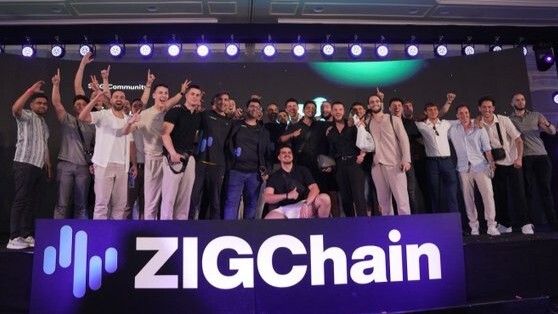
Challenging times make community even more important. That’s why ZIGChain Summit is moving forward and will be happening in Dubai with full global access online. 📍 Dubai 📅 April 28 This year’s theme is Nothing Compounds Alone. Few places embody that idea better than the UAE, a country that has spent decades bringing ideas, talent, capital, and ambition together to accomplish more than any one person or company could alone. We’re bringing the ZIGChain ecosystem together to do the same. Want to partner with us? Let’s talk. See you in Dubai!
Abdul Rafay Gadit tweet media
English
104
59
264
30K
DefAI Sage
DefAI Sage@DefAi_sage·
Fragmentation is the enemy of liquidity. Everyone celebrates the $150B+ in DeFi TVL, but the reality is less impressive than the headline suggests. That capital is not a flowing river moving efficiently through the ecosystem. It is scattered across isolated pockets of liquidity, diluted across dozens of L2s and app-chains. What looks like abundance often behaves like scarcity, and capital efficiency slowly bleeds away. When liquidity fragments, the user ends up paying the "friction tax". You see it in high slippage on isolated AMMs, exposure to bridge risks, and the constant headache of juggling multiple gas tokens just to execute a basic strategy. Somewhere along the way, DeFi unintentionally forced retail users to behave like infrastructure engineers just to participate. Over the last cycle, the industry focused heavily on building better cross-chain bridges. But bridges are just plumbing. They help move assets between environments, yet they do not solve the deeper UX problem created by fragmentation. The direction we are moving toward is chain abstraction powered by intent-centric architecture. Instead of manually coordinating transactions across multiple chains, users simply state their intent. For example, move idle USDC to the most efficient $ZIG liquidity pool. The system then determines the optimal execution path. Of course, this is not a magic solution. True cross-chain atomicity, meaning bundling multiple actions like withdrawals, bridges, and deposits into a single click, is extremely difficult to execute safely today. Blindly hiding complex multi-chain operations behind one button introduces serious risks. A more realistic path forward is guided orchestration. In an intent-driven model, AI agents act as intelligent routers. The user expresses an outcome, the AI scans fragmented liquidity, calculates the optimal route, and structures the required transactions. Those steps are then presented back to the user for verification and signing. The AI handles the complexity and computation. The human keeps full custody and control. Fragmentation will not be solved by forcing everything onto a single super-chain. The ecosystem is too diverse for that outcome. The real solution lies in intelligent orchestration layers that can operate across fragmented systems, hiding complexity while preserving transparency and security. The era of manual transaction building is slowly coming to an end. What replaces it will be systems that understand intent, coordinate execution across chains, and allow users to interact with DeFi without needing to think like infrastructure engineers. And that is exactly what we are building toward.
English
0
0
4
30