Defence Watch Africa

100 posts

Defence Watch Africa banner
Defence Watch Africa

Defence Watch Africa

@DefWatAf1966

Africa’s eye on defence, strategy & power. Watching the continent’s security frontlines. 🌍🔭

Lagos Nigeria Katılım Eylül 2024
9 Takip Edilen9 Takipçiler
Sabitlenmiş Tweet
Defence Watch Africa
Defence Watch Africa@DefWatAf1966·
🇳🇬 Nigeria stands at a critical turning point in its quest for defence self-reliance. As security threats evolve—from insurgency and banditry to cyber warfare and regional instability—the nation’s capacity to produce, innovate, and sustain its own military capabilities has never been more vital. Drawing on verified government data, industry interviews, and global benchmarks, Nigeria Defence Industry Outlook 2026–2030 provides the first comprehensive analysis of the country’s emerging defence industrial base. From DICON’s modernisation roadmap to the rise of private manufacturers like Proforce and Halogen, this volume maps the strategic, financial, and technological pathways shaping Nigeria’s future arsenal. @DHQNigeria @HQNigerianArmy @NigAirForce @NigerianNavy @MODInfoNg @NGRPresident @NGRSenate a.co/d/fBqkPNr
English

0
4
5
222
Defence Watch Africa retweetledi
BusinessDayNG
BusinessDayNG@BusinessDayNg·
The decision by Donald Trump to impose a naval blockade on Iran marks a dramatic escalation in U.S. strategy in the Middle East. Framed as a show of strength following the collapse of negotiations in Islamabad, the move is intended to choke Iran’s oil exports and force political concessions. businessday.ng/insight-2/arti…
BusinessDayNG tweet media
English
0
2
4
234
Defence Watch Africa retweetledi
Real Global News
Real Global News@FelastoryMedia·
🇺🇸🇮🇪 Man Arrested After Axe Attack Damages US Military Plane at Shannon Airport A man in his 40s has been arrested after a dramatic security breach at Shannon Airport left a US military aircraft badly damaged and briefly halted operations on Saturday morning. According to Irish police, the incident unfolded at approximately 9:45 am when the suspect allegedly cut through a perimeter fence and entered a restricted zone of the airport. He then made his way across a remote taxiway to a parked US Air Force C-130 Hercules transport plane, which had arrived the previous day from the United States via Canada. Witness footage circulating online appears to show the man climbing onto the aircraft’s wing and striking it repeatedly with what has been described as a hatchet or small axe. The attack targeted both the fuselage and wing structure, causing what officials later described as “significant damage.” Airport security and emergency personnel responded swiftly, but due to the height and position of the aircraft, a mobile stairway had to be deployed to safely reach the suspect. He was arrested by Gardaí shortly before 11:00 am without further incident. The breach forced Shannon Airport to suspend operations for roughly 25 to 30 minutes, between 9:50 am and 10:15 am, disrupting a number of scheduled flights. Normal services resumed shortly after the suspect was taken into custody. Airport authorities confirmed that the damaged aircraft has been removed from service pending a full technical assessment. The extent of the damage has not yet been publicly quantified, but early indications suggest repairs may be extensive. The incident has reignited debate over Shannon Airport’s long-standing role as a transit hub for US military flights. Activist groups have for years staged protests at the airport, arguing it supports overseas military operations, including recent US and Israeli actions in the Middle East. However, the Irish Government, led by Taoiseach Micheál Martin, has consistently maintained that the airport is not being used to assist in active war operations. An investigation into the breach and its security implications is now under way.
English
0
1
2
54
Defence Watch Africa retweetledi
Real Global News
Real Global News@FelastoryMedia·
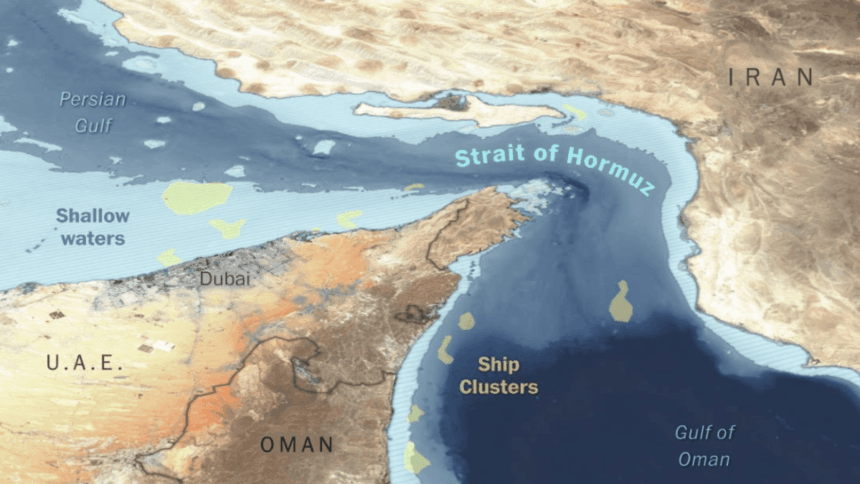
🇮🇷⚔️Iranian Drones Shadow Hormuz Traffic as IRGC Issues Stark Warning After US Blockade Tensions in the Strait of Hormuz escalated sharply on 12 April 2026 as Iranian drones began closely monitoring maritime traffic, hours after Donald Trump announced a sweeping United States naval blockade of the critical waterway. Iran’s naval forces, led by the Islamic Revolutionary Guard Corps (IRGC), issued a chilling warning, declaring that “any wrong movement” by enemy vessels would “trap” them in what it described as deadly conditions across the narrow strait. The statement signals a rapid shift from fragile ceasefire conditions to a highly volatile standoff with global implications. Despite the threat, Iranian state-linked media reported that the situation in the strait remained outwardly calm in the immediate aftermath of the US announcement. However, military analysts warn that the presence of surveillance drones overhead suggests a battlefield being quietly prepared, rather than de-escalated. The Strait of Hormuz, a vital artery for global oil shipments, has now become the focal point of a high-risk confrontation. Iranian drone activity is believed to be part of a wider defensive network designed to track, target, and, if necessary, overwhelm opposing naval forces. These unmanned systems can relay real-time intelligence to missile batteries and fast attack craft positioned along Iran’s southern coastline. Security experts caution that such tactics are designed to create a “kill zone” in one of the world’s most constrained maritime corridors. With commercial vessels still attempting passage, the margin for error is rapidly shrinking. A single miscalculation—whether by a naval commander or a civilian tanker—could trigger a chain reaction with catastrophic consequences. The United States, meanwhile, has begun mine-clearing operations and increased naval deployments, but questions remain about its ability to fully secure the waterway under constant drone surveillance. Critics argue that Washington’s blockade risks turning a tense standoff into an uncontrollable conflict. With both sides now entrenched and watching each other in real time, the Strait of Hormuz is no longer just a trade route—it is a live trigger point. As drones circle above and warships hold position below, the world is left bracing for what could come next.
English
0
1
2
34
Defence Watch Africa retweetledi
Real Global News
Real Global News@FelastoryMedia·
🇺🇸⚔️🇮🇷US Declares War on Iran as Red Sea and Gulf Chokepoints Slide Toward Full Closure The United States has formally declared war on Iran, triggering an immediate escalation across two of the world’s most critical maritime corridors, with Yemen’s Houthi movement warning it will move to block the Bab el-Mandeb Strait in response. The announcement, delivered via United States Central Command (CENTCOM) at 10:00 a.m. Eastern Time on Monday, confirmed that a naval blockade of Iranian waters had begun. Within hours, Iranian and allied officials signalled a coordinated countermeasure: the effective closure of both the Strait of Hormuz and the Bab el-Mandeb to Western-linked shipping. In a sharply worded statement, Iran’s elite Islamic Revolutionary Guard Corps warned that any foreign military vessel entering the Strait of Hormuz would be treated as a violation of an already fragile ceasefire, raising the risk of immediate confrontation. Iranian officials declared that both chokepoints would remain under “Iranian-Yemeni protection only,” rejecting any external military presence. The Bab el-Mandeb Strait, which connects the Red Sea to the Gulf of Aden, has become a focal point of the widening conflict. The route typically carries between 12% and 14% of global maritime trade, including around 40% of global fertilizer shipments, 20% of rice flows, and roughly 15% of wheat supplies. Energy markets are also exposed, with up to 12% of seaborne oil historically passing through the corridor, although volumes have already fallen sharply due to prior instability. Shipping firms and governments are bracing for severe disruption. Major carriers have already reduced or suspended operations in the Red Sea since 2024, diverting vessels around the Cape of Good Hope — a costly detour that adds weeks to transit times and drives up global freight rates. The escalation also threatens supply chains linking Asia and Europe, which account for roughly 40% of traffic through the Bab el-Mandeb. Key trading nations including China, India, and Saudi Arabia face renewed uncertainty, while Russia has emerged as a dominant energy shipper through the corridor in recent months. With both chokepoints now at risk, analysts warn the conflict could rapidly evolve into a global economic shock, as energy supplies tighten, food prices surge, and naval confrontation becomes increasingly likely across two of the world’s most strategically vital waterways.
Real Global News tweet media
English
0
1
2
26
Defence Watch Africa retweetledi
Real Global News
Real Global News@FelastoryMedia·
🇺🇸✝️Trump’s Spiritual Adviser Sparks Backlash After Viral Prayer Video Paula White-Cain, a longtime spiritual adviser to Donald Trump, faced a wave of criticism on Monday after a video of an Oval Office prayer session resurfaced and spread rapidly across social media, prompting some commentators to label her a “whack job” and “mentally unstable.” The footage, reportedly recorded on March 5, 2026, shows White-Cain leading a prayer gathering inside the White House during a period of heightened tensions between the United States and Iran. In the video, she repeatedly chants the word “strike” in a rhythmic cadence, at one point declaring “strike and strike and strike,” while calling for divine intervention in global affairs. The prayer escalates as White-Cain begins speaking in tongues, a practice known as glossolalia, uttering phrases that critics online compared to fictional or nonsensical speech. She also claims that angels were being deployed “from Africa and South America” to secure victory for the United States and its leadership. The video quickly went viral across platforms including Instagram and Reddit, where users mocked the display and questioned the influence of religious figures within the highest levels of government. Some compared the scene to video game dialogue or scenes from horror films, while others raised concerns about decision-making during a volatile geopolitical moment. White-Cain, who previously drew attention for a similar performance during the 2020 election period, has long been a polarising figure in American religious and political circles. Supporters argue her style reflects charismatic Christian traditions, while critics say her rhetoric blurs the line between faith and statecraft. The White House has not issued an official response to the backlash, and it remains unclear whether the video was intended for public release. However, the timing of its circulation—amid ongoing strategic tensions involving Iran—has intensified scrutiny of advisory roles within the administration. The episode underscores the growing intersection of religion, politics, and digital media, where moments once confined to private settings can rapidly shape public perception and political discourse.
English
0
1
2
46
ONYEKA V ™
ONYEKA V ™@_Sironyeka·
Bro to Bro: build your x account now Just say “hello” and gain 400 mutuals here.
ONYEKA V ™ tweet media
English
30.5K
2.4K
37.4K
1.7M