

Parzival

2.8K posts

Parzival banner
Parzival

Parzival

@DemetaCrypto

Metaverse Katılım Mayıs 2020
2.2K Takip Edilen303 Takipçiler
Parzival
Parzival@DemetaCrypto·
@aiedge_ How to save tokens in Claude cowork? It consumes a lot and limit reach really fast? I feel openAI codex consumes less tokens
English
0
0
0
132
AI Edge
AI Edge@aiedge_·
AI pro tip: start being rude to AI. I swear my outputs genuinely got better from doing this.
English
10
2
36
4.7K
Jordan Ross
Jordan Ross@jordan_ross_8F·
The founders who figure out OpenClaw in the next 90 days are going to look like geniuses in 2027. The problem is most agency owners don't have time to figure out the install, the security risks, where to start, or what to actually hand it first. So my team built a 48-page beginner's guide that does it for you. Inside: — The exact prompts to hand it on day one — Plain English setup for Mac and Windows — How to secure it so it doesn't burn your business down — 42 copy-paste workflows across sales, marketing, ops, and finance Your competitors are sleeping on this. Comment OPENCLAW and I'll send it.
The Startup Ideas Podcast (SIP) 🧃@startupideaspod

"OpenClaw is the new computer." — Jensen Huang This is the early PC era all over again. A few power users see it. Everyone else hasn't even started. "It's the most popular open source project in the history of humanity, and it did so in just a few weeks. It exceeded what Linux did in 30 years." A solo founder with OpenClaw can now build what used to take a 50-person team. The leverage is absurd.

English
3K
354
3.6K
539.6K
Parzival
Parzival@DemetaCrypto·
#Agents of Chaos: The Hidden Risks of Autonomous Al
Parzival tweet media
English
0
0
0
10
Lian Lim | Dashboard & AI Automation Expert
here are 4 ways to make money with OpenClaw (Clawbot) i just created a playbook breaking down each one: 1. Setup-as-a-Service 2. AI Assistant-in-a-Box 3. Proactive Monitoring & Alerts Subscription 4. Skills, Education & Micro-SaaS this is how you turn one self-hosting tool into multiple income streams want the full playbook for FREE? Comment "OPENCLAW" and i'll DM it to you (must be following)
Lian Lim | Dashboard & AI Automation Expert tweet media
English
942
96
911
93.4K
Meta Alchemist
Meta Alchemist@meta_alchemist·
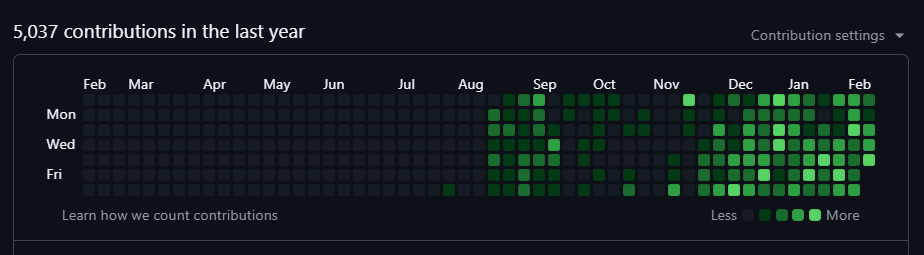
i passed 5000+ commits vibe coding today and here are 5 things i wish i would knew before: 1. all the time you spent vibe coding was worth it, in fact you should have done more 2. work on very hard questions, there will be a ton of people competing for the easy stuff 3. don't try to underestimate what you can build with vibe coding: see AI as a friend, understand it, and then you can literally build anything together 4. world is gonna change so fast due to AI, faster than you thought, get as many of your loved ones introduced to it, don't let them fall behind 5. dream very very big, and let no one discourage you from mastering this, trust the journey
Meta Alchemist tweet media
English
42
13
171
4.8K
Parzival retweetledi
PolkaWorld
PolkaWorld@polkaworld_org·
💥 The End of Easy Inflation: What the New $DOT Issuance Curve Changes in 2026! 2025 is coming to an end, and Polkadot is about to officially step into 2026. If I had to pick one change from this year that matters the most — and will have the longest-lasting impact — it would be the new DOT issuance curve, without hesitation. With many people recently asking questions about DOT staking and Polkadot’s economic model, this article aims to clearly walk through three things: ▪️What has actually changed in DOT’s economic model ▪️What concrete impacts to expect in 2026 ▪️And what these changes mean for DOT holders 1/ Fixed Total Supply With the approval of WFC #1710 (Hard Pressure), Polkadot’s economic model has, for the first time, been put on a clear, predictable, and structurally constrained long-term path. This path is defined by three core rules: ▪️ A hard cap on total supply: 2.1 billion DOT ▪️Issuance reductions every 2 years ▪️Each reduction cuts the remaining issuance by 13.14% Under the Hard Pressure model, Polkadot’s annual issuance will begin to decline starting on March 14, 2026. It’s important to note that “annual” here does not refer to the calendar year, but to an issuance year. Each issuance year runs from March 14 → March 14 of the following year. As a result, the first issuance reduction takes effect on March 14, 2026, with the following figures: ▪️Annual issuance for the 2026 issuance year: 55,617,170 DOT ▪️If 15% flows into the Treasury → approximately 8.34 million DOT ▪️If 85% is allocated to staking → estimated ~5.6% annual staking yield ▪️Corresponding annual inflation rate: ~3.11% The entire Hard Pressure mechanism has now been fully implemented in code and merged into the Polkadot mainnet repository. x.com/polkaworld_org… It is expected to go live on March 14, 2026. 2/ Asset Migration Over the past period, many community members have messaged us with the same question: “Why does it look like my DOT is gone?” The reason is that Polkadot has completed one of the most radical upgrades in its history — migrating core functionality that previously lived on the Relay Chain to the system chain, Asset Hub. This migration includes: ▪️ DOT balances ▪️ Staking-related functionality ▪️ The underlying asset logic itself If you can’t see your DOT in your original wallet, it does not mean your assets are lost. It simply means that the wallet you’re using has not yet fully supported this migration. Our recommendation is straightforward: ▪️ Use @NovaWalletApp, or ▪️ Use @subwalletapp ▪️ Then re-import your existing mnemonic or private key ⚠️ For users who are currently staking: No action is required. As long as your wallet shows your DOT as actively staked, the migration has already been completed automatically, and your assets remain safe. 3/ Changes to the Staking Mechanism After Hard Pressure was approved, the Web3 Foundation raised a deeper and more fundamental question: “As issuance starts to decline, how can Polkadot sustainably maintain network security, validator incentives, and ecosystem spending over the long term?” This is the context in which the Dynamic Allocation Pool (DAP) was introduced. The proposal explicitly outlines how Polkadot’s staking system would evolve under this new framework. At a high level, the direction of change can be summarized in three points: ▪️ Validator and nominator budgets are effectively separated ▪️ Validator rewards = stablecoin-based operating compensation + DOT security incentives ▪️ Nominators: slashing removed, unbonding shortened to ≤ 1 day Let’s look at the details. 1) Validator-side changes: from “living off inflation” to sustainable operation Under the new proposal, validators would receive three types of compensation: ▪️ Fixed stablecoin payments to cover real-world operating costs such as servers, staffing, and ongoing maintenance ▪️ Existing DOT staking rewards, with the same underlying logic as today, but at a reduced level ▪️ Additional DOT security incentives, designed to encourage validators to increase and maintain meaningful self-stake, strengthening the network’s economic security At the same time, the proposal introduces clearer constraints and incentive rules: ▪️ Minimum self-stake requirement: 10,000 DOT ▪️ Self-stake incentives follow a curve with diminishing marginal returns ▪️ Additional incentives vest linearly over one year, discouraging short-term behavior ▪️ Self-stake can be placed trustlessly via whitelisted accounts, addressing institutional and delegation-related operational constraints The goal is explicit: to achieve a more even distribution of stake across validators and to strengthen the weakest 1/3N + 1 segment of the validator set, in line with the ELVES economic resilience model. Validator unbonding will also be adjusted: ▪️Introduction of an unbonding queue ▪️Unbonding periods dynamically scale between 2 and 28 days 2) Changes for Nominators: More Liquid, More User-Friendly The changes on the nominator side are more aggressive and much more focused on user experience: 1️⃣ Slashing is completely removed Nominators will no longer bear slashing risk. Responsibility is pushed back to where it belongs — the validators who actually run the nodes. 2️⃣ Unbonding shortened to ≤ 1 day Unbonding is fixed to the end of the active era In Polkadot’s context, this means a maximum lock-up of one day Nominator staking is thus designed to be highly liquid and low-friction, which also serves as compensation for the sharp reduction in yields under the Hard Pressure issuance model. At the same time, W3F proposes that nominator rewards come from a dedicated budget, controlled via DAP parameters. As a result, nominator APY starts to resemble an adjustable interest rate, used as a balancing lever within the overall protocol budget. As issuance becomes more constrained and budget stability more important, nominator rewards may increasingly serve as the system’s “last degree of freedom” — a point explicitly stated in the proposal itself. 4/ DAP: The Coordinator of Polkadot’s Economic Resources The Dynamic Allocation Pool (DAP) is a protocol-level fiscal buffer that sits between DOT issuance and protocol spending (validators, nominators, the Treasury, and more). Its role is to dynamically allocate, smooth, and coordinate Polkadot’s economic resources. forum.polkadot.network/t/proposal-dyn… DAP didn’t appear out of nowhere — it is almost a necessary consequence of introducing a hard cap and declining issuance. How does DAP work? 1️⃣ All inflows go into DAP first All newly issued DOT, as well as protocol revenues — including Coretime revenue and transaction fees from the Relay Chain and system chains — flow into the DAP. 2️⃣ DAP pays out via adjustable parameters DAP does not spend funds arbitrarily. Instead, it uses a parameterized framework to allocate funds across different purposes: ▪️ Validator operating costs (potentially paid in a DOT-backed stablecoin) ▪️ Validator security incentives (DOT) ▪️ Nominator staking incentives ▪️ Treasury budgets ▪️ Strategic reserves These parameters can be governed via OpenGov (or dedicated tracks) and adjusted over time, though the default posture is intentionally stable, conservative, and continuity-oriented. 3️⃣ DAP can retain funds and build strategic reserves This is a crucial feature: DAP is not designed to “spend everything.” Any unallocated DOT accumulates as strategic reserves. These reserves serve two potential purposes: ▪️ Smoothing issuance declines over time ▪️ Acting as a last-resort backstop for DOT-native stablecoins, reducing tail-risk in extreme liquidation scenarios At its core, DAP introduces a governable, buffered, and forward-looking protocol treasury system for Polkadot in an era of finite issuance. 5/ Treasury Management and the DOT Stablecoin Finally, there are two important topics we haven’t touched on yet: Polkadot Treasury management and the DOT-backed stablecoin. On the Treasury side, PolkaWorld already discussed this in depth in last week’s article. x.com/polkaworld_org… As for the DOT stablecoin, there is still limited public information at this stage. We’ll continue to follow developments closely and share updates as they emerge. What is already clear, however, is that a DOT-backed stablecoin is expected to play a central role in the overall economic model — whether in the staking system, Treasury management, or the long-term sustainability of DOT itself. 6/ Final Thoughts At long last, the issue that many have repeatedly raised — DOT’s high inflation — is set to see a meaningful shift in 2026. Hard Pressure establishes a hard cap. DAP takes over coordination. Staking is split, restructured, and redesigned. Validators and nominators are redefined in terms of roles, responsibilities, and incentives. Together, these changes do not point toward a more aggressive growth narrative, but toward a more sustainable operating model for the network. So, what does this mean for DOT holders? ▪️ DOT will no longer rely on high inflation to keep the system running ▪️ Staking will no longer be a simple “lock tokens, earn yield” mechanism ▪️ More DOT may flow into DeFi products and on-chain economic activity ▪️ And we’re genuinely curious to see how these changes reshape market behavior Of course, this entire framework is still under discussion and active evolution. Many parameters, timelines, and even design choices will continue to be debated and refined through OpenGov. But one thing is clear: 2026 may be a decisive year for whether Polkadot can truly sustain itself in the long run. And this time, DOT’s economic model is no longer just background infrastructure — it has stepped onto center stage.
PolkaWorld tweet media
English
12
26
135
18.4K
Parzival retweetledi
Bloktopia
Bloktopia@bloktopia·
👀 There’s more than just games and prizes in Bloktopia… Explore Neon City, the Fashion Zone, Sports highlights, and top crypto insights — all in one immersive world 🌐 Your metaverse experience just got bigger 🚀 👉 bloktopia.com/download #Metaverse #VR #Crypto #Bloktopia
Bloktopia tweet media
English
24
30
183
18.3K
Parzival
Parzival@DemetaCrypto·
I just received 1,821 points on @1st_app! 🎉 Currently ranked
English
0
0
1
62