Denys Reva

1.3K posts

Denys Reva banner
Denys Reva

Denys Reva

@Denys_Reva

Researcher, Maritime Security @ISSAfrica Retweet≠endorsement 🇺🇦🇿🇦

South Africa Katılım Kasım 2018
963 Takip Edilen774 Takipçiler
Sabitlenmiş Tweet
Denys Reva
Denys Reva@Denys_Reva·
Can a new wave of drone tech make Africa’s seas safer? @tshegofatso____ and I wrote an article discussing the potential of unmanned systems to contribute to broader maritime security objectives in Africa. issafrica.org/iss-today/can-…
English
0
0
4
0
Denys Reva retweetledi
Priyal Singh 📚
Priyal Singh 📚@priyal_singh·
Now that US foreign policy has abandoned all pretences, what does this mean for Africa? My latest piece with @RonakGopaldas squares-in on the shrinking room for manoeuvre for African states against the geopolitical headwinds blowing in from Washington. #AfricaInTheWorld 🌍
ISS@issafrica

ISS Today > Trump’s Africa policy: strategy or shakedown? The 2025 US National Security Strategy recasts Africa from partner to price tag in a transactional, resource-driven era of great-power rivalry. issafrica.org/iss-today/trum…

English
0
3
2
143
Denys Reva retweetledi
Arnaud Bertrand
Arnaud Bertrand@RnaudBertrand·
To illustrate just how nonsensically these tariffs were calculated, take the example of Lesotho, one of the poorest countries in Africa with just $2.4 billion in annual GDP, which is being struck with a 50% tariff rate under the Trump plan, the highest rate among all countries on the list. Why? Does Lesotho apply extortionate tariffs on U.S. products and the U.S. is merely being "reciprocal" here? Not at all, despite what Trump is saying, it's NOT the way these tariffs are defined. As a matter of fact Lesotho, as a member of the Southern African Customs Union (SACU), applies the common external tariff structure established by this regional trade bloc. Which means it applies the same tariffs on U.S. products as South Africa does, as well as the 3 other members of the bloc: Namibia, Eswatini and Botswana. So since the tariffs charged by these 5 countries on U.S. products are exactly the same, they must all be struck with a 50% tariff rate by the U.S., right? Not at all: South Africa is getting 30%, Namibia 21%, Botswana 37% and Eswatini just 10%, the lowest rate possible among all countries. So what gives? Again, the way these tariffs are calculated has absolutely zero relationship with actual tariffs imposed by these countries on U.S. products. Instead, they appear to be simply derived from trade deficit calculations. Looking at Lesotho specifically, every year the U.S. imports approximately $236 million in goods from Lesotho (primarily diamonds, textiles and apparel) while exporting only about $7 million worth of goods to Lesotho (wits.worldbank.org/CountryProfile…). Why do they export so little? Again this is an extremely poor country where 56.2% of the population lives with less than $3.65 a day (databankfiles.worldbank.org/public/ddpext_…), i.e. $1,300 a year. They simply can't afford U.S. products, no-one is going to buy an iPhone or a Tesla on that sort of income... The way the tariffs are ACTUALLY calculated appears to be based on a simplistic and economically senseless formula: you take the trade deficit the U.S. has with a country, divide it by that country's exports to the U.S and declare this - falsely - "the tariff they charge on the U.S." And then as Trump did in his speech last night, you magnanimously declare that you'll only "reciprocate" by charging half that "tariff" on them. As such, for Lesotho, the calculation goes like this: ($236M - $7M)/$235M = 97%. That's the "tariff" Lesotho is deemed to charge this U.S. and half of that, i.e. roughly 50% is what the U.S. "reciprocates" with. It's extremely easy to see why this makes no sense at all. First of all, there's nothing Lesotho can do about it: they can't change tariffs they allegedly charge the U.S. to reduce the tariff rate the U.S. "reciprocates" with because, again, it's NOT based on any tariff that they charge. Similarly they can't do much about reducing the trade deficit they have with the U.S. because, again, they simply don't have enough money to buy U.S. products. Also the main rational Trump gave for the tariffs is to get production back to the U.S., to "bring manufacturing back". 47.3% of Lesotho's exports are diamonds: how do you bring the "manufacturing" of that "back to the U.S."? Anyone can see it makes just about zero sense. The Lesotho example exposes the fundamental economic incoherence of these tariffs. Rather than addressing actual trade barriers, they punish countries based on trade deficits that arise from structural economic realities. All the more countries like Lesotho which pose zero competitive threat to American industry. Worse yet, these tariffs will likely make these structural realities even worse: the U.S. is Lesotho's second most important export destination so it's a fair bet that applying 50% tariffs on their products will make people in Lesotho even poorer, and therefore even LESS able to afford U.S. products. But perhaps the most unfair and detrimental aspect of all this is that these tariffs represent a complete reversal of longstanding U.S. development policy, and therefore a betrayal of countries - like Lesotho - who chose to follow U.S. advice in the past. For decades the U.S. has used preferential trade access to encourage economic development in the world's poorest nations, recognizing that trade, not just aid, could get them out of poverty and ultimately put them in a position where they too could afford iPhones or Tesla. They're now effectively penalizing countries for following previous U.S. policy, a lesson which I bet they won't forget anytime soon. So all in all the irony is painful: in the name of fighting unfair trade, America has just demonstrated what truly unfair trade looks like. This isn't something designed to address genuine trade issues, but simply a mechanism based on arbitrary math to punish countries for the affront of selling more to the United States than they buy.
James Surowiecki@JamesSurowiecki

Just figured out where these fake tariff rates come from. They didn't actually calculate tariff rates + non-tariff barriers, as they say they did. Instead, for every country, they just took our trade deficit with that country and divided it by the country's exports to us. So we have a $17.9 billion trade deficit with Indonesia. Its exports to us are $28 billion. $17.9/$28 = 64%, which Trump claims is the tariff rate Indonesia charges us. What extraordinary nonsense this is.

English
343
3.6K
12.9K
1.8M
Denys Reva retweetledi
James Surowiecki
James Surowiecki@JamesSurowiecki·
This is truly amazing. The Deputy White House Press Secretary is claiming that I'm wrong, and that the "tariff rates" on Trump's chart were calculated by "literally" measuring every country's tariffs and non-tariff trade barriers. To prove it, he screenshots the formula the USTR says was used to calculate the reciprocal tariffs we imposed on other countries. And when you back out the Greek symbols, what is that formula? Trade deficit/imports - exactly what I said it was. I don't know if the Deputy Press Secretary was misinformed, or is just being misleading. Either way, the Trump administration did not "literally calculate tariff and non tariff barriers" to determine the tariff rates it's imposing on other countries. As I said, it divided our trade deficit with a country by our imports with that country, and then multiplied by 0.5 (because Trump was being "lenient"). Oh, and if our trade deficit/imports with a country is less than 10%, or we have a trade surplus with a country, Trump slapped a flat 10% tariff on that country.
James Surowiecki tweet media
English
1.2K
9.3K
53.9K
4.3M
Denys Reva retweetledi
Priyal Singh 📚
Priyal Singh 📚@priyal_singh·
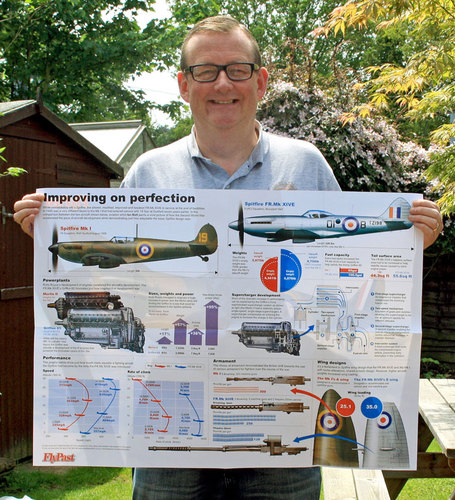
A few things we'll be watching out for in terms of US-Africa relations under the new Trump Administration at @issafrica/#AfricaInTheWorld 🇺🇸🌍 (thread):
Priyal Singh 📚 tweet media
English
3
20
26
4.3K
Denys Reva retweetledi
Ian Bott
Ian Bott@ian_bott_artist·
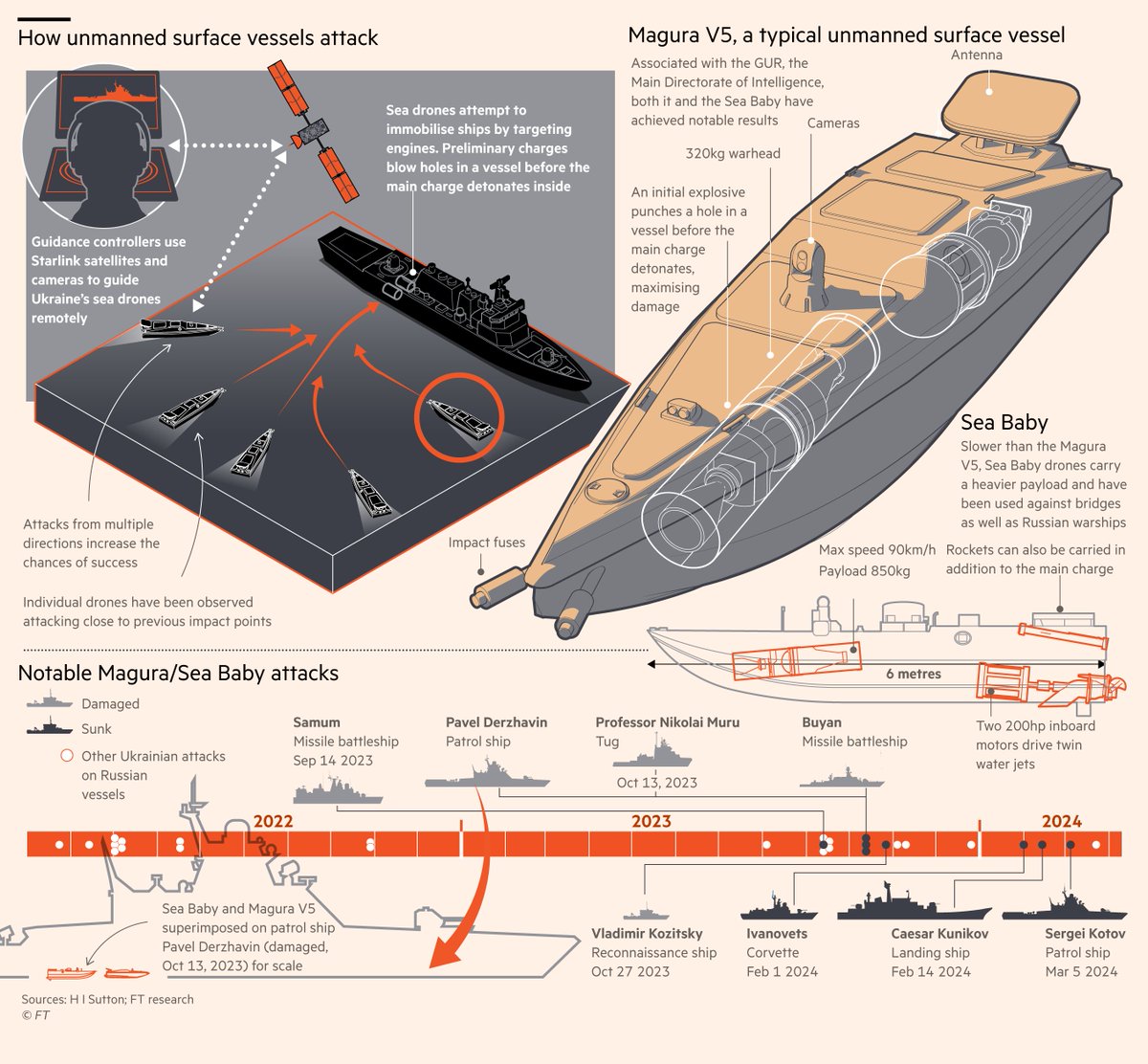
New artwork by me working with the @FT's excellent visual storytelling team: How smart use of sea drones has pushed Moscow’s warships to newly protected bases in the east and enabled trade from key ports to return to pre-war levels.
Ian Bott tweet media
English
1
9
34
2.9K
Denys Reva
Denys Reva@Denys_Reva·
🌍 Don't miss out on this insightful seminar on the lessons from the Ukraine war and African governments’ role in resolving the conflict 🗓️Date: March 15, 2024 🕛Time: 12:00 - 13:30 (GMT+2) 📍Venue: Online via Zoom Register here👇 issafrica.org/events/lessons…
English
0
1
6
144
Denys Reva retweetledi
Denys Reva
Denys Reva@Denys_Reva·
@swasrao @IamGod75 Mediazona is doing this with the BBC based on open-source data, i.e. social media posts (VK, OK etc) and local news reporting. So the number is an approximation and incomplete, but it is fair to say that BBC/Mediazona identified and verified at least 44,654 public reports.
English
0
0
2
63
Sandra Kramer 🇪🇺
Sandra Kramer 🇪🇺@SandraKramerEU·
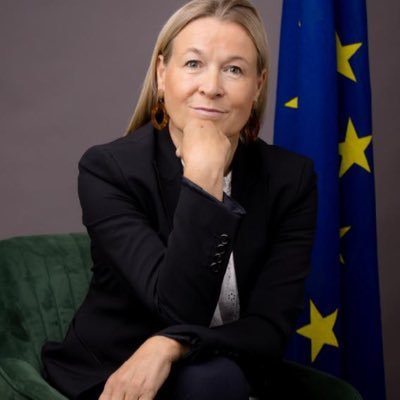
Great to meet two brilliant and fabulous alumni of the @EUI_EU young African Leaders programme today. Loved hearing about their stay in #Firenze, their travels around the 🇪🇺 #EU and their wonderful experience.
Sandra Kramer 🇪🇺 tweet media
English
3
11
35
5.5K
Denys Reva retweetledi
Ottilia Anna MaSibanda
Ottilia Anna MaSibanda@MaS1banda·
Attention is on Palestine, & rightly so. Let's multitask, & also profile the plight of people in other conflict-affected countries. - Afghanistan - DRC - Myanmar - The Sahel - The Lake Chad Basin - Ukraine - Sudan - Somalia - Syria - Yemen - Ethiopia - South Sudan and and and…
English
15
362
463
29.1K
Denys Reva retweetledi
DefenceWeb
DefenceWeb@defenceWeb_Afr·
The eighth edition of Exercise Good Hope, between the South African and German Navies, has commenced off South Africa’s West Coast, although on a much smaller scale than in the past. defenceweb.co.za/sea/sea-sea/ex…
English
1
9
11
2.1K
Denys Reva retweetledi
Michael Imran Kanu, SJD
Michael Imran Kanu, SJD@MichaelKanuSL·
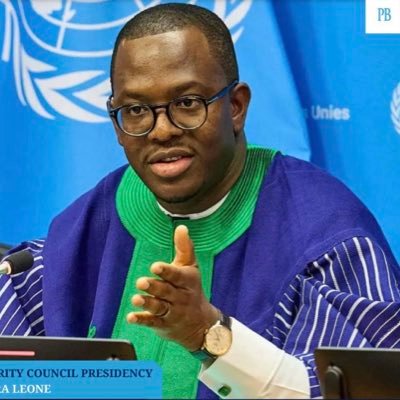
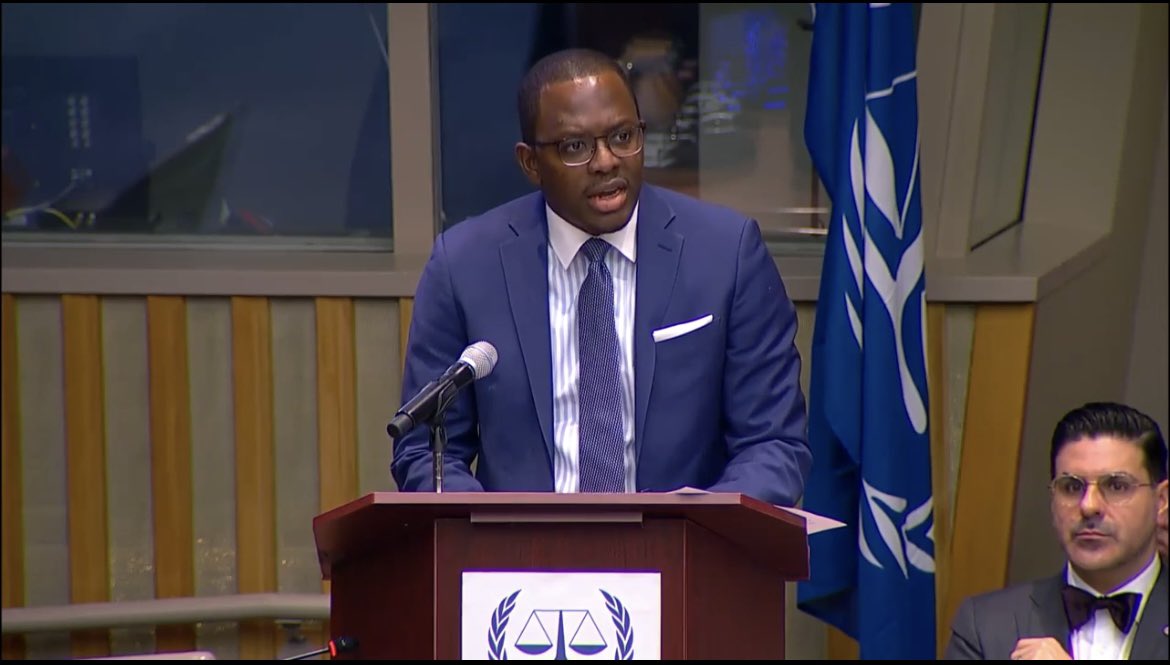
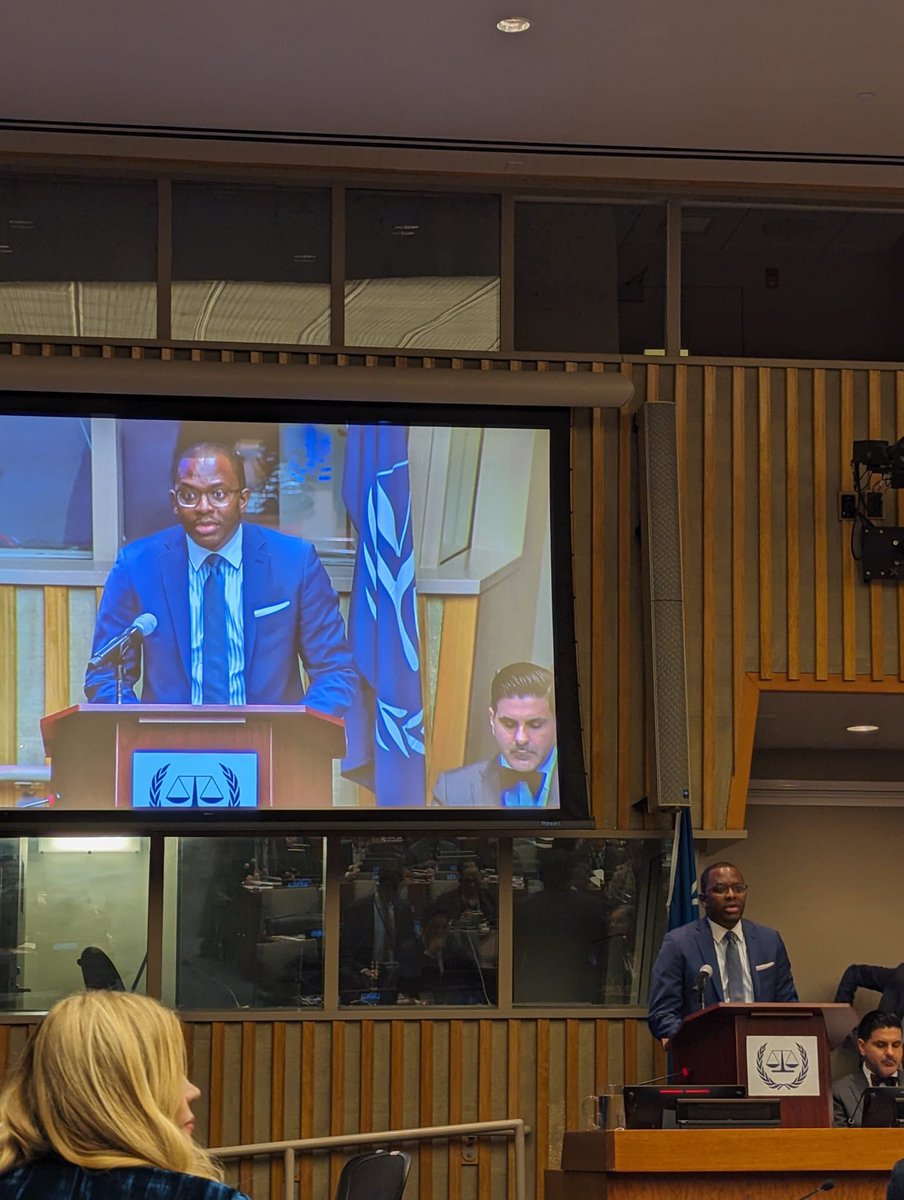
Great honour to have been elected as Vice-President of the @IntlCrimCourt Assembly of States Parties (#ASP) for the 23rd to 25th sessions, further consolidating Sierra Leone’s prioritization of international criminal justice and accountability at the international level. I remain grateful to H.E.@PresidentBio for the overall vision and demonstrable leadership; and to Foreign Minister @TimKabba for the invaluable support. I congratulate Ambassador @PaiviKaukoranta (Finland) on her election as President of the ASP, and thank her for her trust to work together with co Vice-President, Ambassador H.E. Margareta Kassangana (Poland). In the 25th anniversary year of the adoption of the Rome Statute, the relevance of the only permanent international criminal court cannot be overstated. As the important quest to address accountability gaps continues, delivering on the Court’s mandate for the victims must be central. The ASP’s as the management oversight and legislative body of the ICC is critical in ensuring cooperation and support for the Court in the discharge of its important mandate. Earlier in the opening session, I had the honour to introduce the “Report of the Review Mechanism”, on behalf of my co-State-Party Representative Ambassador Paul-vanden Ijssel (The Netherlands), and the ad country focal points, Bangladesh, Chile, and Poland.
Michael Imran Kanu, SJD tweet mediaMichael Imran Kanu, SJD tweet media
English
34
28
251
18.8K
Denys Reva retweetledi
Timothy Walker
Timothy Walker@timwalker919·
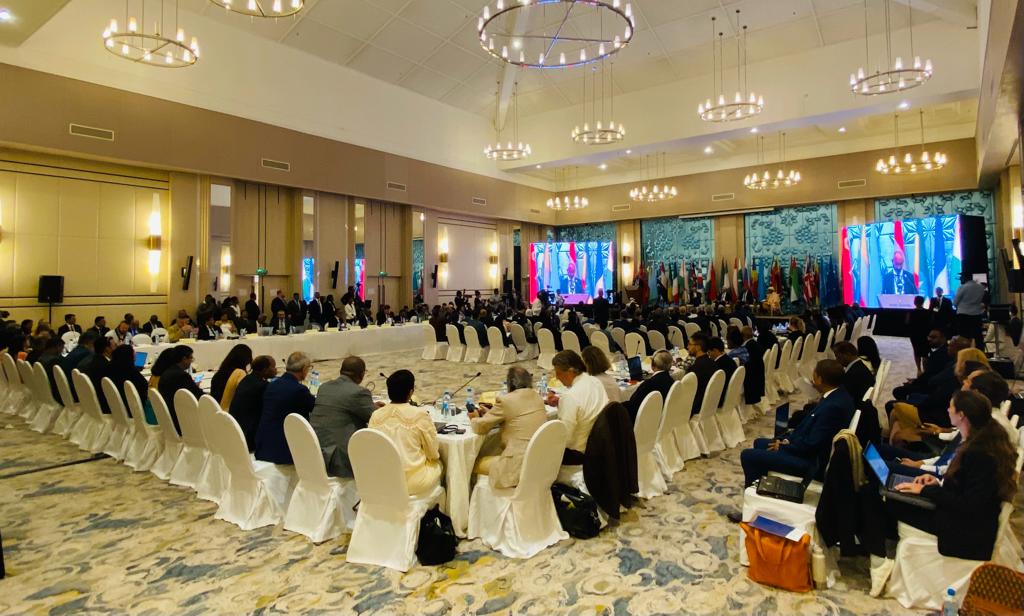
Today is the 3rd Ministerial Conference on Maritime Security and Safety in the Western Indian Ocean in 🇲🇺. Several significant initiatives are being discussed and readied for implementation, not least an African Coast Guards Functions Forum 🌍⚓️🌊🐠🛳️ #maritimesecurity #oceans
Timothy Walker tweet media
English
1
6
25
2.1K
Denys Reva retweetledi
Stop Illegal Fishing
Busy developing Standard Operating Procedures related to Port State measures with reps of Ghana's MCS, port & maritime authorities in Tema. The goal: drafting practical & feasible SOPs to be tested in Tema's port with #fisheries inspectors in the next days. #IUUfishing @FCWC_CPCO
Stop Illegal Fishing tweet media
Tema, Ghana 🇬🇭 English
0
6
21
721
Denys Reva retweetledi
Dean Wingrin
Dean Wingrin@deanwingrin·
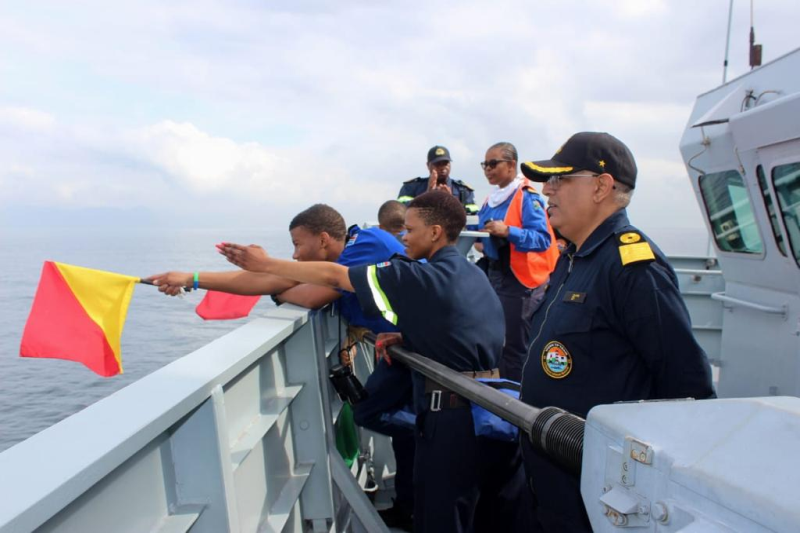
Good to s̶e̶a̶ see: The South African and Indian navies are holding a combined Operational Sea Training exercise in False Bay (Cape Town) this week. The South African and Indian Navy Operational Sea Training teams conducted joint work-up training on board SAS MENDI at sea. /1
Dean Wingrin tweet media
English
2
10
22
3.6K
Denys Reva retweetledi
Amish Mulmi
Amish Mulmi@amish973·
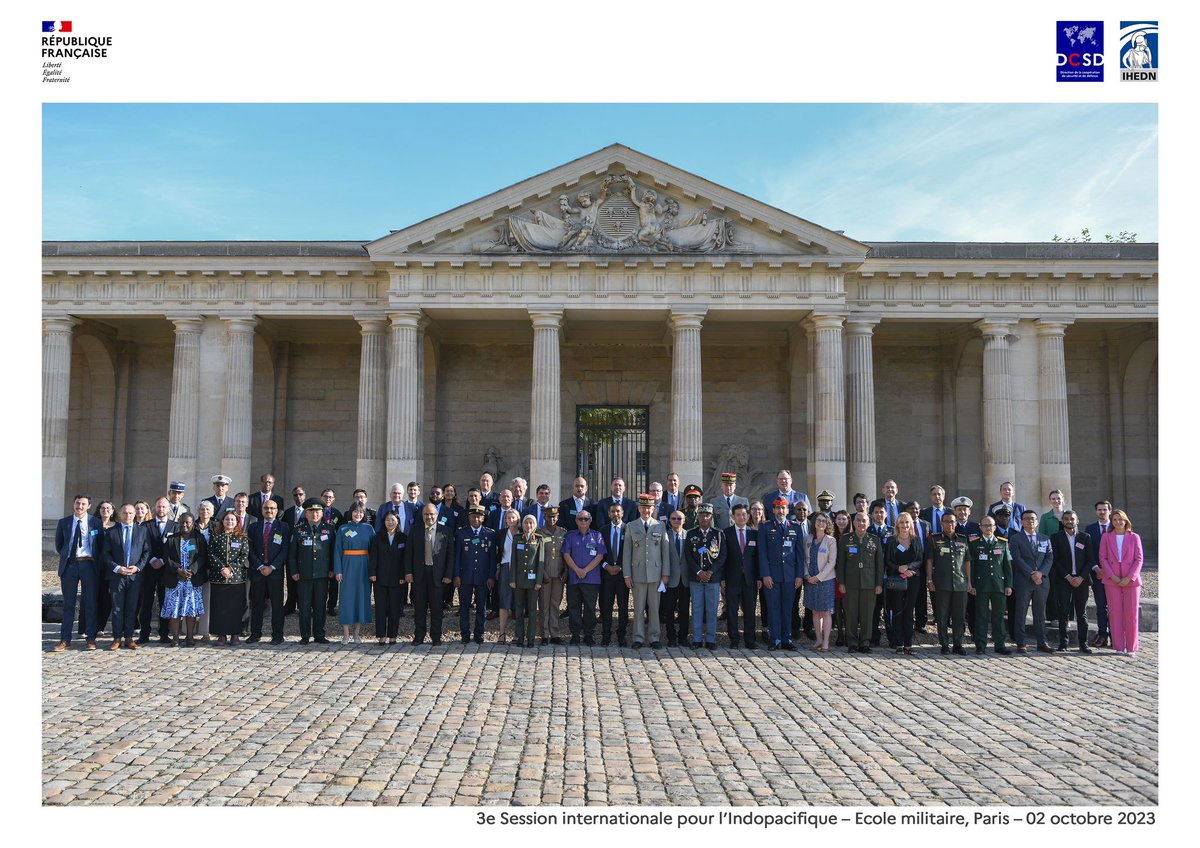
A stellar group of scholars, officials and personnel from across the world at #SIIP2023. Great learning experience to understand complexities of Indo Pacific geopolitical issues.
Amish Mulmi tweet media
English
2
1
14
2.4K