
Dekka
2.6K posts

Dekka
@DerekFranc90653
Investment Banking Director at UBS (7 yrs rated no 1 research analyst ), Chief Economist NSW PBO, Senior Adviser Min Comms, Composed 5 symphonies arr for Piano.

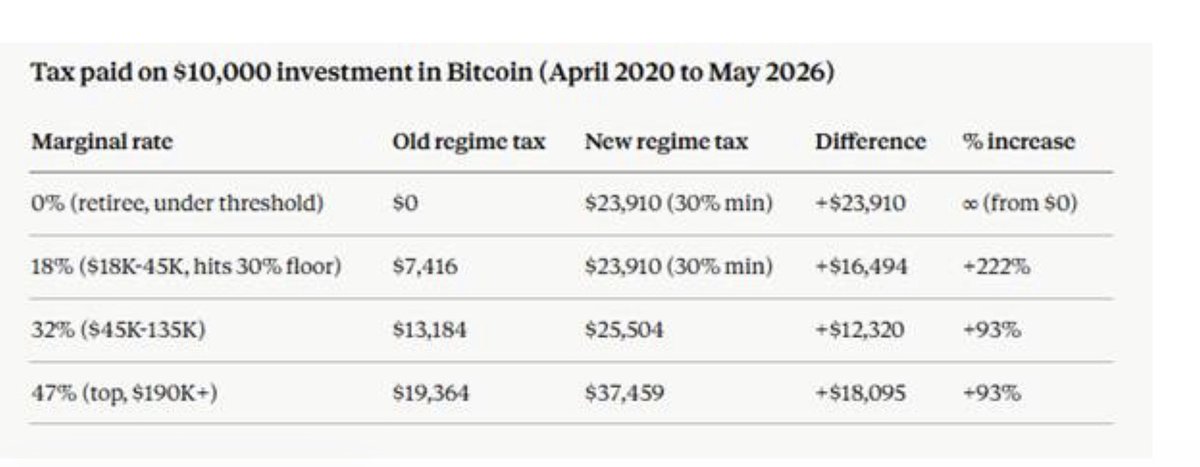
There are two other dire consequences of this budget that nobody is talking about. The first is that the budget’s introduction of an effective capital gains tax of up to 45 per cent - 47 per cent – previously capped at 23.5 per cent for assets held more than 12 months – hits younger savers hardest, precisely because they have the highest portfolio exposures to high-growth assets such as listed global equities, Australian shares, crypto, venture capital and private equity. When anyone builds a portfolio for younger investors, they rationally load them up with the highest-growth and most volatile assets on the basis that a long investment horizon allows them to weather the inevitable volatility storms. As investors age, these portfolios shift into more stable and income-rich asset classes such as cash and bonds, which are net beneficiaries of the CGT increase, because their post-tax returns now look more attractive relative to growth assets. As many investors have noted online, why would you allocate to a bunch of high-risk growth companies when Albanese and Chalmers are going to take almost half the upside while wearing none of the downside? Rather than helping younger generations, the highest CGT rate in the developed world will hammer them. And it is a double whammy because the many early-stage companies that have historically employed 20- and 30-somethings will now consider moving overseas. Their investors will simply not want to trade away half of their upside to the public oligarchs. If you allocated $10,000 to bitcoin after the March 2020 pandemic shock – which many young punters did, and which would now be worth approximately $92,000 – the new CGT regime imposes vastly higher amounts of tax. A self-funded retiree on the tax-free threshold would go from paying nothing to almost $24,000. Somebody earning between $18,000 and $45,000 a year would see their tax bill jump from $7400 to $23,900 – a 222 per cent increase. Those in the $45,000 to $190,000-plus tax brackets would have their bill rise by 93 per cent. Since the new CGT regime is, by definition, much more costly on higher-growth investments, it will punish younger investors who have much greater risk appetites and lower average incomes. afr.com/markets/equity…


Great interview @peterstefanovic @SkyNewsAust thank you 🙏 The Federal Budget punishes aspiration and hits young Australians hardest. It delivers higher taxes on success and it weakens incentives to invest and build wealth. The Government is taxing the very things we need more of: capital, ambition, and home ownership. 👇 #AustralianEconomy #FederalBudget #Aspiration
Housing investors DO NOT contribute to demand, they contribute to supply: the house is rented out and used 30% more efficiently. An increase in supply with minimal capital investment. They are part of the housing affordability solution, NOT the problem. gemini.google.com/share/10183d43…
Honestly the most frustrating part of the budget is how many people don't actually read the thing but still somehow think this is a winner for renters or people wanting to secure housing. We currently have record low vacancy across most of the country. If every tenant in the country magically took ownership of the property they live in and landlords just got a giant 'fuck you' literally nothing would change in terms of housing. Its shuffling deck chairs. Labor's own budget papers explicitly state that as a result of their tax changes there will be 35k less homes built. While their immigration is forecast to increase. I would suggest they will be low on both their forecasts. They are explicitly reducing supply, whilst increasing demand. And somehow this is to be celebrated? Too partisan and interested in lashing out to judge a policy objectively. This entire budget is not about actually solving a problem, its about hurting those who have more or are perceived as winners. Which, to be fair is very much the ethos of the political left, focus on dragging everyone down instead of actual productivity or growth reforms to grow the economic pie. Literally none of anyone's problems are because of a billionaire. budget.gov.au/content/bp1/do… budget.gov.au/content/bp1/do…
Let me get this straight..... If I invest 500k into a startup, take all the risk, put in years of work and become one of the very small % that succeed in a meaningful way — when I sell, under the new budget the government takes 47%. They funded nothing and took zero risk. On a 500k capital gain that's $235,000 gone. And here's the kicker: because a founder builds from nothing, there's almost no cost base to index. The new "inflation discount" shelters almost nothing for the people who actually build companies. It was designed to hit you hardest. If I take that same 500k to the casino and put it all on black and win, I make $500k and they tax nothing. The time to either win or lose is in seconds, and the outcome if I win is better. The probability of winning is 50% — far better odds than the startup, and a lot faster. So this government will back the gambling companies — they refuse to budge on their own findings and recommendations despite being in complete power — and they'll prop up gambling, but they'll shoot innovation in the head. Founders, leave now is the message. Fair? #auspol